
Finding the right baby nursing pillow can transform your feeding journey from a physically demanding task into a comfortable, relaxed bonding experience. During the first few months of parenthood, newborn feeding sessions can last anywhere from 30 to 45 minutes, occurring up to twelve times a day. Holding an infant for these extended periods without proper support frequently leads to acute fatigue in your shoulders, neck, and lower back.
To achieve sustained comfort during these long sessions, specialized brands offer distinct support structures tailored to different caregiver needs and body types. The ideal pillow must maintain its shape under your baby’s weight, keep the infant elevated at the correct height for a proper latch, and adapt to your physical recovery. Choosing the right brand depends on your body shape, feeding style, and physical recovery path.
This guide breaks down the essential comfort features of leading nursing pillows, evaluates the primary design categories, and helps you match a pillow to your specific postpartum recovery and safety requirements.
Products mentioned in this guide
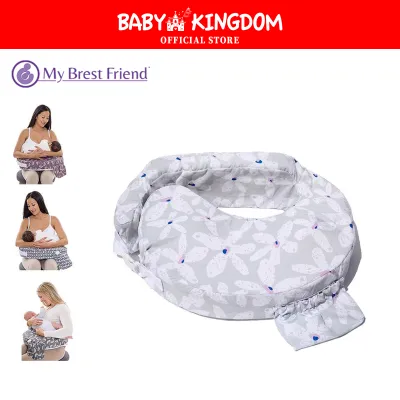
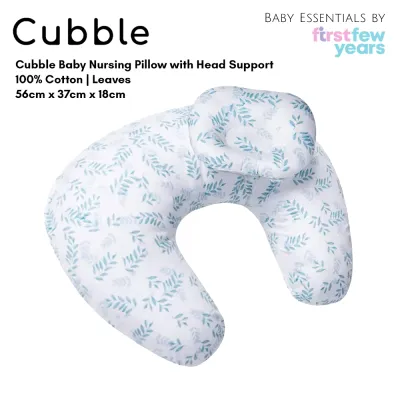
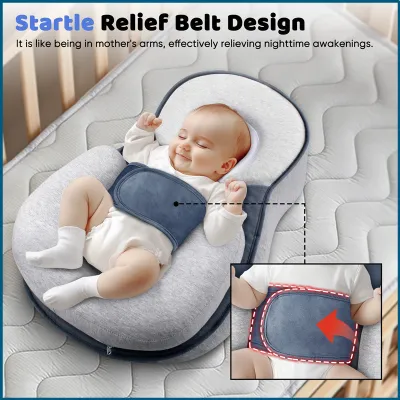
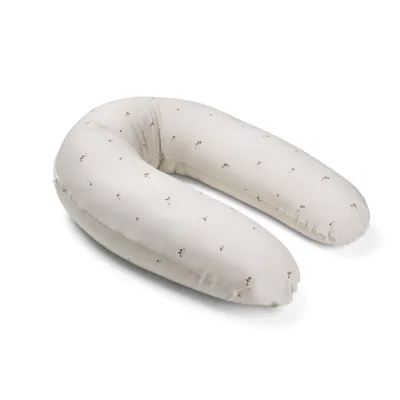
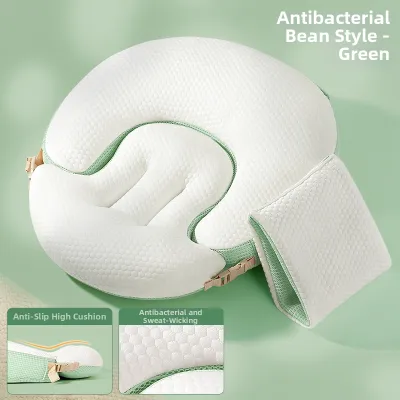
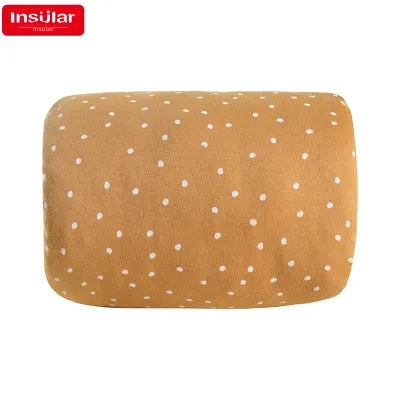
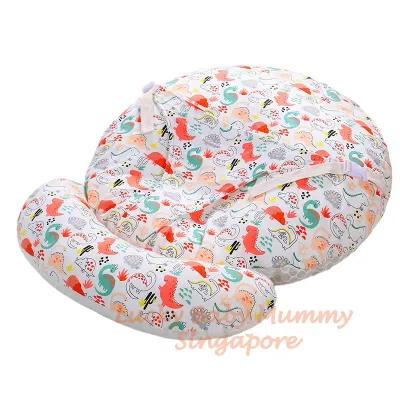
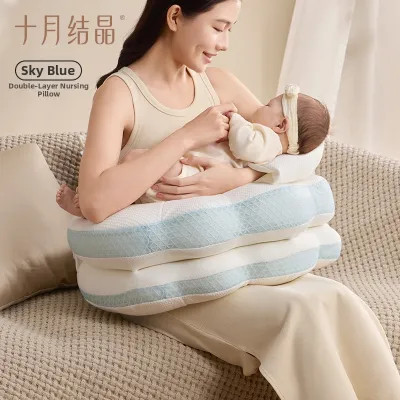
Prices are valid at publication and may change. Please refer to the product page for the latest price.
Key Features for Baby Nursing Pillow Comfort in Long Sessions
To understand why certain nursing pillow designs excel during long feeding sessions, it is helpful to look at the physical mechanics of feeding. When you breastfeed or bottle-feed, your posture naturally tends to slouch forward as you look down at your baby. Over a 40-minute session, this forward head posture places immense strain on your cervical spine and upper back muscles. A well-designed baby nursing pillow acts as a supportive bridge, bringing your baby up to breast or bottle height so you can maintain an upright, relaxed posture.
Firmness and Density The firmness of a nursing pillow’s filling is the most critical factor in preventing physical strain. Soft, plush pillows may feel comfortable at first touch, but they often sink under a baby’s weight. When a pillow compresses too much, your baby slides downward, forcing you to lean forward or use your arms to lift them back into position. A dense, high-firmness foam or tightly packed fiberfill keeps the baby elevated at the correct height throughout the entire feeding session. This stable elevation ensures that the baby’s latch remains aligned, preventing nipple pain and reducing arm fatigue.
Ergonomic Shape and Fit The shape of the pillow determines how well it integrates with your body and your seating environment. Wrap-around designs feature a strap or belt that secures the pillow tightly against your waist, eliminating any gaps between your body and the support surface. This secure fit prevents the baby from slipping down the back or sides of the pillow. Conversely, open C-shape pillows slide easily around your waist without buckles, offering quick setup but requiring you to manually tuck the pillow close to your body. Choosing between these shapes depends on whether you prioritize absolute stability or quick, unencumbered transitions.
Arm and Back Support Extended feeding sessions require robust support for your upper extremities and lower back. When your arms are left hanging or are partially supported, your deltoid and trapezius muscles must contract continuously to hold your baby’s head. Over time, this leads to muscle spasms and tension headaches. High-quality nursing pillows often feature integrated armrests or raised side panels that support your elbows. Additionally, some wrap-around designs include a dedicated lumbar support pad that rests against your lower back, encouraging a neutral spinal alignment and preventing the slouching that leads to chronic lower back pain.
Breathability and Climate Adaptation In Singapore’s warm and humid climate, heat retention is a major comfort consideration for both caregiver and baby. Close physical contact during feeding naturally generates body heat, which can cause sweating and skin irritation if the pillow materials trap warmth. Look for nursing pillows that feature breathable covers made from natural fibers like organic cotton, bamboo-derived fabrics, or technical 3D mesh. These materials facilitate airflow and wick away moisture. Furthermore, because spills, spit-up, and sweat are inevitable, ensure the pillow has a fully removable, machine-washable cover with high-quality zippers that can withstand frequent laundering without shrinking.
Recommended Baby Nursing Pillow Brands for Extended Feeds
Different brands address the challenges of long-session feeding through distinct design philosophies. By examining the three primary categories—wrap-around designs, versatile C-shapes, and ergonomic contoured models—you can identify which structural approach aligns best with your comfort priorities.

Wrap-Around Support Designs (e.g., My Brest Friend)
Wrap-around nursing pillows are engineered with a primary focus on structural stability and ergonomic precision. Brands like My Brest Friend utilize a flat, firm foam platform that wraps completely around your body, securing with an adjustable strap and silent-release buckle.
Comfort Mechanism The core comfort of the wrap-around design lies in its secure attachment system. Once buckled around your waist, the pillow remains locked in place, creating a stable, level shelf that does not shift when you or your baby move. The flat surface prevents the baby from rolling inward or outward, which is highly beneficial for maintaining a consistent latch. Additionally, the integrated backrest provides firm lumbar support, reminding you to sit back rather than slouching your shoulders forward. This design virtually eliminates the need to use your arm muscles to support the baby’s weight, allowing your upper body to remain fully relaxed.
Ideal Scenarios This style is highly recommended for caregivers recovering from childbirth, particularly those who have experienced a Caesarean section, as the firm structure can be positioned high on the torso to avoid pressing against abdominal incisions. It is also ideal for those suffering from pre-existing lower back pain or sciatica, as the lumbar support helps maintain the spine’s natural curve. Caregivers who struggle with positioning or have babies who tend to roll off softer pillows will find the structured, flat surface exceptionally reassuring during long, quiet feeds.
Limitations The highly structured nature of wrap-around pillows comes with trade-offs in terms of portability and flexibility. These pillows are relatively bulky and can be cumbersome to store or transport outside the home. The process of strapping into the pillow and adjusting the buckle takes longer than simply sliding an open pillow onto your lap, which can be challenging when trying to soothe a crying, hungry infant. Furthermore, because the foam is rigid, it does not conform easily to every body shape. You should always verify the manufacturer’s maximum waist size specifications before purchasing to ensure a comfortable fit.
Versatile C-Shape Designs (e.g., Boppy)
The classic C-shape design is the most common nursing pillow style on the market. Brands like Boppy offer a symmetrical, horseshoe-shaped pillow filled with resilient virgin polyester fiberfill that fits snugly around the front and sides of your waist.
Comfort Mechanism The primary comfort advantage of a C-shape pillow is its simplicity and flexibility. Because it features an open back, you can quickly slide the pillow onto your lap with one hand while holding your baby in the other. The resilient fiberfill offers a softer, more cushioned feel than rigid foam, which some caregivers and babies prefer. The open design allows you to position the pillow at various angles around your waist, making it easy to transition between different feeding holds, such as the cradle, cross-cradle, or football hold. It also accommodates both breastfeeding and bottle-feeding positions with minimal adjustment.
Ideal Scenarios A C-shape pillow is highly suitable for caregivers who value speed, portability, and multi-functional use. It is lightweight and easy to move from room to room or pack into a car for travel. Because it does not buckle around you, it easily accommodates multiple caregivers of different body sizes without the need to adjust straps. Additionally, as your baby grows, these pillows can serve secondary purposes, such as supporting the baby during propped lounging, tummy time, or sitting practice, provided they are always under strict, continuous adult supervision.
Limitations While the open design offers convenience, it lacks the absolute physical support of a strapped system during very long feeding sessions. Because the pillow is not anchored to your body, it can gradually slide forward or away from your waist as your baby moves. This creates a gap that can cause the baby to sink, requiring you to actively squeeze the pillow with your arms or lean forward to close the space. Over a 40-minute session, this repetitive muscle engagement can lead to tension in your forearms, wrists, and shoulders.
Ergonomic Contoured Designs (e.g., Peanut)
Ergonomic contoured nursing pillows feature asymmetrical, sculpted shapes designed to align with the natural curves of both the caregiver’s lap and the baby’s body. Brands utilizing this design, such as peanut-shaped models, focus on self-adjusting angles to promote a natural feeding posture.
Comfort Mechanism Contoured pillows feature a sloped or asymmetrical surface that is typically higher on one end than the other. This elevation naturally positions your baby’s head at a slight incline, which is highly beneficial for digestion and can help reduce symptoms of infant reflux. The contoured shape cradles the baby’s body, helping to keep them turned inward toward you without requiring you to manually prop up their head or back. By utilizing gravity and anatomical sculpting, these pillows reduce the need for constant manual adjustments during extended feeding sessions.
Ideal Scenarios These pillows are excellent for caregivers who find traditional, flat C-shape pillows too low or unsupportive for their baby’s upper body. They are also highly effective for transitioning between breasts during a single session, as the sloped design can be flipped or rotated to match the baby’s position. Caregivers who prefer the football hold often find that the contoured sides provide a more secure channel for the baby’s body than symmetrical pillows.
Limitations The primary limitation of an ergonomically contoured pillow is its highly specific fit. Because the shape is sculpted to a particular angle, it may not align comfortably with all caregiver body types, torso lengths, or lap sizes. If your body shape does not match the contours of the pillow, you may find yourself sitting in an awkward position to make it work, which defeats its ergonomic purpose. Additionally, the rigid contouring means these pillows are less versatile for non-feeding activities and can be difficult to pack tightly for travel.
Matching the Pillow to Your Feeding Needs and Recovery
Selecting the most comfortable nursing pillow requires you to look beyond brand names and evaluate how a pillow’s specific features align with your physical recovery, family dynamics, and preferred feeding methods.
Postpartum and C-Section Recovery Your physical state immediately after childbirth plays a major role in determining which pillow will be comfortable. If you are recovering from a C-section, any direct pressure on your lower abdomen can cause significant discomfort and interfere with incision healing. In this scenario, a wrap-around pillow that can be buckled higher up on your ribcage—well away from your incision—is often the most comfortable choice. Alternatively, a high, firm C-shape pillow that rests lightly on your lap without binding tightly around your waist can help protect the sensitive abdominal area while still providing necessary support.
Feeding Multiples If you are feeding twins, a standard single-infant nursing pillow will not provide sufficient surface area or support. Tandem feeding requires a specialized twin nursing pillow, which is significantly wider, deeper, and firmer than standard models. These pillows typically feature a wrap-around design with a large, flat foam platform that extends far along both sides of your body. This allows you to place both babies in the football hold simultaneously, supporting their weights evenly while keeping your hands free to adjust latches or hold bottles, preventing severe strain on your back and shoulders.
Breastfeeding vs. Bottle-Feeding The physical mechanics of breastfeeding and bottle-feeding differ, and this affects your pillow requirements. Breastfeeding requires the baby to be positioned close to your chest at a specific angle to maintain a deep, comfortable latch. A firmer, highly structured pillow is ideal for this. Bottle-feeding, on the other hand, often requires the baby to be held at a more upright angle to ensure safe swallowing and control the flow of milk. An adjustable pillow or a contoured design with a built-in incline can help you maintain this angled position without straining your wrists and forearms from holding a bottle at an awkward angle for 30 minutes.
Verification Before finalizing your purchase, always verify the manufacturer’s specific guidelines regarding weight limits, age recommendations, and physical dimensions. Some pillows are designed strictly for newborns up to a certain weight, while others can accommodate older infants. Ensure that the pillow’s inner circumference matches your waist size comfortably. If you experience persistent pain, difficulty positioning your baby, or ongoing latch issues during long feeding sessions, do not rely solely on a pillow; consult a certified lactation consultant or a qualified healthcare professional for personalized guidance.
Essential Safety and Care Guidelines
While a baby nursing pillow is an invaluable tool for caregiver comfort, it must always be used with strict adherence to safety guidelines to protect your infant. Nursing pillows are designed solely as active feeding supports and require careful maintenance to remain hygienic.
Strict Sleep Warnings Under no circumstances should a baby nursing pillow ever be used for infant sleep, unsupervised rest, or as a sleep positioner. The soft, elevated, and contoured surfaces of these pillows pose a severe risk of suffocation, airway obstruction, and sudden infant death syndrome (SIDS). If a baby falls asleep on a nursing pillow, they can easily roll over, trapping their face in the soft fabric, or their head can tilt forward onto their chest, compressing their airway. Always transfer your baby to a firm, flat, safety-approved crib or bassinet immediately if they fall asleep during or after a feeding session.
Supervision Requirements A baby should only be placed on a nursing pillow while actively feeding and under direct, continuous adult supervision. Never leave your baby unattended on a pillow, even for a brief moment, and do not place the pillow on elevated surfaces like sofas, beds, or changing tables where it could slip or fall. The pillow is not a safety restraint; an active baby can easily wiggle, slide off, or become wedged between the pillow and adjacent furniture, leading to injury or breathing restriction.
Hygiene and Maintenance Because nursing pillows are used multiple times a day, they are highly susceptible to sweat, milk spills, and spit-up. In Singapore’s warm, humid climate, trapped moisture can quickly lead to the growth of mold, mildew, and bacteria within the pillow filling. To maintain a hygienic environment, choose a pillow with a removable cover and wash it regularly in warm water using a mild, baby-safe detergent. Always inspect the inner pillow insert for dampness and spot-clean it according to the manufacturer’s care label. Ensure the cover and insert are completely dry before reassembling and using the pillow again.
Frequently Asked Questions (FAQ)
Is it safe to leave my baby on the nursing pillow after feeding?
No, it is not safe to leave your baby on a nursing pillow once the feeding session has ended. Nursing pillows are designed exclusively for active, supervised feeding support and are not safe for lounging, resting, or sleeping. If a baby is left on the pillow, there is a serious risk they could roll off the elevated surface, slide down into a position that restricts their breathing, or suffocate if their face presses against the soft fabric. As soon as your baby finishes feeding or falls asleep, you must immediately transfer them to a firm, flat, safety-approved sleeping surface, such as a crib or bassinet.
Do I really need a specialized baby nursing pillow?
While you can use standard household bed pillows or cushions to support your baby in a pinch, they are generally not recommended for long-term, frequent feeding sessions. Standard pillows lack the specific density, structural firmness, and ergonomic shapes required to support a baby’s weight consistently without sinking. This lack of support forces you to constantly adjust your posture, leading to chronic back, shoulder, and wrist strain. A specialized baby nursing pillow is engineered specifically to bring your baby to the correct height, secure them close to your body, and distribute their weight evenly, significantly reducing physical fatigue during extended feeds.
Community discussion
Share your experience or ask a question. Comments are reviewed before publication.