
The choice between Momcozy and Ergobaby baby carriers does not come down to a single universal winner. Instead, the ideal ergonomic support depends on the specific model selected, your baby’s current developmental stage, and your unique body shape. Both brands offer distinct approaches to structural design, strap configurations, and adjustment mechanisms. To find the carrier that provides the most comfortable and supportive fit, you must evaluate how individual models distribute weight and adapt to your baby’s growth.
Ergonomics in baby carrying is a dual-sided equation. It must protect the baby’s developing hips and spine while simultaneously shielding the parent’s shoulders, back, and hips from strain. A carrier that works beautifully for one parent might cause discomfort for another due to differences in torso length, shoulder width, or waist size. This makes a one-size-fits-all recommendation impossible, highlighting the need to assess specific design features against your personal physical requirements.
To make an informed decision, parents should look closely at several critical design elements. These include the adjustability of the seat width, the structure of the lumbar support, the thickness and placement of strap padding, and the overall weight distribution mechanics. By examining these features, you can determine which brand’s design philosophy aligns better with your daily routine and physical comfort.
Products mentioned in this guide
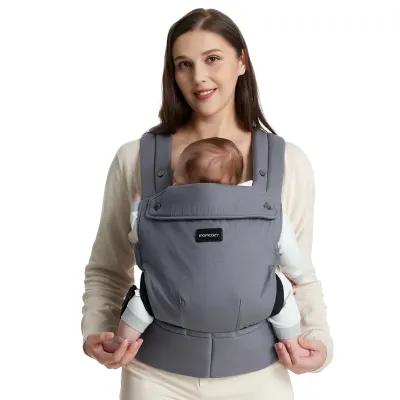
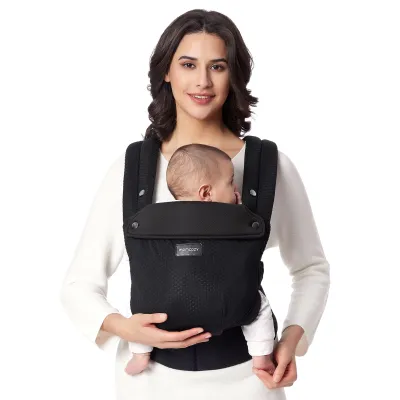
![[Ready stock]Ergo baby Alta Hip Seat Baby Carrier](https://img.lazcdn.com/g/p/2c179e746e091486e346c48507f7eabb.jpg_400x400q80.jpg_.webp)
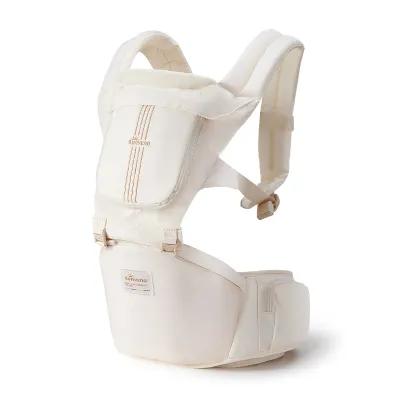
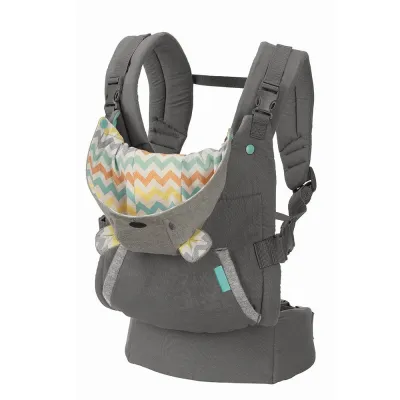
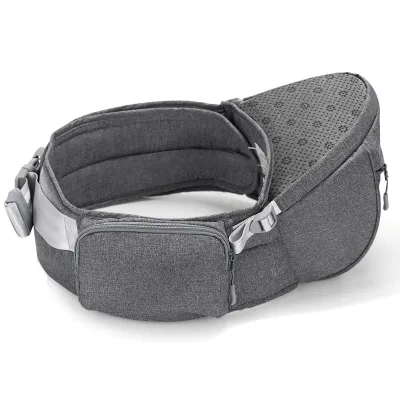
Prices are valid at publication and may change. Please refer to the product page for the latest price.
This guide breaks down the structural differences between Momcozy and Ergobaby carriers. Rather than relying on generalized brand claims, we will focus on how to verify specific product specifications, check safety guidelines, and assess physical fit. This approach ensures you select a carrier that supports your baby’s physical development while keeping you comfortable during extended carrying sessions.
Baby's Spine and Hip Support: Comparing the Designs
A baby’s developing skeletal system requires careful support, particularly during the first year of life. When placed in a carrier, a baby should sit in a natural “M-position,” also known as the froggy position, where the hips are spread, the thighs are supported, and the knees are slightly higher than the bottom. This position reduces stress on the hip joints and supports healthy hip socket development. Both Momcozy and Ergobaby design carriers aimed at facilitating this position, but their adjustment mechanisms vary by model.
To ensure a carrier maintains this ergonomic position as your baby grows, you must examine the seat width adjustability. Some models utilize button systems, hook-and-loop fasteners, or sliding adjusters to widen or narrow the seat. When testing a carrier, verify that the fabric extends fully from knee crease to knee crease without forcing the baby’s lower legs inward or outward. If the seat is too narrow, the baby’s legs will dangle straight down, placing undue pressure on the hip joints; if it is too wide, it may force the knees into an unnatural stretch.
When evaluating ergonomic claims, it is important to verify safety acknowledgments directly on the specific product packaging or within the official user manual. Many parents look for recognition from international hip health organizations, such as the International Hip Dysplasia Institute. Because certifications and design approvals can change or vary by specific model and production year, you should always check the manufacturer’s current documentation rather than assuming all models from a brand carry the same designations.
Transitioning carrying positions—such as moving from front-inward to front-outward, hip, or back carrying—requires strict adherence to developmental milestones. Before attempting a new position, consult the specific model’s manual to verify the minimum weight, height, and age requirements. For example, outward-facing carrying typically requires the baby to have complete head and neck control, which usually develops around several months of age. Placing a baby in an advanced position too early can compromise their airway safety and spinal alignment.
Parent Comfort: Weight Distribution and Strain Relief
The comfort of the caregiver is just as critical as the support provided to the baby, especially during long walks or busy days at home. A well-designed carrier distributes the baby’s weight evenly across the parent’s hips and shoulders, preventing localized pressure points. The waistband plays a primary role in this distribution, acting as the foundation of the carrier’s support system.

When comparing Momcozy and Ergobaby, pay close attention to the rigidity, width, and padding of the waistband. A wider, firmer waistband generally excels at transferring weight away from the shoulders and onto the hips, which is highly beneficial for carrying heavier babies. Some models feature integrated lumbar support pads that sit against the lower back to prevent the waistband from digging in or folding under pressure. You should check how these pads align with your lower back, as a pad that is too large or poorly positioned can cause you to arch your spine unnaturally.
Shoulder strap design is another key factor in strain relief. Thick, high-density foam padding helps cushion the shoulders, while breathable mesh fabrics can improve airflow to prevent overheating. The adjustability of these straps determines how well the carrier fits different torso lengths. If the straps cannot be tightened sufficiently, the baby’s weight will pull away from your body, causing you to lean forward and strain your neck and upper back muscles.
The method of routing the shoulder straps can significantly impact your comfort. Some carriers offer crossable straps (often referred to as an “X-back” configuration), which allow the straps to cross over the shoulder blades. This style is frequently favored by smaller-framed parents because it pulls the carrier closer to the body and distributes weight more evenly across the back. Other models utilize parallel straps (an “H-back” configuration) with a chest clip, which can be easier to put on independently and often suits parents with broader shoulders.
To prevent physical fatigue and potential injury, always check the specific model’s maximum weight capacity and recommended carrying duration limits. Even the most ergonomic carrier can cause strain if used continuously beyond your physical comfort level or the product’s design limits. Taking regular breaks, checking your posture in a mirror, and ensuring the waistband remains level and secure will help maintain comfort during extended use.
Specification and Fit Verification Checklist
Because individual body shapes and baby sizes vary widely, relying on general brand comparisons is rarely sufficient. To ensure a safe and comfortable fit, you should perform a systematic check of the carrier’s specifications and physical features before committing to a purchase. This verification process helps prevent common fit issues and ensures the carrier meets your specific environmental needs.
First, consult the user manual of the exact model you are considering to verify its physical compatibility limits. Check the minimum and maximum weight ranges, as well as the maximum waist and torso measurements for the wearer. This is particularly important if multiple caregivers of different sizes plan to share the same carrier, as some waistbands or strap lengths may not adjust sufficiently to accommodate everyone comfortably.
Next, evaluate the carrier’s materials for climate suitability, especially if you live in a warm and humid environment like Singapore. Look for models that incorporate lightweight mesh panels, breathable performance fabrics, or moisture-wicking linings. These materials help facilitate airflow between you and your baby, reducing heat buildup and sweat accumulation during outdoor activities or daily errands.
Confirm the presence and condition of essential safety and comfort features. Check for an adjustable sleeping hood, which provides sun protection and head support when the baby falls asleep. Inspect the structured neck support to ensure it can be secured firmly for newborns who lack head control. Additionally, examine the buckles, safety elastic loops, and adjustment webbing to ensure they are robust, easy to operate, and free from defects.
Finally, verify the return policy and fitting trial periods offered by your chosen retailer. Trying on a carrier at home with your baby—or using a weighted doll if testing before birth—is the most reliable way to assess comfort. Ensure the retailer allows returns or exchanges if you find that the strap placement, waistband rigidity, or overall fit does not suit your body shape or your baby’s comfort.
How to Choose the Right Carrier for Your Needs
Selecting between Momcozy and Ergobaby requires matching their specific design philosophies to your personal priorities and lifestyle. Neither brand is a universal solution, but each excels in different areas depending on what you value most in a baby carrier. By identifying your primary needs, you can narrow down the options to the model that best supports your family.
Consider a Momcozy carrier if you prioritize highly adjustable features, specific strap routing styles like crossable straps, or a particular price-to-feature ratio. Many Momcozy models are designed with soft, flexible fabrics that conform closely to the body, making them appealing to parents who prefer a snug, wrap-like feel with the structure of a buckle carrier. If you want a carrier that is easy to pack and offers straightforward adjustments for multiple wearers, verifying these features in a Momcozy model is a practical step.
Opt for an Ergobaby carrier if you prefer established structural rigidity, a wide variety of carrying positions, or a highly structured waistband. Ergobaby models often feature robust lumbar support pads and thick, molded shoulder straps designed to handle heavier weight loads over long periods. If you plan to use the carrier frequently for outdoor hikes, extended travel, or as your baby grows into a toddler, checking the specifications of Ergobaby’s structured models can help you find the necessary support.
Keep in mind that neither brand may fit your needs if you or your baby have specific physical conditions. If you experience chronic back pain, pelvic floor issues, or are recovering from a difficult birth, you should obtain medical clearance from a healthcare professional before using any baby carrier. Similarly, if your baby was born prematurely, has a low birth weight, or has developmental hip concerns, consult your pediatrician to ensure carrying is safe and to receive guidance on proper positioning.
Before making a purchase, exercise caution if buying from unauthorized online marketplaces or second-hand sources. Counterfeit baby carriers are common on some ecommerce platforms, and they often lack the structural integrity, reinforced stitching, and safety-tested buckles of genuine products. Furthermore, second-hand carriers may have hidden wear and tear, degraded elastic, or missing safety components that compromise their safety. Always purchase from authorized retailers to ensure you receive a genuine, fully warranted product.
Frequently Asked Questions (FAQ)
Can I use these carriers for a newborn without an infant insert?
Whether you can use a carrier for a newborn without a separate infant insert depends entirely on the design of the specific model. Some modern carriers feature fully adjustable seats that can be narrowed sufficiently to support a newborn’s natural hip position and head height without extra accessories. Other models, particularly older or highly structured designs, strictly require a separate infant insert to position the baby safely and prevent them from slipping down. Always consult the product manual to verify the minimum weight requirement and neck control guidelines before placing a newborn in the carrier.
How do I know if the baby carrier is causing me back pain?
You can identify if a baby carrier is causing back pain by observing how it sits on your body during use. Common signs of a poor fit include shoulder straps digging into your neck, the waistband riding up toward your ribs, or a feeling that you must lean forward or arch your back to balance the baby’s weight. If you experience discomfort, try adjusting the tension of the straps, repositioning the lumbar support pad, or raising the waistband higher on your hips to transfer the weight. If persistent pain or discomfort continues after making these adjustments, stop using the carrier and consult a healthcare professional or a certified babywearing consultant for guidance.
Community discussion
Share your experience or ask a question. Comments are reviewed before publication.