
Selecting the right hands-free breast pump is a highly personal decision that depends on your unique anatomy, daily schedule, and financial considerations. When comparing the Momcozy M5, M6, and S12, there is no single option that suits every parent. Instead, the ideal model for your nursing journey depends on how you balance physical design, battery performance, suction customization, and long-term maintenance costs.
To make an informed choice, you must evaluate how each pump fits into your daily routine, whether you are pumping at an office desk, managing household tasks, or traveling. By verifying the manufacturer’s official specifications and measuring your physical requirements, you can select a model that supports your lactation goals comfortably and efficiently.
Comparing the Physical Design and Wearability of Each Model
The physical structure of a wearable breast pump directly affects how discreetly it fits under your clothing and how comfortable it feels during use. When evaluating the Momcozy M5, M6, and S12, start by checking the official product pages to verify the design layout of each model. Some wearable pumps feature an all-in-one design where the motor sits directly on top of the collection cup, while others utilize a split-component or lower-profile structure. These differences impact the overall weight and how far the pump protrudes from your chest. For instance, a pump that sits flush against the breast is less likely to shift when you bend over to tend to your baby, whereas a top-heavy motor might require you to remain more upright during your pumping sessions.
Products mentioned in this guide
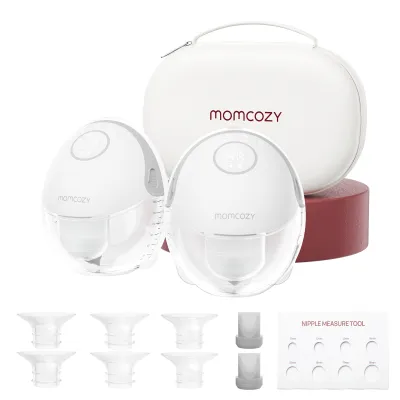
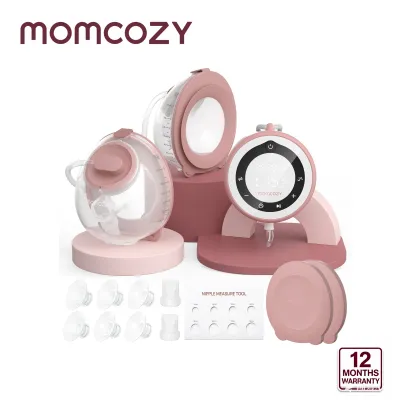
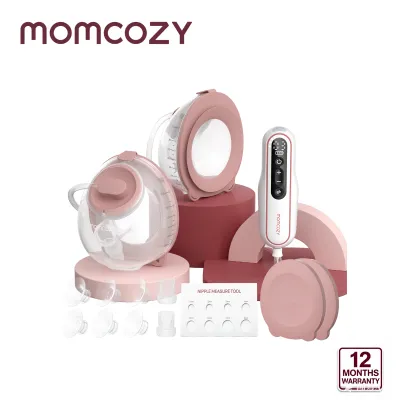
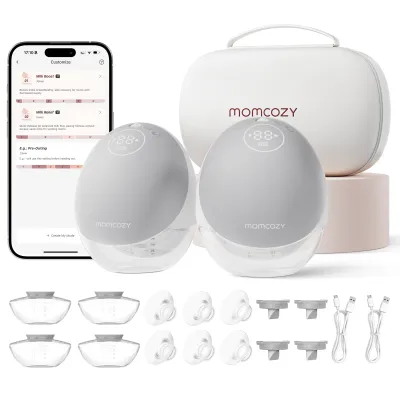
Prices are valid at publication and may change. Please refer to the product page for the latest price.
To ensure a discreet fit, compare the physical dimensions and weight of each unit against the style of nursing bras you plan to wear. A bulkier motor may require a more supportive, stretchy bra to hold the pump securely against your breast, whereas a compact, integrated design might fit easily into your standard daily wear. If the pump is too heavy or poorly supported, it can slip, breaking the suction seal and leading to leaks or inefficient milk expression.
Proper anatomical fit is also critical for both comfort and milk output. Review the manufacturer’s user manual for the included flange sizes and specific measuring instructions. Using an incorrect flange size can cause friction, pain, and reduced milk flow. Many models come with standard flange sizes but offer separate silicone inserts; verify which sizes are included in the box and whether you need to purchase additional inserts to match your measurements.
Matching the Pump to Your Daily Routine and Environment
Your daily schedule and pumping frequency should dictate the battery capacity and portability features you prioritize. If you are an exclusive pumper, you will require a robust battery that can handle multiple sessions throughout the day without needing a charge. For occasional pumping or relieving engorgement between direct breastfeeding sessions, a model with a standard battery capacity may be perfectly adequate. Always check the manufacturer’s specified battery life, charging times, and whether the unit supports USB-C or power bank charging to ensure it matches your mobility needs. If you frequently commute or travel, having a pump that can charge quickly via a standard car adapter or portable power bank can prevent stressful situations when your battery runs low.

The environment in which you plan to pump also plays a major role in your decision. If you intend to express milk in a shared office, during virtual meetings, or in public spaces, noise level is a critical factor. Review the manufacturer’s stated decibel ratings for each model, keeping in mind that actual noise can vary based on the suction level used. Additionally, consider the carrying options, such as protective travel cases or storage bags, that are included or available for purchase to keep the components clean and organized while on the move.
In warm, humid climates, such as in Singapore, wearability and comfort against the skin are even more important. Sweat can affect how well the silicone flange adheres to your skin, making a secure fit and lightweight design essential. Checking how each model handles humidity and whether the motor unit is easily detachable for cleaning can help you maintain hygiene in tropical conditions.
Evaluating Comfort, Suction Controls, and Cleaning Requirements
Comfort during pumping is highly subjective and depends on the customization options available. Review the product specifications for the Momcozy M5, M6, and S12 to compare the number of suction levels, massage modes, and mixed modes offered. A pump with a wider variety of settings allows you to mimic your baby’s natural nursing pattern more closely, helping to stimulate let-down and maintain comfortable milk expression. Check the user manuals to see how easy it is to toggle between these modes using the on-pump buttons or digital displays. Some users prefer physical buttons that can be operated by feel under clothing, while others prefer a bright digital screen that clearly displays the active mode and elapsed time.
Hygiene and maintenance are equally vital for your baby’s health and your own convenience. Before purchasing, examine the cleaning instructions for the milk-contact parts of each model. Verify the manufacturer’s guidelines regarding dishwasher-safe limits, boiling water sterilization, or steam sterilization. Some silicone parts may degrade faster if exposed to high heat or specific chemical sterilizers, so understanding these limits beforehand will help you preserve the life of your pump parts.
While adjusting settings can optimize your experience, physical safety must always come first. If you experience nipple pain, blanching, bruising, or tissue damage while using any of these models, stop using the device immediately. These symptoms indicate an incorrect fit or excessive suction, and you should consult a certified lactation consultant or healthcare provider to address the issue before resuming use.
Assessing the Budget and Long-Term Replacement Costs
The initial purchase price is only one part of the financial commitment when buying a breast pump. To evaluate the upfront cost, compare current retail prices across authorized online stores, local pharmacy chains, or the official brand website. Keep in mind that prices may vary based on promotions, bundle deals, or seasonal sales, so checking multiple authorized platforms is recommended. In Singapore, you might also want to compare prices across local authorized distributors to see if they offer local warranty coverage, which can save you shipping costs and hassle if you ever need a replacement unit.
Beyond the initial purchase, you must factor in the ongoing cost of consumable replacement parts. Silicone valves, duckbill membranes, diaphragms, and flanges wear out over time due to regular use and cleaning, which directly impacts suction efficiency. Check the availability and pricing of these replacement components for the M5, M6, and S12 models on authorized online marketplaces. Choosing a model with widely available and affordable replacement parts can significantly lower your long-term maintenance costs.
Additionally, investigate whether you can offset these costs through financial assistance. Check with your health insurance provider, flexible spending accounts, or local health subsidies to see if breast pumps and their accessories are covered under your plan. In many cases, reimbursement or direct coverage requires a medical prescription and purchase from an authorized medical supplier rather than a general retail store, so verify these requirements beforehand.
Final Decision Framework: Which Model Should You Choose?
To finalize your decision, use the following framework based on your verified specifications and personal lifestyle:
- Choose the Momcozy M5 if you prioritize a highly discreet, lightweight, and integrated design that fits easily under standard clothing for pumping on the go, and you are comfortable with its specific suction mode configurations.
- Choose the Momcozy M6 if your routine requires a balance of updated suction technology, specific comfort modes, and you prefer a design that offers a distinct balance of wearability and control interface.
- Choose the Momcozy S12 if you want a reliable, budget-friendly option with a clear digital display for easy tracking of your pumping time and suction levels, and you do not mind a slightly more prominent physical profile.
Before making your purchase, verify your exact flange size using a measuring tool, as an accurate fit is essential for comfort and milk expression. Read recent user reviews on independent forums to gather real-world feedback on noise levels and battery durability, and carefully review the return and warranty policies of your chosen retailer to protect your investment.
Frequently Asked Questions (FAQ)
Can I use the same flanges and parts across the M5, M6, and S12?
You should not assume that parts are interchangeable between different models. Always check the official compatibility chart provided by the manufacturer or contact customer support before attempting to mix parts like flanges, diaphragms, or valves between the M5, M6, and S12. Using mismatched or unofficial parts can compromise the suction seal, reduce pumping efficiency, void your product warranty, or lead to milk backflow and contamination.
Are these specific models covered by insurance or local health subsidies?
Coverage for wearable breast pumps varies widely depending on your specific health insurance policy or local health authority guidelines. To find out if the M5, M6, or S12 is eligible, contact your insurance provider or check the approved medical device lists in your region. Keep in mind that many insurance plans require a prescription from a doctor or lactation consultant and may only cover purchases made through authorized medical equipment suppliers rather than general ecommerce platforms.
Community discussion
Share your experience or ask a question. Comments are reviewed before publication.