
Selecting a wearable breast pump in Singapore requires balancing convenience, comfort, and performance to match your daily routine. The Momcozy Air 1 has emerged as a popular option for mothers seeking a hands-free pumping experience, but determining how it compares to other wearable pumps on the market involves looking closely at verifiable technical specifications. Because every mother’s lactation journey and anatomy are unique, a pump that works perfectly for one person may not suit another. By evaluating key factors such as suction modes, flange sizing, battery life, and local warranty support, you can make an informed decision that supports your breastfeeding goals.
Understanding the Momcozy Air 1: Core Features to Verify
To establish a reliable baseline for comparison, you must first examine the official specifications of the Momcozy Air 1. Start by checking the manufacturer’s documentation for the motor type and physical weight of the pump. Wearable pumps generally house the motor directly on top of the collection cup, which eliminates external tubing but adds weight to the breast. Verifying the exact weight of the motor unit and cup assembly helps you estimate how much support your nursing bra will need to provide during a session.
Next, look at the milk collection capacity of the cup. Most wearable pumps hold between 120 ml and 180 ml of milk per cup, but you should verify the exact volume limits listed in the product manual to prevent overfilling and potential backflow into the motor. Additionally, check the design form factor of the unit. Some wearable pumps feature an all-in-one design where the motor is integrated seamlessly into the cup’s silhouette, while others use a split design with a separate motor unit that clips onto your waistband or slips into a pocket. The integration level directly impacts how discreetly the pump fits under standard clothing.
Products mentioned in this guide

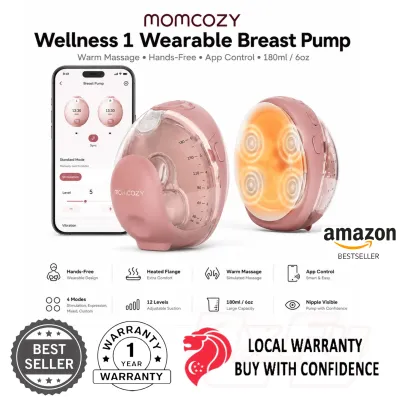
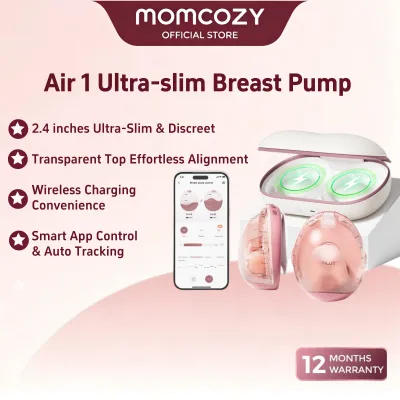
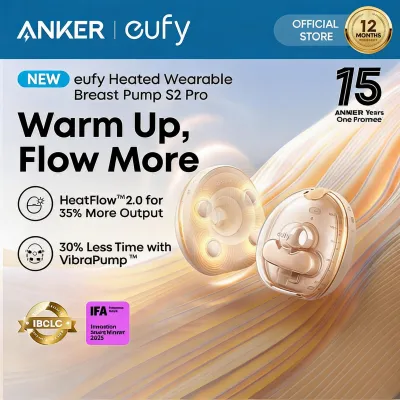
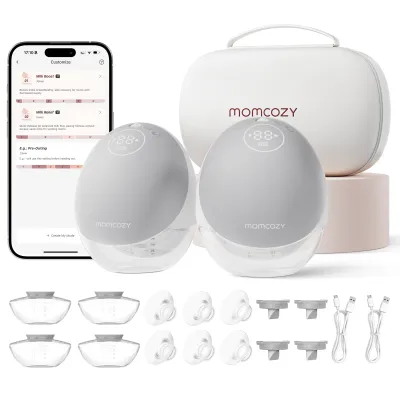
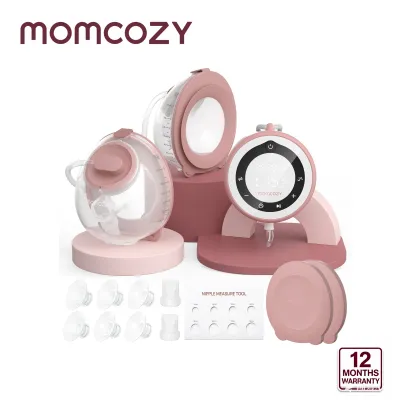
Prices are valid at publication and may change. Please refer to the product page for the latest price.
Finally, pay close attention to the included flange sizes and compatibility with sizing inserts. The Momcozy Air 1 typically ships with a standard flange size, but the manufacturer often provides or supports smaller silicone inserts to customize the fit. Before purchasing, verify which sizes are included in the box and whether additional sizes must be bought separately. Using an incorrect flange size can lead to discomfort, reduced milk expression, and tissue damage, making this one of the most critical initial checks.
Key Comparison Dimensions for Wearable Breast Pumps
When comparing the Momcozy Air 1 to other wearable breast pumps available in Singapore, relying on a structured evaluation framework ensures you do not overlook critical details. By analyzing verifiable product labels, user manuals, and technical specifications, you can objectively assess how different models perform across key operational categories.

Suction Performance and Pumping Modes
Suction performance is a primary factor in how effectively a breast pump can express milk. When reviewing the Momcozy Air 1 and its competitors, check the maximum suction pressure, which is typically measured in millimeters of mercury (mmHg). While higher suction does not automatically equate to more milk, having a wide range of adjustment allows you to find a comfortable and effective setting. You should also verify the number of available modes and intensity levels on each device.
Most modern wearable pumps offer at least two distinct operational modes: a stimulation (or let-down) mode and an expression mode. Stimulation mode uses fast, shallow cycles to mimic a baby’s initial rapid sucking, which triggers the milk ejection reflex. Expression mode uses slower, deeper cycles to draw out milk efficiently once it begins to flow. Some advanced pumps also feature a mixed or dual-rhythm mode that alternates between the two.
When comparing models, check whether the pump allows you to adjust the suction strength and the cycle speed independently. Many entry-level wearable pumps link these two settings together, meaning that increasing the suction automatically slows down the cycle. If you require precise control to mimic your baby’s specific feeding patterns, look for models that offer independent adjustments in their technical specifications.
Flange Sizing, Fit, and Comfort
Physical comfort is directly linked to your body’s ability to release milk, making the fit of the pump flange highly critical. Before purchasing any wearable breast pump, you must measure your nipple diameter to determine your correct flange size. This measurement should be taken at the base of the nipple, excluding the areola, and is best done after a pumping or nursing session when the tissue is fully stimulated.
Compare the availability of different flange sizes and silicone insert options across competing brands. Some manufacturers offer a wide range of tunnel sizes (such as 17mm, 19mm, 21mm, 24mm, and 27mm), while others only provide one or two standard sizes, requiring you to source third-party inserts. Ensure that the brand you choose offers a clear path to obtaining the exact size you need, as a poor fit can cause friction, swelling, and blocked milk ducts.
Additionally, verify the material composition of the parts that come into contact with your skin and milk. Look for product packaging that explicitly states the use of food-grade silicone and BPA-free plastics. Some premium wearable pumps utilize double-sealed silicone flanges designed to conform more naturally to the breast shape, which can improve the vacuum seal and reduce pressure points compared to rigid plastic flanges.
Portability, Battery Life, and Noise Levels
For mothers pumping on the go or returning to work in Singapore, portability and discretion are essential. Begin by verifying the battery capacity and the estimated number of pumping sessions you can expect from a single full charge. Most manufacturers specify battery life in terms of total operating minutes or a set number of 20-minute sessions. You should also check the charging port type; a standard USB-C port offers greater convenience as it allows you to use common phone chargers or power banks.
The physical footprint and weight of the pump inside your bra will determine how easily you can move around while wearing it. Compare the dimensions of the Momcozy Air 1 against alternative models to see how far they protrude from the chest. A lower-profile design is generally easier to conceal under professional attire or casual clothing.
Discretion also depends heavily on operational noise. Check the manufacturer’s technical specifications for a decibel (dB) rating, or look for verified descriptions of the motor’s sound profile. A pump that operates quietly is crucial if you plan to express milk during office meetings, in public transit, or next to a sleeping baby. Keep in mind that actual noise levels can vary depending on the suction intensity setting you select.
Matching Pump Specifications to Your Pumping Lifestyle
To choose the right wearable breast pump, you must align the technical specifications of the Momcozy Air 1 and its competitors with your daily routine and lactation needs. There is no single pump that is perfect for every situation, so your decision should be guided by how and where you plan to use the device most frequently.
If your primary goal is occasional use—such as pumping during a quick outing, running errands around Singapore, or managing an occasional missed feed—you may want to prioritize a lightweight, highly discreet pump. In these scenarios, a compact design with a slightly smaller milk capacity and moderate suction settings is often sufficient. The convenience of a pump that fits easily into a standard handbag and does not feel heavy in your bra can outweigh the need for advanced programming or maximum suction power.
Conversely, if you are an exclusive pumper, returning to a demanding full-time job, or working to build a low milk supply, your requirements will be different. You will likely need a pump that offers robust suction levels, a larger collection capacity, and a highly durable motor capable of handling multiple sessions every day. In this case, you should look for models that feature advanced customizable cycles and long battery lives, even if the units themselves are slightly bulkier or heavier.
To summarize your options based on verifiable specifications:
- Consider the Momcozy Air 1 or similar models if: You prioritize a balance of standard suction modes, a lightweight integrated motor design, and a widely compatible flange system that can be easily customized with standard silicone inserts for daily, flexible use.
- Consider alternative wearable pumps if: You require specialized features such as app-controlled tracking, independent cycle speed adjustments, ultra-low decibel ratings for highly quiet environments, or a split-motor design that minimizes the weight carried directly on the breast.
If you experience persistent discomfort, low milk output, or physical pain while using any breast pump, stop using the device immediately. It is highly recommended to consult a certified lactation consultant or a healthcare professional to evaluate your fit and pumping technique.
Verifying Authenticity and Purchasing Safely in Singapore
When buying a wearable breast pump in Singapore, ensuring you receive a genuine, safe product is paramount for both your health and your baby’s safety. Always purchase your pump from the official brand website, authorized physical maternity stores, or verified official flagship stores on major e-commerce platforms. Buying from these channels guarantees that the materials used in the pump are authentic, food-grade, and free from harmful chemical contaminants.
Be highly cautious of unauthorized third-party sellers on online marketplaces offering the Momcozy Air 1 or competing models at prices that seem unusually low. These heavily discounted units may be counterfeit, refurbished, or older models that do not meet current safety standards. Counterfeit pumps may use substandard plastics that leach chemicals into your milk, or they may feature faulty electrical components that pose a safety hazard.
Furthermore, purchasing through official channels ensures you have access to local warranty coverage and customer support. Check the specific warranty terms before buying, as many manufacturers do not honor warranties for products purchased from unauthorized parallel importers. A local warranty is invaluable if the motor experiences a technical fault. Additionally, verify the ongoing availability of replacement parts, such as silicone valves, duckbills, and diaphragms, in the Singapore market. Regular access to these consumable parts is essential for maintaining the pump’s suction efficiency over time.
Frequently Asked Questions (FAQ)
Can I use a wearable breast pump while lying down?
Generally, wearable breast pumps are designed to be used in an upright or slightly reclined position. Because they rely on gravity to direct the expressed milk into the collection cup, lying down flat can cause milk to leak out of the flange tunnel or flow backward into the motor assembly, potentially causing permanent damage. You should always consult the specific user manual for the Momcozy Air 1 or any competing model to find the maximum allowable tilt angle. To prevent spills, avoid bending over completely or lying down while the pump is active.
How often should I replace the wearable pump parts?
The consumable silicone parts of a wearable breast pump, such as the duckbill valves, silicone diaphragms, and flange inserts, wear out over time due to regular use, washing, and sterilization. When these parts lose their elasticity or develop micro-tears, the pump’s suction performance will decrease significantly. As a general guideline, duckbill valves should be inspected and typically replaced every one to three months, while diaphragms and inserts may last three to six months depending on your pumping frequency. Always inspect your pump parts visually before each use and replace them immediately if you notice any warping, tearing, or a drop in suction.

Community discussion
Share your experience or ask a question. Comments are reviewed before publication.