
Choosing between Mom Cozy and competing breast pump brands depends entirely on your specific daily routine, mobility needs, and comfort preferences. Mom Cozy and similar wearable models generally appeal to mothers prioritizing hands-free portability and discretion, while traditional bilateral or hospital-grade competitors often suit those needing highly customizable, high-volume extraction at a fixed station. There is no single winner; the best choice is the one that aligns with your current lactation goals and physical comfort. Always verify current manufacturer specifications and local availability before purchasing.
Identifying Your Daily Pumping Baseline
Before comparing specific features, you must establish your personal pumping baseline. This involves assessing where, how often, and for how long you will need to pump each day. For instance, a mother returning to a fast-paced office environment in Singapore’s central business district will have vastly different requirements than a mother who primarily cares for her infant at home. Consider your daily commute, whether by public transit or private vehicle, and the availability of private nursing rooms or power outlets at your workplace.
Your pumping frequency also dictates the type of machine you require. If you are exclusively pumping or need to express milk six to eight times a day to maintain your supply, durability and motor efficiency become paramount. Conversely, if you only pump occasionally to relieve engorgement or to prepare an occasional bottle, a lighter, more portable system may suffice. Additionally, take note of your physical sensitivities. Some individuals have highly sensitive breast tissue or elastic skin, which requires precise flange sizing and gentle suction patterns to prevent discomfort or injury. Understanding these personal variables first ensures you do not select a pump based solely on popularity.
Products mentioned in this guide
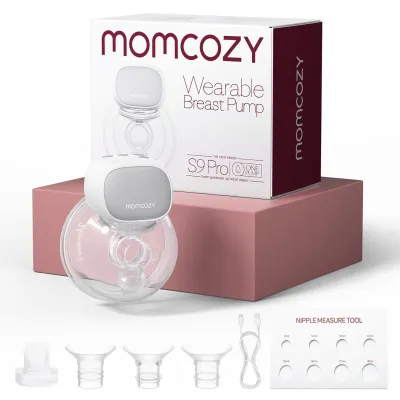
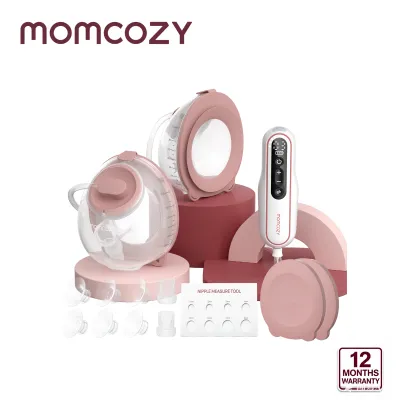
Prices are valid at publication and may change. Please refer to the product page for the latest price.
Comparing Suction Patterns and Comfort
Suction performance is not merely about maximum pull; it is about how closely a pump mimics a baby’s natural nursing rhythm. When evaluating Mom Cozy against traditional brands, examine the adjustable suction levels and cycle modes detailed in the product manuals. Most modern electric pumps offer at least two phases: a stimulation or massage mode with fast, shallow cycles to trigger letdown, and an expression mode with slower, deeper cycles to draw out milk. Some advanced models also include mixed modes that combine these patterns.

Look closely at the technical specifications for the vacuum range, typically measured in millimeters of mercury (mmHg). While some brands highlight high maximum suction, a wider range of adjustable levels is generally more beneficial. This allows you to fine-tune the settings to your comfort level on any given day. If the suction is too intense, it can cause micro-tears in the nipple tissue, leading to pain and a subsequent drop in milk supply. Prioritize brands that offer fine-tuned, incremental adjustments rather than a few fixed, high-intensity settings.
Flange design is another critical factor in the comfort equation. Traditional pumps often use rigid plastic flanges, though many now offer silicone rims or full silicone cups. Wearable pumps like Mom Cozy typically utilize soft silicone cups that sit directly inside your bra. Silicone tends to feel warmer and more natural against the skin, which can aid in relaxation and letdown. However, you must verify that the brand you choose offers the correct flange size or compatible inserts for your specific measurements, as an ill-fitting flange will compromise both comfort and milk expression.
Portability, Noise, and Routine Integration
The physical footprint of your breast pump directly influences how easily you can integrate it into your daily routine. Wearable, hands-free designs consolidate the motor, battery, and collection cup into a single unit that fits entirely inside a standard nursing bra. This eliminates external tubing and dangling bottles, allowing you to move around, attend to your baby, or work at your desk while expressing milk.
In contrast, traditional bilateral or hospital-grade setups utilize a separate, larger motor unit connected to the breast shields via silicone tubing. While these systems are less portable and require you to remain relatively stationary, they often feature more robust motors that can handle frequent, heavy-use sessions. For mothers who pump primarily at a dedicated desk or at home, the lack of mobility may be a reasonable trade-off for faster, more efficient milk extraction.
Discretion is another key consideration, particularly when pumping in shared offices or public spaces. Check the manufacturer’s specifications for motor noise, usually measured in decibels (dB). Wearable pumps are designed to operate quietly, often producing a low hum that is easily masked by ambient office noise or air conditioning. Finally, evaluate the battery life and charging mechanisms. USB-C charging compatibility is highly convenient for Singaporean mothers, as it allows you to recharge your pump using standard phone chargers, power banks, or laptop ports during your daily commute.
Cleaning, Maintenance, and Replacement Parts
The ease of maintaining your breast pump can make or break your long-term breastfeeding journey. Every pump consists of multiple components—such as valves, membranes, diaphragms, and collection cups—that must be disassembled, washed, and sanitized after every use. Wearable pumps often have compact, uniquely shaped parts designed to fit within the bra cup, which can sometimes be more intricate to clean by hand compared to the straightforward, open shapes of traditional pump parts.
Before committing to a brand, research the local availability and cost of replacement parts in S$. Silicone components like valves and diaphragms are wear-and-tear items that stretch and degrade over time, requiring replacement every few weeks or months to maintain optimal suction. Ensure you can easily purchase these parts from reputable local distributors or online marketplaces in Singapore to avoid long shipping delays that could disrupt your pumping schedule.
Always consult the official user manual to verify the sanitizing compatibility of your pump parts. Singapore’s warm, humid climate makes thorough drying and proper sterilization essential to prevent mold and bacterial growth. Some materials are compatible with steam sterilizers, UV sterilizers, or boiling water, while others may warp or degrade under high heat. Using incompatible sanitizing methods can void your warranty and compromise the safety of the expressed milk.
Decision Framework: Choosing the Right Brand
To make your final decision, weigh your daily mobility needs against your physiological requirements. A wearable pump like Mom Cozy, or similar hands-free models, is highly suitable if you prioritize multitasking, need to pump discreetly during a commute or at an office desk, and prefer a lightweight, tubeless design. These models excel at keeping you active and mobile throughout the day.
On the other hand, a traditional or hospital-grade pump is the logical choice if you require maximum customizable suction, are working to establish or increase a low milk supply, or prefer highly structured, stationary pumping sessions. These robust systems are often better suited for exclusive pumping routines where efficiency and high-volume extraction are the primary goals.
Regardless of the brand you select, always measure your nipple diameter to ensure a correct flange fit before your first session. Additionally, consider your preferred pumping posture; wearable pumps generally require you to sit relatively upright to prevent leaks, whereas some traditional setups allow for a slightly more relaxed lean. If you experience persistent pain, skin irritation, or a sudden decrease in milk output, stop using the device immediately and consult a certified lactation consultant or healthcare professional.
Frequently Asked Questions (FAQ)
Can I use Mom Cozy and a traditional pump together?
Yes, many mothers successfully use a hybrid approach, utilizing a wearable pump like Mom Cozy for on-the-go convenience, commuting, or multitasking, while relying on a traditional, hospital-grade pump for morning and evening sessions at home. This combination allows you to maximize both mobility and extraction efficiency. If you adopt this method, ensure you maintain separate, clearly labeled sets of parts for each pump to prevent cross-contamination and maintain strict hygiene standards.
How do I know if my flange size is correct across different brands?
To determine your correct flange size, do not rely on your bra size or visual estimation. Use a nipple measuring tool or a standard ruler to measure the diameter of the base of your nipple (excluding the areola) in millimeters, preferably before a pumping session. Add 2mm to 4mm to this measurement to find your starting flange size. Keep in mind that sizing charts and fit guidelines can vary slightly between brands. If you experience friction, pinching, incomplete breast emptying, or pain during or after pumping, stop use and consult a qualified lactation specialist to adjust your setup.
Community discussion
Share your experience or ask a question. Comments are reviewed before publication.