
Quick Answer: Evaluating Minimeis Against Other Ergonomic Carriers
Choosing between the Minimeis shoulder carrier and traditional ergonomic baby carriers depends on your baby’s developmental stage, your physical comfort, and your intended activities. The Minimeis features a unique overhead shoulder-seat design that positions the child above the caregiver’s shoulders, distributing weight down through the spine and hips. Traditional ergonomic carriers, by contrast, secure the baby against the caregiver’s chest or back, keeping the center of gravity closer to the torso.
While the shoulder-carrying design offers an unobstructed view for older infants and toddlers, traditional carriers often provide more comprehensive torso support for younger babies. Before purchasing, caregivers must verify the manufacturer’s official age, weight, and developmental milestones to ensure safe use.
Core Ergonomic Design: Standards for Baby Posture and Seat Fit
When evaluating any baby carrier, the primary consideration must be the child’s physical development and joint alignment. Pediatric orthopedists emphasize the importance of maintaining the “M-shape” position for the baby’s lower extremities. In this position, the baby’s hips are spread wide, the thighs are supported from knee to knee, and the knees are positioned slightly higher than the bottom. This alignment reduces stress on the hip joints, helping to prevent hip dysplasia during crucial growth phases.
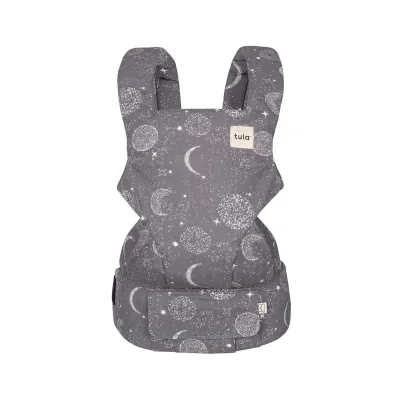
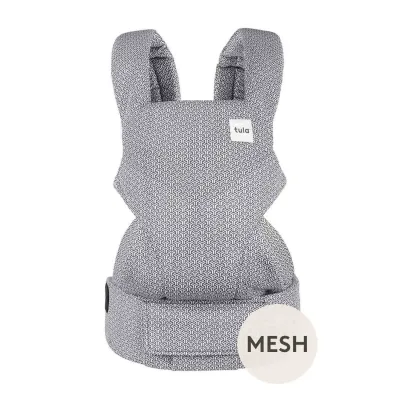
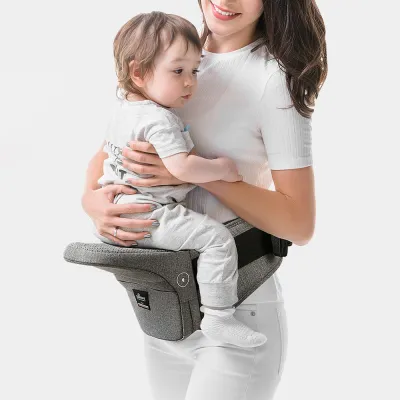
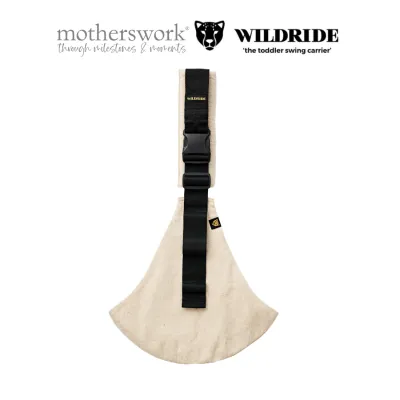
Products mentioned in this guide
![[NEW] Pomulu Baby 2 Way Hip Seat Sling Carrier - Infant Toddler Bag Carry for Mom Parent Ergonomic Adjustable Wrap](https://img.lazcdn.com/g/p/aa7ec53384f07c7fd804fe26330044ca.jpg_400x400q80.jpg_.webp)

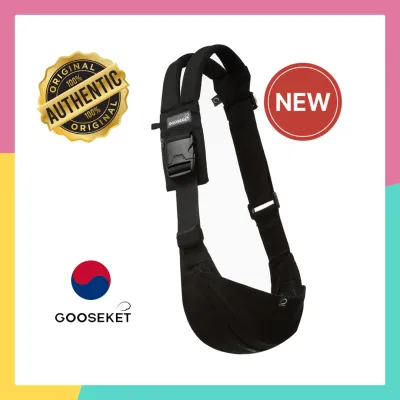
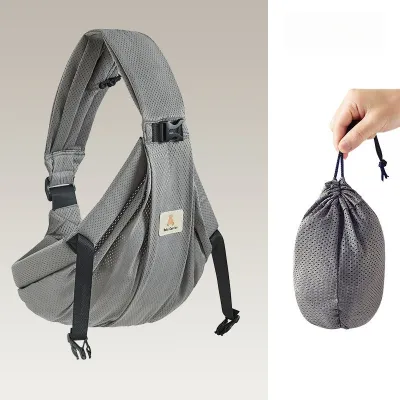
Prices are valid at publication and may change. Please refer to the product page for the latest price.

To assess whether a carrier supports this posture, examine the seat width. A well-designed ergonomic carrier should feature an adjustable seat base that can be widened or narrowed to match the baby’s growth. If the seat is too narrow, the baby’s legs will dangle straight down, placing undue pressure on the hip sockets. Conversely, if the seat is too wide, it may force the baby’s knees into an unnatural stretch or rub against the back of their calves. Caregivers should physically measure the distance from the back of one knee to the other along the baby’s thighs and compare this to the carrier’s seat dimensions.
The baby’s spine also requires specific structural accommodation. Newborns and young infants naturally have a rounded, “C-shape” spine curve. Ergonomic carriers should feature a flexible back panel that supports this natural curvature without forcing the spine into an unnaturally straight position. As the child develops head control and trunk strength, the spine gradually straightens, but the carrier must still allow for comfortable, unforced alignment.
To verify these ergonomic claims, look for official recognitions from independent bodies, such as the International Hip Dysplasia Institute (IHDI). Manufacturers whose designs promote healthy hip development often submit their products for evaluation. You can verify these acknowledgments by checking the official IHDI website or looking for certified labels on the product packaging and user manuals. Avoid relying solely on marketing terms like “ergonomic” without verifying the underlying structural features and independent certifications.
Caregiver and Baby Support: Assessing Straps and Weight Distribution
A carrier’s ergonomic design is just as critical for the caregiver as it is for the baby. Carrying a growing child for extended periods can place significant strain on the shoulders, neck, and lower back. The design of the shoulder straps plays a pivotal role in mitigating this strain. Traditional carriers typically offer two main configurations: cross-back (X-back) straps and parallel (H-back) straps. Cross-back straps distribute weight diagonally across the back muscles, which many caregivers find more comfortable for longer walks. Parallel straps rely heavily on a chest clip to keep the straps from slipping off the shoulders.
When testing a carrier, pay close attention to the padding density of the shoulder straps. High-density foam padding prevents the straps from digging into your collarbones under the baby’s weight. However, excessively bulky padding can restrict arm movement or trap heat, which is a key consideration in warm, humid climates like Singapore’s.
The waistband is another essential component for weight distribution. A wide, rigid waistband acts as a load-bearing belt, transferring a substantial portion of the baby’s weight from the caregiver’s shoulders down to the hips and pelvis. This transfer stabilizes the caregiver’s center of gravity and protects the lumbar spine. Look for waistbands with integrated lumbar support panels or firm foam cores that do not collapse or fold under pressure.
For the baby, head and neck support is paramount, especially during the early months when neck muscles are still developing. Traditional front carriers often include adjustable padded collars, hoods, or structured panels that can be secured to support a sleeping baby’s head. When evaluating shoulder carriers like the Minimeis, note how the design secures the child’s torso and upper body. Because shoulder carriers position the baby upright behind or above your head, they require the child to have fully established head and neck control. Always check the manufacturer’s minimum age and developmental requirements to ensure your child can safely sit in an upright, elevated position without slouching.
Minimeis vs. Competitors: Specification Verification Checklist
To make an informed decision, caregivers should systematically compare the technical specifications of the Minimeis with those of traditional ergonomic carriers. Because product features can vary by model and manufacturing year, verifying these details directly from official user manuals or authorized local distributors is the most reliable approach.
Below is a structured comparison framework designed to help you organize your research. You can use this template to record and verify the specifications of the models you are considering:
| Feature | Minimeis Shoulder Carrier | Traditional Ergonomic Carriers |
|---|---|---|
| Carrying Positions | Overhead shoulder carrying (forward-facing) | Front-inward, front-outward, back, hip carrying |
| Minimum Age/Development | Typically requires independent sitting (approx. 6 months) | Newborn (often with insert) to toddlerhood |
| Weight Range | Check official manual for exact limits (typically up to 18kg) | Check official manual (typically 3.2kg to 20kg) |
| Material & Breathability | Mesh panels, lightweight textile harness | Cotton, canvas, or 3D mesh variants |
| Storage & Portability | Foldable frame, compact flat-pack design | Soft structure, rolls up or packs into a diaper bag |
When researching these specifications, visit the official Minimeis website and compare it with the documentation of popular ergonomic brands available in Singapore. Pay close attention to the material composition; in tropical climates, highly breathable 3D mesh fabrics are generally preferred to prevent both caregiver and baby from overheating.
Additionally, verify the local warranty terms and return policies. Purchasing through authorized local retailers ensures access to customer support and genuine replacement parts if needed. Some retailers may also offer trial periods or in-store fittings, which are invaluable for testing how the carrier fits your specific body shape before committing to the purchase.
Decision Framework: Choosing the Right Carrier for Your Family
Selecting the right carrier ultimately depends on your lifestyle, your baby’s age, and your physical comfort preferences. Use the following guidelines to help narrow down your choice based on verifiable design features.
Choose Minimeis if…
- Your child has achieved full head, neck, and trunk control (typically from 6 months onward) and enjoys an elevated, panoramic view during outdoor walks.
- You prioritize an active lifestyle, such as hiking, visiting theme parks, or walking through crowded urban spaces where a stroller is impractical.
- You prefer a design that distributes the child's weight directly down through your shoulders and spine rather than pulling forward on your chest or lower back.
- You require a highly portable carrier that folds flat for easy storage in a backpack or travel luggage.
Choose alternative ergonomic brands if…
- You need a carrier suitable for a newborn or young infant who requires close physical contact and specialized head and neck support.
- You prefer multiple carrying positions, such as front-inward carrying for nursing or back-carrying for extended periods.
- You require advanced lumbar support structures, such as thick, padded waistbelts designed to relieve lower back strain during long carrying sessions.
- You want a soft-structured carrier that conforms closely to your body shape and allows the baby to sleep comfortably against your chest.
Verify first if…
- You can visit a local boutique or baby gear showroom in Singapore to try on the carriers with your child. This allows you to test the strap adjustments and feel the weight distribution firsthand.
- You check the return policy of the retailer to ensure you can exchange the carrier if it does not fit comfortably during initial home use.
- You consult your pediatrician or a pediatric physiotherapist if your baby has any pre-existing hip, spine, or developmental concerns before introducing a new carrying style.
Frequently Asked Questions (FAQ)
Can I use an ergonomic carrier for a newborn without an infant insert?
Whether you can use an ergonomic carrier for a newborn without an insert depends entirely on the specific model’s design. Newborns require precise head, neck, and hip support to keep their airways clear and their joints properly aligned. Some modern carriers feature adjustable panels that narrow sufficiently to support a newborn safely from birth. Other models require a separate, structured infant insert to elevate the baby and support their spine. Always consult the manufacturer’s instruction manual to verify the minimum weight limit and whether an insert is mandatory for safe newborn use.
How do I know if the baby carrier is causing me back pain?
If you experience localized discomfort, such as shoulder digging, upper back tension, or lower back aching within fifteen to twenty minutes of carrying, your carrier may be poorly adjusted or unsuitable for your body type. Poor weight distribution often causes the caregiver to lean forward or arch their back to compensate for the baby’s weight. To resolve this, try tightening the waistband higher up on your hips to transfer the load away from your shoulders. Ensure the shoulder straps are snug and the chest clip is positioned at mid-back level to keep the straps securely aligned.

Community discussion
Share your experience or ask a question. Comments are reviewed before publication.