
When evaluating child car safety options, the Mifold booster seat represents a fundamental shift from traditional booster design. While conventional boosters lift a child up to meet the vehicle’s adult seatbelt, this compact alternative works by pulling the seatbelt down to fit the child’s smaller frame. This design difference makes it highly portable, but choosing between them requires understanding how these distinct mechanisms perform in daily scenarios.
Understanding the Mifold Concept: Grab-and-Go vs. Traditional Boosters
Traditional booster seats are typically large, semi-permanent fixtures in a vehicle. Whether they are high-back models with built-in headrests or simple backless cushions, their primary function is to elevate the child. By raising the child’s seating position, the vehicle’s standard three-point seatbelt can align correctly across the shoulder and hips. This design provides excellent comfort and positioning but makes transferring the seat between vehicles cumbersome.
In contrast, the Mifold is designed as a grab-and-go solution. Instead of adding height, it rests flat on the vehicle seat. The child sits directly on the slim base, and the seat’s adjustable guides pull the vehicle’s lap belt and shoulder strap down to secure the child safely. This alternative approach eliminates the bulk of traditional foam and plastic boosters.
Products mentioned in this guide
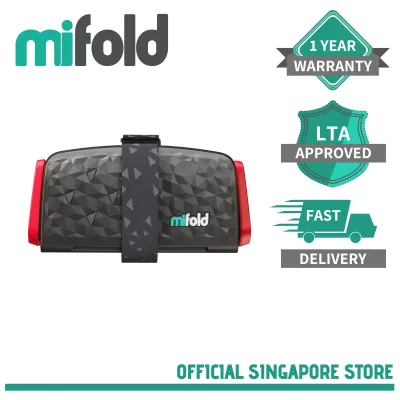
Prices are valid at publication and may change. Please refer to the product page for the latest price.
This compact design is particularly useful for families navigating urban environments where private car ownership is not the only mode of transport. In cities like Singapore, where families frequently transition between taxis, ride-hailing vehicles, and car-sharing services, carrying a full-sized booster seat is highly impractical. A pocket-sized booster allows parents to maintain safety standards during spontaneous trips without carrying bulky gear.
Key Mifold Specifications and What They Mean for Daily Use
The physical specifications of this portable booster directly influence how it integrates into your daily routine. Its primary appeal lies in its foldability. When folded, the unit is small enough to slip into a child’s school backpack, a handbag, or the vehicle’s glove compartment. This level of storage means a child can carry their own safety restraint to school for afternoon carpools or playdates.

The core of this design is its seatbelt routing system. It features two side guides that secure the vehicle’s lap belt across the child’s pelvis, preventing it from riding up onto the sensitive abdominal area. Additionally, an adjustable strap extends from the rear of the seat, utilizing a shoulder clip to position the diagonal seatbelt safely across the collarbone rather than the neck. Parents must adjust these guides manually to match the child’s height during setup.
To achieve this level of portability, the seat utilizes a slim, rugged chassis rather than thick foam cushioning. While the materials are engineered for durability and structural integrity, the minimal padding represents a clear trade-off. For short commutes, the thin profile is highly convenient, but children may notice the lack of plush cushioning during extended road trips or long highway drives.
Mifold vs. Traditional Boosters: Matching the Seat to Your Travel Needs
Deciding between a portable booster and a traditional seat requires weighing convenience against long-distance comfort. Traditional high-back boosters offer built-in side-impact protection, energy-absorbing foam, and a supportive headrest that keeps a sleeping child’s head from slumping. The portable booster lacks these structural supports, relying entirely on the vehicle’s own side-impact safety features and seat structure.
Installation methods also differ significantly. Traditional boosters often secure to the vehicle’s chassis using ISOFIX or LATCH connectors, keeping the seat stable even when unoccupied. The Mifold does not semi-permanently install; instead, it is placed on the seat, and the vehicle’s seatbelt is routed through its guides each time the child buckles in. This makes it incredibly fast to pack away but requires active adjustment every single trip.
For daily school runs in a primary family vehicle, a traditional high-back or backless booster remains the practical choice for long-term comfort and ease of use. However, the portable booster excels in secondary scenarios. It is ideal for holiday travel, rental cars, unexpected taxi rides, or accommodating three passengers across the back seat where space is extremely limited.
Safety Standards and Fit Checks: What to Verify Before Use
Before using any child restraint, parents must verify that the product meets both manufacturer specifications and local legal requirements. Always check the physical labels printed directly on the underside of the booster seat. These labels specify the exact weight, height, and age limits required for safe operation, which can vary depending on the specific model version you own.
In Singapore, traffic regulations dictate that anyone under 1.35 metres in height must use an approved child restraint appropriate for their height and weight. When purchasing a portable booster, verify that it carries an approved certification label, such as the UN ECE R44/04 or R129 standard, which are recognized by local transport authorities. Using an unapproved or counterfeit seat can compromise safety and violate local traffic laws.
To ensure a proper fit during use, perform a quick visual check once the child is buckled in. The lap belt must sit low across the hips, touching the thighs, and never across the soft stomach. The shoulder strap must cross the middle of the child’s shoulder and collarbone, without slipping off the arm or rubbing against the neck. If the belt cannot be adjusted to fit these parameters, the child is not yet ready to use this style of booster.
Frequently Asked Questions (FAQ)
Is the Mifold booster seat approved for use on airplanes?
Generally, booster seats of any kind cannot be used during takeoff, landing, or taxiing on commercial flights because aircraft seats only feature lap belts, whereas boosters require a three-point lap-and-shoulder belt to function. However, its compact size makes it an excellent carry-on item that you can store in the overhead compartment, ensuring you have a certified restraint ready the moment you land and board a taxi.
How do I know if my child has outgrown the Mifold seat?
A child has outgrown the booster when they exceed the maximum weight or height limits specified on the manufacturer’s label. Additionally, they are ready to transition to the vehicle’s seatbelt alone when they can sit all the way back against the vehicle seat with their knees bending comfortably over the edge, and the seatbelt naturally aligns across their collarbone and hips without the aid of any guides.
Community discussion
Share your experience or ask a question. Comments are reviewed before publication.