
Choosing the right pants diaper for your growing baby is a milestone that directly impacts their daily comfort and your peace of mind. As infants transition into Size L, they typically become much more active, rolling, crawling, or taking their first steps. This increased mobility demands a diaper that not only absorbs moisture effectively but also moves seamlessly with their body. Among premium diaper options, Japanese brands like Merries and Moony are highly favored by parents for their exceptional softness and advanced engineering.
However, determining which of these two brands is better for your baby is not a matter of finding a universal winner. Because every baby has a unique body shape, skin sensitivity level, and urination pattern, the ideal diaper varies from one infant to another. A diaper that keeps one baby dry overnight might cause leaks or red marks on another. Therefore, the best approach is to evaluate how each brand’s specific design features align with your baby’s physical needs and daily routines.
In Singapore’s warm and humid climate, factors like breathability and skin dryness become even more critical. High humidity can trap moisture inside a diaper, increasing the risk of diaper rash and skin irritation. By understanding how to assess fit, absorbency, breathability, and flexibility, you can make an informed decision that keeps your baby comfortable and dry throughout the day and night.
Products mentioned in this guide
![[LIMITED EDITION] Merries GIANT PANTS L54 x 3 packs](https://img.lazcdn.com/g/ff/kf/S00c74cba66d14c6abc99259f5df06b7fQ.jpg_400x400q80.jpg_.webp)
![[NEW] Merries Ultra Jumbo Pants Diapers L (54s x 3 Packs)](https://img.lazcdn.com/g/p/a946667aef44479eb0fab5c49c634100.jpg_400x400q80.jpg_.webp)
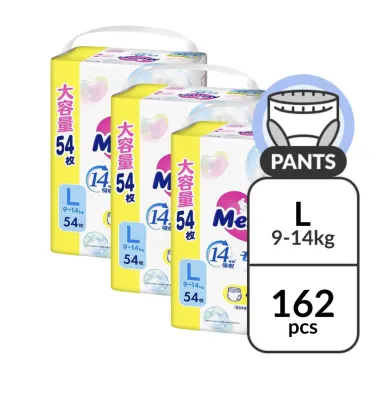
![[1 Carton] Merries Walker Pants Large 54s x 3 packs (9-14 kg)](https://img.lazcdn.com/g/p/b319871e204bbd8e0aa65e3589483d4a.jpg_400x400q80.jpg_.webp)
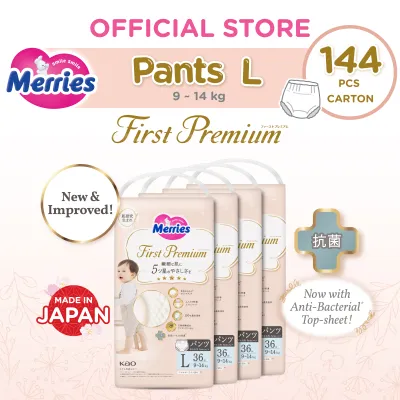
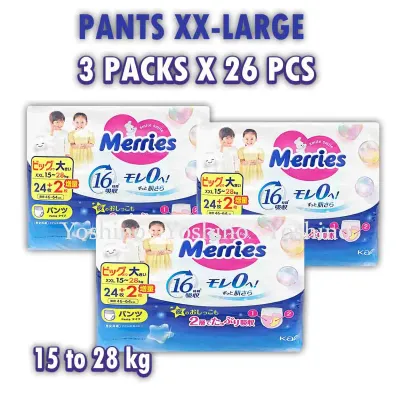
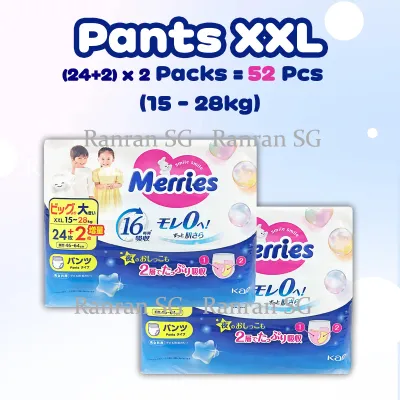
Prices are valid at publication and may change. Please refer to the product page for the latest price.
Understanding Size L Fit: Weight Ranges and Body Shapes
To begin your evaluation, you must first verify if Size L is indeed the correct size for your baby. Both Merries and Moony print recommended weight ranges on their packaging, which typically cover babies weighing between 9 and 14 kilograms. However, these weight ranges are general guidelines rather than absolute rules. It is common for babies near the lower or upper limits of this range to experience fit issues depending on their physical development.
Caregivers should closely observe physical signs of a poor fit during daily changes. If you notice red elastic marks around your baby’s thighs, waist, or hips, the diaper is likely too tight, even if their weight falls well within the recommended range. Frequent leaks, especially around the legs or back, can also indicate that the diaper is either too small or that the cut does not suit your baby’s current body shape.
Babies naturally develop different body shapes as they grow. Some infants have rounder tummies and chunky thighs, while others have a more slender build with a longer torso. Merries and Moony design their pants diapers with slightly different cuts to accommodate these variations. For instance, one brand may feature a higher waist rise that sits securely above the belly button, while another might offer a wider crotch area to provide more coverage for babies with thicker thighs.
When fitting a pants diaper, ensure that the waistband sits comfortably around your baby’s midsection without digging in. The diaper should fully cover the buttocks and remain symmetrical from front to back. If you find yourself constantly pulling the diaper up or adjusting the sides, the cut may not be compatible with your baby’s unique proportions, suggesting a need to try an alternative brand’s design.
Comparing Absorbency and Leak Protection
Absorbency is a primary consideration when choosing a diaper, especially as babies begin to sleep for longer stretches. To evaluate absorbency, parents should start by reviewing the manufacturer’s stated core technology on the product packaging. Japanese diaper brands often utilize advanced polymer sheets or specialized channels designed to distribute liquid evenly and lock it away from the skin.

Your baby’s unique urination patterns should guide your assessment of each brand’s performance. Some babies release a large volume of urine at once, which requires a diaper core that can absorb liquid rapidly to prevent pooling. Other babies wet small amounts frequently, demanding a core that can continuously draw moisture away over several hours. Observing how dry the inner lining feels during a diaper change can give you a clear indication of how well the core is performing.
Daytime and overnight usage present very different demands on a diaper. During the day, frequent changes are common, meaning the diaper does not need to hold maximum capacity for long periods. Overnight, however, the diaper must reliably contain multiple wettings without leaking or leaving the baby’s skin damp. If your baby wakes up with damp pajamas or if the diaper feels heavy and cold to the touch, the absorbency core may be reaching its limit.
Signs of saturation, such as a sagging diaper middle or a gel-like feel through the outer cover, indicate that the diaper has done its job but needs to be changed immediately. If leaks occur consistently during sleep, check that the diaper is applied correctly and that the internal leak guards are fully upright. If leaks persist despite proper application, it may be necessary to evaluate a different brand’s absorbency pattern or consider sizing up.
Evaluating Comfort, Breathability, and Skin Sensitivity
A baby’s skin is incredibly delicate and thin, making it highly susceptible to irritation from trapped moisture and friction. When comparing Merries and Moony, evaluating the softness of the materials and the breathability of the outer cover is essential. Parents should examine the product labels for claims regarding inner lining materials, such as textured sheets or organic fibers, which are designed to minimize direct contact with wetness.
In Singapore’s humid environment, breathability is crucial for maintaining healthy skin. Diapers with high breathability allow hot air and moisture to escape, reducing the humidity level inside the diaper. You can monitor your baby’s skin health by checking for redness, heat rash, or localized dampness immediately after removing a wet diaper. If the skin feels clammy or shows signs of irritation, the diaper may not be ventilating effectively for your baby.
Individual skin tolerance varies greatly from one baby to another. A diaper material that feels incredibly soft to one parent might still trigger a mild reaction in a baby with highly sensitive skin. It is important to note any specific dermatological testing or hypoallergenic claims printed on the packaging. While these labels indicate that the manufacturer has taken steps to minimize irritants, they do not guarantee that a reaction will never occur.
If you observe persistent redness, a bumpy rash, or signs of discomfort that do not improve with regular diaper creams, stop using the current brand immediately. Consult a qualified healthcare professional or pediatrician to rule out allergic contact dermatitis or yeast infections. Always prioritize your baby’s skin comfort over brand loyalty or bulk purchasing convenience.
Checking the Waistband and Leg Cuffs for Active Babies
As babies reach the Size L stage, their physical activity increases dramatically. Whether they are crawling, cruising along furniture, or walking independently, their diaper must offer both flexibility and security. The design of the waistband and leg cuffs plays a vital role in preventing leaks while allowing your baby to move freely without restriction.
Examine the stretchability of the waistband on both brands. A high-quality waistband should stretch easily to accommodate a full tummy after a meal and contract gently as the baby moves. It should feel soft to the touch and leave no deep red indentations on the baby’s skin. If the waistband is too stiff, it can restrict movement or cause friction-induced chafing around the waist.
The leg cuffs are the primary defense against side leaks, which are common when active babies twist and turn. Check the design of the leg gathers to ensure they feature double barriers or outer ruffles. When putting on a pants diaper, caregivers must perform a manual check by running a finger around the inside of the leg bands. This simple step ensures that the ruffles are fully flared outward and not tucked inward, which is a frequent cause of accidental leaks.
Observe how the diaper holds up during active play. A well-designed diaper should stay securely in place without sagging excessively or shifting to one side as it fills. If you notice that the diaper slides down or that the sides tear easily when your baby bends, the waistband and leg cuff design may not be providing adequate support for your baby’s activity level.
How to Decide: A Practical Choice Framework
To make the best decision for your baby, establish a structured framework based on your direct observations rather than relying solely on general recommendations. Every baby’s body and skin chemistry are unique, meaning the final choice should be tailored to how your child responds to each brand during actual wear.
You should choose Merries if your baby’s skin remains consistently dry and free of irritation after wearing it, or if you observe that the specific texture of its inner lining and the stretch of its waistband align perfectly with your baby’s comfort during active play. This brand is often favored when parents prioritize a highly breathable feel that performs exceptionally well in warm, humid conditions.
On the other hand, you should choose Moony if your baby’s physical proportions—such as a slimmer waist or specific thigh shape—align better with its tailored cut, or if you find that its leg cuff design provides more reliable leak protection during high-activity movements. This option is highly suitable if you observe that the diaper’s shape hugs your baby’s body securely without shifting or sagging.
Before committing to a bulk purchase of multiple cartons, always verify your choice by testing small trial packs. You can easily find travel packs or trial sizes containing a few diapers at local supermarkets, baby specialty stores, or online marketplaces in Singapore. Spending a small amount of S$ on a trial pack allows you to test the fit, monitor for skin sensitivity, and evaluate overnight absorbency with minimal financial risk, ensuring you make the perfect choice for your baby.
Frequently Asked Questions (FAQ)
When should I transition my baby from Size L to Size XL?
You should consider transitioning your baby to Size XL when their weight approaches the upper limit printed on the Size L packaging, or when you observe consistent physical indicators of a tight fit. These signs include deep red marks around the thighs or waist, difficulty pulling the diaper up over the baby’s hips, or the waistband sitting significantly below the belly button. Frequent leaks despite correct application and ensuring the leg cuffs are flared outward also suggest that the diaper’s absorbency capacity or physical coverage is no longer sufficient for your growing baby.
Can I mix Merries and Moony diapers for daytime and nighttime use?
Yes, mixing different diaper brands for daytime and nighttime use is a highly practical and cost-effective strategy for many parents. You can utilize a lighter, highly breathable diaper during the daytime hours when changes are frequent and your baby is highly active. For overnight use, you can switch to a diaper that offers a snugger fit around the waist and legs or features a higher absorbency core to ensure your baby remains dry and comfortable throughout uninterrupted sleep. Always verify that both options do not cause skin irritation before establishing this routine.

Community discussion
Share your experience or ask a question. Comments are reviewed before publication.