
Choosing the right OXO spoon for your baby depends entirely on their current developmental stage and feeding skills. For early weaning with smooth purees, a soft-tip spoon with a long handle is ideal for caregiver-led feeding. As your baby transitions to self-feeding, a training spoon with a short, chunky, non-slip handle helps them grip and scoop independently. Finally, for toddlers mastering solid foods, a deeper toddler spoon with firmer materials supports their growing bite strength and coordination. Matching the utensil to your child’s physical cues ensures a smoother, safer transition to solid foods.
Understanding Your Baby's Weaning Stages and Spoon Needs
Introducing solids is a gradual journey that unfolds in distinct phases, each requiring different physical movements from your baby. In the initial phase, babies rely on caregivers to place smooth purees into their mouths. As they grow, they enter a transitional phase where they attempt to grasp the utensil and mimic scooping. The final phase sees toddlers eating family meals independently, using refined hand-eye coordination to feed themselves with minimal assistance.
Your baby’s oral motor skills and hand-eye coordination dictate the physical design of the spoon they need. Early on, a baby’s tongue-thrust reflex is still fading, meaning they require a very shallow spoon bowl that allows them to easily clear food with their upper lip. As their grip transitions from a full-fist palmar grasp to a more precise pincer grasp, the handle of the spoon must evolve from thick and textured to slim and structured.
Products mentioned in this guide
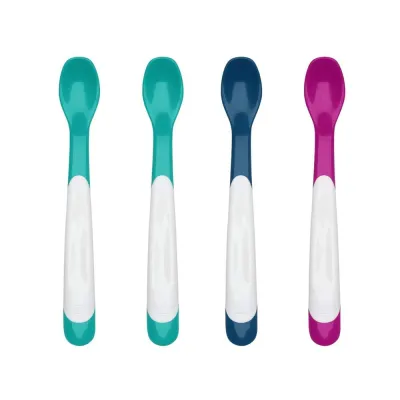
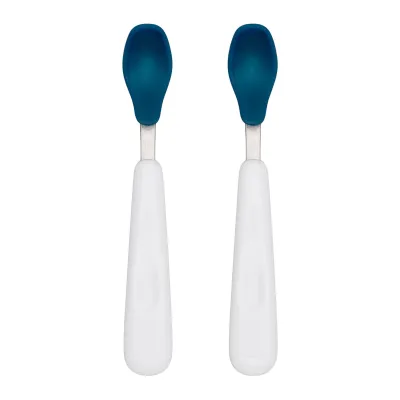
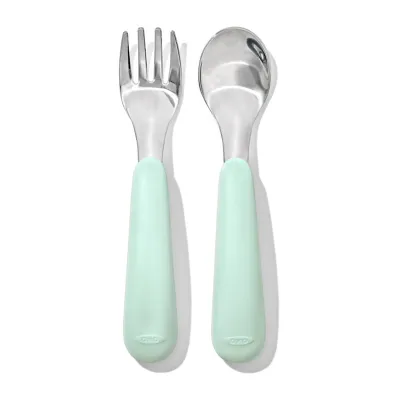
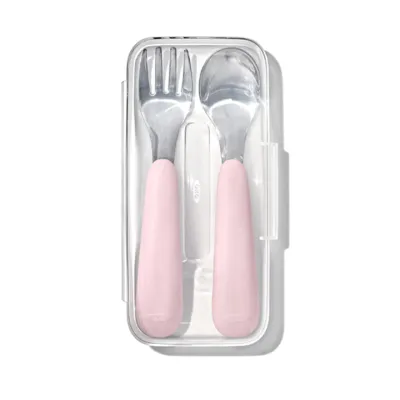
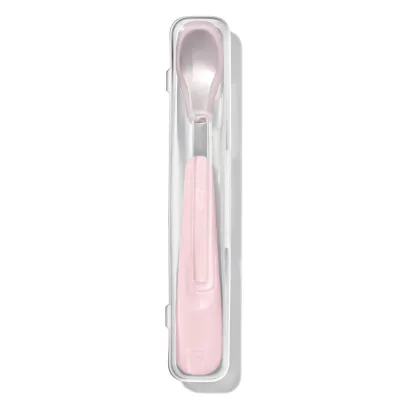
Prices are valid at publication and may change. Please refer to the product page for the latest price.
Before purchasing new utensils, observe your baby’s daily behavior to determine their readiness for the next stage. You can use this checklist of developmental cues to guide your decision:
- Upright Sitting: Your baby can sit in a high chair with little to no support, maintaining steady head control.
- Active Interest: They watch you eat intently, reach for your food, or open their mouth when food is brought near.
- Diminished Tongue-Thrust: They no longer automatically push solid food out of their mouth with their tongue.
- Hand-to-Mouth Coordination: They can easily bring toys, teething rings, or their own hands directly to their mouth.
Early Weaning: Soft-Tip Spoons for Purees and First Tastes
When starting early weaning, the primary goal is introducing new flavors rather than consuming large volumes. Caregiver-led feeding is the standard at this stage, making the spoon’s handle length and bowl depth critical. A long, ergonomically designed handle allows you to navigate deep baby food jars and scrape the bottom of bowls easily, while keeping your hand at a comfortable angle.

At this stage, a baby’s gums are highly sensitive, and emerging teeth can make feeding uncomfortable. It is essential to choose a spoon with a soft silicone tip that cushions contact with tender gums. Before feeding, physically check the spoon’s flexibility by pressing the tip gently; it should bend easily under light pressure but retain enough structural integrity to hold a small portion of smooth puree.
While soft-tip spoons are excellent for early purees, they have distinct limitations as your baby develops. Once your baby begins reaching out, grabbing the handle, or trying to pull the spoon from your hand, a long-handled spoon can become a safety hazard. The long handle acts as a lever, making it easy for a baby to accidentally poke the back of their throat or knock food across the room, signaling that it is time to transition to a self-feeding design.
The Self-Feeding Transition: Training Spoons for Developing Motor Skills
As babies show a desire to feed themselves, they require utensils designed for their limited motor skills. Training spoons feature short, chunky handles that fit naturally into a baby’s small fist. Textured surfaces and contoured grips help prevent the spoon from slipping out of wet or food-covered hands, allowing the baby to maintain control as they practice bringing the utensil to their mouth.
During this transitional phase, babies have not yet mastered the wrist rotation required to keep a standard spoon level. To minimize frustration, look for training spoons with non-slip materials and slightly angled or curved bowl designs. These features help keep food on the spoon even when the baby approaches their mouth at an awkward angle, reducing wrist strain and building self-feeding confidence.
Supervising this transition requires patience, as self-feeding is inherently messy. In Singapore’s warm climate, setting up a dedicated, easy-to-clean feeding area in your dining space can make managing the mess much easier. To support your baby’s efforts, adjust the texture of the food you offer; thicker mashes, oatmeal, and sticky purees cling to the spoon bowl much better than thin liquids, giving your baby a higher chance of successful self-feeding.
Independent Toddler Meals: Toddler Spoons for Grown-Up Textures
When your child reaches toddlerhood, their eating habits shift toward family meals with thicker, chunkier textures. Toddler spoons feature deeper bowls that can hold larger portions of rice, pasta, and stews. The handles are slightly longer than those on training spoons, transitioning toward a shape that encourages the development of a mature pencil-style grip.
As chewing ability improves, toddlers need firmer utensils to manage solid foods. While soft silicone is perfect for purees, it lacks the rigidity needed to cut through soft cooked vegetables or scoop up denser foods. Transitioning to spoons made of durable plastics or stainless steel tips with plastic handles provides the structural strength your toddler needs to feed themselves independently.
Before introducing a toddler spoon, verify that the size of the bowl matches your child’s mouth capacity. A spoon bowl that is too wide can cause discomfort or lead to overstuffing, while one that is too small may frustrate a hungry toddler. Choose a size that allows your toddler to take manageable, comfortable bites, and always check that the edges of the spoon are smooth and rounded to protect their lips and gums.
Safety Checks, Cleaning, and When to Replace Baby Spoons
Maintaining strict hygiene is vital to protect your baby’s developing immune system. In Singapore’s humid environment, ensuring utensils dry completely after washing is essential to prevent mold and bacterial growth. Always refer to the manufacturer’s packaging to verify whether your specific spoon is dishwasher-safe or requires hand-washing with mild baby-safe detergent.
While sterilization is common for infant items, high-heat methods like steam sterilizers or boiling water can degrade plastics and silicone over time. Check the manufacturer’s guidelines for maximum temperature limits before exposing spoons to intense heat. For daily maintenance, a thorough wash in warm, soapy water followed by air-drying on a clean rack is generally sufficient for older babies.
Regularly inspect your baby’s spoons for signs of wear and tear to ensure they remain safe for use. You can perform a quick physical audit using these key checkpoints:
- Silicone Integrity: Look closely for small tears, bite marks, or peeling edges, especially if your baby is actively teething.
- Surface Scratches: Deep scratches in plastic can harbor bacteria that normal washing cannot reach.
- Material Separation: Check the joints where different materials meet, such as a silicone tip joined to a plastic handle, to ensure no moisture or food particles are trapped.
If you observe any cracks, peeling, loose parts, or persistent odors, stop using the spoon immediately. Damaged utensils can become choking hazards or collect harmful bacteria, making timely replacement a simple and necessary step for your baby’s safety.
Frequently Asked Questions (FAQ)
Can I use a toddler spoon for a younger baby if they are eating purees?
Using a toddler spoon for a younger baby is not recommended due to safety and functional mismatches. Toddler spoons have deeper, wider bowls designed for larger mouths and thicker food textures, which can easily overload a younger baby’s mouth and increase the risk of gagging or choking. Additionally, the firmer materials and longer handles of toddler utensils lack the gentle flexibility needed to protect sensitive, teething gums during early caregiver-led feeding.
How do I verify if an OXO spoon is authentic and safe for my baby?
To ensure you are purchasing an authentic and safe product, buy directly from authorized brand stores, official online storefronts, or reputable local department stores. Examine the physical packaging for clear manufacturer details, age-grading recommendations, and safety certifications such as BPA-free labels. Avoid purchasing items that arrive in loose, unbranded plastic bags or lack official safety markings, as these may not meet the strict material standards required for infant feeding products.
Community discussion
Share your experience or ask a question. Comments are reviewed before publication.