
Quick Answer: Which Nail Filer Should You Choose?
Caring for a newborn’s paper-thin, rapidly growing nails is a common source of anxiety for new parents. Both manual and electric baby nail files are exceptionally safe when used correctly, but they cater to different parental comfort levels and grooming styles. There is no single “best” tool, as the ideal choice depends on your baby’s temperament and your own confidence.
An electric baby nail file, equipped with age-specific cushioned pads, is generally the easiest option for anxious first-time parents who worry about accidentally nicking their baby’s delicate skin. The motor-driven, rotating abrasive pads gently wear down the nail and automatically stall or slow down if pressed too hard against the skin, offering peace of mind. Conversely, manual glass or fine-grit files provide unmatched silent, tactile control, making them perfect for parents who prefer to groom their baby’s nails quietly while they sleep or feed.
The rest of this guide will break down the safety profiles, ease of use, speed, and sensory comfort of both manual and electric nail filers to help you make the right choice for your family.
Products mentioned in this guide
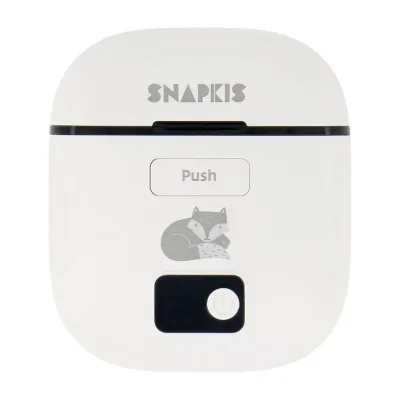
Prices are valid at publication and may change. Please refer to the product page for the latest price.
Understanding the Basics: Manual vs. Electric Nail Filers
To make an informed decision, it is essential to understand how each type of nail filer operates on a newborn’s delicate anatomy. Newborn nails are fundamentally different from adult nails; they are incredibly soft, highly pliable, and tightly adhered to the underlying skin of the nail bed. Because of this, traditional adult grooming tools are highly unsuitable and present a significant risk of injury.

Manual baby nail files are simple, non-powered tools that rely entirely on manual friction to smooth down the nail. The most common types are ultra-fine glass files and baby-specific paper emery boards. Glass files are highly popular in Singapore’s humid climate because they are non-porous, easy to sanitize, and do not degrade or harbor bacteria like paper-based files. They feature a chemically etched, micro-fine abrasive surface that gently wears away the soft nail edge without generating excessive heat.
Electric baby nail files, often referred to as electric nail trimmers, are battery-operated handheld devices that use a low-speed rotating mechanism. They come with interchangeable, cushioned grinding pads of varying grits, color-coded according to the baby’s age and development stage. These devices use gentle, motorized abrasion to file down the nail quickly and evenly. Many models offer multiple speed settings and dual rotation directions to accommodate different angles.
Adult nail files, clippers, or scissors should never be used on a newborn. Adult tools possess a coarse grit and sharp edges designed for thick, hard nails, which can easily shear the extremely thin skin surrounding a baby’s nail bed or cause painful friction burns. Dedicated baby nail filers are specifically engineered with micro-fine grits and safety features to protect your little one’s sensitive fingers and toes.
Comparing Safety and Risk of Injury
Safety is understandably the primary concern for any parent choosing a nail care tool. While both manual and electric files are vastly safer than traditional metal clippers, each tool carries its own unique set of minor risks that require careful handling.
Electric baby nail files are designed with safety as a priority, featuring low-speed motors and cushioned backing behind the abrasive pads. This design minimizes the risk of cutting or nicking the skin, which is a common fear when using traditional clippers. If the rotating pad is pressed too firmly against the baby’s skin, the motor is engineered to automatically slow down or stop completely, preventing friction burns. However, there is a minor risk of pinching if loose skin gets caught in the rotating mechanism, or if the plastic edge of the pad holder rubs directly against the skin.
Manual baby nail files completely eliminate any motor-related risks, such as pinching or mechanical failures. Because you control the speed and movement of the file, there is no motor to worry about. However, manual files require precise pressure control and steady movements. If you file too rapidly in a back-and-forth motion, you can generate friction heat, which may cause discomfort or mild redness on the baby’s skin. Additionally, using a manual file with an incorrect, overly coarse grit can easily abrade the delicate skin surrounding the nail.
Ultimately, no tool is completely risk-free, and safety depends heavily on parental technique. Ensuring you have excellent lighting, maintaining a firm but gentle grip on your baby’s hand, and strictly adhering to the manufacturer’s age and grit guidelines are mandatory steps to keep the grooming process safe and stress-free.
Ease of Use and Parental Control
The learning curve and physical effort required to operate a nail filer can make a significant difference in your grooming routine, especially when dealing with a squirming baby.
Electric baby nail files do the vast majority of the physical work for you. You simply need to hold the device gently against the nail edge and guide it along the curve. This minimal physical effort reduces hand fatigue and makes it much easier to file at awkward angles, which is particularly helpful if you have unsteady hands. Furthermore, many electric models feature a built-in LED light at the tip, which illuminates the nail bed and helps you see exactly what you are doing, even in a dimly lit room during night feedings.
Manual baby nail files require a higher level of manual dexterity and physical effort. To file a newborn’s nails effectively, you must maintain a steady hand, apply consistent light pressure, and file in a single direction to prevent nail splitting. This can be physically tiring and challenging if your baby is active or resistant to having their hands held. The small size of manual files can also make them slippery and difficult to grip, especially in Singapore’s tropical humidity where hands can easily become damp.
However, manual files offer an unparalleled level of tactile feedback. When using a manual glass file, you can feel the exact resistance of the nail and know precisely when a sharp corner has been completely smoothed down. This tactile connection is entirely lost with an electric file due to the constant vibration of the motor, which can make it harder to gauge how much nail you have actually removed until you stop the device to inspect it.
Effectiveness, Speed, and Baby's Comfort
How quickly a tool works and how your baby reacts to the sensory experience are crucial factors in determining which nail filer will become your go-to grooming tool.
In terms of effectiveness, both manual and electric files are highly capable of smoothing away sharp edges and preventing your baby from scratching their face. However, electric files generally deliver a more uniformly polished and rounded edge in a fraction of the time. Because the motorized pad spins hundreds of times per minute, it can shape and smooth a nail in a matter of seconds. This speed is incredibly valuable when dealing with an impatient, active newborn who dislikes being restrained.
The primary drawback of electric files lies in their sensory impact. Even the quietest electric trimmers produce a mild buzzing sound and a physical vibration that some newborns find startling or unsettling. This sensory stimulation can trigger the Moro (startle) reflex, making an awake baby squirm, and can easily wake a lightly sleeping infant. If your baby is highly sensitive to noise or touch, the vibration of an electric file may make nail grooming a challenging ordeal.
Manual glass files are completely silent and vibration-free, offering a highly soothing sensory experience. They do not startle newborns, making them the superior choice for filing while your baby is sleeping soundly or feeding calmly. The gentle, rhythmic motion of manual filing is often tolerated much better by sensitive babies. The trade-off is speed; manual filing takes significantly longer than using an electric device, meaning you must be prepared for a longer grooming session and have the patience to work slowly and carefully.
Feature Comparison at a Glance
To help you quickly compare the physical characteristics and operational differences between these two options, the table below summarizes the key decision dimensions for manual and electric baby nail files.
| Feature | Manual Baby Nail File | Electric Baby Nail File |
|---|---|---|
| Power Source | None (manual effort) | Batteries (typically AA or AAA) |
| Speed and Time Required | Slower; requires manual strokes | Fast; motorized rotation shapes nails quickly |
| Noise and Vibration | Completely silent; no vibration | Low buzzing sound; mild vibration |
| Risk of Skin Nicks | Very low; depends on pressure and grit | Minimal; safety stall feature prevents cuts |
| Tactile Feedback | High; feel the nail resistance directly | Low; vibration masks the tactile sensation |
| Maintenance and Cleaning | Easy; glass files are washable and reusable | Requires pad replacements; device is not waterproof |
How to Decide: A Practical Framework for Parents
Choosing between a manual and electric baby nail file does not have to be complicated. By evaluating your baby’s temperament, your own confidence levels, and your grooming preferences, you can easily determine which tool is the right fit for your household.
Choose an Electric File if:
- You feel highly anxious about accidentally cutting or nicking your baby's skin.
- You want a quick, efficient grooming session that finishes in minutes.
- Your baby is relatively calm and is not easily startled by mild buzzing sounds or vibrations.
- You appreciate helpful extra features, such as a built-in LED light for low-light grooming.
Choose a Manual File if:
- You prefer to groom your baby's nails while they are sleeping deeply or feeding, without any risk of waking them.
- You want complete tactile control and want to feel exactly how much nail you are filing away.
- You prefer a simple, reliable tool that requires no batteries, charging, or electronic maintenance.
- You want a highly hygienic, long-lasting tool like a tempered glass file that can be easily washed and sanitized.
Verify First if:
- You are unsure about the correct grit level to use. Always consult the manufacturer's age recommendations and pad specifications before using any tool on a newborn under three months of age. Using a grit that is too coarse can cause skin irritation, regardless of whether the tool is manual or electric.
Essential Safety Practices for Newborn Nail Care
Regardless of which tool you choose, practicing safe and mindful grooming habits is essential to protect your newborn’s delicate fingers and toes.
First, always choose the optimal window of time to file your baby’s nails. The best moments are when your baby is calm, relaxed, feeding, or in a deep sleep. Attempting to file the nails of an active, hungry, or crying baby increases the risk of sudden movements, which can lead to accidental skin contact. If you notice your baby’s limbs are limp and their breathing is slow and regular, they are likely in a deep sleep phase, which is the perfect opportunity for a quiet grooming session.
Second, ensure you are working in a highly stable environment with excellent lighting. Sit in a comfortable, well-lit position where you can clearly see the boundary between your baby’s nail and the underlying skin. Hold your baby’s finger firmly but gently, using your thumb to press the finger pad slightly away from the nail edge. This action exposes the nail fully and minimizes the risk of the file making contact with the surrounding skin. Rest your own hands and elbows on a flat surface to stabilize your movements and prevent slipping.
Third, monitor your baby’s reaction closely throughout the process. Stop immediately if your baby becomes distressed, if the tool feels too harsh, or if you notice any skin redness or irritation. Nail grooming should never be forced. If your baby is squirming excessively or showing signs of discomfort, it is always safer to pause the session and try again later when they are in a calmer state.
Finally, establish a clear safety boundary for complex situations. If your newborn’s nails appear unusually thick, ingrown, or if you notice any signs of infection, such as swelling, redness, or discharge around the nail bed, do not attempt to file them yourself. Stop immediately and consult a pediatrician or a qualified healthcare professional. Additionally, if you feel entirely unconfident or anxious about the process, seeking guidance from a professional during an early infant check-up can help build your confidence.
Frequently Asked Questions (FAQ)
When can I start using a nail file on my newborn?
You can start using a gentle baby nail file on your newborn from their very first week of life. Newborn nails grow incredibly fast and are often surprisingly long and sharp at birth, which can lead to accidental scratches on their face or eyes. Because their nails are extremely soft and closely attached to the skin, filing is highly recommended over clipping during the first few weeks. Always verify with your pediatrician during your baby’s first check-up if you have any concerns, and strictly follow the specific age guidelines on your nail file’s packaging.
Can I use a regular adult emery board on my baby?
No, you should never use a regular adult emery board or adult nail file on a newborn. Adult nail files are constructed with a highly coarse grit designed to shape thick, hard adult nails. Using these abrasive surfaces on a newborn can easily tear their paper-thin nails and cause painful friction burns or raw skin on their delicate fingertips. Always use tools specifically designated for infants, such as ultra-fine glass files or baby-specific emery boards with micro-fine grit levels.
How often should I file my newborn's nails?
The frequency of nail filing depends entirely on your individual baby’s nail growth rate, which can vary significantly. Generally, newborn fingernails grow rapidly and may require filing two to three times a week to prevent them from scratching themselves. Newborn toenails, however, grow much slower and typically only need to be filed once or twice a month. Rather than sticking to a rigid calendar schedule, perform a quick touch-test every couple of days to check for sharp edges and file them as needed.
Community discussion
Share your experience or ask a question. Comments are reviewed before publication.