
Quick Answer: Is MamyPoko Airfit Tape L Right for Your Baby?
Finding the ideal tape diaper in Singapore involves balancing comfort, absorbency, and the challenges of a highly humid tropical climate. MamyPoko Airfit Tape L is widely recognized for its contoured fit and focus on airflow, but determining whether it is the absolute best option depends on several specific variables. The optimal choice is always conditional on your baby’s physical build, skin sensitivity, and your primary caregiving priorities.
If your main objective is to secure a highly flexible, breathable diaper that prevents bulkiness during active daytime hours, MamyPoko Airfit Tape L stands out as an excellent candidate. Its specialized design is engineered to facilitate air circulation, which is crucial for minimizing heat retention in local weather. However, if your baby has exceptionally sensitive skin that reacts to standard materials, or if you require an ultra-high-capacity core designed specifically to endure twelve hours of uninterrupted overnight sleep, you will need to compare this model against specialized premium or dedicated overnight brands. Because every baby’s anatomy is unique, a diaper’s performance is ultimately determined by how well it conforms to their body, making it essential to verify the manufacturer’s size and weight guidelines on the physical packaging before making a bulk purchase.
Core Dimensions for Comparing Tape Diapers in Singapore
Evaluating disposable baby diapers requires moving past generic brand reputation and focusing on concrete, structural elements. In Singapore, parents face unique environmental challenges, such as persistent high humidity and warm temperatures, which can exacerbate skin issues like diaper rash. To make an informed decision, caregivers must analyze diapers through a holistic framework rather than relying solely on marketing buzzwords. By understanding the mechanical and material differences between products, you can select a diaper that matches your baby’s current developmental stage and daily routine.
Products mentioned in this guide
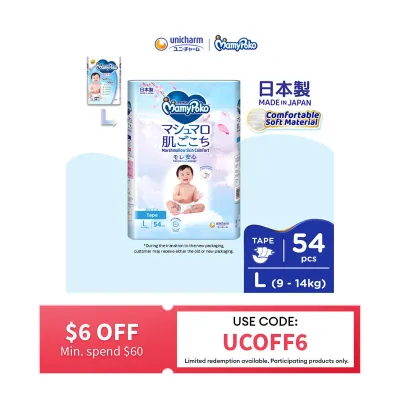
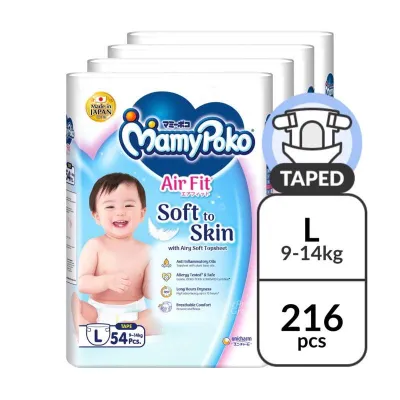
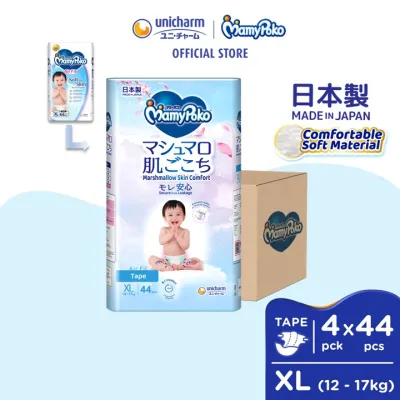
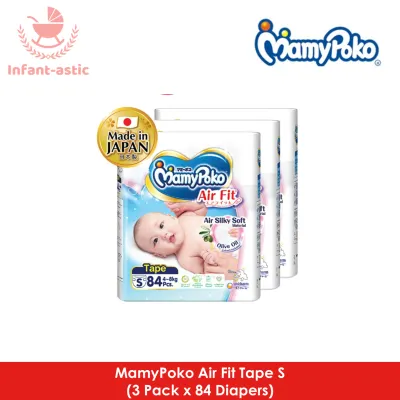
![[1 Carton] MamyPoko Air Fit Tape Diapers](https://img.lazcdn.com/g/p/9b196f2b6093e5196de5d3e0a29fd220.png_400x400q80.png_.webp)
![MamyPoko AIR FIT PANTS & TAPE DIAPERS [Size-M/L/XL/XXL] MADE IN JAPAN](https://img.lazcdn.com/g/ff/kf/S4d626b86fe6f40a6919ca71866aff0481.jpg_400x400q80.jpg_.webp)
Prices are valid at publication and may change. Please refer to the product page for the latest price.

Absorbency and Leak Protection
When examining absorbency, it is vital to distinguish between a diaper’s total fluid capacity and its actual absorption speed. Total capacity refers to the maximum amount of liquid the core can hold before structural failure occurs, whereas absorption speed determines how quickly wetness is drawn away from your baby’s skin. For an active baby wearing Size L—typically a stage characterized by increased crawling, cruising, and rolling—the speed of absorption is critical to preventing dynamic leaks during movement.
Caregivers should inspect the physical packaging to verify the presence of multi-layer absorbent cores, which often utilize superabsorbent polymers to lock moisture deep inside the structure. Additionally, high-quality leg cuffs with raised, hydrophobic leak guards are essential for containing sudden voids, especially when the baby is positioned on their side. The placement of the absorbent core also plays a role; some diapers distribute the core evenly, while others concentrate it toward the front or center, which can affect performance depending on whether your baby is a front-sleeper or highly active during the day.
Breathability for Humid Climates
In Singapore’s tropical climate, breathability is not merely a comfort feature but a primary line of defense against diaper dermatitis. When moisture and body heat are trapped inside a diaper, the skin barrier weakens, making it highly susceptible to irritation and fungal infections. The breathability of a tape diaper is largely determined by its outer backsheet material and the texture of the inner top-sheet that rests directly against the baby’s skin.
To verify a diaper’s airflow capabilities, look for explicit packaging indicators such as “micro-pores,” “air-through covers,” or “breathable outer layers.” These features allow water vapor to escape while keeping liquid safely contained inside. While a thinner diaper profile naturally facilitates better heat dissipation and a less bulky fit, caregivers must carefully observe whether the reduced thickness compromises the diaper’s overall liquid retention capacity during extended wear.
Fit, Flexibility, and Skin Comfort
As babies transition to Size L, their physical mobility increases dramatically, requiring a diaper that conforms dynamically to their movements. A diaper that is too rigid can cause painful friction along the thighs and waist, while a diaper that is too loose will inevitably leak. This makes the elasticity of the side tapes and the flexibility of the waistband critical evaluation points for any caregiver.
High-performance tape diapers feature stretchable fastening bands that expand and contract as the baby’s stomach rises and falls during breathing and digestion. When handling a diaper, physically feel the inner lining to assess its softness and check for any rough seams or stiff plastics that could rub against delicate skin. A proper fit is achieved when the tapes can be secured symmetrically on the landing zone without requiring excessive tightening, leaving no deep red indentations on your baby’s thighs or waist after a few hours of active play.
Evaluating MamyPoko Airfit Tape L: Features and Verification
MamyPoko Airfit Tape L is designed with a specific philosophy that prioritizes a natural, contoured fit to minimize pressure on a baby’s delicate skin. The core of this design is the “Airfit” technology, which utilizes a curved shape engineered to match the natural posture of a baby’s body. This approach aims to reduce the gap around the legs and waist without relying on tight, restrictive elastics, thereby minimizing the risk of red marks while maintaining reliable leak protection.
When considering this diaper, caregivers must actively verify the specific weight range indicated on the physical packaging. Sizing standards can vary between different manufacturing batches and regional product versions, so relying on a generic “Size L” label is insufficient. Typically, Size L is intended for babies within a specific weight bracket, and checking this ensures that the diaper’s structural dimensions align with your child’s current development.
Another key feature to examine is the tape fastening system. The Airfit model generally incorporates soft-touch, hook-and-loop style tapes rather than stiff adhesive plastics. This design allows caregivers to peel and readjust the tapes multiple times to achieve a symmetrical fit without tearing the outer backsheet or losing fastening strength. The landing zone at the front of the diaper features clear visual markers to help you align the tapes evenly, which is crucial for maintaining balanced tension across the hips.
While the manufacturer highlights the breathable, textured top-sheet designed to draw wetness away quickly, caregivers should frame these claims as features to be verified through practical usage. No diaper can guarantee absolute freedom from diaper rash, as skin reactions are highly individual and depend on factors like diet, change frequency, and skin sensitivity. To safely assess compatibility, it is highly recommended to purchase a small trial pack first, monitoring your baby’s skin condition and the diaper’s structural integrity over a 48-hour period.
How MamyPoko Airfit Compares to Other Market Categories
To understand where MamyPoko Airfit Tape L fits within the broader landscape of diaper options in Singapore, it is helpful to categorize the market into distinct segments. Diaper brands design their products to excel in specific areas, whether that is maximum skin protection, ultimate liquid capacity, or budget-friendly utility. By comparing the Airfit design against these categories, you can identify which trade-offs align best with your family’s lifestyle and budget.
Premium Softness and Skin-Care Brands
Premium skin-care diapers are typically engineered for newborns and babies with highly reactive or sensitive skin. These products often feature exceptionally thick, plush padding and top-sheets infused with soothing lotions, organic cotton, or specialized pH-balancing materials designed to buffer skin against acidic waste. The primary focus of this category is to provide an ultra-soft barrier that minimizes physical friction and chemical irritation.
In comparison, MamyPoko Airfit Tape L takes a slightly different design path. While it offers a soft inner lining, its primary emphasis is on a lightweight, highly flexible, and contoured structure that reduces bulkiness between the legs. Premium skin-care brands can sometimes feel heavier and retain more heat due to their dense, plush layers, which may not be ideal during the hottest hours of the day in Singapore. If your baby has documented skin sensitivities, a premium skin-care brand may be necessary; however, if your child is active and thrives in lighter clothing, the breathable, low-profile Airfit design may offer superior daytime comfort.
High-Absorbency and Overnight Brands
High-absorbency and dedicated overnight diapers are engineered with a singular primary goal: maximum liquid retention over extended periods. These diapers feature highly dense cores packed with a high ratio of superabsorbent polymers, designed to lock away multiple voids over ten to twelve hours. To support this capacity, they often have wider waistbands, taller leg guards, and a thicker overall profile, which naturally commands a higher retail price point.
While MamyPoko Airfit is equipped with a reliable absorbent core suitable for standard daytime intervals, it is not primarily positioned as an extreme-capacity overnight diaper. Under active daytime conditions, the Airfit’s focus on flexibility and airflow is highly beneficial, but during long, uninterrupted night sleeps, a highly active wetter may exceed its absorption threshold, leading to saturated skin or leaks. A practical compromise adopted by many Singaporean parents is a hybrid diapering strategy: utilizing the breathable, flexible MamyPoko Airfit during active daytime hours to prevent heat buildup, and switching to a dedicated high-capacity overnight diaper to ensure dry, comfortable sleep.
Value and Everyday Use Brands
Value or budget-friendly diapers are designed to offer basic, functional wetness protection at a lower price point. To achieve this cost efficiency, manufacturers often utilize simpler materials, such as standard plastic backsheets instead of advanced breathable membranes, and more basic, less elastic tape fastening systems. These diapers are highly functional for frequent daytime changes but often lack the specialized ergonomic contours and advanced airflow features found in mid-to-high-tier options.
MamyPoko Airfit Tape L occupies a mid-to-premium position that balances advanced features with reasonable everyday value. Compared to budget options, the Airfit provides a significantly softer feel, superior elasticity in the waist and tape zones, and a more advanced breathable structure that is highly beneficial in a warm climate. While the upfront cost of a value brand is lower, the potential for frequent leaks or skin irritation can quickly diminish those savings. Caregivers can optimize their diapering budget by watching for bulk-buy promotions, subscription discounts, and seasonal sales on local online marketplaces to bridge the price gap between basic value brands and the feature-rich Airfit.
Calculating True Cost and Value per Diaper
When managing a household budget in Singapore, comparing diapers solely by their retail pack price can be highly misleading. Manufacturers package diapers in various configurations—such as standard packs, jumbo packs, and super-jumbo packs—and the actual number of diapers per pack varies significantly between brands and even within different sizes of the same brand. To establish an accurate financial comparison, caregivers must calculate the true cost per diaper.
The formula for this calculation is straightforward: divide the total price of the pack by the exact number of diapers contained inside (Total Pack Price ÷ Number of Diapers = Cost per Diaper). For example, if a pack of MamyPoko Airfit Tape L costs S$24.00 and contains 54 diapers, the cost per diaper is approximately S$0.44. Performing this quick calculation allows you to compare the product objectively against any competitor on the shelf, regardless of differences in packaging sizes.
To secure the best possible value, parents in Singapore should leverage local purchasing strategies. Many online marketplaces and baby specialty retailers offer recurring subscription discounts, which can reduce the per-pack cost by a significant percentage. Additionally, purchasing in bulk—such as buying cartons of three or four packs—often unlocks lower unit prices. It is also highly beneficial to monitor seasonal online shopping events and local baby fairs, where warehouse clearance deals and bundle promotions are common.
However, true value extends beyond the raw cost per piece; caregivers must also consider the “cost per successful change.” If a cheaper, lower-quality diaper suffers from frequent leaks or blowouts, it will require more frequent changes, double-bagging, and additional laundry cycles for soiled clothing and bedding. A slightly higher-priced diaper that fits securely and absorbs efficiently can ultimately prove more economical by reducing the total number of diaper changes required per day. Tracking both the physical performance and the calculated unit cost during a trial phase is the most reliable way to determine the true value of a diaper for your specific household.
Decision Framework: Choosing the Best Tape Diaper
To help you navigate the many options available on the Singapore market, this structured decision framework outlines when to choose specific diaper types based on your baby’s needs and your household priorities.
Choose MamyPoko Airfit Tape L if:
- Your primary goal is to find a lightweight, highly breathable diaper that minimizes heat and moisture buildup during warm, humid daytime hours.
- Your baby is highly active, crawling, or cruising, and benefits from a contoured, flexible fit that conforms naturally to their movements without creating bulk between the legs.
- You prefer a secure, soft-touch tape fastening system that can be easily adjusted multiple times for a symmetrical, comfortable fit.
Choose a Premium Softness Brand if:
- Your baby has highly reactive, sensitive skin that requires specialized, lotion-infused top-sheets or ultra-fine organic fibers to prevent irritation.
- You prioritize maximum physical plushness and are willing to accept a slightly thicker, warmer diaper profile to ensure the softest possible contact with your baby's skin.
Choose a High-Absorbency Overnight Brand if:
- Your baby consistently experiences leaks during long, uninterrupted overnight sleep stretches, and you require maximum core capacity rather than daytime flexibility.
- You want a dense, highly saturated core that keeps wetness locked away from the skin for up to twelve hours, reducing the need for disruptive nighttime changes.
Verify First if:
- You are transitioning between diaper sizes or trying a new brand for the first time. Always purchase a single, small trial pack to evaluate the physical fit around your baby's unique waist and thigh contours.
- Carefully monitor your baby's skin over a 48-hour trial period for any signs of friction, redness, or allergic reactions.
- Confirm the current weight guidelines on the physical packaging, as standard size charts can shift slightly during product updates. If the manufacturer's instructions conflict with general sizing advice, always defer to the specific guidelines printed on the product packaging.
Frequently Asked Questions (FAQ)
When should I transition from tape diapers to pants diapers?
The transition from tape diapers to pants diapers is primarily driven by your baby’s physical mobility and developmental stage rather than their weight alone. As babies become highly active—typically when they begin rolling away during changes, crawling, or standing up—securing the tapes on a standard diaper can become exceptionally challenging. If your baby resists lying still on the changing mat, pants diapers allow for quick, pull-up applications even while they are standing. Many caregivers opt for a hybrid approach, utilizing tape diapers for quiet times like naps and overnight sleep when the baby is still, and switching to pants diapers for active daytime play.
How can I tell if Size L is still the correct fit?
You can verify if Size L is the appropriate fit by performing a few simple physical checks during diaper changes. First, inspect your baby’s waist and thighs immediately after removing a diaper; if you notice deep red marks or indentations that do not fade within a few minutes, the diaper is likely too tight, indicating it is time to size up. Second, frequent side leaks or blowouts—even when the absorbent core is not fully saturated—often suggest that the leg cuffs are no longer sealing properly around the thighs due to outgrowing the size. Finally, check the alignment of the tape fasteners on the front landing zone; if the tapes must be fastened at the very outer edges to secure the diaper, your baby has likely outgrown the current size, and you should consult the manufacturer’s weight guidelines on the packaging for the next size up.
Community discussion
Share your experience or ask a question. Comments are reviewed before publication.