
Little Freddie baby food pouches generally contain 100% organic fruits, vegetables, grains, and meats, with a strict commitment to zero added sugar, salt, artificial additives, or fillers. However, because the exact ingredient composition varies significantly across their product range—from simple single-fruit purees to complex multi-ingredient savory meals—parents must always examine the individual packaging label for the most accurate, up-to-date ingredient and allergen information.
Quick Answer: The Ingredient Philosophy Behind Little Freddie
When evaluating baby food options, understanding the manufacturer’s core ingredient philosophy is the first step toward making an informed choice. Little Freddie positions itself as a premium brand focused on clean eating, whole foods, and minimal processing. In practice, this means the primary ingredients in their pouches are real fruits, vegetables, grains, and proteins, without the inclusion of artificial preservatives, synthetic colorings, or unnecessary texturizers like chemically modified starches.
While the brand maintains a consistent “no-add” policy across its entire line, the actual ingredient list is highly diverse and depends entirely on the specific product category. A simple fruit puree pouch may contain only one or two organic fruit ingredients, whereas a savory dinner pouch will feature a complex blend of vegetables, grains, and sometimes animal or plant proteins. Because formulations can be updated to improve taste, texture, or sourcing stability, parents should never assume that two different flavors share the same base ingredients.
Products mentioned in this guide
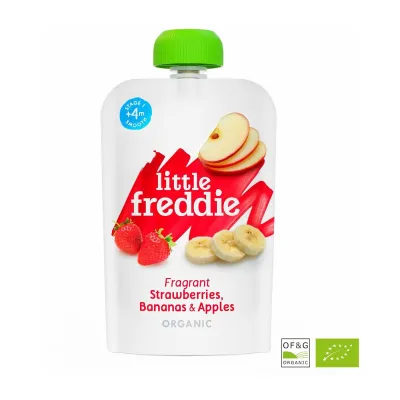
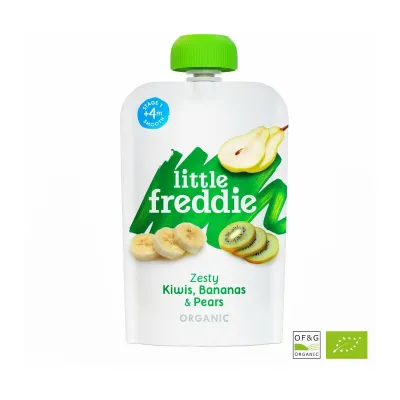
Prices are valid at publication and may change. Please refer to the product page for the latest price.
For parents managing specific dietary requirements, infant food sensitivities, or severe allergies, relying on general brand reputation is not enough. It is crucial to check the physical label of each individual pouch before purchase and consumption. This practice ensures you have the most current ingredient data, which is especially important as babies transition through different stages of weaning and develop unique digestive tolerances.
Core Ingredients and Nutritional Breakdown
Fruit and Vegetable Bases
Fruit and vegetable purees serve as the foundational elements for the majority of Little Freddie’s product offerings. These ingredients are selected to provide essential vitamins, minerals, and dietary fiber that support a baby’s rapid growth and digestive health. By utilizing whole-food purees rather than highly processed powders, the brand aims to retain the natural nutritional integrity of the agricultural ingredients.

It is important for parents to distinguish between naturally occurring sugars and added refined sugars. While Little Freddie does not add cane sugar, syrups, or artificial sweeteners to its pouches, fruit-heavy blends naturally contain fructose. This natural sugar provides energy but also contributes to a highly sweet flavor profile. To foster a balanced palate, pediatric nutritionists generally recommend offering a variety of flavors rather than relying solely on sweet purees.
To prevent your baby from developing a strong preference for sweet tastes, try balancing fruit-based pouches with vegetable-heavy or savory options. Regularly introducing earthy or bitter vegetable flavors, such as spinach, broccoli, and kale, helps train your baby’s taste buds to accept a wider variety of foods later in childhood. This balanced approach supports long-term healthy eating habits.
Grains, Proteins, and Complex Blends
As infants grow, their nutritional requirements expand beyond the simple vitamins found in basic fruit and vegetable purees. Little Freddie’s more complex meal pouches incorporate grains like quinoa, oats, spelt, and millet, alongside plant-based proteins such as lentils and chickpeas. These ingredients introduce new textures and supply complex carbohydrates, which are essential for sustained energy levels throughout the day.
Combining grains with vegetables and proteins creates a more balanced macronutrient profile than single-ingredient purees can offer. This combination slows down digestion, providing a steady release of energy and helping your baby feel satisfied for longer periods. It also introduces the digestive system to more complex plant fibers, supporting healthy gut microbiome development.
Before introducing these complex blends, parents should verify the exact protein and carbohydrate content on the nutritional information panel. This step ensures that the pouch aligns with your baby’s daily nutritional goals and matches their current digestive capabilities. Every infant develops at a different pace, and matching the macronutrient density to their activity level is key to healthy growth.
What is Excluded: The "No-Add" Approach
Understanding what is left out of baby food is often just as important as knowing what is included. Little Freddie adheres to a strict “no-add” approach, meaning their products contain no added salt, refined sugars, or artificial preservatives. This practice aligns directly with international pediatric guidelines, which advise against introducing added sodium and sugar to infants to protect their developing kidneys and prevent early preferences for unhealthy foods.
Furthermore, the absence of artificial thickeners, such as modified cornstarch or xanthan gum, means the consistency of the puree relies entirely on the natural structure of the ingredients. This allows babies to experience the genuine textures of real food, which is a vital part of learning how to swallow and process different food consistencies. Fillers are often used in the industry to dilute products and lower manufacturing costs, so avoiding them ensures a higher density of actual food nutrients.
However, parents must remember that a “no added sugar” label does not mean a product is entirely sugar-free. If a pouch contains high proportions of naturally sweet fruits or fruit juice concentrates used for sweetening, the overall sugar content per serving can still be relatively high. Always review the nutritional panel to assess the total sugar content, ensuring it fits reasonably within your child’s overall daily diet.
Sourcing Standards: How to Verify Quality Claims
Premium baby food brands frequently highlight rigorous sourcing standards, emphasizing organic farming, strict pesticide screening, and heavy metal testing protocols. These claims are designed to reassure parents who are concerned about environmental contaminants in infant food. Because young children are more vulnerable to the effects of heavy metals and chemical residues, verifying these sourcing claims is an essential step in food selection.
To move beyond marketing terminology, parents should actively look for recognized, independent third-party certification logos printed directly on the packaging. For example, certifications from established organic bodies (such as the European Union Organic Certification or the Soil Association) serve as verifiable proof that the ingredients were grown without synthetic pesticides or chemical fertilizers. These logos indicate that the product has met strict, legally binding agricultural standards.
For deeper verification, parents can utilize the brand’s official website or contact their customer service channels to request transparency reports, batch testing results, or detailed sourcing maps. Many premium brands provide tracking tools that allow you to see exactly where individual ingredients, such as specific fruits or grains, were grown. This level of transparency helps confirm that the brand’s marketing claims are backed by rigorous quality control systems.
If specific certifications, independent testing data, or sourcing details are not visibly displayed on the packaging or accessible via official brand channels, parents should treat those claims as unverified. In such cases, or if you have strict safety concerns regarding environmental contaminants, it is best to consult your pediatrician. A qualified healthcare professional can help you evaluate the safety of different food options based on your baby’s specific health needs.
Matching Ingredients to Your Baby’s Weaning Stage
Early Weaning (Around 6 Months)
At the start of the weaning journey, which typically begins around six months of age when the baby shows signs of developmental readiness, simplicity is key. For beginners, it is highly recommended to start with single-ingredient or very simple two-ingredient fruit and vegetable purees. This minimalist approach allows you to introduce new flavors gradually and monitor your baby closely for any signs of food sensitivities or adverse reactions.
During this initial stage, the texture of the food must be perfectly smooth, runny, and free of any lumps to ensure it is easy and safe for early swallowers to manage. The primary goal of early weaning is to introduce the concept of solid food and spoon-feeding rather than replacing milk as the primary source of nutrition. Caregivers should supervise every feeding session closely to ensure the baby swallows safely.
Before offering any early-stage pouch, check the ingredient label carefully to ensure it contains no complex spices, added salts, or high-allergen ingredients. The ingredient list should be short and easily understandable. Keeping early meals simple reduces the risk of digestive upset and makes it much easier to pinpoint the exact cause if an adverse reaction does occur.
Exploring Textures and Complex Flavors (7-12 Months)
Once your baby has successfully accepted basic single-ingredient purees, usually between seven and twelve months, you can begin introducing multi-ingredient savory blends. This stage is crucial for expanding your baby’s palate and helping them become familiar with more complex, family-style flavor profiles. Introducing a wider variety of tastes now can help reduce picky eating habits as they grow older.
This period also marks an important transition in food consistency. You should gradually move your baby away from completely smooth, runny purees toward thicker, more textured blends. These thicker consistencies encourage chewing motions, help develop oral motor skills, and prepare your baby’s jaw and tongue for handling soft solid foods. Always monitor your child’s reaction to new textures to ensure they do not gag or struggle.
This stage is also appropriate for introducing mild, baby-safe herbs and spices, such as cinnamon, parsley, or mild cumin, which are often featured in Little Freddie’s advanced recipes. Introducing these gentle flavors helps build a diverse palate without relying on salt or sugar for taste. Always verify on the packaging that the herbs used are mild and suitable for this specific age range.
Toddler Meals and Energy Needs (12+ Months)
By the time toddlers reach twelve months and older, their physical activity increases significantly, and they require more energy-dense foods to support their rapid growth. Toddler-specific food options are formulated to meet these higher caloric and nutritional demands, often incorporating heartier ingredients like beans, lentils, whole grains, and larger portions of proteins.
These robust ingredients provide a steady source of sustained energy, helping to keep active toddlers fueled throughout their busy days. When choosing toddler pouches, look for those that emphasize complex carbohydrates and dietary fiber, which support healthy digestion and keep energy levels stable. Always check the nutritional panel to ensure the protein and fat content are appropriate for your toddler’s daily requirements.
While convenient toddler pouches are excellent for busy days or on-the-go snacking, they should not become the sole source of nutrition. It is vital to offer your toddler actual solid foods and finger foods alongside purees. Practicing with finger foods helps toddlers develop essential fine motor skills, hand-eye coordination, and the ability to chew and swallow various food structures independently.
Navigating Allergens and Dietary Restrictions
Managing food allergens is one of the most critical aspects of early childhood feeding. On Little Freddie packaging, potential allergens are legally required to be clearly declared, often highlighted in bold text or listed in a dedicated allergen warning box. Parents must make a habit of scanning this section of the label every single time they purchase a product, as manufacturing processes and recipes can change without notice.
Common allergens that may appear in specific product lines include dairy (such as yogurt or cheese powders), gluten (from wheat, spelt, or oats), and tree nuts. According to current pediatric guidelines, highly allergenic foods should be introduced one at a time in very small quantities once weaning has commenced. This systematic approach allows you to monitor your child for any immediate or delayed allergic reactions, such as hives, swelling, or digestive distress.
For families adhering to specific dietary restrictions, such as vegan, vegetarian, or halal diets, a meticulous ingredient check is essential for every single flavor. Formulations vary widely across different product lines, and a brand that offers vegetarian options will also produce meals containing meat or dairy. Checking the ingredient list on every pouch ensures the product aligns perfectly with your family’s dietary standards and lifestyle choices.
If you encounter an unfamiliar ingredient on the label, or if the allergen cross-contamination warning is unclear or ambiguous, do not feed the product to your child. Stop and consult a pediatrician, pediatric dietitian, or allergy specialist before introducing the food. Taking this precautionary step protects your child’s health and provides you with professional, personalized guidance on how to safely navigate infant nutrition.
Reading and Verifying Baby Food Labels in Singapore
In Singapore, understanding how to read and interpret food labels empowers parents to make informed purchasing decisions. By law, ingredients on a food label must be listed in descending order of weight. This means the ingredient listed first is present in the highest amount, while the ingredient listed last is present in the smallest amount. Checking this order helps you verify if a “spinach and pear” pouch is mostly pear or actually contains a significant portion of spinach.
Parents should also learn to identify hidden sugars and unnecessary fillers that might be used to sweeten or bulk up a puree. Ingredients like “fruit juice concentrate,” “maltodextrin,” “rice syrup,” or “cornstarch” are often added to lower production costs or enhance sweetness. While these ingredients are safe for consumption, they can artificially increase the sugar content and dilute the overall nutritional value of the whole-food ingredients.
In Singapore, the Singapore Food Agency (SFA) regulates food safety and labeling standards, ensuring that imported and locally produced baby foods meet strict compliance guidelines. Compliant products sold in the local market should feature a clear, English-language nutritional information panel (NIP). This panel provides standardized data on energy, protein, fat, carbohydrates, sodium, and sugars, allowing parents to verify the nutritional profile accurately.
To make the healthiest choices for your baby, get into the habit of comparing the NIP across different brands and flavors, paying close attention to the sodium and sugar content per 100 grams. This comparison allows you to identify which products offer the highest nutritional density with the lowest amount of natural sugars and sodium. Making these comparisons ensures you are selecting the highest quality options available in the market.
Frequently Asked Questions (FAQ)
Are Little Freddie pouches suitable for babies with reflux?
While smooth purees are generally easier for infants to digest, highly acidic fruit-based pouches—such as those containing citrus fruits, berries, or tomatoes—can sometimes trigger or worsen acid reflux symptoms in sensitive babies. If your baby is prone to reflux, it is generally safer to select milder, vegetable-based or oat-based pouches that are less likely to irritate the stomach. For personalized dietary advice and a proper management plan for infant reflux, always consult your pediatrician.
Do I need to refrigerate Little Freddie pouches before opening?
Unopened Little Freddie pouches do not require refrigeration because they undergo a commercial sterilization process and are sealed in airtight packaging, making them completely shelf-stable. In Singapore’s warm and humid climate, store unopened pouches in a cool, dry pantry away from direct sunlight. Once a pouch is opened, any remaining unused portion must be immediately refrigerated, kept sealed, and consumed within the specific timeframe indicated on the packaging, which is typically 24 to 48 hours.
Can I mix Little Freddie purees with breast milk or formula?
Yes, mixing a small amount of breast milk or infant formula into a puree is a safe and effective way to thin its consistency for early weaning and introduce a familiar taste to your baby. To prevent bacterial growth and contamination from saliva, only mix the specific portion your baby is expected to eat during that feeding session, and discard any leftovers. Never heat breast milk or formula in a microwave, and do not boil the pouch directly; instead, warm the puree gently in a separate container before mixing.
Community discussion
Share your experience or ask a question. Comments are reviewed before publication.