
Under Singapore’s Road Traffic Act, anyone under the height of 1.35 metres must be secured with an approved child restraint appropriate for their height and weight when travelling in a vehicle. A high back booster seat is a common and highly effective way to meet this legal requirement for growing children who have outgrown their harnessed car seats but are not yet tall enough to use an adult seatbelt safely. Failing to comply with these regulations is a legal offence for drivers, making it essential to understand how to select, install, and verify these safety devices. Navigating these rules ensures both legal compliance and the physical protection of young passengers on the road.
Understanding the Legal Thresholds for Child Restraints
In Singapore, the primary legal trigger for child restraints is height rather than age alone. The Road Traffic Act mandates that any passenger below 1.35 metres in height must use an approved child restraint, booster seat, or adjustable seatbelt. This law applies to all private motor vehicles, meaning parents cannot rely on standard seatbelts alone for children who have not yet reached this height milestone.
While age is often used as a general developmental guideline by parents, children grow at vastly different rates. A child who is technically old enough to sit without a booster may still be well under the 1.35-metre threshold, meaning they remain legally required to use a restraint. Relying solely on age can lead to dangerous situations where an adult seatbelt rests against a child’s neck or abdomen instead of their strong skeletal frame.
Products mentioned in this guide
Prices are valid at publication and may change. Please refer to the product page for the latest price.
Combining height metrics with a physical check of how the vehicle’s seatbelt fits across the child’s body is the safest approach. The legal framework is designed to prevent seatbelt-induced injuries, which occur when a belt designed for an adult body rides up onto a child’s soft tissues.
Drivers bear the sole legal responsibility for ensuring that all passengers under the age of 21 are properly secured. Under Singapore law, failing to ensure that a passenger under 1.35 metres is properly restrained can result in a composition fine, demerit points for the driver, or prosecution in court for repeat or serious offences. To verify the most current legal thresholds, parents should regularly consult official publications from the Singapore Police Force (SPF) or the Land Transport Authority (LTA), as traffic laws and enforcement guidelines may be updated.
Verifying Safety Standards and Certification Labels
Before purchasing a high back booster seat, parents must verify that the product complies with safety standards recognized by Singaporean authorities. The Traffic Police typically recognize major international standards, including the European Union (ECE R44/04 or ECE R129/i-Size), United States (FMVSS 213), United Kingdom, or Australian standards. These certifications ensure the seat has undergone rigorous crash testing and meets strict structural integrity requirements.

When inspecting a booster seat, look for a physical certification label permanently affixed to the shell. For European-approved seats, this is usually an orange sticker displaying an “E” mark followed by a number indicating the country of certification, alongside the specific weight or height limits. If a seat does not have one of these recognized labels, it may not be legally compliant for use on Singapore roads.
Always read the manufacturer’s label carefully to confirm the seat’s specific limits. For example, older ECE R44/04 seats categorize boosters by weight groups (typically Group 2/3 for 15 to 36 kg), while newer R129 (i-Size) standards classify seats primarily by the child’s height range (such as 100 to 150 cm). Matching your child’s current physical measurements to these labels is critical for legal compliance.
Avoid purchasing or using any booster seat that lacks clear, legible certification labels. A missing label makes it impossible to verify if the seat has been recalled, if it has expired, or if it meets the necessary crash-test standards required by law.
Using secondhand booster seats from unknown sources carries significant risks. Even if the seat looks pristine, it may have been involved in a collision, stored in conditions that degraded its plastic structure, or missing critical internal components that compromise its safety performance.
Ensuring Proper Fit and Installation in Your Vehicle
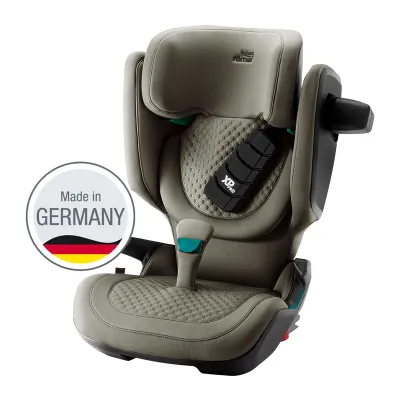
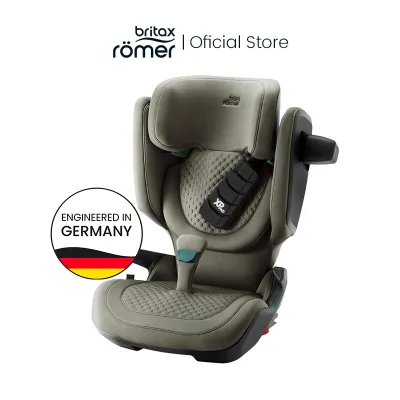
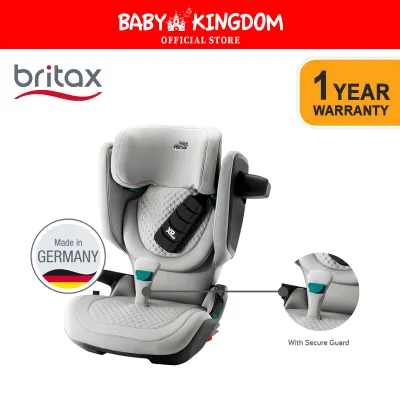
A high back booster seat can only protect a child if it is compatible with the vehicle and installed correctly. Before installation, check whether your vehicle has ISOFIX lower anchor points or if you must rely entirely on the vehicle’s three-point seatbelt system to secure both the seat and the child. Some high back boosters utilize ISOFIX connectors to keep the seat stable when unoccupied, but the primary restraint mechanism is almost always the vehicle’s adult seatbelt.
Ensure your vehicle’s seatbelts are three-point belts; a two-point lap belt is never safe or legal for securing a booster seat. When routing the seatbelt through the booster, perform a visual check of the belt path. The shoulder belt must pass through the designated red or green guide on the booster’s headrest, crossing snugly over the middle of the child’s collarbone rather than rubbing against their neck or slipping off their shoulder.
The lap belt portion must sit low across the child’s hips and upper thighs, resting on the strong pelvic bones. It should never ride up over the soft abdomen, as this can cause severe internal injuries in the event of a sudden stop or collision.
Parents must monitor when it is time to discontinue using a specific high back booster. Check the manufacturer’s manual for the maximum height and weight limits, and observe the child’s physical fit: if the top of their ears rises above the highest point of the booster’s headrest, they have outgrown the seat’s protective shell.
Transitioning from a High Back Booster to a Standard Seatbelt
Transitioning a child from a high back booster to a standard vehicle seatbelt is a major milestone that requires careful, objective assessment. Even if a child has reached the legal height threshold of 1.35 metres in Singapore, they may not yet be physically ready for a standard seatbelt due to their body proportions or the design of the vehicle’s seats.
To determine readiness, parents can use the widely recognized “5-Step Test” as an objective evaluation framework. First, check if the child can sit all the way back against the vehicle seat back with their knees bending comfortably over the edge of the seat cushion without slouching. Second, verify that the shoulder belt rests naturally across the middle of their collarbone, not on their neck or face.
Third, ensure the lap belt sits low and flat across their hips, touching their thighs. Fourth, confirm that the child can maintain this correct seating posture for the entire duration of the journey. If they slouch, wiggle, or slide forward, the seatbelt will shift into a dangerous position, indicating they still require the positioning help of a high back booster.
Finally, monitor the child’s habits during the initial transition weeks. Children accustomed to the side support of a high back booster may fall asleep and slump sideways, or tuck the shoulder belt under their arm or behind their back, both of which are highly unsafe and legally non-compliant.
Frequently Asked Questions (FAQ)
Can my child sit in the front seat with a high back booster seat?
Under Singapore’s traffic laws, children under the height of 1.35 metres are generally restricted from riding in the front passenger seat unless they are properly secured in an approved child restraint. However, even with a high back booster, placing a child in the front seat is highly discouraged by safety experts due to the extreme force of deploying front airbags.
If front-seat travel is absolutely unavoidable and legally permitted for your specific vehicle type, you must consult your vehicle’s manual to determine how to safely adjust the front passenger seat. This typically involves sliding the vehicle seat as far back as possible on its tracks to maximize the distance between the child and the airbag dashboard, or manually deactivating the passenger airbag if the vehicle is equipped with that feature.
Are backless booster seats legal in Singapore?
Backless booster seats, often referred to as booster cushions, are legally permitted in Singapore provided they carry an approved safety certification label and match the child’s height and weight profile. However, they offer significantly less protection than high back booster seats, particularly in side-impact collisions where there is no built-in headrest or side wings to cushion the child’s head and torso.
When choosing between the two, parents should review the manufacturer’s guidelines and official safety recommendations. High back boosters are generally recommended for younger or smaller children because they provide crucial upper-body support, keep the seatbelt properly positioned even when the child falls asleep, and offer a physical barrier against side-impact forces.
Community discussion
Share your experience or ask a question. Comments are reviewed before publication.