
When selecting a laundry detergent for your infant, understanding what goes onto their clothes—and ultimately touches their delicate skin—is paramount. Kodomo baby detergent is formulated specifically to balance effective stain removal with dermatological gentleness. The primary active ingredients in these formulas include mild, plant-derived surfactants that lift organic soils, paired with targeted biological enzymes in specialized variants to break down milk proteins and food starches. By omitting harsh additives like optical brighteners, phosphates, and heavy synthetic dyes, the formulation aims to minimize the risk of contact dermatitis and skin irritation in infants.
In a high-humidity environment like Singapore, where laundry is frequently dried indoors or in semi-enclosed service yards, detergent residue can become a significant issue. If a detergent does not rinse clean, the combination of trapped moisture and chemical residue can irritate a baby’s thin skin barrier. Understanding how these ingredients function, how they interact with local soft water, and how to optimize your washing routine ensures your baby’s garments remain clean, soft, and completely safe to wear.
Core Cleaning Agents: How Surfactants and Enzymes Tackle Baby Stains
Surfactants, or surface-active agents, are the workhorses of any laundry detergent. They function by reducing the surface tension of water, allowing it to wet fabrics more thoroughly and penetrate deep into the fibers. A surfactant molecule consists of a hydrophilic (water-attracting) head and a hydrophobic (water-repelling) tail. The hydrophobic tail attaches itself to oily soils, milk fats, and sebum, while the hydrophilic head remains bonded to the water. As the washing machine agitates, the surfactants pull the oils away from the fabric, suspending them in the water so they can be rinsed away.
Products mentioned in this guide
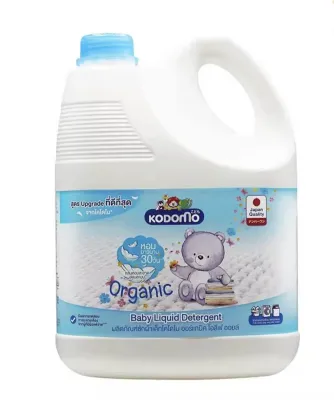
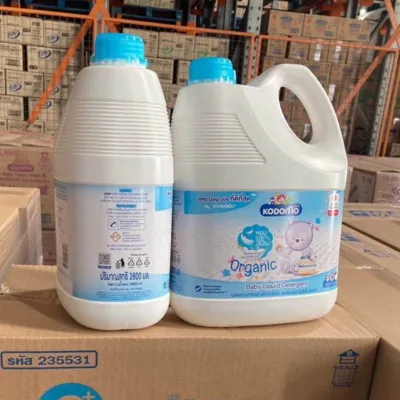
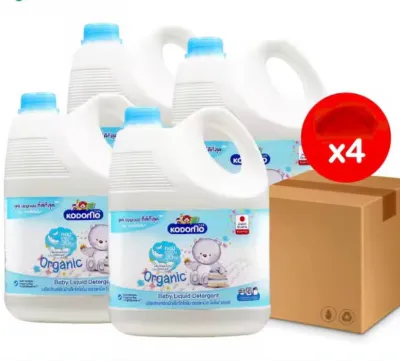
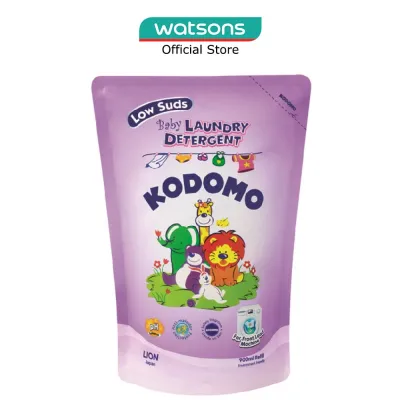
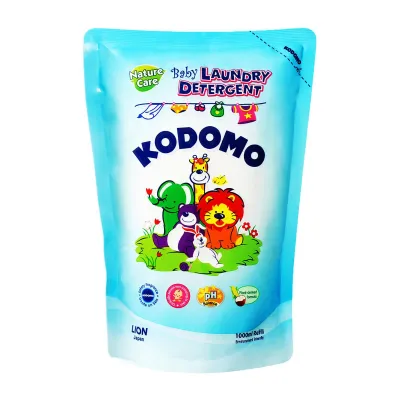
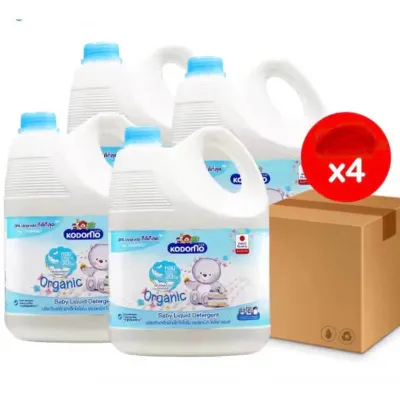
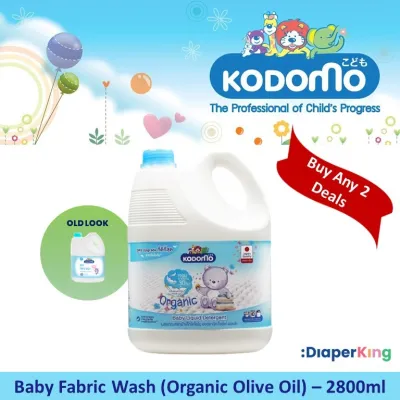
Prices are valid at publication and may change. Please refer to the product page for the latest price.
In baby detergents like Kodomo, the choice of surfactants is carefully calibrated. Standard adult detergents often rely heavily on strong anionic surfactants, which provide excellent grease-cutting power but can strip the natural lipids from human skin if any residue remains on the clothing. Baby-specific formulas typically blend mild anionic surfactants, often derived from natural coconut or palm oils, with non-ionic surfactants like alkyl polyglucosides. Non-ionic surfactants carry no electrical charge, making them exceptionally gentle on skin and highly effective at emulsifying oily residues without causing irritation or leaving harsh chemical deposits on fabric fibers.
To tackle the unique stain profiles of growing infants, certain variants of baby detergent incorporate biological enzymes. Babies are prone to spills involving breast milk, infant formula, spit-up, and eventually, solid food purees. These stains are primarily composed of complex proteins and starches that surfactants alone cannot easily dissolve. Enzymes act as highly specific biological catalysts that break down these large, complex molecules into smaller, water-soluble fragments. For example, protease enzymes specifically target and degrade protein stains like milk and blood, while amylase enzymes break down starches from baby cereals and vegetable purees.
When using an enzyme-based baby detergent, understanding water temperature is critical for maintaining chemical efficacy. Enzymes are proteins themselves, meaning their structure and function are highly dependent on temperature. Most modern enzymes used in baby detergents are optimized to perform best in cool to warm water, typically between 30°C and 40°C. If the water is too cold, the chemical reaction slows down significantly, reducing stain-removal performance. Conversely, if caregivers use extremely hot water—such as a 90°C sanitizing cycle—the heat will denature the enzymes, permanently destroying their catalytic ability and rendering them useless. Always refer to the manufacturer’s care instructions on both the detergent bottle and the baby’s clothing labels to determine the optimal washing temperature.
Additives and "Free-From" Claims: What They Mean for Sensitive Skin
The marketing labels on baby detergents frequently highlight what is not in the bottle. Among the most common exclusions are phosphates and fluorescent brighteners, also known as optical brighteners. Phosphates were historically added to detergents to soften hard water and improve cleaning efficiency. However, they are highly detrimental to aquatic ecosystems, leading to excessive algae growth that suffocates marine life. Because Singapore’s municipal water supply is naturally soft, the inclusion of phosphates is entirely unnecessary for water softening, making phosphate-free formulas both environmentally responsible and highly effective.

Fluorescent brighteners are chemical dyes that remain on the fabric after washing. They absorb invisible ultraviolet light and emit visible blue light, making yellowed fabrics appear whiter and brighter to the human eye. While this optical illusion is popular in adult laundry, these chemicals do not actually clean the clothes. Instead, they deposit a chemical film on the fabric fibers that comes into direct, prolonged contact with the baby’s skin. For infants with eczema, dry skin, or developing immune systems, these lingering brighteners can trigger allergic contact dermatitis, redness, and persistent itching. Choosing a detergent free from optical brighteners ensures no unnecessary chemical residues are left behind to irritate your child’s skin.
Preservatives and fragrances represent another critical category of additives. Because liquid detergents are water-based, they are highly vulnerable to contamination by bacteria, yeast, and mold. Without preservatives, a bottle of detergent stored in a warm, humid Singaporean bathroom or service yard would quickly become a breeding ground for harmful pathogens. Therefore, mild, dermatologically tested preservatives are essential to maintain product stability and safety. Fragrances, on the other hand, are purely aesthetic. While many parents love the classic, clean scent associated with baby laundry, synthetic fragrances are among the most common triggers for skin sensitivities. If your infant has highly reactive skin or eczema, opting for a fragrance-free or hypoallergenic variant is the safest course of action to prevent flare-ups.
Some specialized baby detergents also feature antibacterial or antimicrobial additives. These ingredients are designed to sanitize garments by eliminating bacteria that cause odors or skin infections. While antibacterial formulas can be highly beneficial for sanitizing heavily soiled cloth diapers, bedding after an illness, or damp clothes that have developed a musty smell from indoor drying, they are generally not necessary for daily, lightly soiled infant wear. For routine laundry, a standard wash with a mild detergent and thorough rinsing is entirely sufficient to maintain excellent hygiene without exposing your baby’s skin to unnecessary antimicrobial chemicals.
Matching the Formula to Your Baby's Age and Skin Sensitivity
As your baby grows, their skin barrier matures, and their daily activities change, requiring you to adapt your laundry strategy. Newborns have incredibly delicate, thin skin that is highly permeable to environmental chemicals. During the first six months of life, a newborn’s skin barrier is still developing its protective lipid layer. For this stage, caregivers should prioritize detergent variants with the simplest possible ingredient lists. Look for formulas that are completely free of dyes, fragrances, and optical brighteners, focusing purely on mild, plant-based surfactants that clean without stripping the skin’s natural moisture.
Once your baby transitions into an active toddler—crawling on the floor, exploring the outdoors, and experimenting with self-feeding—their stain profile shifts dramatically. The laundry basket will soon be filled with stubborn grass stains, mud, colorful fruit purees, and grease from finger foods. At this stage, a minimalist newborn detergent may struggle to clean garments effectively, leading to dingy fabrics and lingering odors. Transitioning to an enzyme-rich baby detergent variant allows you to leverage the targeted stain-cleaning power of proteases and amylases. These enzymes dissolve tough organic bonds at the molecular level, reducing the need for aggressive scrubbing or harsh pre-treatment chemicals that can prematurely wear out clothing fibers.
Environmental factors, particularly local water quality, play a major role in how detergent ingredients perform. In Singapore, the tap water is classified as soft, meaning it contains very low concentrations of dissolved calcium and magnesium minerals. Soft water is highly advantageous for laundry because minerals do not interfere with the surfactants, allowing the detergent to lather easily and clean efficiently at lower dosages. However, this also means that using too much detergent can quickly lead to an oversaturated wash cycle with excessive suds. These suds are incredibly difficult to rinse out completely, especially in modern, water-efficient front-loading washing machines, often leaving a soapy residue trapped within the fabric fibers.
While selecting a high-quality baby detergent is an excellent preventive measure, caregivers must remain vigilant regarding their baby’s skin health. Every child’s skin chemistry is unique, and a formula that works perfectly for one infant may trigger a reaction in another, regardless of “hypoallergenic” or “dermatologically tested” claims. If your baby develops unexplained skin rashes, dry patches, hives, or signs of discomfort after wearing freshly washed clothes, immediately discontinue use of the current detergent. Wash a batch of their clothing using only plain water to strip away any remaining residue, and consult a pediatrician or pediatric dermatologist to identify the underlying cause and secure an appropriate treatment plan.
Reading the Label and Optimizing Your Laundry Routine for Safety
Optimizing your baby’s laundry routine begins with a careful reading of the product’s back label. Rather than relying solely on front-of-pack marketing claims, flip the bottle over to locate the ingredient list, dosage instructions, and safety warnings. The ingredient list will help you verify the presence of mild surfactants and the absence of optical brighteners or synthetic dyes. Additionally, pay close attention to the dosage chart, which is typically divided based on the washing method—hand washing, top-loading machines, or front-loading machines—as well as the size of the laundry load and the level of soil.
Precise dosing is one of the most critical steps in ensuring both fabric cleanliness and skin safety. A common misconception among caregivers is that using more detergent results in cleaner, fresher clothes. In reality, modern baby detergents are highly concentrated, and exceeding the recommended dosage does not improve cleaning power. Instead, the excess detergent becomes trapped in the fabric fibers during the rinse cycle. This surfactant residue acts like a magnet, attracting dirt, dust, and body oils back onto the clothing while it dries. When the baby wears these garments, the trapped chemicals rub against their skin, causing friction, heat buildup, and contact irritation.
To guarantee that clothes are completely free of irritating chemical residues, establish a rigorous rinsing protocol. This is especially vital for garments that remain in direct, prolonged contact with the baby’s skin, such as swaddles, sleepwear, and reusable cloth diapers. Most modern washing machines offer an “extra rinse” or “sensitive skin” cycle, which adds an additional rinse phase to the end of the program to flush out any lingering surfactants. After the wash is complete, perform a quick physical check of the damp garments: if they feel slimy to the touch, appear unusually stiff, or carry an intense, overpowering fragrance, it is a clear sign that detergent has been overdosed or that the rinse cycle was insufficient. Adjust your dosage downward for the next load to maintain optimal fabric softness and skin safety.
Frequently Asked Questions (FAQ)
Can I use Kodomo baby detergent for the whole family's laundry?
Using a single detergent for the entire household is a highly practical and cost-effective approach, particularly for busy parents. Kodomo baby detergent is perfectly safe and highly effective for washing adult clothing, especially shared household items like bedsheets, pillowcases, and bath towels that frequently come into contact with your baby’s skin. However, it is important to recognize the limitations of baby formulas. Adult garments often accumulate heavy sebum, synthetic perfumes, deodorants, and industrial or outdoor soils that require stronger surfactants, optical brighteners, or heavy-duty builders to clean completely. A practical compromise is to use the baby detergent for all shared family linens and daily casual wear, while reserving a standard adult detergent for heavily soiled workwear, sports gear, or deeply stained garments, ensuring these adult items are washed separately from the baby’s laundry.
Do I need to use a separate fabric softener with baby detergent?
In most cases, using a separate fabric softener is neither necessary nor recommended for infant laundry. Many baby detergents, including various Kodomo formulations, are specifically designed to leave fabrics naturally soft and pliable without the need for additional additives. Standard commercial fabric softeners work by depositing a thin, lubricating chemical film—often containing quaternary ammonium compounds and heavy synthetic fragrances—over the fabric fibers to reduce static and increase softness. This chemical coating significantly reduces the absorbency of fabrics, which is highly problematic for baby towels, bibs, and reusable cloth diapers that need to absorb moisture quickly. Furthermore, these lingering softening chemicals and fragrances are common dermatological irritants. If you feel a fabric softener is absolutely necessary due to local drying conditions, always select a product formulated specifically for infants, free of strong synthetic fragrances, and verify that it does not trigger any skin sensitivities.
Community discussion
Share your experience or ask a question. Comments are reviewed before publication.