
When a baby transitions from milk to solid foods, the physical journey involves far more than simply swallowing new textures. It is a complex motor task requiring hand-eye coordination, spatial awareness, and muscle control. Many parents in Singapore focus heavily on the nutritional content of the puree or finger food, sometimes overlooking the tools they place in their child’s hands. The right kids spoon and fork set acts as a developmental bridge, transforming a potentially frustrating chore into an empowering learning experience.
Using adult-sized or poorly designed cutlery can severely hinder this development. Standard household spoons are often too long, too heavy, and too deep for a baby’s tiny mouth and undeveloped grip. When a child struggles with a tool that does not match their physical capabilities, they frequently experience spills, dropped food, and physical fatigue. This frustration can lead to mealtime resistance, where the child rejects self-feeding altogether and insists on being fed by a caregiver. Providing utensils tailored to their current developmental stage helps build confidence and fosters independence early on.
There is no single “perfect” utensil set that will carry a child from their first taste of puree at six months all the way to independent family meals at two years old. A baby’s grip, mouth capacity, and coordination evolve rapidly during these eighteen months. What works beautifully for a six-month-old who is just learning to close their lips around a spoon will be completely inadequate for an eighteen-month-old attempting to pierce a piece of steamed carrot. Features must adapt as the child transitions from purees to solid foods, requiring parents to choose tools that match their child’s current motor skills.
Products mentioned in this guide
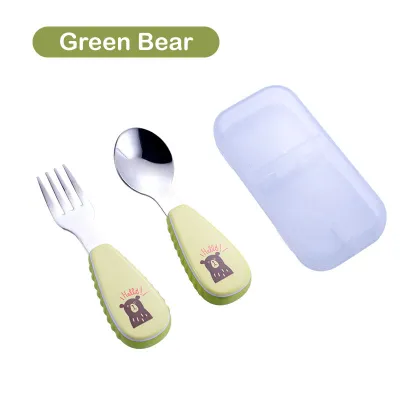
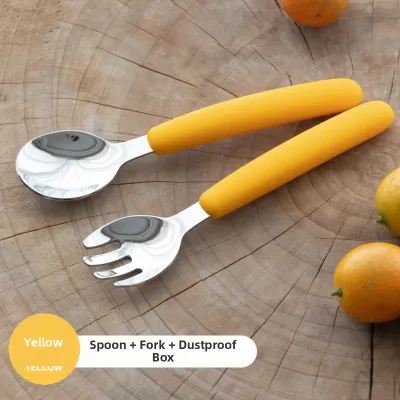
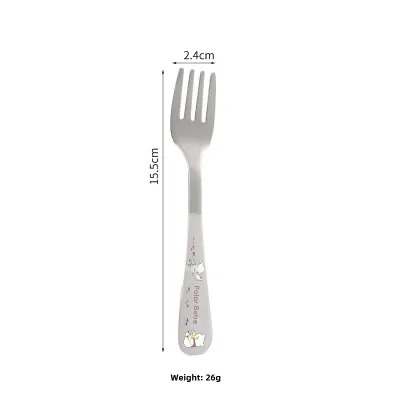
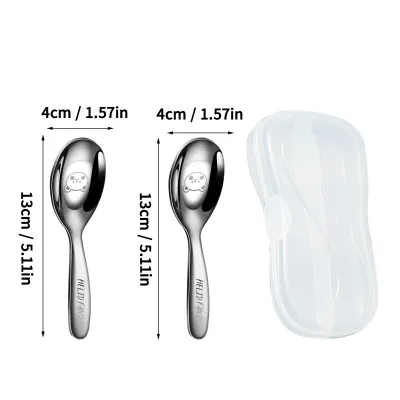
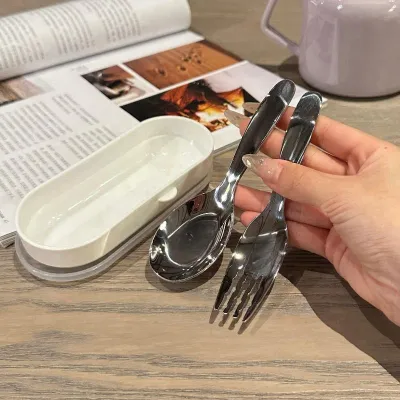
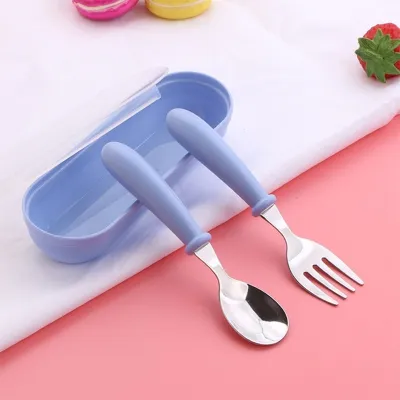
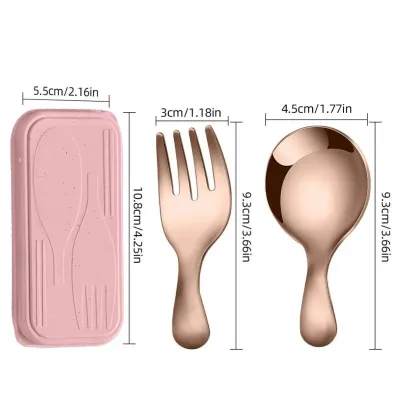
Prices are valid at publication and may change. Please refer to the product page for the latest price.
Core Features to Evaluate in Any Kids Spoon and Fork
When evaluating any kids spoon and fork set, looking past bright colours and cartoon characters is essential. The physical design of the utensil directly dictates how easily a child can navigate food from the plate to their mouth. By understanding the biomechanics of how young children eat, parents can make informed choices that reduce mealtime mess and support natural developmental progression.
Handle Grip and Ergonomics
The way a child holds an object changes dramatically over the first two years of life. Infants initially use a palmar grasp, wrapping their entire fist around an object from the top or side. As their fine motor skills improve, they transition to a pincer grasp, using their thumb and index finger to manipulate smaller items with precision. Utensil handles must accommodate these shifting grip patterns to remain functional.
For early learners, short, chunky, and rounded handles are vastly superior to long, thin ones. A shorter handle reduces the leverage required to lift the utensil, making it much easier to control. Round or bulbous handles fill the small palm comfortably, allowing the child to secure a firm grip without needing advanced finger strength. Furthermore, textured surfaces or contoured ridges help prevent the utensil from slipping out of greasy or wet hands during messy self-feeding sessions.
Non-slip materials, such as food-grade silicone or textured thermoplastic rubber, provide the necessary friction for a secure hold. When a child’s hands are covered in oils, purees, or water, smooth plastic or polished metal handles slide easily, causing the utensil to twist in their grip. A stable handle ensures that the spoon bowl or fork tines remain upright, which is crucial for successful food transport.
Spoon Bowl Depth and Angle
The business end of the spoon requires careful inspection, particularly regarding the depth and contour of the bowl. Standard spoons have a deep cup that holds a significant volume of liquid, but a young child does not yet possess the oral motor skills to clean a deep spoon bowl with their upper lip. Instead, they require a design that works with their natural biting and scraping motions.
Shallow, relatively flat spoon bowls are highly effective for early self-feeding. When a baby takes a bite, they typically press their upper lip down to scrape the food off the spoon. A flat or shallow bowl allows them to retrieve the entire portion easily without leaving half of it trapped in a deep pocket. Additionally, some training spoons feature an angled or offset neck. This curve offsets the need for the child to rotate their wrist completely—a movement they often struggle to coordinate in the early stages of self-feeding.
Conversely, deep, adult-style spoon bowls should be avoided in the early stages. If a spoon holds too much food or is too deep, the child may struggle to clear it, leading to choking hazards or triggering a sensitive gag reflex. A spoon bowl that is too wide can also stretch the corners of a small mouth uncomfortably, causing discomfort and making the child hesitant to take subsequent bites.
Fork Tine Shape and Safety
Introducing a fork can feel daunting for parents concerned about safety, but a well-designed toddler fork is highly functional and poses minimal risk. The primary purpose of a kids fork is to help them transition from scooping to piercing, which requires a balance between safety and utility.
An ideal toddler fork features blunt, rounded tines that are safe to touch but still capable of piercing soft foods like steamed sweet potato, pasta, or soft fruits. Sharp metal tines can easily poke or scratch a toddler’s sensitive gums and lips, especially when their hand-eye coordination is still developing and their movements remain erratic. Some beginner forks utilize a rounded outer edge or a protective guard near the base of the tines to prevent the child from pushing the utensil too far into their oral cavity.
It is also helpful to distinguish between early “rakes” and true “piercing” forks. Early-stage forks often feature flat, wide, and slightly curved tines made of silicone or soft plastic. These act more like textured scoops or rakes, helping the child trap slippery foods against the plate rather than actually piercing them. As the child’s coordination improves, they can transition to firmer materials with defined, blunt tines that allow for genuine piercing actions.
Ideal Utensil Features by Developmental Stage
Children develop at their own pace, meaning chronological age is often a less reliable guide than observable physical milestones. When choosing a kids spoon and fork set, observing how your child interacts with food and objects will tell you exactly which features they require.

Early Weaning and First Tastes (Starting Solids)
This stage typically begins around six months of age, though parents should look for specific physical readiness signals. These include the ability to sit upright with minimal support, good head and neck control, a strong interest in what others are eating, and the disappearance of the tongue-thrust reflex (where the tongue automatically pushes solid objects out of the mouth).
At this initial phase, feeding is primarily parent-led, though babies will frequently reach out to grab the spoon. The ideal utensils for this stage feature extra-short handles that allow for easy parent guidance while remaining safe if the baby grabs and shoves the spoon. The spoon bowl must be exceptionally narrow and shallow to match the tiny capacity of a six-month-old’s mouth. Soft, highly flexible silicone is the preferred material here, as it is incredibly gentle on sensitive, teething gums and will not cause pain if the baby accidentally strikes their mouth.
Forks are completely unnecessary during this early weaning phase. The focus should remain entirely on introducing single-ingredient purees, mashed foods, or very soft finger foods. Introducing a fork at this stage serves no developmental purpose and can introduce unnecessary frustration. A simple, soft silicone spoon is all that is required to help the baby learn the mechanics of swallowing from a utensil.
Developing the Pincer Grasp and Self-Feeding
As children approach their first birthday, usually between nine and fifteen months, their motor skills undergo a significant upgrade. Parents will notice their child actively reaching for the spoon during meals, attempting to dip the utensil into their bowl, and successfully picking up small pieces of food using their thumb and forefinger (the pincer grasp).
This is the prime window to introduce self-feeding training utensils. Look for spoons and forks with slightly longer but still chunky handles that accommodate a transitioning grip. Angled necks are particularly beneficial here, as they allow the child to bring food directly to their mouth even if they cannot yet rotate their wrists smoothly. This is also the appropriate time to introduce a beginner fork with blunt, widely spaced tines, allowing them to experiment with the concept of stabbing soft pieces of food.
Because utensils are frequently dropped, thrown, or banged against the high chair tray during this experimental phase, durability is key. Utensils with a weighted base or an ergonomic curve that prevents the spoon bowl from touching the table surface when laid down can help maintain hygiene. Look for designs that are easy to wash and resilient enough to withstand constant impact without cracking or chipping.
Confident Toddler Eating and Table Manners
By eighteen to twenty-four months, many toddlers have developed the coordination necessary to feed themselves with minimal spills. They can successfully navigate a variety of food textures, pierce firmer items with a fork, and are beginning to sit at the family dining table rather than in a high chair.
For these confident eaters, utensils should begin to transition toward designs that mimic adult cutlery, albeit on a smaller scale. Handles can become longer and slimmer, as the child now possesses the finger strength and coordination to hold them using a mature pincer or tripod grasp. Spoon bowls can be slightly deeper to accommodate liquids like soups or broths, which are common in Singaporean households. The fork tines can be made of firmer materials, such as food-grade stainless steel, with slightly more defined tips that make piercing meat or vegetables easier, while still maintaining rounded, kid-safe edges.
This stage is an excellent time to invest in high-quality stainless steel sets featuring comfortable silicone, wooden, or BPA-free plastic grips. These materials are highly durable, mimic the look of adult tableware, and help the child feel like an active participant in family meals. They are also incredibly easy to sanitize, ensuring they remain hygienic through years of daily use.
Material, Safety, and Care Considerations
Choosing the right material for your child’s spoon and fork is not just about aesthetics; it directly impacts safety, durability, and daily maintenance. Parents must weigh the pros and cons of food-grade silicone, stainless steel, bamboo, and plastics to find the best fit for their household.
Food-grade silicone is highly popular for early weaning due to its soft texture, flexibility, and resistance to heat. It is gentle on gums and virtually unbreakable, making it ideal for babies who tend to throw their utensils. Stainless steel is incredibly durable, hygienic, and mimics adult cutlery, making it perfect for older toddlers, though it is too hard for early teething infants. Bamboo and wood offer a natural, eco-friendly alternative, but they require hand washing and can degrade or splinter over time if exposed to prolonged moisture. BPA-free plastics are lightweight and affordable, but they can scratch easily, creating tiny crevices where bacteria can multiply, and they may degrade when exposed to high heat in dishwashers or sterilizers.
When purchasing kids utensils, parents should look past marketing buzzwords and verify safety claims through independent certifications. Look for packaging that indicates compliance with international safety standards, such as FDA approval, LFGB (European) certification, or EN 14372 (the European standard for child use and care articles). In Singapore, ensuring that materials are free from harmful chemicals like BPA, phthalates, lead, and PVC is crucial for long-term health.
Proper care and maintenance are vital to keep these utensils safe for daily use. Always check the manufacturer’s instructions to verify if a utensil is dishwasher-safe or if it can be placed in a steam sterilizer. Silicone utensils should be inspected regularly for micro-tears, discoloration, or sticky residues, which indicate that the material is beginning to degrade. Any utensil showing signs of cracking, splintering, or deep scratching should be discarded immediately to prevent choking hazards or bacterial contamination.
Most importantly, parents must remember that no utensil, regardless of its safety features, replaces active caregiver supervision. Always supervise your child during meals to prevent them from running with utensils in their mouth or shoving them too far down their throat. Always refer to the specific manufacturer’s documentation for age recommendations, weight limits, and usage warnings before introducing a new product to your child.
Shopping Checklist: What to Look for Before You Buy
To make your shopping experience easier, keep this quick-reference checklist in mind when browsing local baby boutiques or online marketplaces in Singapore. Matching the utensil features to your child’s current motor skills will ensure a smoother transition to self-feeding.
- Handle Design: Short, thick, and rounded handles for infants using a palmar grasp; longer, slimmer handles for toddlers developing a pincer grasp.
- Spoon Bowl Shape: Shallow, narrow, and slightly flat for early weaning to facilitate easy scraping; deeper bowls for older toddlers eating soups or grains.
- Fork Tine Safety: Blunt, rounded tines that are wide enough to prevent accidental throat insertion but firm enough to pierce soft food.
- Material Quality: High-quality food-grade silicone for beginners; durable stainless steel with non-slip grips for older toddlers.
- Safety Certifications: Look for clear labels indicating BPA-free materials and compliance with standards like FDA, LFGB, or EN 14372.
Red Flags to Avoid
- Long, Thin Handles for Beginners: These act as levers, making it difficult for infants to control the utensil and increasing the risk of eye or mouth injuries.
- Sharp Metal Tines: Avoid adult-style metal forks for children under two, as they can easily cut or bruise delicate gums and lips.
- Deep Spoon Bowls: Deep pockets trap food, causing frustration for babies who cannot yet clear the bowl with their upper lip.
- Unverified Cheap Plastics: Low-cost, unbranded plastic utensils may contain harmful chemicals or crack easily under pressure, creating sharp edges and choking hazards.
Ultimately, the best kids spoon and fork set is one that aligns with your child’s observable physical capabilities rather than the generic age label printed on the packaging. By observing how they grasp objects and manage food in their mouth, you can select a tool that minimizes frustration and turns every meal into a successful step toward independence. If you ever have concerns about your child’s physical development, feeding milestones, or persistent difficulties with swallowing, consult a qualified paediatrician or occupational therapist for professional guidance.
Community discussion
Share your experience or ask a question. Comments are reviewed before publication.