
When dining out with your baby at a bustling hawker centre or a shopping mall in Singapore, having a dedicated travel cutlery set in your diaper bag makes on-the-go feeding significantly easier. The ideal travel cutlery set must balance safety, portability, and developmental suitability. Rather than choosing a set based solely on aesthetics, you need to evaluate how the utensils align with your baby’s physical milestones, grip strength, and food textures.
Selecting the right tools prevents mealtime frustration and supports your child’s transition to independent eating. Because oral motor skills and coordination change rapidly during weaning, a single set of utensils is unlikely to meet their needs from the first purees to self-feeding solids. Understanding what features to prioritize at each developmental milestone ensures a safe, hygienic dining experience.
Match the Cutlery to Your Baby's Weaning Stage
Weaning is a progressive developmental journey. A travel cutlery set that works perfectly for a six-month-old starting their first purees will not suit a one-year-old learning to spear soft fruit. To choose the right travel set, you must first assess your baby’s current motor skills, coordination, and food textures. Matching the utensil’s material, size, and shape to their developmental stage reduces mealtime mess and prevents oral discomfort.
Products mentioned in this guide
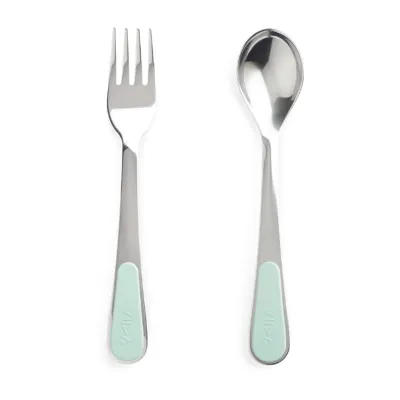
![[VIIDA] CULI Stainless Steel Travel Spoon & TOLI Fork Set of 2 (6 Colour)](https://img.lazcdn.com/g/p/d41f4f16fa893e2cc82b0df9d552339d.jpg_400x400q80.jpg_.webp)
Prices are valid at publication and may change. Please refer to the product page for the latest price.
Early Weaning (Around 6 Months): Soft Spoons for Purees
At the start of weaning, your baby is transitioning to smooth purees. During this stage, their gums are highly sensitive and their primary feeding reflex is still developing. Look for travel spoons made from ultra-soft, flexible silicone that gently bend against sensitive gums. A shallow spoon bowl is essential, allowing your baby to easily clear food with their upper lip without requiring deep suction. Additionally, look for long, slender handles that let you comfortably guide the spoon from across a table. Always verify the manufacturer’s age recommendations on the packaging to ensure the spoon’s dimensions are appropriate for a young infant’s mouth.
Mid Weaning (7-9 Months): Introducing Forks and Finger Foods
During mid weaning, babies begin exploring thicker textures, mashed foods, and soft finger foods. This is the ideal time to introduce a travel fork alongside their spoon. A travel fork for this stage must feature blunt, rounded tines that can easily scoop or gently spear soft foods like steamed pumpkin without posing a puncture risk to delicate gums. Look for handles that feature textured grips or non-slip silicone sleeves. These textures encourage your baby to transition from parent-led feeding to grasping the utensils themselves, helping develop early hand-eye coordination.
Late Weaning (10-12 Months+): Complete Sets for Self-Feeding
Older babies display a strong desire for independence and are actively developing their pincer grasp. They want to feed themselves, which requires a complete travel cutlery set consisting of a spoon, fork, and sometimes a dull, rounded toddler knife. For this stage, choose sets with short, thick, and chunky handles. These bulbous or teardrop-shaped handles are designed specifically for small hands to grip securely using a palmar grasp. Providing the right ergonomics at this stage boosts their confidence and reduces the likelihood of utensils slipping out of their hands and landing on a restaurant floor.
Essential Safety and Material Features to Verify
When buying products that directly contact your baby’s food, safety must be your absolute priority. Because travel cutlery is subjected to frequent packing, unpacking, and varying temperatures, you must carefully evaluate both the chemical composition and the physical build of the utensils.

Material Verification
Do not rely on vague marketing terms like ‘eco-friendly’ when evaluating a travel cutlery set. Instead, check the product labels for official food-grade certifications. Ensure the manufacturer explicitly states that the set is BPA-free, PVC-free, and phthalate-free. These chemical compounds can leach into food, especially when exposed to heat, so verifying these certifications on the physical packaging is a critical safety step before purchase.
Silicone vs. Stainless Steel vs. Plastic
Each material offers distinct advantages and trade-offs to weigh based on your travel habits. Food-grade silicone is exceptionally soft, making it the safest choice for protecting sensitive gums, though it can sometimes absorb food odors or sustain stains from bright foods like carrots. Stainless steel is incredibly durable, hygienic, and resistant to odors, making it excellent for older babies who need to spear firmer foods, but it lacks the soft cushioning of silicone. High-quality, food-grade plastics are lightweight and highly budget-friendly for travel, but they can degrade or scratch over time, creating tiny crevices where bacteria can hide. Whichever material you choose, always check the manufacturer’s specified temperature limits to ensure the set can safely withstand your preferred sterilization methods or hot foods.
Physical Safety Checks
Before use, perform a visual and tactile inspection of the items. Look for a seamless, one-piece construction; utensils with joints or glued parts can break under pressure or trap food particles in hard-to-clean seams. Run your fingers along the edges of the spoons and forks to ensure there are no sharp plastic seams or rough metal edges. Pay close attention to multi-material utensils, such as a silicone spoon head attached to a wooden or plastic handle. Ensure these attachments are completely secure and cannot be pulled apart, as any small, detachable parts pose a serious choking hazard. If you notice any signs of cracking, peeling, or loose parts, stop using the cutlery immediately and consult the manufacturer.
Portability and Hygiene Features for On-the-Go Meals
A travel cutlery set is only useful if it is easy to transport and maintain while you are away from home. In Singapore’s warm and humid climate, hygiene is a constant consideration, making smart portability features essential for keeping your diaper bag clean and your baby safe from bacteria.
Protective Cases and Covers
Do not toss loose cutlery directly into your diaper bag, where it can collect dust and bacteria. Look for travel cutlery sets that come with their own dedicated, hard-shell storage case or secure snap-on covers that fully enclose the utensil heads. The ideal travel case should feature built-in ventilation holes. These small vents allow air to circulate, preventing moisture from trapping inside the case and discouraging the growth of mold or bacteria if you have to pack the cutlery away slightly damp after a meal at a restaurant.
Compact and Bag-Friendly Designs
Space is limited when packing a diaper bag for a day out. Before purchasing a set, check its physical dimensions to ensure the cased utensils can easily slide into your standard wet bags, insulated bottle bags, or compact changing clutches. Some travel sets feature foldable or collapsible handles that significantly reduce their storage footprint. While these space-saving designs are highly convenient, you must carefully inspect the hinges and folding joints. Ensure the hinges are sturdy enough to withstand repeated folding and do not feature deep, narrow crevices that can act as food traps and make cleaning difficult.
Cleaning Convenience
When dining out, you rarely have access to baby bottle brushes or sterilizers. Therefore, your travel cutlery should feature a crevice-free, streamlined design that can be easily wiped down or rinsed in a restroom sink. Look for dishwasher-safe labels—specifically those indicating the set can be safely placed on the top rack—to make deep cleaning effortless once you return home. If a set requires complex hand-washing protocols or cannot tolerate standard dish soaps, it may become a hassle to maintain during extended trips.
Ergonomic Designs for Self-Feeding and Parent Assistance
The physical design of the cutlery handles and heads directly impacts how comfortable and successful mealtime will be for both you and your baby. Choosing the right ergonomics depends on who is holding the utensil during the meal.
Handle Length and Thickness
The length and thickness of the cutlery handles should match your current feeding dynamic. If you are primarily feeding your baby, opt for long, slender handles. These allow you to scrape the bottom of deep baby food jars or travel containers easily, and they give you better leverage when feeding your baby across a table. Conversely, if your baby is practicing self-feeding, they require short, thick, and rounded handles. These chunky handles fit naturally into a baby’s palmar grasp, allowing them to bring food to their mouth with greater control. If you want a versatile option, consider purchasing dual-ended sets or travel kits that include both parent-led and baby-led utensils.
Angled and Offset Bowls
Spoons with angled or offset heads are designed specifically to assist babies who are learning to self-feed. Because infants lack the wrist rotation required to keep a standard spoon level as it moves from the bowl to their mouth, an angled spoon compensates for this physical limitation, reducing spills and frustration. However, keep in mind the trade-offs of this design. While highly beneficial for a self-feeding baby, an angled spoon can feel awkward and unnatural when you are trying to feed your baby yourself, meaning these sets are best reserved for the later stages of self-feeding.
Sensory and Grip Enhancements
Babies learn about their environment through tactile feedback, and their hands are often covered in food or moisture during meals. To prevent utensils from constantly slipping out of their hands, look for travel cutlery with sensory and grip enhancements. Features like raised silicone bumps, textured ridges, or soft matte finishes on the handles provide excellent tactile feedback. These non-slip surfaces help your baby maintain a secure hold even when their hands are wet or messy, fostering their independence and making on-the-go meals a more positive experience.
Quick Evaluation Checklist Before You Buy
Before you make your final purchase, use this quick checklist to compare travel cutlery options and ensure you select the safest, most practical set for your family’s needs:
- Developmental Match: Does the spoon or fork type align with your baby's current weaning stage and motor skills?
- Material Safety: Are the materials verified as food-grade, BPA-free, and phthalate-free on the product label?
- Physical Integrity: Is the design seamless, sturdy, and free from small, detachable parts that pose a choking hazard?
- Hygiene Protection: Does the set include a ventilated travel case or secure covers to keep the utensils clean in your bag?
- Ease of Cleaning: Is the cutlery free of deep crevices, and is it rated dishwasher-safe for easy sanitization?
- Ergonomic Support: Does the handle length and shape support your current feeding style, whether parent-led or self-feeding?
Always supervise your baby closely during every meal, and strictly follow the manufacturer’s care, cleaning, and safety instructions to ensure the longevity and safety of the travel cutlery set.
Frequently Asked Questions (FAQ)
How do I clean and sterilize baby travel cutlery while away from home?
To maintain proper hygiene while traveling, always start by checking the manufacturer’s care instructions for specific temperature limits and approved sterilization methods, such as boiling, steam, or UV sterilization. If you are staying in a hotel, a practical option is to rinse the cutlery in clean water and then submerge it in freshly boiled water from a clean kettle, provided the materials are rated for high temperatures. Alternatively, carry a small, travel-sized bottle of baby-safe dish soap and a portable brush in a clean zip-lock bag. Always ensure the cutlery and its travel case are completely dry before packing them away, as storing damp utensils in a sealed container can promote rapid bacterial or mold growth.
At what age can my baby start using a travel fork?
Most babies are developmentally ready to start using a fork during the mid-to-late weaning stages, typically between 8 and 10 months of age. This is the period when they begin developing their pincer grasp and can coordinate the physical movement required to spear soft, solid foods. When introducing a fork, always select one specifically designed for infants, featuring blunt, rounded tines and a short, slip-resistant handle. Because every baby develops at their own pace, you should monitor your child’s physical coordination and readiness rather than relying strictly on age guidelines. Always refer to the manufacturer’s age recommendations on the packaging before introducing any new utensil.
Community discussion
Share your experience or ask a question. Comments are reviewed before publication.