
Choosing a baby carrier hip seat requires balancing your child’s physical development with your own physical comfort. The right carrier acts as an ergonomic bridge, supporting your baby’s hips and spine while distributing their weight evenly across your body. To achieve this, you must look for specific design elements: a seat base that facilitates the natural M-position, a supportive back panel that respects the infant’s spinal curve, and a robust, padded harness system for the wearer.
Evaluating these features before purchasing ensures that your baby remains safe and comfortable during daily outings. Because every baby grows at a different rate, understanding how to assess these physical specifications will help you select a carrier that adapts to your family’s needs.
Decoding Seat Specs: Angle, Width, and the M-Position
The primary feature of a hip seat carrier is the shelf-like seat that supports the baby’s weight. To protect your baby’s developing hips, this seat must facilitate the “M-position,” also known as the froggy position. In this posture, the baby’s hips are bent so that their knees sit slightly higher than their hip joints, and their thighs are spread comfortably to wrap around the parent’s torso. The seat width must be wide enough to support the baby’s thighs from knee crease to knee crease, preventing the legs from dangling straight down, which can place harmful stress on the hip sockets.
Products mentioned in this guide
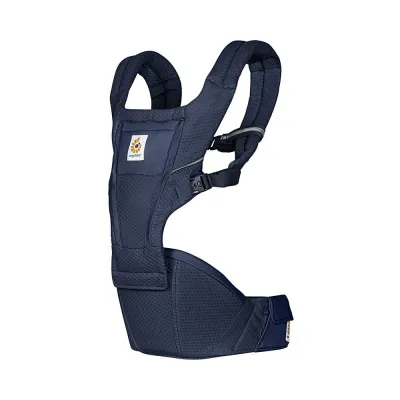

![[Ready stock]Ergo baby Alta Hip Seat Baby Carrier](https://img.lazcdn.com/g/p/ca5c5e8220b9b8ea9cb4913bc083a66e.jpg_400x400q80.jpg_.webp)
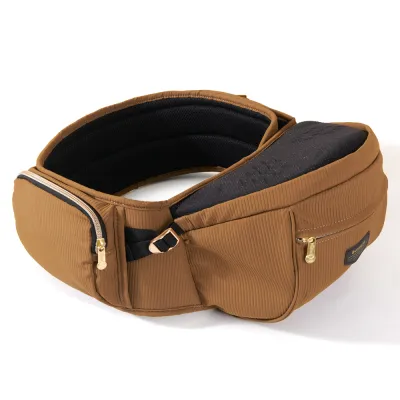
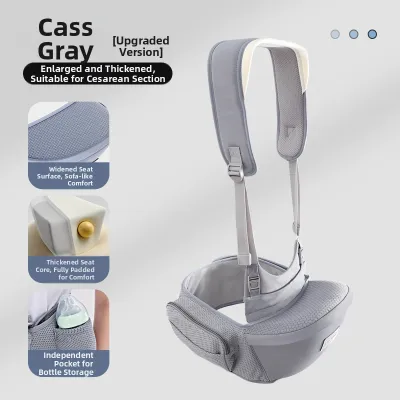
![[✅SG Ready Stock] Baby Carrier Infant Comfortable Breathable Multifunctional Sling Backpack Hip Seat Carrier Baby Carrie](https://img.lazcdn.com/g/p/e8c643c546e9e022264c606457589c93.jpg_400x400q80.jpg_.webp)
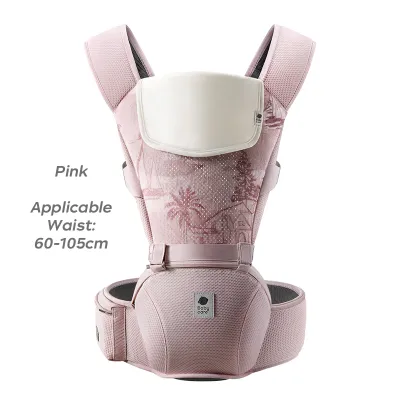
Prices are valid at publication and may change. Please refer to the product page for the latest price.
Seat angle is equally critical for maintaining proper pelvic tilt and preventing the baby from sliding forward. Many ergonomic hip seats are designed with a slight upward tilt toward the parent’s chest. This incline naturally shifts the baby’s center of gravity toward your body, keeping their pelvis tucked and reducing the pressure on their lower spine. When evaluating a carrier, check the manufacturer’s specifications for the recommended seat angle and look for non-slip materials on the seat surface to keep your baby securely positioned.
Because babies grow rapidly, a fixed-width seat may not offer a universal fit. A seat that is too wide for a younger infant can overstretch their hip joints, while a seat that is too narrow for an older toddler will fail to support the thighs. Look for carriers that offer adjustable seat widths or modular designs where the hip seat base can be modified or paired with different panel sizes to match your baby’s current growth stage.
Evaluating Back Support for Natural Spine Alignment
A baby’s spine develops gradually, transitioning from a gentle C-shaped curve at birth to the mature S-shaped curve of an adult. The back panel of your carrier must accommodate this natural development rather than forcing the spine into an unnatural position. Structured back panels should offer firm yet flexible support, cradling the back without pulling it completely flat or rigid. Unstructured or fabric-only panels can also be highly effective, provided they are tensioned correctly to keep the baby close to your chest without sagging.

For younger infants who have not yet developed full head and neck control, the back panel must extend high enough to support the upper cervical spine. Look for carriers equipped with adjustable hoods, padded neck collars, or extendable panels that can be secured when the baby falls asleep or needs extra stability. These features prevent the baby’s head from tilting backward or slumping forward, which can compromise their airway.
Always verify the manufacturer’s weight and age limits for the specific back panel configuration you plan to use. Some carriers allow you to detach the back panel entirely to use the hip seat as a standalone nursing or carrying aid, but this configuration is only safe once the child has achieved robust trunk control. Matching the structural support of the panel to your baby’s developmental stage is essential for safe carrying.
Assessing Weight Distribution and Padding for Parent Comfort
An ergonomic carrier must protect the wearer’s body just as much as the baby’s. The waist belt is the foundation of a hip seat carrier, acting much like the hip belt on a heavy-duty hiking backpack. To work effectively, the belt should be wide, firmly padded, and designed to sit securely on your pelvic bones rather than your soft waist. This positioning transfers the majority of the baby’s weight away from your shoulders and lower back, distributing it down through your legs.
Shoulder straps require careful inspection to ensure they do not pinch or dig into your neck muscles. Look for thick, high-density foam padding and adjustable straps that allow you to customize the fit. Some carriers offer the option to cross the straps over your back in an “X” pattern, which can help distribute weight more evenly across your upper back compared to parallel “H” straps. Quick-adjust buckles are also beneficial, allowing you to tighten or loosen the fit easily when transitioning between different wearers.
In warm and humid climates, such as Singapore, heat buildup between parent and baby can quickly lead to discomfort and skin irritation. Pay close attention to the materials used in the padding and panels. Breathable 3D mesh, moisture-wicking fabrics, and ventilated panels help promote airflow, keeping both you and your baby cool during extended wear. Choosing a carrier with zip-down fabric panels that reveal a mesh backing offers excellent versatility for changing weather conditions.
How to Verify Ergonomic Claims and Safety Labels
With many brands using marketing terms like “ergonomic” and “orthopedic” freely, it is important to look for independent verification. Check the product packaging or the manufacturer’s official website for acknowledgments from recognized international medical institutes, such as the International Hip Dysplasia Institute. These acknowledgments indicate that the carrier’s design has been evaluated and found to support healthy hip development when used as directed.
Safety standards are another crucial benchmark to verify before buying. Look for compliance labels indicating the carrier meets recognized regional safety standards, such as the European standard EN 13209 or the American standard ASTM F2236. These standards test the structural integrity of the buckles, the strength of the seams, the safety of the restraint systems, and the flammability of the fabrics, ensuring the carrier can safely support your baby’s weight over time.
Finally, remember that every baby’s physical development is unique. If your child has been diagnosed with hip dysplasia, spinal asymmetry, or any other developmental condition, consult your pediatrician or a pediatric physiotherapist before using a hip seat carrier. A qualified professional can provide personalized guidance on the best carrying positions and structural features to support your baby’s specific health needs.
Frequently Asked Questions (FAQ)
At what age or weight can a baby safely use a hip seat carrier?
Most hip seat carriers are designed for babies who have developed strong head and neck control and can sit unassisted, which typically occurs around six months of age. However, developmental milestones vary for every child. Always check the specific manufacturer’s minimum and maximum weight and age guidelines on the product label, as using a hip seat too early can strain an infant’s developing spine and hips.
Can a hip seat carrier cause back pain for the parent?
While ergonomic hip seat carriers are engineered to reduce physical strain, improper fitting can still lead to back or shoulder discomfort. If the waist belt is worn too loose or too low, the baby’s weight will pull forward, forcing you to lean backward to compensate and straining your lower spine. To prevent discomfort, ensure the waist belt is fastened snugly around your hips and the shoulder straps are adjusted so the baby’s weight rests close to your center of gravity.

Community discussion
Share your experience or ask a question. Comments are reviewed before publication.