
Are you planning to purchase a Joie car seat for your child, or do you already own one and want to ensure it meets local traffic laws? In Singapore, child passenger safety is strictly regulated, and using a non-compliant car seat can result in legal penalties and compromised safety.
While Joie is a highly reputable global brand widely sold by local distributors, brand reputation alone does not guarantee legal compliance for every single model. A Joie car seat is only considered legally compliant in Singapore if the specific model carries an approved international safety certification label, is installed correctly according to the manufacturer’s instructions, and matches your child’s current height and weight. Before taking your child on the road, you must physically verify these details on the seat itself.
To help you navigate these requirements, this guide outlines Singapore’s mandatory child restraint laws, explains how to locate and read the compliance labels on Joie seats, and details the installation rules you must follow to remain fully compliant.
Products mentioned in this guide
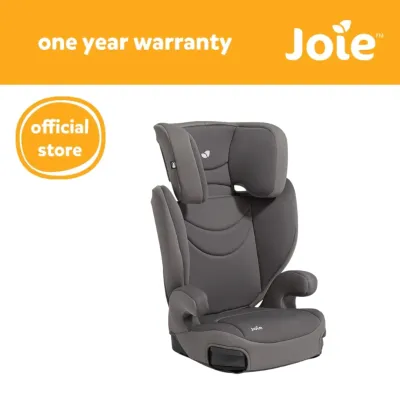
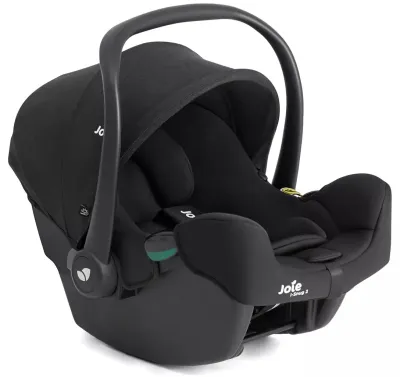
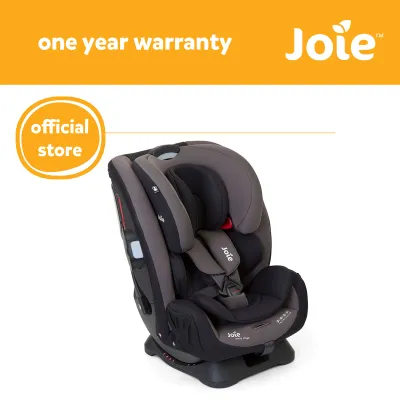
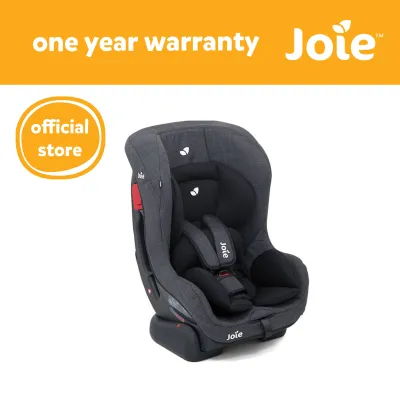
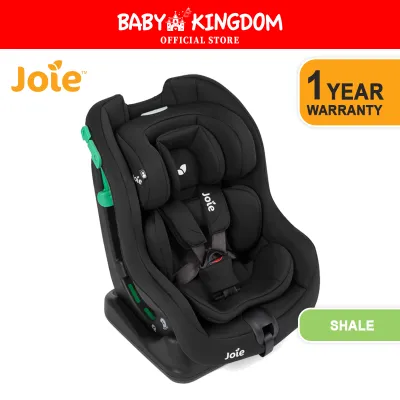
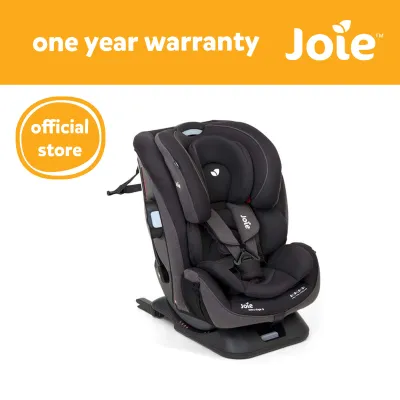
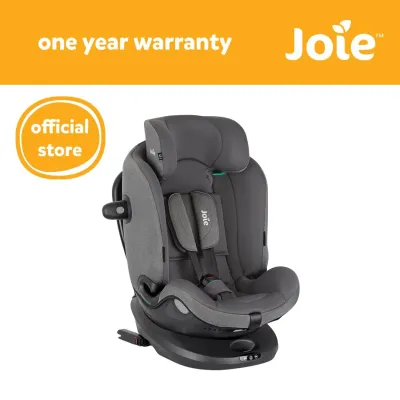
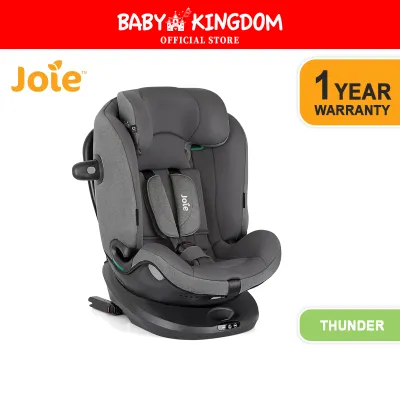
Prices are valid at publication and may change. Please refer to the product page for the latest price.
Understanding Singapore's Mandatory Child Restraint Regulations
Singapore’s Road Traffic Act mandates strict safety measures for young passengers to minimize the risk of injury during travel. Under local law, any passenger in a motor vehicle who is under the height of 1.35 metres must be properly secured using an approved child restraint or a booster seat appropriate for their height and weight. This height threshold is chosen because standard adult seatbelts are designed for individuals at least 1.35 metres tall; using them on shorter children can cause severe seatbelt-induced injuries to the neck and abdomen during sudden deceleration.
Rather than establishing a unique local testing standard, Singapore authorities recognize several rigorous international safety standards. The Traffic Police and the Land Transport Authority (LTA) accept child restraints that comply with recognized standards from Europe, the United States, Great Britain, Japan, and Australia. The most common standards found on compliant seats in Singapore are the European Union’s ECE R44/04 and the newer UN R129 (often referred to as i-Size) regulations.
The legal responsibility for complying with these rules falls squarely on the driver of the vehicle. If you are stopped by traffic police and a child under 1.35 metres is not secured in an approved, properly fitted restraint, you can face composition fines and demerit points. Furthermore, while public buses and traditional street-hailed taxis are legally exempt from this requirement due to practical transit constraints, private hire vehicles (such as ride-hailing app services) are not exempt. This makes owning a compliant, easily transferable car seat a practical necessity for Singapore families who rely on ride-hailing services.
How to Verify Compliance Labels on Joie Car Seats
To confirm that your Joie car seat is legally compliant in Singapore, you must perform a physical inspection of the seat to locate its official certification sticker. You should never rely solely on product listings, online descriptions, or verbal assurances from sellers.

On almost all Joie car seats, the compliance certification is printed on a highly visible orange sticker. This sticker is typically affixed to the rear of the seat shell, underneath the base, or along the side of the plastic casing. If this sticker is missing, damaged, or illegible, the seat cannot be verified as legally compliant during a routine traffic check or vehicle inspection.
When examining the orange sticker on your Joie seat, look for the following key details to confirm its validity:
- The Standard Code: The label must clearly display a recognized standard code, such as "ECE R44/04" or "UN R129" (or "i-Size").
- The Approval Mark: Look for a circle containing the letter "E" followed by a number (for example, "E4" or "E11"). This indicates the European country that conducted the safety testing and granted the certification.
- The Classification Category: The label will state whether the seat is "Universal" (compatible with most standard vehicle seats) or "Semi-Universal" (requiring specific vehicle compatibility checks).
- Weight or Height Limits: The sticker will specify the exact weight range (for R44/04 seats) or height range (for R129/i-Size seats) for which the seat is certified. Your child must fall within these exact parameters for the seat to be legally used.
If you are considering purchasing a second-hand Joie car seat from online marketplaces or peer-to-peer platforms, exercise extreme caution. If the orange compliance label is faded, torn, or completely missing, you should avoid the purchase entirely. Beyond the legal compliance aspect, second-hand seats with missing labels often have an untraceable history, meaning they may have been involved in a collision or subjected to structural stress that compromises their protective capabilities.
Choosing a Compliant Joie Model Based on Child's Profile
Using a certified Joie car seat is only legal if the seat is appropriate for your child’s current physical development. Using a seat that does not match your child’s size violates safety regulations and significantly reduces the seat’s effectiveness. Joie designs seats across several distinct categories, each aligned with specific developmental stages:
- Infant Carriers: These are rear-facing seats designed specifically for newborns and young infants. They feature deep protective shells and supportive inserts to protect fragile necks and spines.
- Convertible Car Seats: These versatile seats can transition from rear-facing to forward-facing as your child grows. They are highly popular in Singapore due to their extended lifespan, but you must carefully monitor when to adjust the seat's configuration.
- Booster Seats: High-back and backless booster seats are designed for older children who have outgrown their harnessed seats but remain under the 1.35-metre legal threshold. They work by raising the child so that the vehicle's adult seatbelt aligns safely across their shoulder and pelvis.
When transitioning your child between different seating modes, always prioritize physical measurements over age guidelines. Age ranges provided by manufacturers are merely estimates, whereas legal compliance and physical safety depend strictly on height and weight. For example, under the newer UN R129 standard, children must remain rear-facing until they are at least 15 months old. Even if your child seems tall enough to face forward, transitioning them too early violates the certification parameters of an i-Size seat.
Always check the specific limits printed on your Joie seat’s orange label. If your child exceeds the maximum weight or height limit for their current seat, you must transition them to the next category to maintain legal compliance and ensure their safety on the road.
Installation Rules That Affect Legal Compliance
An approved Joie car seat only provides legal protection and physical safety if it is installed and operated in strict accordance with the manufacturer’s instructions. An improperly installed seat can be deemed non-compliant under general road safety duties, as it fails to secure the passenger safely.
Joie car seats generally utilize one of two installation methods, and you must verify which method is compatible with both your seat model and your vehicle:
- ISOFIX Installation: This method uses rigid metal connectors built into the base of the Joie seat that click directly into anchor points welded into your vehicle's chassis. ISOFIX is highly recommended because it minimizes installation errors, but you must ensure your vehicle is equipped with ISOFIX anchors before purchasing an ISOFIX-only model.
- 3-Point Seatbelt Installation: Many Joie models can be secured using the vehicle's standard three-point seatbelt. When using this method, you must thread the seatbelt precisely through the color-coded routing guides on the seat (typically blue guides for rear-facing installation and red guides for forward-facing installation). A loose or incorrectly routed seatbelt invalidates the seat's safety certification.
Additionally, you must consider the placement of the car seat within your vehicle. In Singapore, it is highly recommended to install child restraints in the rear passenger seats. If you must install a rear-facing Joie infant carrier or convertible seat in the front passenger seat, you are legally and safely required to deactivate the front passenger airbag. If the airbag cannot be deactivated, installing a rear-facing seat in that position is extremely dangerous and strictly prohibited.
Finally, be aware of when a car seat must be retired. You must stop using any Joie car seat immediately if it has been involved in a moderate to severe vehicle collision, as invisible micro-fractures in the plastic shell can compromise its structural integrity. Furthermore, car seat materials degrade over time due to UV exposure and high cabin temperatures—a particularly relevant factor in Singapore’s hot and humid climate. Check your Joie user manual or the stamp on the plastic shell to identify the manufacturer’s recommended lifespan, and replace the seat once it reaches its expiration date.
Frequently Asked Questions (FAQ)
Can I use a Joie car seat bought overseas in Singapore?
You can use a Joie car seat purchased overseas in Singapore only if the specific model carries one of the international safety certification labels recognized by Singapore authorities, such as the orange ECE R44/04 or UN R129 sticker. If the seat was manufactured for a market with different regulatory standards that are not recognized by Singapore’s Traffic Police, it cannot be legally used on Singapore roads. Always physically inspect the seat’s labels to verify compliance before using an imported model.
Are backless booster cushions legal for older children?
Yes, backless booster cushions are legal in Singapore for older children, provided they meet the height and weight thresholds specified by both local regulations and the seat’s manufacturer. Under newer safety standards, backless boosters are typically restricted to children who weigh at least 22 kg and stand over 125 cm tall. While backless boosters are convenient and highly portable, high-back booster seats are generally recommended for daily use because they provide essential side-impact protection and ensure more reliable seatbelt routing across the child’s shoulder.
Community discussion
Share your experience or ask a question. Comments are reviewed before publication.