
Welcoming a newborn brings a flurry of decisions, with sleep safety sitting at the very top of the priority list. The tutti bambini cozee bedside crib has become a highly popular choice for parents seeking to keep their infants close during those first critical months. From a safety perspective, this bedside sleeper is designed to align with modern infant sleep safety guidelines, provided it is assembled, secured, and used in strict accordance with the manufacturer’s instructions. No sleep environment can guarantee absolute safety on its own; rather, safety is a continuous practice that depends on your adherence to weight limits, developmental milestones, and safe sleep habits. Before placing your newborn in any crib, you must verify the specific safety certifications on the product label and carefully read the user manual to ensure correct setup.
Safety Standards and Certifications to Verify for the Tutti Bambini Cozee Bedside Crib
When evaluating any infant sleep furniture, relying on brand reputation or aesthetic appeal is not enough. You must actively verify that the specific model of the tutti bambini cozee bedside crib you own or plan to purchase complies with recognized international and local safety standards. In European and many international markets, the benchmark standard for cribs and cradles is BS EN 1130. This standard governs structural stability, the height of the side barriers, the strength of the frame, and the prevention of entrapment hazards.
For parents in Singapore, infant products are monitored under consumer protection regulations administered by Enterprise Singapore. While many imported cribs carry European or American safety marks, you should inspect the product packaging, the sewn-in fabric labels, and the user manual for explicit confirmation of BS EN 1130 compliance before use. If instructions conflict or the safety marking is absent, consult the manufacturer or a qualified retail specialist.
Products mentioned in this guide

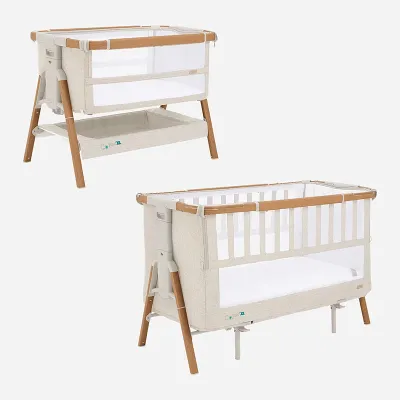
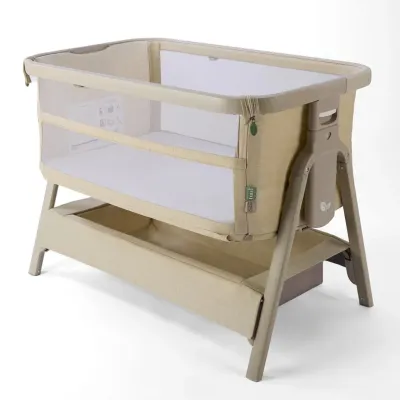

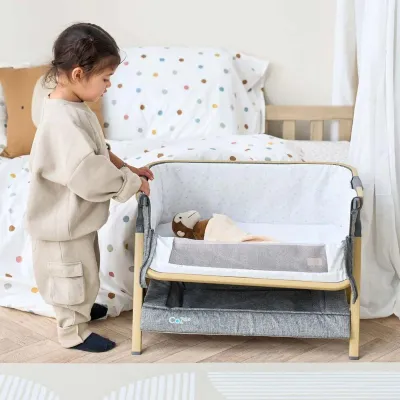
Prices are valid at publication and may change. Please refer to the product page for the latest price.
In addition to standard compliance, you must verify that your specific crib model and production batch have not been subject to any voluntary or mandatory product recalls. Safety standards evolve, and manufacturing anomalies can occur. You can check for active recalls on official consumer safety portals, such as the Singapore Consumer Product Safety Office website or international recall databases. Never assume a product is safe simply because it is available for purchase on online marketplaces or retail shelves.
Design Features and Potential Risk Factors to Monitor
Every bedside sleeper combines convenience with specific design elements that require active monitoring. Understanding how these features function—and where potential risks lie—allows you to maintain a secure sleeping environment for your baby.

Breathability, Mattress Fit, and Suffocation Risks
The sleep surface is the most critical element of infant safety. A safe newborn mattress must be firm, flat, and fit the crib frame perfectly without any gaps. To test this, perform the “two-finger rule”: insert your index and middle fingers between the edge of the mattress and the inner fabric wall of the crib. If you can fit more than two fingers in any gap, the mattress is improperly sized or has shifted, creating a severe entrapment and suffocation risk.
The crib features mesh side panels designed to promote airflow and allow you to easily view your baby. In Singapore’s warm and humid tropical climate, proper ventilation is essential to prevent heat retention and carbon dioxide rebreathing. However, this mesh only functions safely if you use the original, manufacturer-provided mattress. Never add aftermarket mattress toppers, extra padding, or soft blankets under the baby, as these alter the firmness and can compress under the infant’s weight, blocking their airway. If you need to replace the mattress due to wear, you must purchase an official replacement directly from the manufacturer to ensure identical dimensions and density.
Drop-Side Mechanism, Locking, and Stability
The defining feature of a bedside sleeper is the lowering side panel, which allows easy access to your baby from your own bed. However, drop-side mechanisms carry inherent risks if the locking systems are worn, damaged, or improperly engaged. You must regularly inspect the latches, zippers, and connection points of the drop-side panel to ensure they lock firmly into place when the side is raised. A partially locked side can give way under a baby’s weight, leading to falls or entrapment.
Furthermore, the stability of the entire crib frame is paramount. The crib is built with an adjustable height mechanism to align with different adult bed heights. You must ensure that both sides of the crib are adjusted to the exact same height level to keep the sleeping surface perfectly horizontal; an angled crib can cause a newborn to roll or slide into the side walls. Regularly check the frame’s joints and legs for any wobble or looseness, especially if you frequently move the crib between rooms on its wheels. Ensure the wheel brakes are always locked when the crib is stationary.
Essential Safe Sleep Practices for Bedside Cribs
Even the most highly certified crib requires safe sleep practices to protect your newborn. The foundational rule of infant sleep safety is to always place your baby on their back for every sleep, both night and day. This position keeps the airway open and significantly reduces the risk of Sudden Infant Death Syndrome (SIDS).
The interior of the crib must remain entirely empty. Do not place pillows, loose blankets, quilts, bumper pads, sleep positioners, or soft toys inside the sleeping area. In Singapore’s tropical climate, parents often worry about their baby getting cold in air-conditioned bedrooms. Instead of using loose blankets, dress your baby in a lightweight, well-fitting sleeping sack or swaddle suitable for the room’s temperature, ensuring their head and face remain uncovered. Keep the room temperature comfortable, ideally between 22°C and 24°C, and position the crib away from direct air conditioning drafts or fan breezes.
When using the crib in its bedside sleeper configuration, you must securely attach it to the adult bed frame using the manufacturer-provided attachment straps. These straps must be pulled taut so that there is absolutely no gap between the adult mattress and the side of the crib. If a gap forms, a baby can slip into the space and become trapped, which is a life-threatening hazard. Check the tightness of these straps before every single sleep.
Finally, never leave your baby unattended in the crib when the side panel is lowered or unzipped, unless the crib is securely strapped to the adult bed and you are actively supervising. If you step away from the bedside, even for a moment, you must raise the side panel and lock it securely in its upright position.
When to Transition Out of the Bedside Crib
A bedside crib is a temporary sleep solution designed specifically for the early months of infancy. To prevent serious fall injuries, you must transition your baby to a larger, deeper sleep space, such as a standard cot, travel cot, or floor bed, as soon as they reach certain physical or developmental milestones.
The manufacturer specifies a maximum weight limit for the crib, which is typically 9kg. However, developmental milestones almost always precede this weight limit. You must stop using the crib immediately if your baby shows signs of rolling over, pushing up on their hands and knees, or sitting unassisted. Once a baby can move dynamically, they can easily lean over the low sides of a bedside crib or shift their weight enough to cause a tip-over hazard.
Monitor your baby’s physical growth and activity levels daily. If you notice your infant is becoming highly active or is reaching the ends of the crib mattress, begin planning the transition to a full-sized cot. Never attempt to prolong the use of the bedside crib by modifying the frame or lowering the mattress platform beyond the manufacturer’s approved settings.
Frequently Asked Questions (FAQ)
Can I use the Tutti Bambini Cozee for bed-sharing on the adult mattress?
No, you must never place the crib, or its mattress, directly on top of your adult mattress for bed-sharing. The crib is designed to stand independently on its own secure frame adjacent to your bed. Placing the sleeping surface on an adult bed exposes your newborn to extreme risks of suffocation from adult pillows and heavy duvets, entrapment between the crib and the headboard, or falls from the bed.
Is it safe to buy and use a second-hand Cozee bedside crib?
Using a second-hand infant crib carries significant hidden risks. Over time, plastic components can degrade, locking mechanisms can wear down, and structural joints can loosen, compromising the crib’s stability. If you choose to use a pre-owned crib, you must obtain the original user manual, thoroughly inspect every latch, zipper, and frame joint for wear, and verify that no parts are missing. Additionally, you must purchase a brand-new, original manufacturer-approved mattress to guarantee proper firmness and a perfect, gap-free fit.
Community discussion
Share your experience or ask a question. Comments are reviewed before publication.