
The Stokke Mattress V3 is designed to align with infant sleep safety guidelines, but its actual firmness and safety in your home depend on physical verification, proper installation, and regular maintenance. Unlike adult mattresses where comfort is highly subjective, a newborn’s mattress must remain exceptionally resistant to indentation to prevent suffocation risks. Parents, particularly those navigating warm, humid climates and specific nursery setups, must look beyond the brand name to verify the physical state of the mattress, its fit within the crib frame, and the manufacturer’s specific safety labels before placing a newborn down to sleep.
Understanding Safe Sleep Firmness Standards for Newborns
Pediatric health authorities worldwide emphasize that a firm sleep surface is the single most critical component of a safe nursery setup. The primary objective of a firm mattress is to minimize the risk of Sudden Infant Death Syndrome (SIDS) and accidental suffocation. When a mattress is sufficiently firm, it provides a stable, unyielding plane that keeps the infant’s airway fully open and unobstructed throughout the sleep cycle.
Newborns lack the muscular strength, head control, and motor skills to extricate themselves from hazardous positions. If an infant rolls onto their stomach or turns their face sideways on a soft surface, their nose and mouth can easily sink into the material. This creates a localized pocket where exhaled carbon dioxide becomes trapped, leading to rebreathing, oxygen deprivation, or direct physical blockage of the airway. A firm surface prevents this indentation from forming, ensuring that even if a baby turns, their face remains on a flat, breathable plane.
Products mentioned in this guide
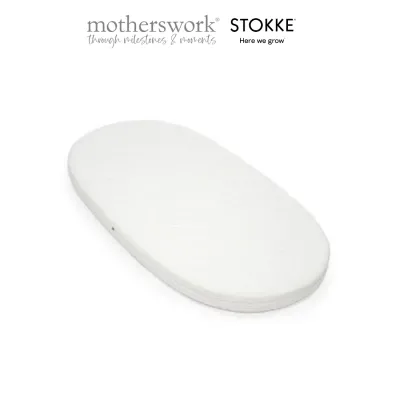
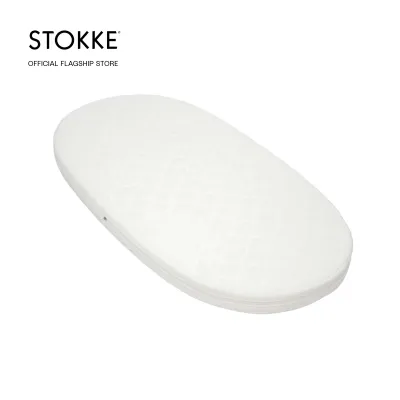
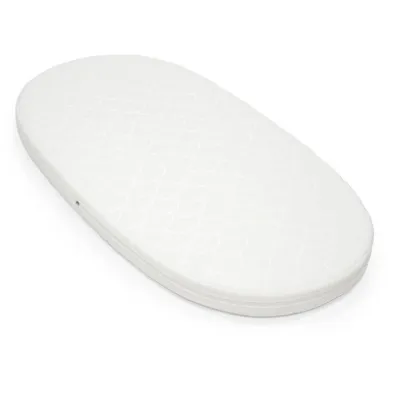
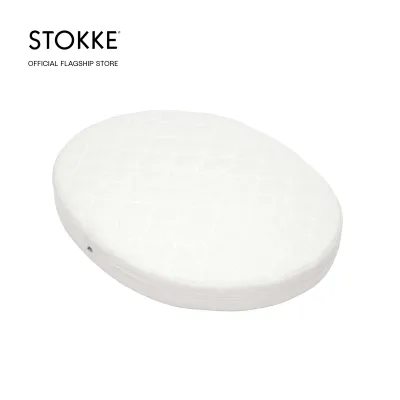
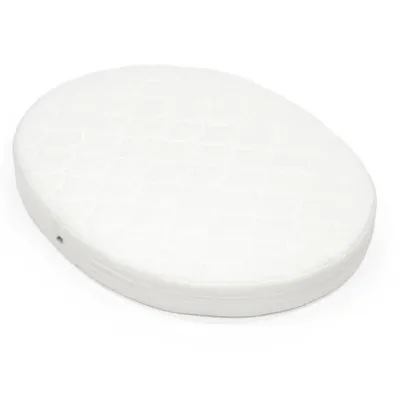
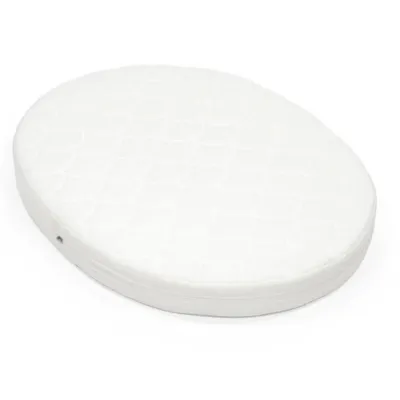
Prices are valid at publication and may change. Please refer to the product page for the latest price.
Many first-time parents struggle to reconcile their own comfort preferences with the safety needs of their baby. While adults associate plush, contouring memory foam with a good night’s rest, such materials are highly dangerous for infants. A baby’s skeletal system is rapidly developing and requires continuous, flat support. A mattress that feels overly firm or even hard to an adult hand is often exactly what is required to keep a newborn safe and structurally supported.
How to Physically Test the Firmness of Your Stokke Mattress V3
While manufacturers design products to meet safety guidelines, parents must physically verify the condition of their specific mattress at home. Over time, shipping conditions, storage, or prolonged use can affect the structural integrity of foam and fiber cores. Performing a few simple, manual checks ensures the mattress remains safe for immediate use.

The hand-press test is a reliable, practical method to evaluate surface resistance. Place the mattress on a flat, hard surface and press your palm firmly down into the center of the mattress. Apply significant downward pressure, then lift your hand quickly. A safe, firm mattress will instantly spring back to its original flat shape, leaving no visible handprint, depression, or lingering contour. If the surface takes several seconds to recover or retains a shallow bowl-like shape, the material is too conforming for a newborn.
Next, observe your baby’s posture directly when they are lying on the mattress. Place your infant on their back in the center of the crib and look closely at how their body interacts with the surface. The baby should rest entirely on top of the mattress, with their head, shoulders, and hips aligned on a single flat plane. If you notice any visible sinking, or if the mattress forms a distinct indentation around the baby’s body, the surface lacks the necessary density to support safe sleep.
Do not forget to evaluate the perimeter and edge support of the mattress. Press your hand along the outer edges and corners of the mattress to check for structural collapse. A mattress with weak edges can sag when a baby rolls near the sides, potentially trapping them against the crib rails. The edges should feel just as resilient and resistant to compression as the center of the mattress.
Checking Stokke Manufacturer Specifications and Safety Labels
Physical testing should always be paired with a thorough review of the manufacturer’s official documentation and product labels. The Stokke Mattress V3 is engineered to fit specific crib dimensions, and using it outside of its intended configuration can introduce serious safety hazards.
Start by locating the physical product labels sewn into the mattress cover or printed on the core itself. These labels contain critical information regarding the specific model, manufacturing date, and intended age or weight limits. Verify that the label explicitly states suitability for newborns and infants. Because product designs can change across different versions, never rely on a product name alone; always confirm that the physical label matches your specific crib frame model.
Review the user manual carefully for care instructions and safety warnings. For instance, the materials used in the Stokke Mattress V3 core and cover require specific cleaning methods to preserve their density and breathability. Washing the mattress core or cover at incorrect temperatures, or using harsh chemical detergents, can degrade the internal fibers and cause the mattress to soften prematurely. Following the manufacturer’s exact maintenance guidelines is essential to preserving the mattress’s safety profile.
Finally, verify the physical fit of the mattress within your crib frame using the “two-finger rule.” Place the mattress inside the crib and attempt to slide your fingers between the edge of the mattress and the wooden rails. If you can fit more than two fingers (approximately 3 centimeters) into the gap, the mattress is not a safe fit for that specific crib. Gaps wider than this pose a severe entrapment risk where a baby’s head or limbs could become wedged.
Creating a Safe Sleep Environment Beyond Mattress Firmness
A firm mattress is only one component of a comprehensive safe sleep strategy. Even the highest-quality, firmest mattress cannot protect an infant if the surrounding sleep environment contains unnecessary hazards. Parents must maintain a strict, minimalist approach to the nursery setup.
Keep the sleep space completely bare at all times. This means the crib should contain nothing other than the mattress, a tightly fitted sheet designed specifically for the Stokke Mattress V3, and the baby. Do not add pillows, loose blankets, quilts, comforters, bumper pads, sleep positioners, or soft toys to the crib. These items can easily cover a baby’s face or create a suffocation hazard, regardless of how firm the underlying mattress is. If you are concerned about keeping your baby warm, use a wearable sleep sack or swaddle instead of loose blankets.
Always place your baby on their back to sleep for every nap and nighttime session. This position keeps the airway fully open and significantly reduces the risk of SIDS compared to side or stomach sleeping. Once your baby learns to roll over independently from back to front and front to back, you can allow them to find their own comfortable sleep position, provided the mattress remains firm and the crib is entirely free of loose items.
In Singapore’s warm and humid tropical climate, managing the nursery’s temperature and ventilation is a vital safety consideration. Overheating is a known risk factor for sleep-related infant deaths. Ensure the nursery is well-ventilated, utilizing air conditioning or a ceiling fan to maintain a comfortable, cool temperature. Dress your baby in lightweight, breathable cotton clothing, and regularly check their chest or the back of their neck for sweat or heat to ensure they are not overheating.
When to Stop Using the Mattress or Seek Professional Advice
Mattresses do not last indefinitely, and their safety performance can degrade with age, wear, and environmental exposure. Caregivers must remain vigilant and inspect the sleep surface regularly to identify when it is no longer safe for continued use.
Inspect the mattress weekly for physical signs of wear and tear. Look for permanent indentations, sagging in the center, soft spots, or a general loss of edge support. Check the cover for tears, broken zippers, or loose threads that could present a wrapping hazard. If the mattress core fails to immediately snap back during your hand-press tests, or if you observe any structural deterioration, stop using the mattress immediately and replace it.
Be mindful of the baby’s developmental milestones and physical growth. Review the manufacturer’s documentation to identify the maximum weight, height, or age limits specified for the mattress. When your baby reaches these limits, or when they begin showing signs of pulling up to a standing position, you must adjust the crib base to its lowest setting or transition to a larger, age-appropriate sleep setup as directed by the manufacturer.
If you ever experience uncertainty regarding the structural integrity of the mattress, or if you notice changes in your baby’s breathing or sleep comfort, do not hesitate to seek professional guidance. Contact the manufacturer directly to verify if a physical change in the mattress is normal, or consult a qualified pediatrician to address any health or safety concerns regarding your infant’s sleep environment.
Frequently Asked Questions (FAQ)
Can I add a soft mattress topper to the Stokke Mattress V3 for comfort?
No, you should never add a soft mattress topper, extra padding, or aftermarket layers to the Stokke Mattress V3. Introducing soft materials on top of a firm infant mattress completely compromises its safety design, creating a severe suffocation and entrapment hazard. Safe sleep guidelines dictate that only a tight-fitting sheet designed specifically for the mattress dimensions should be used. Adding unauthorized accessories can also void the manufacturer’s warranty and safety certifications.
Does a firm mattress mean it has to feel like a hard board?
A safe, firm infant mattress does not need to feel as rigid as a solid wooden board, but it must fundamentally resist contouring to the baby’s body weight. Infant mattresses are engineered with dense foam or fiber cores that provide a slight, resilient give for basic comfort while maintaining a flat, unyielding surface under pressure. The key distinction is resilience: the surface must immediately push back against the baby’s body rather than molding to it, ensuring the infant’s airway remains completely unobstructed.
Community discussion
Share your experience or ask a question. Comments are reviewed before publication.