
When setting up a nursery, selecting a safe sleep surface is one of the most critical decisions you will make for your newborn. In Singapore’s warm, humid climate, natural latex baby mattresses—such as those manufactured by GetHa—are highly popular due to their breathability and moisture-regulating properties. However, a mattress’s material composition is only part of the safety equation. The most crucial factor for preventing sleep-related accidents is physical firmness.
While GetHa is a well-regarded brand specializing in natural latex bedding, you cannot assume every model is automatically firm enough for a newborn simply because of the brand name. Firmness levels can vary significantly depending on the specific model, the density of the latex core, and whether the mattress features a dual-sided design. Parents must physically inspect and verify the firmness of their exact mattress model before allowing an infant to sleep on it. A safe infant mattress must feel flat, unyielding, and completely resistant to conforming to your baby’s head or body shape.
Why a Firm Surface is Critical for Infant Safety
Medical authorities worldwide emphasize that a firm sleep surface is the foundation of safe infant sleep. During the first year of life, infants lack the neck strength and motor control to rescue themselves if they roll into a position that obstructs their breathing. If a baby sleeps on a surface that is too soft, their face can sink into the material, creating a localized pocket where exhaled carbon dioxide becomes trapped. The baby then breathes in this trapped carbon dioxide instead of fresh oxygen, a dangerous scenario known as rebreathing, which is a primary risk factor for Sudden Infant Death Syndrome (SIDS) and accidental suffocation.
Products mentioned in this guide
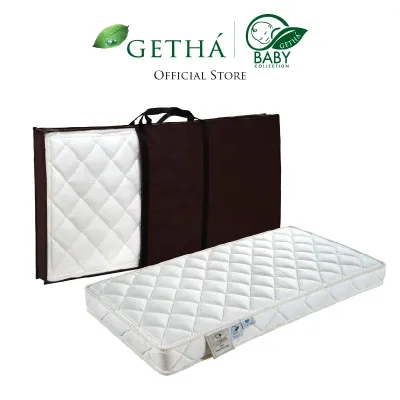
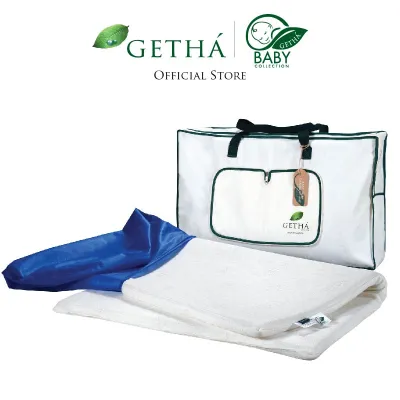
Prices are valid at publication and may change. Please refer to the product page for the latest price.
To mitigate these risks, pediatric consensus—including guidelines from major global pediatric societies—demands that infants under twelve months of age sleep on a flat, firm, and non-inclined surface. A firm mattress does not conform to the shape of the baby’s head or body, ensuring that the airway remains open and unobstructed even if the infant manages to roll onto their stomach. While adults often associate plushness and cushioning with comfort, infants require structural support rather than pressure relief to sleep safely.
Natural latex is inherently supportive and resilient, but different manufacturing processes yield different densities. Some latex mattresses are engineered with a softer feel to accommodate toddlers or older children who have fully developed airways and neck muscles. For a newborn, however, any surface that allows the head to sink even slightly is a hazard. Therefore, verifying the specific firmness rating of your mattress is a non-negotiable step in preparing a safe nursery environment.
How to Physically Test Your GetHa Mattress Firmness
Because you cannot determine firmness solely by reading a product description online, you should perform physical tests on the mattress once it is in your home. These low-risk, practical assessments will help you confirm whether the surface meets safe sleep criteria.

The Hand Press and Rebound Test
To conduct this test, place the mattress on a flat, solid surface like the floor or the base of your crib. Press your open palm down firmly into the center of the mattress with significant force, simulating the concentrated weight of a sleeping infant’s head and torso. Lift your hand quickly and observe the reaction of the material. A safe infant mattress will resist your downward pressure and spring back to its original flat shape immediately. If the surface takes several seconds to recover, leaves a temporary handprint, or conforms closely around your hand like memory foam, it is too soft for a newborn and should not be used.
The Edge Support Check
Next, apply firm pressure along the outer perimeter and corners of the mattress. In many nursery setups, weak mattress edges pose a significant safety hazard. If the edges collapse easily under pressure, an active infant who rolls to the side of the crib could slide into the gap between the mattress and the crib frame, leading to dangerous entrapment. The perimeter of the mattress must feel just as firm and unyielding as the center, maintaining its structural shape even when compressed near the boundaries.
The Weight Simulation
To visualize how the mattress behaves under a sustained load, you can simulate an infant’s weight using a heavy, flat-bottomed household object, such as a large book or a household weight weighing approximately three to five kilograms. Wrap the object in a thin towel to protect the mattress cover, place it in the center of the mattress, and look at the surface from eye level. The mattress should support the object without any noticeable dipping, sagging, or cratering. If the object sinks deeply into the core, the mattress lacks the density required to keep an infant’s airway safe.
What to Check on Your GetHa Labels and Specifications
Beyond performing physical tests, you must carefully examine the manufacturer’s labels, packaging, and product documentation to ensure the mattress is configured correctly for your baby’s developmental stage.
Dual-Sided Indicators
Many premium baby mattresses are designed to grow with your child by offering dual-sided firmness. One side is engineered to be extra-firm to meet safe infant sleep standards, while the reverse side is slightly softer to provide comfort for toddlers. If your mattress features this design, locate the physical tags sewn into the cover or consult the user manual to identify which side is which. You must ensure that the mattress is placed in the crib with the designated “infant side” facing up. Accidentally placing a newborn on the softer toddler side compromises their safety.
Age and Weight Limits
Review the manufacturer’s specifications for explicit age and weight limits. Do not assume that a mattress labeled as a “baby” product is suitable for a newborn. Some models are designed specifically for older infants or toddlers who have reached specific developmental milestones, such as the ability to roll over and sit up independently. Verify that your child fits within the manufacturer’s specified age and weight ranges before introducing the mattress to their sleep routine.
Safety Certifications
Because baby mattresses can contain synthetic foams, adhesives, or chemical flame retardants, you should verify the material safety certifications printed on the product labels. For natural latex products, look for recognized independent certifications such as OEKO-TEX Standard 100, eco-INSTITUT, or the Global Organic Latex Standard (GOLS). These certifications confirm that the mattress has been tested for harmful substances and volatile organic compounds (VOCs), ensuring that the air your baby breathes while sleeping is clean and safe.
Care and Usage Warnings
Read the manufacturer’s warning labels regarding care and maintenance. In Singapore’s humid environment, moisture retention can lead to mold growth if a mattress is not cared for properly. However, you must follow the manufacturer’s cleaning instructions precisely. Avoid adding thick, waterproof mattress protectors that are heavily padded, as these can trap heat and alter the engineered firmness of the mattress. If the care instructions conflict with safe sleep guidelines—such as recommending a plush topper for comfort—always prioritize the safe sleep guidelines and keep the surface firm and bare.
Beyond Firmness: Other Essential Safe Sleep Rules
Investing in a firm mattress is only the first step in creating a secure sleeping environment. To fully protect your infant, you must implement several other critical safe sleep practices in your nursery.
First, always use a tightly fitted sheet designed specifically for the exact dimensions of your mattress. Loose sheets can easily bunch up or pull away from the corners, creating folds of fabric that pose a serious suffocation hazard. The sheet should fit snugly around the mattress corners without pulling the mattress edges upward.
Second, keep the crib completely bare. While nursery showrooms often display cribs decorated with quilts, pillows, bumper pads, and stuffed toys, these items are highly dangerous in a real sleep environment. Your baby’s crib should contain only the firm mattress, the fitted sheet, and the baby. If you are concerned about your baby getting cold, use a wearable sleep sack instead of loose blankets.
Third, always place your baby on their back to sleep for every sleep session, including daytime naps. Back sleeping is the single most effective way to reduce the risk of SIDS. Once your baby can roll from back to front and front to back independently, you can allow them to remain in their preferred sleep position, but you must still place them on their back initially.
Finally, ensure that the mattress fits your crib frame perfectly. Use the “two-finger rule” to check the fit: if you can insert more than two fingers between the edge of the mattress and the side of the crib, the gap is too large. This gap represents a severe entrapment risk where a baby’s head or limbs could become wedged. If the mattress does not fit snugly, you must replace either the crib or the mattress to ensure a safe, gap-free fit.
Frequently Asked Questions (FAQ)
Can I use a mattress topper to make a GetHa mattress more comfortable for my baby?
No, you should never add a mattress topper, padded mattress protector, or any extra cushioning to an infant’s mattress. While adults associate plushness with comfort, babies do not have the same sleep needs. Adding a topper softens the surface, increases the risk of suffocation, and directly violates safe sleep guidelines. The mattress must remain firm and unyielding until your child is at least one year old and has transitioned to a toddler bed.
How do I know if my GetHa mattress is too old or worn out to be safe?
You should inspect the mattress regularly for physical signs of degradation. Look for visible sagging, permanent body indentations, lumps, or a loss of rebound responsiveness. If the mattress no longer springs back immediately during the hand press test, or if the cover is torn and exposing the inner latex, it is no longer safe for an infant. In Singapore’s humid climate, also check the underside of the mattress regularly for any signs of mold or mildew, and replace the mattress immediately if any moisture damage is detected.
Community discussion
Share your experience or ask a question. Comments are reviewed before publication.