
High-quality, food-grade stainless steel is widely regarded as an excellent material for children’s feeding sets due to its durability, resistance to shattering, and natural freedom from synthetic chemicals like bisphenol A (BPA) and phthalates. However, determining whether a specific set is safe for your child requires looking beyond the marketing claims. True safety depends on verifying the specific grade of steel, inspecting the physical construction of the tableware, and establishing safe daily usage and cleaning habits.
For parents navigating the weaning journey, the transition to solid foods involves many decisions, including choosing the right tableware. While plastic is lightweight and silicone is soft, stainless steel offers a robust, long-lasting alternative that does not degrade easily over time. By understanding what makes stainless steel safe and how to identify high-quality products, you can make an informed choice that supports your child’s health and development.
Understanding Stainless Steel as a Food-Contact Material
To understand why stainless steel is highly recommended for food contact, it helps to look at its physical composition. Unlike plastics, which can degrade over time and potentially leach chemical additives when exposed to heat or acidic foods, high-quality stainless steel provides a stable, non-porous surface. This non-porous nature is highly resistant to absorbing food odors, colors, and bacteria, making it an exceptionally hygienic choice for weaning infants and toddlers.
Products mentioned in this guide
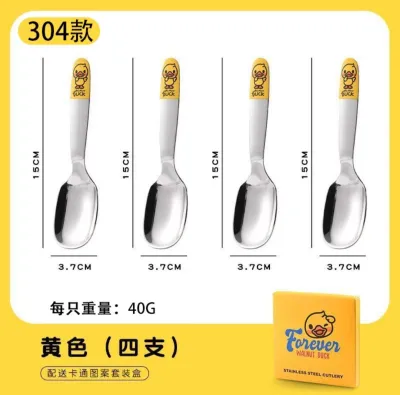
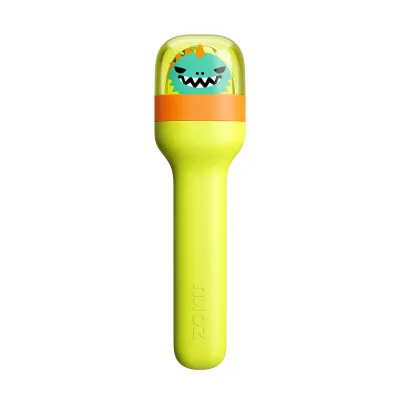
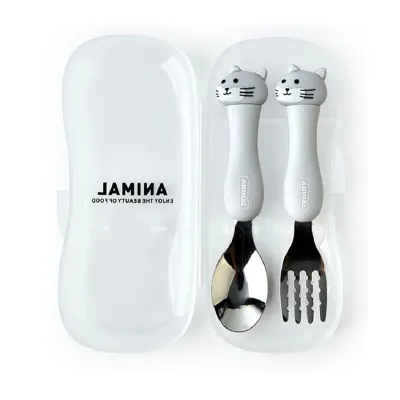

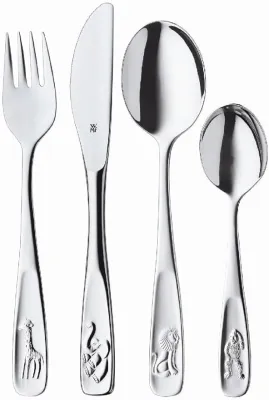
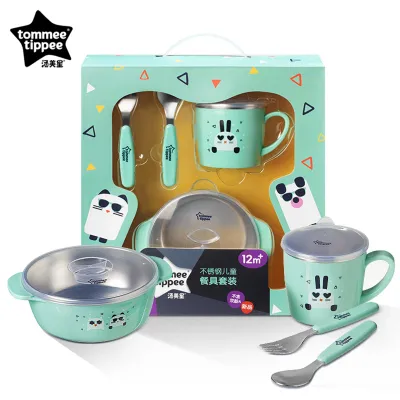
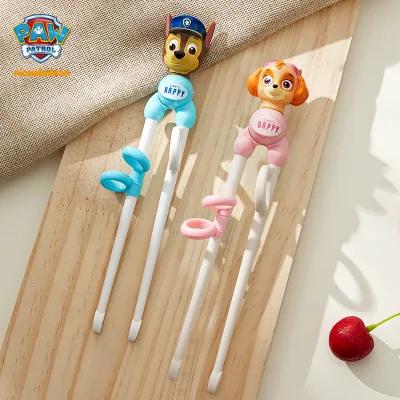
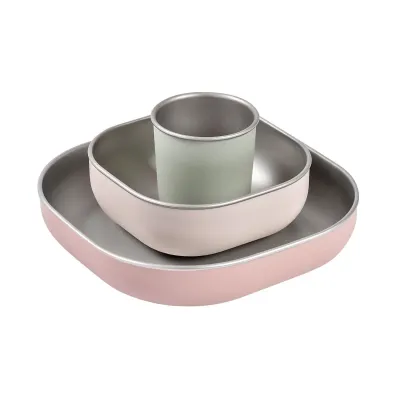
Prices are valid at publication and may change. Please refer to the product page for the latest price.
When browsing for children’s tableware, you will frequently encounter terms like “304” and “316” stainless steel. These numbers refer to specific grades of steel classified by their alloy composition. Grade 304, often labeled as 18/8, contains approximately 18% chromium and 8% nickel. This combination creates a highly durable material that resists corrosion and rust under normal household conditions. Grade 316, or 18/10, includes an additional element called molybdenum, which provides even greater resistance to acids and salts, making it a premium choice for food-contact applications.
While these material grades offer excellent safety profiles, stainless steel possesses inherent physical traits that parents must actively manage. The most notable of these is high thermal conductivity, meaning the metal transfers heat very rapidly. If you serve hot food in a single-walled stainless steel bowl, the exterior of the bowl can quickly become hot enough to cause discomfort or minor burns to a child’s sensitive hands.
Additionally, stainless steel is significantly heavier than plastic or silicone. While this weight can provide stability on a highchair tray, it also means a dropped bowl or cup can cause a louder impact and potentially damage flooring or injure a child’s foot. Understanding these physical properties allows you to select designs that mitigate these risks while retaining the hygienic benefits of the metal.
Navigating Safety Standards and Product Certifications
Equipping yourself with the knowledge to verify safety claims is essential when purchasing children’s products online or in stores. The first step is to look for physical stamps or engravings on the product itself. Legitimate manufacturers of high-quality children’s tableware typically stamp “SUS304,” “SUS316,” “18/8,” or “Food Grade” directly onto the underside of the bowls, plates, or cutlery. A printed logo on the outer packaging is easily replicated, but a permanent stamp on the metal indicates a higher level of manufacturing accountability.

Beyond physical markings, parents should look for verifiable safety documentation when shopping on ecommerce platforms or brand websites. Reputable brands often share independent laboratory test reports demonstrating compliance with international food-contact standards. These standards, such as those established by the US Food and Drug Administration (FDA) or European Union (EU) regulations, ensure that the material does not release harmful substances into food. Specifically, look for heavy metal migration test reports, which verify that elements like lead, cadmium, and nickel do not leach from the steel under simulated food-contact conditions.
Because safety standards and certifications are dynamic, it is important to cross-reference any claims made by a seller. If a product listing claims to be certified but does not provide details, check the official manufacturer’s manual or contact their customer service department directly to request a copy of their compliance certificates. A trustworthy brand will readily provide this documentation to assure parents of their product’s safety. If a seller is unable or unwilling to provide verifiable test reports, it is best to look for an alternative product from a more transparent manufacturer.
Potential Risks and Safe Usage Boundaries
While food-grade stainless steel is inherently safe, practical hazards can arise during daily use if proper boundaries are not established. The primary risk is thermal transfer, which can lead to accidental burns. To minimize this hazard, look for double-walled insulated stainless steel feeding sets. These designs feature an air gap or a protective outer sleeve made of silicone or BPA-free plastic, keeping the exterior cool to the touch even when holding warm food. If you are using single-walled steel bowls, always allow the food to cool to a safe serving temperature before placing it in front of your child, and never pour boiling liquids directly into single-layer metal tableware.
Another consideration is how stainless steel interacts with certain types of food. Although high-quality grades like 304 and 316 are highly resistant to corrosion, prolonged exposure to highly acidic foods (such as tomato-based sauces, citrus fruits, or vinegar) or highly salty dishes can slowly compromise the protective chromium oxide layer on the steel’s surface. To prevent any potential material degradation or metallic taste transfer, avoid using stainless steel containers for long-term food storage. Serve these foods during mealtime, and transfer any leftovers to glass or certified food-safe plastic containers for refrigeration.
Physical hazards can also develop over time as the tableware is subjected to daily wear and tear. Although stainless steel is incredibly durable, repeated drops on hard kitchen floors can cause dents, warping, or sharp edges. If a double-walled bowl is severely dented, the seal between the inner and outer layers may break, allowing dishwater to seep inside and create a hidden breeding ground for mold. Always supervise young children during meals to ensure they do not throw heavy metal tableware, and inspect the physical integrity of each piece regularly.
Inspection Checklist for Purchasing and Unboxing
Performing a thorough physical inspection of a new feeding set before its first use is a practical way to ensure your child’s safety. Start by conducting a tactile and visual check of all edges and surfaces. Run your fingers along the rims of bowls, the tines of forks, and the bowls of spoons. Every edge should be perfectly smooth, rounded, and free from sharp burrs, rough spots, or manufacturing defects that could scratch your child’s delicate mouth or hands.
Next, closely examine the seams and joints of the tableware. Many modern stainless steel feeding sets feature a metal inner bowl fused to a colorful plastic or silicone outer shell. Inspect the junction where these two materials meet. The seam must be completely tight, flush, and secure. Any gaps or loose edges can trap food particles, moisture, and dishwater, leading to bacterial growth that is nearly impossible to clean out.
You should also evaluate the ergonomics and overall weight of the set in relation to your child’s age and motor skills. A spoon or fork that is too heavy or has an awkwardly balanced handle can frustrate a toddler who is learning to self-feed. Ensure the size of the tableware is appropriate for their small hands, allowing them to grip and maneuver the utensils comfortably without tipping over their food.
Finally, verify that all secondary components, such as lids, silicone sealing rings, and removable dividers, fit securely. If a bowl features a suction base, test its grip on your child’s highchair tray to ensure it holds firmly. Loose sealing rings or small detachable parts can pose a choking hazard if a curious toddler manages to pull them off during a meal, so these components must require adult effort to remove.
Daily Care, Cleaning, and When to Retire the Set
Establishing a proper maintenance routine is key to preserving the hygienic properties and longevity of stainless steel tableware. When cleaning the set, always use a soft sponge, microfiber cloth, or silicone brush paired with mild dish soap. Avoid using steel wool, abrasive scouring pads, or harsh chemical cleansers, as these will scratch the polished surface of the metal. These micro-scratches not only dull the appearance of the tableware but also create microscopic crevices where food residue and bacteria can hide, undermining the material’s natural hygiene.
In humid climates like Singapore, proper drying practices are essential to prevent cosmetic and structural issues. After washing, rinse the feeding set thoroughly with clean water to remove all soap residue. Dry each piece immediately with a clean towel, or place them in a well-ventilated drying rack where air can circulate freely. Allowing water to pool on the surface of the steel can lead to unsightly water spots or, over time, localized surface oxidation (rust spots), particularly if your local tap water has a high mineral content.
Knowing when to retire a feeding set is just as important as knowing how to clean it. Regularly inspect each piece for signs of wear and tear that could compromise safety. You should stop using and replace the set immediately if you observe any visible rust spots that do not wash away, deep scratches that penetrate the surface layer, loose or rattling parts in double-walled vessels, peeling outer coatings, or cracked plastic and silicone components. If a suction base loses its grip or a sealing ring becomes stretched and loose, discontinue use of those parts to prevent spills and potential choking hazards.
Frequently Asked Questions (FAQ)
Can stainless steel kids' sets go in the microwave or dishwasher?
Solid metal objects should never be placed in a microwave. Metal reflects microwave radiation, which can cause electrical arcing, sparks, and potentially start a fire or permanently damage your appliance. While some specialized metal containers are marketed as microwave-safe, parents should never assume this applies to standard stainless steel feeding sets. Always consult the manufacturer’s explicit instructions, and when in doubt, keep all metal tableware out of the microwave.
Regarding dishwashers, while high-quality stainless steel itself is typically dishwasher-safe, secondary components may not be. Harsh dishwasher detergents, high water temperatures, and intense drying cycles can degrade attached silicone suction bases, plastic outer sleeves, or painted designs over time. To extend the lifespan of the feeding set, hand-washing is often the gentlest and most effective method, or you can place only the pure stainless steel components on the top rack of the dishwasher.
Is it safe to leave food in a stainless steel bowl overnight in the fridge?
While food-grade stainless steel is highly resistant to corrosion, leaving food in a metal bowl overnight is not recommended for long-term storage. Prolonged contact with moisture, food acids, and salts can slowly break down the protective oxide layer on the steel’s surface. This interaction can occasionally result in a subtle metallic taste transferring into the food, which may make it unappealing to your child.
For optimal hygiene and to preserve both the quality of the food and the integrity of the tableware, transfer any leftovers to airtight glass or food-safe plastic storage containers before placing them in the refrigerator. This simple practice ensures your child’s food remains fresh and untainted while protecting your stainless steel feeding set from unnecessary wear.
Community discussion
Share your experience or ask a question. Comments are reviewed before publication.