
Using a baby walker outdoors is generally not recommended by pediatricians and safety experts due to the unpredictable nature of outdoor environments. While indoor spaces offer flat, uniform floors and controlled boundaries, the outdoors introduces a wide range of physical hazards that can quickly turn a routine play session into an emergency. If you choose to use a baby walker outside, you must ensure the environment meets exceptionally strict safety criteria.
Safety in an outdoor setting depends entirely on three non-negotiable factors: a perfectly flat and enclosed terrain, continuous arm’s-reach supervision, and explicit manufacturer authorization for outdoor use. If you encounter even a minor slope, uneven paving, loose gravel, or proximity to open roads and water features, you must stop using the walker immediately. Understanding these risks and preparing the environment thoroughly is the only way to minimize the potential for serious injury.
Key Safety Risks of Using a Baby Walker Outdoors
Outdoor surfaces present a variety of terrain hazards that do not exist in a typical living room. Small cracks in concrete, stray pebbles, twigs, patches of grass, and door thresholds can easily jam the small, highly mobile swivel wheels of a standard baby walker. When a wheel suddenly stops against an obstacle while the baby’s momentum carries them forward, the walker can tip over instantly, throwing the child onto a hard surface.
Products mentioned in this guide

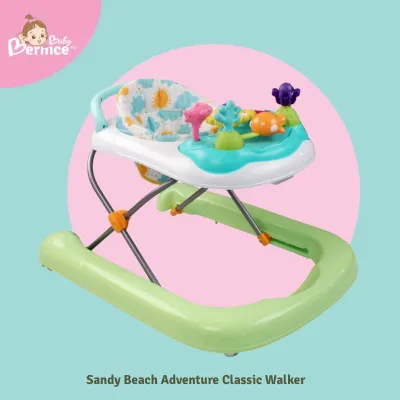
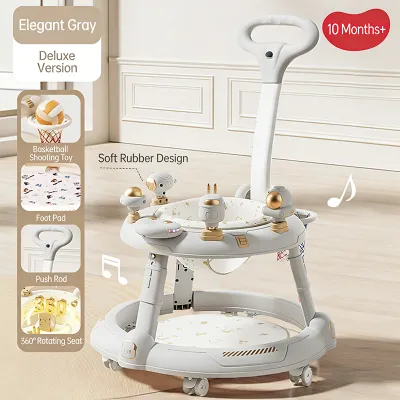
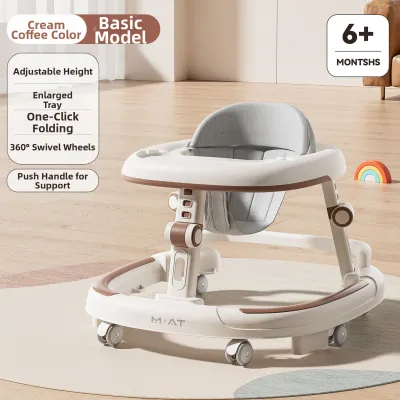
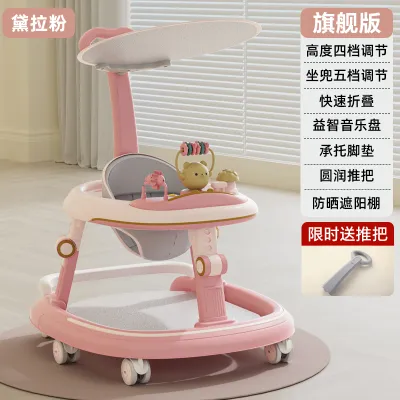
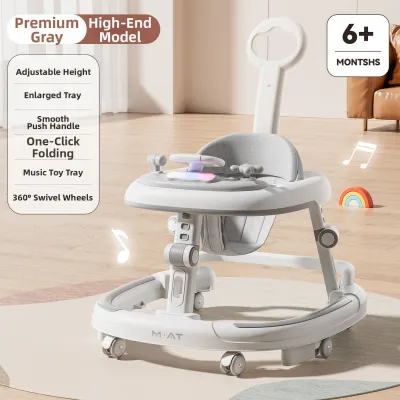
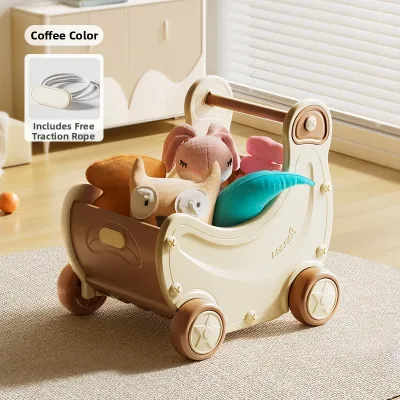

Prices are valid at publication and may change. Please refer to the product page for the latest price.
Elevation changes pose another severe threat to a mobile infant. Slopes that appear completely flat to an adult, such as a gently inclined driveway or a paved park pathway, can cause rapid, uncontrollable acceleration. A baby lacks the strength, coordination, and cognitive development to brake or steer a runaway walker on a downward slope. This can lead to high-speed collisions or dangerous drop-offs over curbs and steps.
Environmental factors also play a significant role in outdoor safety. Direct sun exposure can quickly heat up the plastic and metal components of a walker, potentially causing skin irritation or contact burns on a baby’s sensitive skin. Additionally, sudden gusts of wind can destabilize lightweight walkers, or blow dust and debris into a baby’s eyes, causing them to lose balance or panic.
Finally, the outdoors introduces unpredictable external dangers that are impossible to control completely. Unrestrained pets, passing cyclists, and heavy pedestrian traffic can collide with a low-profile baby walker. Proximity to active driveways or neighborhood streets means a baby could roll into the path of a vehicle in a matter of seconds if a caregiver’s attention wavers even slightly.
Essential Precautions and Supervision Requirements
If you decide to allow your baby to use a walker outdoors under highly controlled conditions, you must practice the “arm’s reach” rule. Active supervision does not mean watching your child from a nearby garden bench or patio chair. A caregiver must remain within arm’s reach at all times, keeping unbroken visual contact and staying close enough to physically grab the walker or the baby within a split second if the device begins to tilt or accelerate.

Before placing your baby in the walker, you must perform a thorough pre-use environment scan. Physically walk the entire designated path to check for any potential hazards. Sweep away loose gravel, sand, leaves, and twigs that could clog or stop the wheels. Inspect the surface for subtle dips, cracks, or changes in texture, and ensure the entire play area is completely blocked off from stairs, swimming pools, ponds, and vehicle access points.
Maintaining speed and boundary control requires strategic positioning. Always stand between your baby and the most significant nearby hazard, such as the edge of a patio, a garden bed, or a walkway transition. By acting as a physical barrier, you can immediately block the walker from moving toward unsafe zones or rolling off the edge of a paved surface.
Hardware checks are equally critical before every single outdoor session. Inspect the walker’s frame to ensure all folding mechanisms are securely locked and show no signs of wear. Check that the wheels spin freely and are completely clear of hair, dirt, or indoor carpet fibers. If your specific model is equipped with wheel locks or friction strips designed to slow the walker on uneven surfaces, verify that these safety features are clean and functioning exactly as the manufacturer intended.
Checking Developmental Readiness and Manufacturer Guidelines
Before taking any equipment outside, you must read the manufacturer’s manual and warning labels carefully. Many baby walkers are explicitly labeled for indoor use only. If your model carries an indoor-only warning, do not attempt to use it outdoors under any circumstances, as the materials, wheel bearings, and base stability are not engineered to withstand outdoor friction, heat, or debris.
You must also verify your baby’s physical readiness against the product’s specific weight and height limits. The baby’s feet must be able to touch the ground flatly or according to the manufacturer’s precise guidelines, ensuring they are not suspended uncomfortably or able to climb out of the seat. If the baby is too small to reach the ground properly, or too tall for the frame, using the walker outdoors increases the risk of tipping.
Recognizing the observable signs that your child has outgrown the walker is vital for preventing accidents. Once a baby can stand independently, pull themselves up to stand easily, or walk with minimal support, they have outgrown the developmental window for a seated walker. Continued use at this stage is dangerous, as the child’s increased strength and higher center of gravity make it much easier for them to climb out of the seat or tip the entire unit over.
If you notice your baby consistently walking on their tiptoes while in the walker, showing signs of physical discomfort, or if you have any concerns about their motor development, stop using the device immediately. Consult a pediatrician or a pediatric physiotherapist. A professional can evaluate your child’s developmental progress and guide you on safe, natural movement practices that support healthy bone and muscle growth.
Safer Alternatives for Outdoor Exploration
For babies who are eager to move and explore the outdoors, sturdy push toys designed specifically for outdoor stability offer a much safer alternative. Unlike seated walkers, high-quality push toys allow babies to practice natural walking mechanics while keeping their feet flat on the ground. Look for models with a wide wheelbase, a low center of gravity, and adjustable wheel resistance to prevent the toy from rolling away too quickly on paved surfaces.
Strollers and utility wagons equipped with secure safety harnesses provide an excellent way to enjoy the outdoors together without the risks of a walker. These transport options offer shaded rest, secure seating, and controlled mobility. They allow your baby to observe the sights, sounds, and textures of the outdoor environment safely while you maintain complete physical control over their movement and speed.
Ground-based play remains one of the most beneficial activities for an infant’s physical development. Setting up a clean, padded outdoor play mat or a large blanket on a flat, grassy area allows your baby to engage in supervised tummy time, rolling, and crawling. This unstructured movement helps build core strength, coordination, and spatial awareness naturally, without exposing them to the tipping and acceleration hazards of wheeled devices.
Frequently Asked Questions (FAQ)
Can I use a standard indoor baby walker on a smooth paved driveway?
Even a driveway that appears perfectly flat to the eye typically has a subtle slope designed to drain rainwater away from the home. This minor incline can cause a baby walker to accelerate rapidly beyond your baby’s control, leading to a runaway hazard. Additionally, standard indoor walkers feature small, hard plastic wheels that are not designed to handle the friction, grit, and expansion joints of outdoor concrete or asphalt. Always check the manufacturer’s label; if it specifies indoor use only, do not use it on a driveway.
What should I do if the baby walker tips over outside?
If a tip-over occurs, immediately and gently lift your baby out of the walker and check them thoroughly for any visible cuts, bruises, or signs of distress. Because outdoor surfaces are hard, monitor your baby closely for signs of a head injury, such as unusual drowsiness, vomiting, or persistent crying. If you observe any of these symptoms, or if the fall was significant, seek immediate medical attention. Before considering any future use, inspect the walker’s frame, seat fabric, and wheel axles for any cracks, bends, or structural damage that could compromise its safety.
Community discussion
Share your experience or ask a question. Comments are reviewed before publication.