
When evaluating whether a general family hand soap, such as those from the Follow Me range, is safe for baby skin, the short answer is that standard family hand soaps are generally not recommended for infants. While these products are designed to effectively cleanse adult hands of daily grime and bacteria, a baby’s skin barrier is significantly thinner, more permeable, and highly susceptible to irritation from standard cleansing agents. Before introducing any hand soap to your child’s routine, you must verify the specific product packaging for age-suitability labels, inspect the ingredient list for potential irritants, and confirm its regulatory status. Relying solely on a brand’s household reputation is not a substitute for verifying the exact formulation of the specific bottle in your bathroom.
How to Verify HSA Notification for Baby Care Products
In Singapore, all cosmetic products, including hand soaps, body washes, and baby care items, must be notified with the Health Sciences Authority (HSA) before they can be legally sold to the public. This notification process is a regulatory requirement designed to ensure that products do not contain prohibited substances and are manufactured under safe conditions. As a parent, you can independently verify whether a specific hand soap variant has been properly notified by using the official HSA Cosmetic Product Notification database online.
To perform this check, visit the official HSA portal and navigate to the public search registry for cosmetic products. Enter the brand name, such as “Follow Me,” along with the specific product variant name printed on your bottle. The database will display active notifications, showing the importer or manufacturer details and the specific variant registered. If you cannot find a specific variant in the public registry, it may be a parallel import, an outdated formulation, or a product not officially cleared for sale in the local market. In such cases, it is safest to withhold use and contact the manufacturer or local distributor for clarification.
Products mentioned in this guide
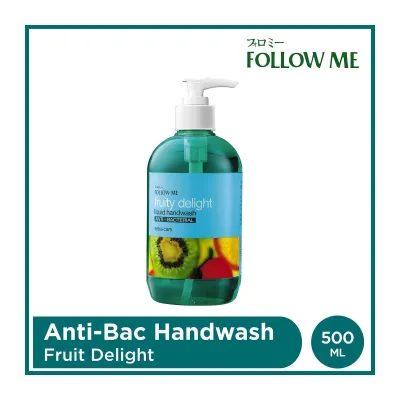
Prices are valid at publication and may change. Please refer to the product page for the latest price.
It is crucial to understand that an active HSA notification is not an explicit endorsement of safety for infants, nor is it a medical approval. The notification simply indicates that the importer has met the baseline regulatory requirements for cosmetic sales in Singapore. It does not guarantee that the formulation is mild enough for a baby’s developing skin barrier. Therefore, the HSA registry should be your first step to confirm legitimacy, but it must always be paired with a careful review of the product’s ingredient list and age recommendations.
Ingredient Checklist: What to Look for on the Product Label
When examining the ingredient list (often labeled as the INCI list) on the back of a hand soap bottle, parents must look past marketing claims like “gentle” or “family-friendly” and focus on the actual chemical components. A baby’s skin is highly sensitive, meaning ingredients that are perfectly safe for adults can trigger contact dermatitis or dryness in infants.

Harsh Surfactants to Avoid
- Sodium Lauryl Sulfate (SLS): A highly effective foaming agent that can strip natural lipids from the skin barrier, leading to severe dryness and irritation.
- Sodium Laureth Sulfate (SLES): While slightly milder than SLS, it can still be too harsh for daily use on delicate infant hands.
Preservatives and Additives to Watch
- Methylisothiazolinone (MIT) and Methylchloroisothiazolinone (MCI): These preservatives are known sensitizers and are restricted or discouraged in leave-on and highly sensitive rinse-off products for children.
- Parabens (such as Propylparaben or Butylparaben): Often used to prevent bacterial growth, but many parents prefer to avoid them due to ongoing discussions surrounding skin absorption.
- Synthetic Fragrances and Colorants: Listed simply as "Fragrance," "Parfum," or specific color codes (like CI 19140). These are among the most common triggers for allergic contact dermatitis in young children.
Milder Alternatives to Look For
- Glucoside-based Surfactants: Ingredients like Coco-glucoside, Decyl glucoside, or Lauryl glucoside are derived from natural sources and cleanse without stripping the skin's moisture.
- Betaines: Cocamidopropyl betaine is commonly used to boost foam while keeping the formulation gentle on the skin.
Always remember that terms like “hypoallergenic” or “tear-free” are marketing descriptors rather than legally binding medical certifications. If your baby has a history of eczema, cradle cap, or extremely dry skin, you should cross-reference any new soap’s ingredient list with your pediatrician or a pediatric dermatologist before the first use.
General Hand Soap vs. Dedicated Baby Wash: Formulation Differences
The fundamental difference between a general family hand soap and a dedicated baby wash lies in their chemical formulation and target skin physiology. Adult skin has a fully developed stratum corneum (the outermost layer of the skin) and a well-established acid mantle, which typically maintains a slightly acidic pH of around 5.5. Adult hand soaps are formulated to strip away heavy oils, grease, and environmental pathogens, often utilizing stronger surfactants and higher pH levels to achieve a deep clean.
In contrast, an infant’s skin barrier is up to 30% thinner than an adult’s. It absorbs and loses moisture at a much faster rate, making it highly vulnerable to lipid depletion. Dedicated baby washes are formulated with a highly controlled, neutral to slightly acidic pH that mimics the natural state of healthy infant skin. They also contain emollient ingredients like glycerin or lipids that help reinforce the skin barrier during the washing process, rather than stripping it bare.
While a mild, fragrance-free family hand soap might occasionally be acceptable for older toddlers whose skin barriers have matured, it is rarely suitable for infants. For babies under one year of age, their hands are frequently in their mouths, meaning any soap residue left behind could also be ingested. This makes the use of ultra-mild, food-grade, or dedicated baby-safe cleansing formulations strictly necessary during their first year of life.
Safe Handwashing Routines and Skin Barrier Protection
Establishing a safe handwashing routine for your baby involves more than just choosing the right product; it requires proper technique to protect their delicate skin barrier from physical and chemical stress.
Water Temperature and Duration
- Always use lukewarm water. Hot water strips natural oils from the skin much faster, accelerating dryness and irritation.
- Keep the washing duration brief. A quick, gentle lather of no more than 20 seconds is sufficient to clean a baby's hands.
- Ensure thorough rinsing. Pay close attention to the spaces between their fingers and the creases of their wrists, as trapped soap residue is a primary cause of localized skin irritation.
When to Use Plain Water
- For very young infants or for routine cleans after light play, plain lukewarm water is often entirely sufficient.
- Reserve soap for times when hands are visibly soiled, after diaper changes, or after contact with potential pathogens.
Post-Wash Moisturizing
- Gently pat the baby's hands dry with a soft, clean cotton towel. Avoid rubbing, which can cause micro-tears in the skin.
- Immediately apply a thin layer of a baby-safe, fragrance-free moisturizer or emollient to lock in hydration while the skin is still slightly damp.
Monitoring for Skin Reactions
- Regularly inspect your baby's hands and wrists for early signs of contact dermatitis, such as localized redness, dry or rough patches, scaling, or small bumps.
- If your baby shows signs of discomfort, scratches their hands, or cries during or after washing, immediately stop using the product. Rinse the area thoroughly with plain water and consult a healthcare professional or pediatrician for a proper evaluation.
Frequently Asked Questions (FAQ)
Can I use regular family hand soap on my newborn?
No, you should avoid using regular family hand soap on a newborn. A newborn’s skin is exceptionally thin, highly permeable, and still developing its protective acid mantle. Standard family soaps contain surfactants and fragrances that can easily disrupt this delicate barrier, leading to severe dryness, irritation, or chemical sensitivity. For the first few weeks, cleansing with plain lukewarm water is generally recommended. If a cleanser is necessary, use only a dedicated, fragrance-free liquid wash specifically formulated and labeled for newborns, under careful parental supervision.
What should I do if my baby develops a rash after using a new hand soap?
If your baby develops a rash, immediately discontinue use of the suspected hand soap. Rinse their hands thoroughly with cool or lukewarm water to remove any lingering product residue. Pat the skin dry gently and apply a mild, fragrance-free baby moisturizer to soothe the barrier. Do not apply over-the-counter medicated creams without professional guidance. Monitor the rash closely; if you observe spreading redness, swelling, oozing, blisters, or if your baby seems in pain or develops a fever, seek immediate medical advice from a pediatrician or dermatologist.
Community discussion
Share your experience or ask a question. Comments are reviewed before publication.