
When setting up a nursery, parents often look for ways to protect their little ones from airborne pathogens, leading many to consider biocair air sanitizers. However, determining whether these devices are entirely safe for infants requires a careful look at how they operate. The safety of using any active air sanitizer around babies depends heavily on the specific technology it uses, the active ingredients in its sanitizing solution, and how strictly parents follow operational guidelines.
Infants and toddlers are not just miniature adults; their developing respiratory and immune systems make them highly sensitive to their environments. A baby’s airways are much narrower and more easily irritated than an adult’s, and they breathe at a faster rate, meaning they inhale more air relative to their body weight. Consequently, airborne chemicals, fine mists, and byproducts like ozone can affect them much more intensely.
Because of these physiological differences, “safe for nursery use” is not a universal guarantee that applies to every device or situation. Parents must look beyond marketing claims and verify that the specific sanitizer does not emit harmful byproducts. It is crucial to confirm that the manufacturer has explicitly cleared both the device and its accompanying sanitizing solution for use in occupied spaces where infants sleep and play.
Products mentioned in this guide
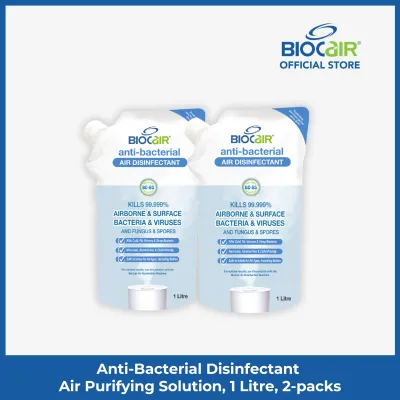
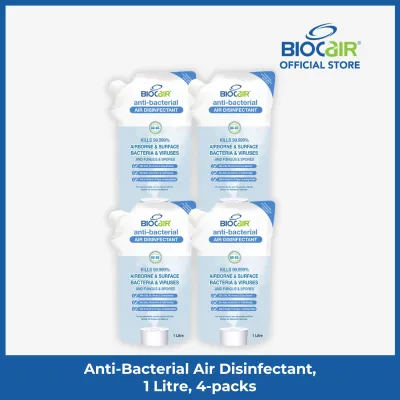
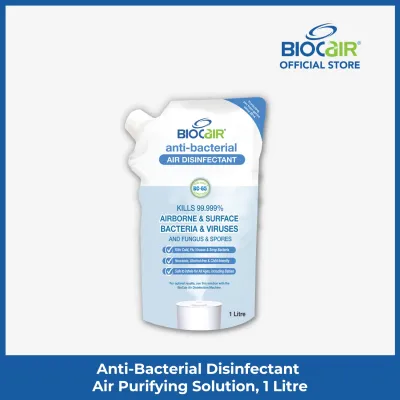
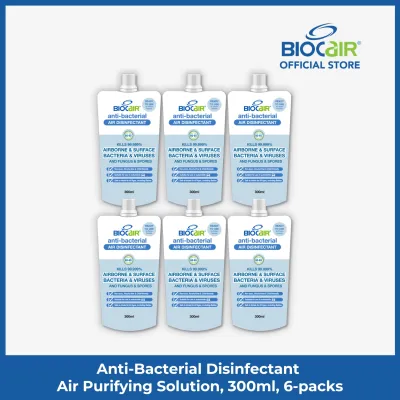
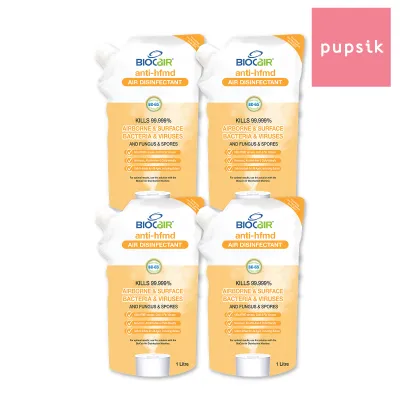
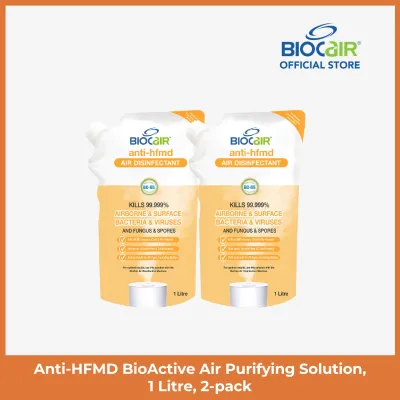
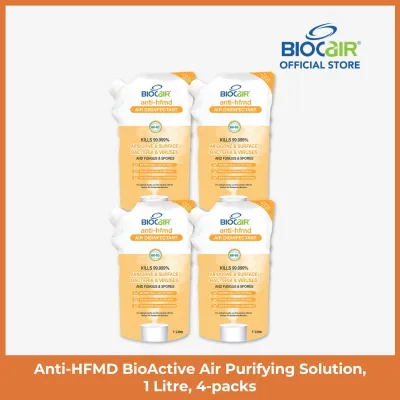
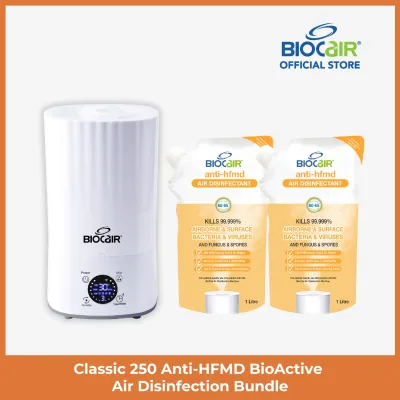
Prices are valid at publication and may change. Please refer to the product page for the latest price.
Critical Safety Features to Verify on the Product Label
Before placing any air sanitizing device in your child’s room, you must carefully inspect the product label, packaging, and user manual for key safety certifications. The first and most critical feature to verify is whether the device is completely ozone-free. Ozone is a potent lung irritant that can trigger severe respiratory distress, coughing, and long-term airway inflammation in young children. Look for explicit “ozone-free” claims or compliance certifications from recognized regulatory bodies, such as local environmental guidelines in Singapore or international equivalents like the California Air Resources Board (CARB).
Next, evaluate the chemical ingredients of the sanitizing solution used in the machine. Many biocair products utilize a specialized formula, often based on hypochlorous acid (HOCl), to target airborne pathogens. While HOCl is widely recognized as a gentle disinfectant, you should still request and review the product’s Safety Data Sheet (SDS). Ensure the solution is entirely free from volatile organic compounds (VOCs), alcohol, artificial fragrances, and harsh chemical preservatives. These additives can linger in the air or settle as residues on nursery surfaces, where a crawling baby might touch or ingest them.
If the model you choose incorporates ultraviolet (UV-C) light as part of its sanitizing process, you must verify how that light is contained. Direct exposure to UV-C radiation is hazardous to human skin and eyes, especially for developing infants. Ensure the device features a fully enclosed, light-tight sanitizing chamber that prevents any UV-C leakage. Additionally, check for an automatic safety shut-off sensor that instantly deactivates the UV-C bulb if the outer casing is opened, tilted, or accidentally knocked over by a curious toddler.
Finally, do not overlook the device’s noise output ratings. Continuous, loud mechanical noises can easily disrupt an infant’s fragile sleep cycles, which are vital for healthy cognitive and physical growth. Check the product specifications for the decibel (dB) rating on its lowest or “sleep” setting. For a nursery environment, the device should ideally operate at or below 30 to 35 dB, which is equivalent to a quiet whisper, ensuring your baby can sleep soundly without auditory strain.
Potential Respiratory and Environmental Risks for Babies
Even when a sanitizing solution is formulated to be non-toxic, dispersing any liquid into a fine mist carries inherent risks for a baby. Ultrasonic mists break down liquid into tiny, inhalable droplets that can travel deep into an infant’s delicate lungs. If a baby has an underlying respiratory sensitivity, such as a family history of asthma or reactive airway disease, breathing in these ultra-fine particles can trigger coughing fits, airway constriction, or mild respiratory irritation.

Another environmental factor to monitor is how the device alters the relative humidity of the room. In Singapore’s naturally warm and humid climate, many parents run air conditioning in the nursery overnight. While air conditioning dries out the air, running a misting sanitizer continuously can cause rapid fluctuations in humidity. If the room becomes too humid, it can encourage the growth of dust mites and mold in the bedding. Conversely, if the air is too dry, it can irritate your baby’s nasal passages, throat, and sensitive skin, making them more susceptible to respiratory discomfort.
Sensory disruption is another subtle risk associated with active nursery appliances. Many modern air sanitizers feature bright LED control panels, status indicator lights, or colorful nightlights. In a dark nursery, this artificial blue or white light can interfere with your baby’s natural melatonin production, making it harder for them to fall and stay asleep. Furthermore, sudden changes in fan speed or the bubbling sound of a water tank can startle a light-sleeping infant, leading to frequent night wakings and daytime irritability.
Best Practices for Safe Placement and Operation
To minimize any potential risks, you must follow strict best practices when setting up and operating an air sanitizer in your baby’s room. Always position the device at least 1 to 2 meters away from the crib, changing table, and play areas. Place it on a flat, stable, and elevated surface—such as a high dresser or shelf—completely out of reach of crawling babies and toddlers. Ensure the output vent or mist nozzle is pointed away from the crib so that the sanitizing mist can disperse evenly into the room rather than blowing directly onto your baby’s face or bedding.
Proper room ventilation is equally important when running an active sanitizer. You should never operate these devices in a completely sealed, airtight room. Keeping the nursery door slightly ajar allows for continuous air exchange and prevents the buildup of concentrated mist particles or carbon dioxide. Make it a habit to open the windows daily to let fresh air circulate throughout the room, flushing out any residual airborne particles and balancing the indoor environment.
Maintaining the cleanliness of the device is a non-negotiable safety step. Stagnant water and residual sanitizing solution inside the tank can quickly become a breeding ground for mold, yeast, and bacteria. Clean the water tank, base, and misting nozzle strictly according to the manufacturer’s instructions, using only the recommended solutions or distilled water. Neglecting this routine can turn your air sanitizer into a source of secondary pollution, aerosolizing harmful microbes directly into your baby’s breathing space.
To further reduce direct exposure, optimize the timing of the device’s operation. Consider running the sanitizer on a higher setting when your baby is out of the room, such as during bath time or outdoor play. This allows the device to actively clean the air and surfaces while the room is unoccupied. When your baby returns to sleep, turn the device off completely or switch it to its lowest, quietest maintenance setting to ensure a peaceful and low-exposure sleep environment.
Warning Signs: When to Stop Using the Air Sanitizer
Even with careful preparation, some infants may still experience sensitivity to active air sanitizing devices. You must remain highly observant and monitor your child closely for any physical signs of distress. Immediately turn off and unplug the device if you notice any of the following symptoms in your baby during or shortly after operation:
- Unexplained, persistent coughing or throat clearing
- Wheezing, whistling sounds during breathing, or rapid breathing
- Red, watery, or itchy eyes
- Sudden nasal congestion, sneezing, or a runny nose
- New or worsening skin rashes, dry patches, or hives
- Unusual fussiness, restless sleep, or resistance to settling down in the nursery
If any of these warning signs occur, move your baby to a different room with fresh air immediately and open the nursery windows to thoroughly ventilate the space. If the symptoms do not resolve quickly, or if your baby shows any signs of breathing difficulty, seek medical attention from a pediatrician right away. When you go to the clinic, bring the product’s user manual and the ingredient label of the sanitizing solution so the medical professional can review exactly what your baby was exposed to.
Frequently Asked Questions (FAQ)
Can I leave the Biocair air sanitizer running all night in the nursery?
It is generally not recommended to run any active misting or sanitizing device continuously overnight in a closed nursery without direct supervision. You should consult your specific model’s user manual to check for maximum continuous run-time limits. If you choose to use the device overnight, utilize its built-in timer or sleep mode to limit active misting, keep the nursery door slightly open to ensure adequate ventilation, and regularly monitor the room’s humidity levels to prevent excessive moisture buildup.
Does Biocair replace the need for a standard HEPA air purifier?
No, an air sanitizer and a standard HEPA air purifier serve completely different functions in a nursery. Air sanitizers are designed to actively target and neutralize airborne pathogens like bacteria and viruses. A true HEPA air purifier, on the other hand, is a passive filtration system that physically traps particulate matter such as dust, pollen, mold spores, pet dander, and fine PM2.5 haze particles. For the most comprehensive nursery air quality, especially in urban environments, parents often find that using both technologies complementarily provides the best protection.

Community discussion
Share your experience or ask a question. Comments are reviewed before publication.