
Quick Answer: Is Babyganics Sanitizer Safe for Babies?
When evaluating whether a Babyganics sanitizer is safe for your baby, the answer depends heavily on the specific product type, your baby’s age, and how the product is applied. The brand offers distinct formulations, primarily dividing their lineup into foaming hand sanitizers designed for skin and surface sanitizing sprays or wipes designed for objects. Hand sanitizers formulated for babies are generally considered safe for occasional use on older infants—typically those over six months of age—provided they are applied by an adult, used in moderation, and allowed to dry completely.
However, surface sanitizers and wipes are formulated with different chemical concentrations meant strictly for non-porous hard surfaces and toys. These must never be applied to a baby’s skin, and any treated toys or items that your baby might place in their mouth must be thoroughly rinsed with clean, potable water after the sanitizer has dried. While these products offer convenient hygiene solutions when you are on the go, pediatricians and pediatric dermatologists emphasize that washing with plain soap and running water remains the gold standard for infant hygiene. Sanitizers should serve as a secondary option when proper washing facilities are unavailable.
Understanding the Ingredients in Babyganics Sanitizers
To make an informed decision, you must understand the active and inactive ingredients listed on the product labels. Babyganics hand sanitizers are widely known for their alcohol-free formulations, which typically utilize benzalkonium chloride (usually at a concentration of 0.11% or 0.13%) as the active antimicrobial agent. Benzalkonium chloride is highly effective at eliminating many common germs without the immediate drying effect associated with ethyl alcohol. However, unlike alcohol, benzalkonium chloride does not evaporate into the air; it remains on the skin as an active residue. This makes thorough drying crucial, as you want to prevent your baby from licking wet hands and ingesting the active chemical.
Products mentioned in this guide
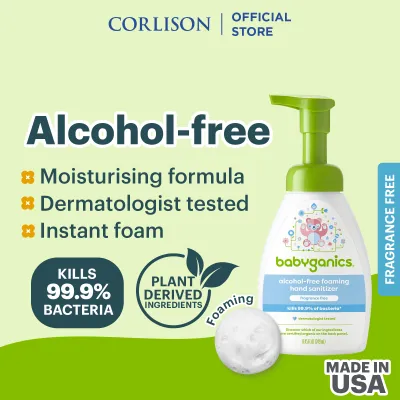
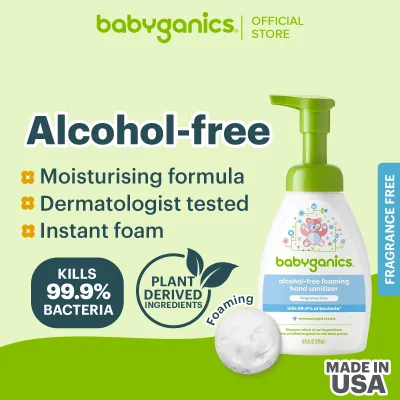
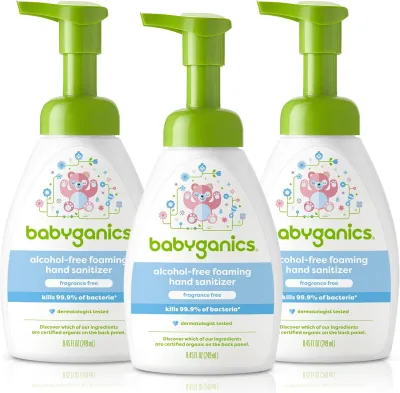
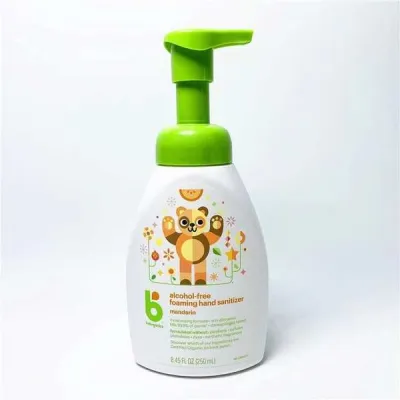
Prices are valid at publication and may change. Please refer to the product page for the latest price.

If you encounter alcohol-based sanitizers within the brand’s broader lineup, these rely on ethyl alcohol to kill pathogens. While alcohol evaporates rapidly, reducing the risk of chemical residue ingestion once dry, it can severely dry out a baby’s highly sensitive skin barrier. In Singapore’s warm, humid climate, infant skin is already susceptible to sweat rashes, chafing, and eczema flare-ups, meaning drying agents can quickly exacerbate localized irritation.
The inactive ingredients in these sanitizers often include plant-derived skin conditioners such as aloe barbadensis leaf juice, chamomilla recutita (matricaria) flower extract, and tocopheryl acetate (vitamin E). These botanical additives are included to soothe and moisturize the skin, helping to counteract potential dryness. Despite their natural origins, botanical extracts and essential oils can still act as contact allergens for infants with highly sensitive skin or pre-existing skin conditions.
When purchasing these products, look closely at the packaging to verify manufacturer claims such as “pediatrician-tested” or “dermatologist-tested.” These labels indicate that the formulation has undergone safety evaluations under professional supervision, but they do not guarantee that your specific child will not experience a reaction. Always check the back label for specific age limits, contact times, and safety warnings printed by the manufacturer before the first application. Baby-safe sanitizing products in Singapore typically range from S$8 to S$25 depending on the bottle size and pack format on major online marketplaces.
Safe Application: Skin, Toys, and Feeding Surfaces
Applying sanitizing products correctly is the most effective way to prevent accidental chemical exposure, skin irritation, or ingestion. Different scenarios require distinct handling methods to keep your baby safe.
On Baby's Hands and Skin
Hand sanitizers should be reserved for situations where clean running water and soap are inaccessible, such as during outdoor play at Singapore’s parks or while traveling. To apply the sanitizer safely, pump a small, dime-sized amount of the foam or gel directly into your own hands first. Rub your hands together slightly, then thoroughly massage the product over all surfaces of your baby’s hands, paying close attention to the spaces between their fingers, the backs of their hands, and around their fingernails.
You must continue rubbing your baby’s hands gently until the product has completely dried, which typically takes 15 to 30 seconds. Do not let your baby touch their face, rub their eyes, or put their hands in their mouth while the skin is still damp. Pediatricians generally advise against using any chemical hand sanitizers on newborns and infants under six months old. Young infants have a highly permeable skin barrier and engage in constant hand-to-mouth exploration, which significantly increases the risk of dermal absorption and accidental chemical ingestion.
On Toys and Hard Surfaces
It is vital to distinguish surface sanitizing sprays and wipes from hand hygiene products. Surface sanitizers contain stronger cleaning agents designed to kill pathogens on non-porous materials like plastic, wood, and metal. When using these products on toys, play mats, or nursery furniture, apply the spray or wipe evenly across the surface.
Refer to the product label to identify the required contact time—the duration the surface must remain wet to effectively eliminate germs, which often ranges from 30 seconds to several minutes. Allow the surface to air dry completely. For any toys, teething rings, or objects that your baby is likely to place directly into their mouth, you must perform an extra safety step: rinse the sanitized item thoroughly with clean, potable water and dry it with a clean towel before returning it to your baby. This step removes any lingering chemical residues that could be ingested.
On Feeding Items (Bottles, High Chairs, Utensils)
Chemical surface sanitizers are generally not recommended for items that come into direct contact with your baby’s milk, food, or mouth, such as baby bottles, nipples, pacifiers, and weaning utensils. The risk of chemical residue transferring directly into the baby’s digestive system is too high. Instead, rely on residue-free physical sterilization methods for these items, such as boiling them in water for five minutes, using a steam sterilizer, or washing them with dedicated, food-safe baby bottle cleansers and hot water.
For high chairs, the tray is a primary food-contact surface where babies often pick up finger foods directly. If you choose to use a surface sanitizer on a high chair tray, treat it with the same care as a toy. Let the sanitizer stand for the recommended contact time, let it dry, and then thoroughly wipe the tray down with a clean cloth soaked in fresh, potable water to ensure no chemical residue remains on the surface where food will be placed.
Potential Side Effects and When to Stop Use
Even when using products designed specifically for infants, parents must remain vigilant for potential side effects and know how to respond if an adverse reaction occurs.
Skin irritation is the most common side effect of frequent sanitizer use. Monitor your baby’s skin for signs of contact dermatitis, which can present as localized redness, rough or peeling patches, small raised bumps, or hives. Babies diagnosed with eczema or those with naturally dry skin are particularly vulnerable to irritation from both the active sanitizing agents and the botanical extracts found in alcohol-free formulas.
Accidental ingestion and localized toxicity represent another risk. If your baby licks their hands while the hand sanitizer is still wet, or if they chew on an unrinsed toy, they may experience mild oral irritation. If this occurs, perform low-risk first aid: gently wipe the inside of their mouth with a clean, damp cloth and offer a small amount of water, breast milk, or formula to help rinse away the taste and residue. If you suspect your baby has ingested a significant amount of sanitizer—such as drinking from a bottle or chewing on a sanitizing wipe—or if they exhibit symptoms like persistent vomiting, lethargy, or breathing difficulties, seek emergency medical care or contact your local poison control center immediately.
Eye exposure can occur if a baby rubs their eyes with wet hands. This causes immediate stinging, redness, and tearing. If sanitizer enters your baby’s eyes, immediately flush them gently with lukewarm water for several minutes. You can do this by squeezing a clean, wet sponge or cloth above their forehead, allowing the water to cascade gently over their eyes. If redness, swelling, or blinking persists after flushing, consult a pediatrician.
You should establish clear stop-use conditions. Discontinue the use of any hand or surface sanitizer immediately if your baby develops persistent skin redness, hives, swelling, or if they show signs of intense itching or discomfort after the product is applied.
Best Practices for Hygiene Around Babies
Reducing your reliance on chemical sanitizers can help preserve your baby’s delicate skin barrier while maintaining a highly hygienic home environment.
Washing hands with plain soap and running water remains the uncontested gold standard for infant hygiene. Soap and water physically remove dirt, grease, organic matter, and a wider spectrum of pathogens—including resilient viruses like norovirus, which many hand sanitizers cannot fully eliminate. Whenever you are at home, prioritize a quick trip to the sink over a pump of sanitizer.
Caregiver hygiene is often your best line of defense. Rather than applying sanitizing products directly to your infant’s sensitive skin, focus on ensuring that parents, older siblings, and household visitors wash or sanitize their own hands thoroughly before handling the baby, preparing bottles, or touching toys. This simple practice dramatically cuts down on pathogen transmission without exposing the baby to chemical formulations.
Additionally, practice strict environmental safety by storing all hand sanitizers, surface sprays, wipes, and household cleaning products securely out of your baby’s reach. Use high shelves or child-proof locked cabinets to prevent accidental ingestion or unsupervised access as your child grows and begins to explore their surroundings.
Frequently Asked Questions (FAQ)
Can I use Babyganics hand sanitizer on my newborn?
No, it is highly recommended to avoid using chemical hand sanitizers on newborns. A newborn’s skin barrier is extremely thin, fragile, and highly permeable, making them far more susceptible to absorbing topical chemicals than older infants. Furthermore, newborns have not yet developed robust immune or metabolic systems to process absorbed substances. For newborns, stick exclusively to gentle soap and warm water, or soft cotton wipes dampened with plain water, and consult your pediatrician if you have specific concerns about newborn hygiene.
Is Babyganics surface sanitizer safe for high chairs?
Yes, you can use Babyganics surface sanitizer to clean and sanitize high chairs, including the frame and the tray. However, because babies frequently eat food directly off the high chair tray, you must take extra precautions. After applying the sanitizer and allowing it to sit for the manufacturer’s recommended contact time, you must thoroughly rinse the tray by wiping it down with a clean cloth saturated with fresh, potable water. This step ensures that no active sanitizing residues transfer onto your baby’s food.
What should I do if my baby eats a Babyganics sanitizing wipe?
If your baby puts a sanitizing wipe in their mouth or swallows a portion of one, act quickly and calmly. Immediately retrieve any remaining pieces of the wipe from their mouth and gently wipe their tongue and gums with a clean, damp cloth to remove residual chemicals. Check the product packaging for specific first-aid instructions. If you suspect they have swallowed a piece of the wipe, or if they display signs of choking, gagging, vomiting, or unusual lethargy, seek immediate medical attention or contact a poison control center.
Community discussion
Share your experience or ask a question. Comments are reviewed before publication.