
Choosing a safe sleeping environment is one of the most critical decisions you will make for your newborn. If you are considering a Coolbaby cot, or have already purchased one, ensuring it meets rigorous safety benchmarks is essential for your peace of mind. Because baby cots are available across various online marketplaces and retail outlets, safety features can vary significantly between different models and production batches.
Determining whether a specific cot is safe requires looking beyond brand names or aesthetic appeal. You must actively verify the product’s compliance with recognized international safety standards, physically inspect its structural components, and ensure correct assembly. By taking a systematic approach to safety verification, you can create a secure, hazard-free sleep space that protects your infant from common nursery risks.
Understanding Recognized Baby Cot Safety Standards
Before introducing any furniture into your nursery, you should familiarize yourself with the primary safety standards governing baby cots. In Singapore, consumer goods are subject to safety guidelines monitored by local regulatory bodies such as Enterprise Singapore. While local authorities oversee general consumer product safety, they heavily rely on established international benchmarks to determine whether a baby cot is fit for use.
Products mentioned in this guide

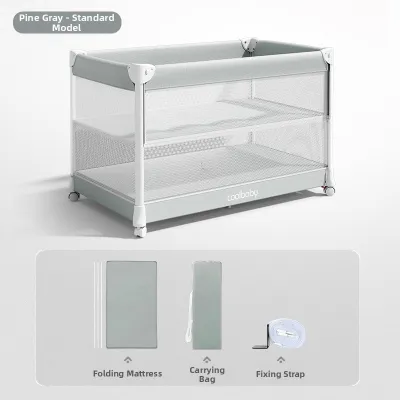
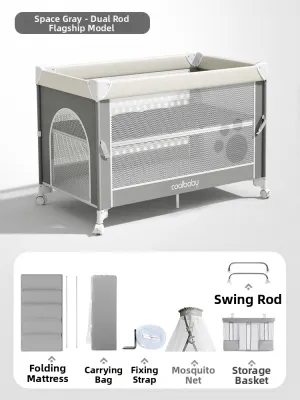

![[INSTOCK] Cool Baby Supreme FlexiNest Co-Sleeper](https://img.lazcdn.com/g/ff/kf/S7586162d7b124a2591a8892022c67047S.jpg_400x400q80.jpg_.webp)

Prices are valid at publication and may change. Please refer to the product page for the latest price.
The European standard EN 716 is one of the most widely recognized benchmarks for children’s cots and folding cots. This standard specifies strict requirements for dimensions, construction materials, and structural strength to prevent accidents. It ensures that the cot’s design minimizes risks such as entrapment, falls, and sharp edges, providing a reliable baseline for parents evaluating nursery furniture.
In addition to European standards, the United States features robust regulations under ASTM F1169 for full-size baby cribs and ASTM F406 for non-full-size or play yard styles. These standards address critical safety aspects, including the strength of the wood, the durability of the hardware, and the structural integrity of the mattress support system. When researching a Coolbaby cot, checking for compliance with either EN 716 or ASTM F1169 is an excellent starting point.
To verify these standards, you should look for physical certification labels, compliance marks, or manufacturer declarations of conformity. These are typically printed on the cot frame itself, included in the instruction manual, or displayed on the product packaging. If this information is not readily visible, you should request official test reports or compliance certificates from the seller or manufacturer before placing your baby in the cot.
How to Physically Inspect a Coolbaby Cot
A physical inspection is a vital step in confirming that a cot is structurally sound and free from manufacturing defects. Even if a product claims compliance on paper, inspecting the physical unit allows you to identify any immediate safety hazards. This hands-on evaluation should be performed immediately after assembly and repeated periodically as your baby grows.

Begin your inspection by measuring the slat spacing across the entire cot frame. The gap between individual slats must never exceed 65 millimetres, which is roughly the width of a standard soda can or a tennis ball. This specific limit is designed to prevent an infant’s head or limbs from slipping through and becoming trapped. If you find any gaps wider than this threshold, the cot is unsafe for unsupervised sleep.
Next, examine the corner posts, joints, and hardware of the cot. Corner posts should be virtually flush with the end panels, extending no more than 1.5 millimetres above the sides to prevent a baby’s clothing or pacifier cords from snagging. All screws, bolts, and brackets must fit snugly without protruding, and any exposed metal parts should be smooth and free from sharp burrs.
Pay close attention to the side mechanisms, particularly if the cot features adjustable or drop-side panels. Traditional drop-side cots, which allow one side to slide down completely, are widely restricted or discouraged internationally due to historical safety incidents involving mechanical failures. If your Coolbaby cot has an adjustable side, verify that it features a secure, double-action locking mechanism that cannot be accidentally released by a child from the inside.
Finally, perform a stability test on the fully assembled unit. Place both hands on the top rails and gently shake the cot from side to side and front to back. A safe cot should feel sturdy and rigid, with minimal wobble or sway. If the frame flexes excessively, or if you hear squeaking and rattling from the joints, double-check your assembly or inspect the wood for structural weaknesses.
Checking Materials, Finishes, and Mattress Fit
The safety of a baby cot extends beyond its structural frame to the materials used in its construction and the mattress paired with it. Because infants spend a significant portion of their day in close contact with their cot, the chemical safety of the finishes and the physical fit of the mattress are paramount.
A proper mattress fit is crucial for preventing suffocation and entrapment hazards. When you place the mattress inside the cot, there should be no significant gaps between the mattress edges and the inner frame. You can verify this using the standard finger-width test: if you can insert more than two fingers between the mattress and any side of the cot, the mattress is too small. A tight, snug fit ensures your baby cannot slide into a gap and become wedged.
Surface finishes must also be scrutinized, as babies frequently chew on cot rails when teething. You must verify that all paints, varnishes, lacquers, or plastic coatings used on the cot are explicitly certified as non-toxic and lead-free. Look for documentation confirming compliance with chemical safety standards, such as the European EN 71-3 standard, which limits the migration of heavy metals and phthalates in children’s products.
Additionally, inspect the physical integrity of the wood or metal components. Run your hands along the rails, slats, and corners to check for splinters, rough patches, or sharp edges that could scratch delicate skin. If the cot features metal parts, ensure there are no signs of rust or peeling plating, which can pose both physical and chemical hazards to your child.
Safe Assembly and Ongoing Usage Guidelines
Even the safest cot can become hazardous if it is assembled incorrectly or placed in an unsafe location within your home. Proper setup and ongoing maintenance are essential to ensuring the cot remains a secure environment throughout your child’s early years.
Always begin by carefully reading and strictly following the manufacturer’s specific instruction manual for your exact Coolbaby model. Never attempt to improvise during assembly, skip steps, or use alternative hardware that did not come with the product. If the instructions are unclear or if you find yourself with leftover parts that are not accounted for, contact the manufacturer for clarification before using the cot.
The placement of the cot within your nursery is another critical safety factor, especially in typical Singapore apartments where space may be limited. Position the cot well away from windows, air conditioning units, electrical outlets, and wall decorations. Ensure that blind cords, curtain strings, and baby monitor cables are completely out of reach from any point inside the cot to eliminate strangulation hazards.
Keep the sleep area itself as minimalist as possible to reduce the risk of sudden infant death syndrome (SIDS) and suffocation. The cot should contain only a firm, flat mattress covered by a tight-fitting sheet. Avoid placing pillows, heavy blankets, quilts, bumper pads, sheepskins, or large stuffed toys inside the cot, as these items can easily obstruct a baby’s airway.
As your baby develops, you must adjust the mattress base height accordingly. Most modern cots offer multiple height positions. The highest setting is designed for newborns who cannot yet sit up, making it easier for parents to lift them. However, as soon as your baby shows signs of rolling over, sitting, or pulling themselves up, you must lower the mattress base to its lowest setting to prevent them from tumbling over the top rail.
Warning Signs and When to Stop Use
A baby cot’s safety is not permanent; wear and tear can compromise its structural integrity over time. Regular maintenance checks are necessary to identify when a cot has reached the end of its safe lifespan and must be retired or repaired.
You must stop using the cot immediately if you notice any cracked, broken, or warped structural components. Splitting wood, bent metal brackets, or stripped screw holes cannot be safely patched with household glue or tape. If any essential hardware becomes lost or damaged, do not attempt to substitute generic screws from a hardware store; instead, contact the manufacturer directly for authorized replacement parts.
You should also monitor your child’s physical development to determine when they have outgrown the cot. Every cot has a manufacturer-specified maximum weight and height limit that must be strictly observed. Even if your child is below the weight limit, you should transition them to a toddler bed as soon as they show the ability to climb out of the cot, or when the height of the top rail is less than three-quarters of their height.
If you ever experience persistent wobbling, loose joints that cannot be tightened, or if you suspect the materials are degrading due to Singapore’s humid climate, err on the side of caution. Discontinue use and consult a qualified furniture specialist or the manufacturer’s customer service team to assess whether the cot is still safe for sleep.
Frequently Asked Questions (FAQ)
Are second-hand or inherited baby cots safe to use?
Using a second-hand or inherited baby cot carries inherent risks that require careful evaluation. Older cots may not comply with modern safety standards, such as the strict limits on slat spacing or the ban on traditional drop-side designs. Additionally, plastic and wooden components can degrade over time, and critical assembly hardware may have been lost or weakened during previous moves.
Before accepting a pre-loved cot, verify its manufacture date and research whether the specific model has ever been subject to safety recalls. Inspect the unit thoroughly for any signs of wear, structural damage, or DIY modifications. If you cannot obtain the original instruction manual, or if the manufacturer’s safety labels are missing, it is generally safer to invest in a new, fully certified cot.
Do I need a specific safety certification label on the cot?
While having a physical safety certification label permanently affixed to the cot frame is highly recommended, its absence does not automatically mean the cot is unsafe. Labels can sometimes peel off, fade, or be omitted from certain production runs. However, the manufacturer or authorized retailer must be able to provide a formal declaration of conformity or independent test reports upon request.
If you are purchasing a Coolbaby cot and cannot find a physical safety mark on the frame, contact the seller or the brand’s customer support directly. Ask them to provide documentation verifying compliance with EN 716, ASTM F1169, or equivalent international standards. A reputable manufacturer will readily share these safety credentials to assure you of their product’s compliance.
Community discussion
Share your experience or ask a question. Comments are reviewed before publication.