
Determining whether a baby walker is safe for your 1-year-old requires a careful look at product design, your home layout, and your daily supervision habits. While these devices are popular for keeping older infants entertained, they also introduce specific physical and developmental risks. By learning how to evaluate a walker’s structural safety features, verify official manufacturing standards, and prepare your living space, you can make an informed decision that protects your child’s well-being.
To choose the right path for your family, it helps to understand why baby walkers require such strict safety scrutiny and how to identify the safest models available on the market.
Understanding the Safety Risks of Baby Walkers for 1-Year-Olds
Before introducing a baby walker into your home, you must understand the unique physical hazards associated with these devices. Because walkers allow a 1-year-old to move at rapid speeds, they can quickly lead to accidents. Common physical hazards include falls from elevated surfaces, such as steps or thresholds, and tipping over on uneven flooring like thick rugs or transitions between tile and wood. Additionally, the elevated height of a walker allows a baby to reach objects that would normally be out of their grasp, such as hot liquids, electrical cords, or household cleaning agents.
Products mentioned in this guide
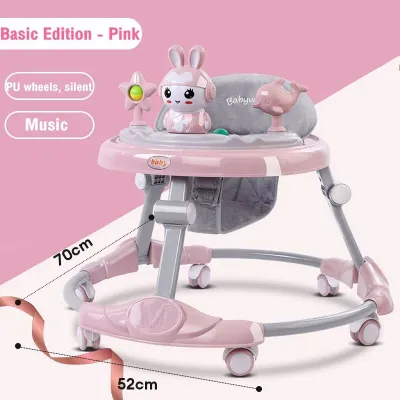
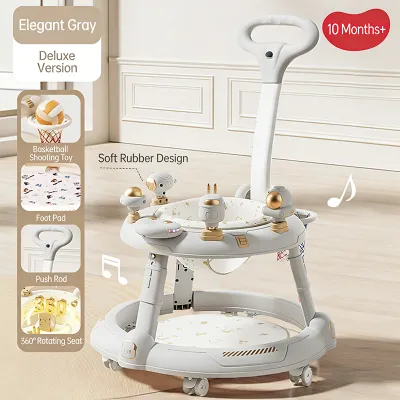
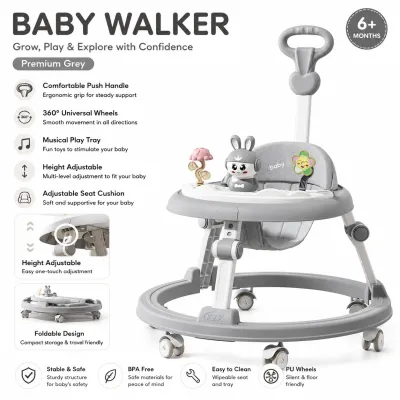
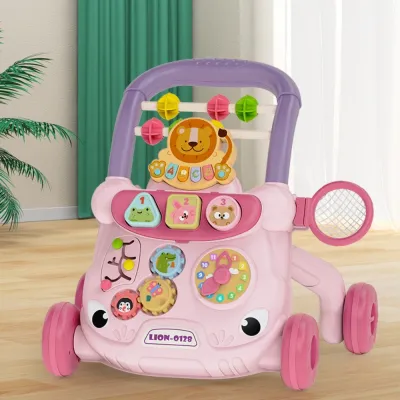
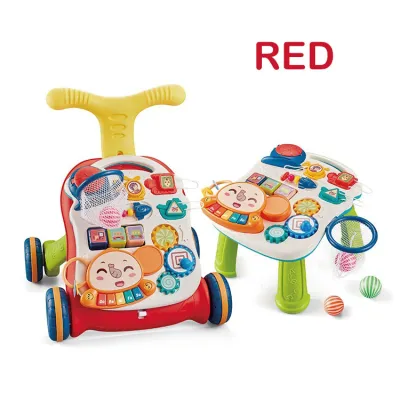
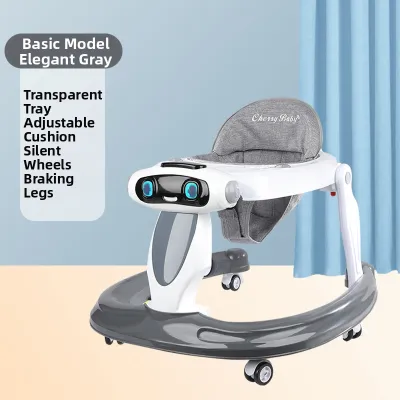
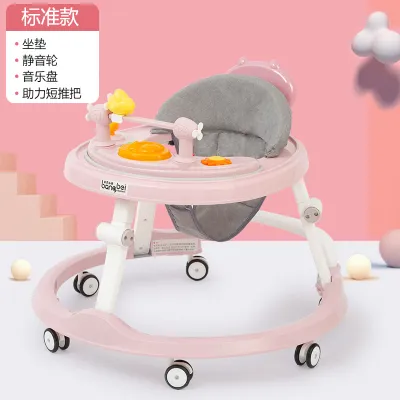
Prices are valid at publication and may change. Please refer to the product page for the latest price.
From a developmental perspective, pediatric experts often raise concerns about how traditional sit-in walkers affect a child’s natural motor progression. When suspended in a walker seat, babies frequently push off with their toes. This repetitive action can encourage toe-walking, which may tighten the heel cords and impact natural gait development. Furthermore, spending excessive time in a walker can reduce the opportunities your child has to practice essential floor-based motor skills, such as crawling, pulling up, and cruising, which naturally build core and leg strength.
It is also important to distinguish between mobile wheeled walkers and stationary activity centers. Mobile walkers feature wheels on the base that allow the child to propel themselves across the room. Stationary activity centers, on the other hand, keep the baby in one secure spot while allowing them to bounce, spin, and interact with attached toys. Because stationary centers do not allow self-propelled travel, they carry a significantly lower risk of falls, collisions, and access-related accidents.
Essential Safety Features to Look For Before Buying
If you decide to purchase a baby walker, you must carefully evaluate its physical design to ensure it minimizes potential hazards. The base of the walker is your first line of defense against tipping. Look for a model with an extra-wide, heavy base that extends well beyond the perimeter of the seat. This wide footprint prevents the walker from tipping over when your baby leans sideways or backward to reach for toys. Many high-quality models also feature built-in anti-tip bumpers or rubberized grips on the underside of the base.

Stopping mechanisms are another critical safety feature to inspect. Reliable walkers are equipped with friction pads or stair-braking systems on the bottom of the frame. These pads are designed to grip the floor and halt the walker’s momentum instantly if one of the wheels loses contact with the ground, such as when approaching a step or a sudden drop-off. Always check the product specifications to confirm the presence of these automatic braking mechanisms.
Take a close look at the seat and frame construction. The seat fabric should be durable, easy to clean, and securely attached to the frame with heavy-duty snaps or buckles. Ensure the harness is adjustable and holds your baby snugly in place without restricting their breathing. Examine the folding joints and adjustment mechanisms carefully; they should feature safety locks that prevent the walker from collapsing while in use, and the joints must be designed to prevent finger-pinch hazards for both you and your child.
Finally, prioritize height adjustability. A safe walker must offer multiple height settings to accommodate your growing baby. When your 1-year-old is seated in the walker, their feet should rest flat on the floor. If only their toes can touch the ground, or if their legs are bent too deeply, the walker is not adjusted correctly. Proper height adjustment supports a natural standing posture and reduces the risk of developing improper walking habits.
How to Verify Safety Standards and Certifications
When shopping for a baby walker, do not rely solely on attractive packaging or vague marketing claims like “safety approved.” You must actively verify that the product complies with recognized national or international safety standards. These standards ensure the walker has undergone rigorous testing for structural integrity, stability, and hazard prevention.
Start by locating the physical certification marks on the product itself. Legitimate safety labels are typically printed on a permanent sticker attached to the metal frame, stamped into the plastic base, or clearly displayed on the product packaging and the cover of the user manual. Look for recognized standards such as ASTM F977 in North America or EN 1273 in Europe. These codes indicate the model meets specific safety requirements for stability, stair-fall prevention, and structural strength.
To ensure the certification is genuine, cross-reference the manufacturer’s claims. You can search official safety databases or visit the manufacturer’s website to verify their compliance records. Be particularly cautious when browsing online marketplaces or purchasing from unfamiliar brands. Red flags include missing compliance labels, vague safety descriptions, lack of clear contact information, or the absence of a traceable batch number on the product frame.
Creating a Safe Environment for Walker Use
Even the most advanced safety features cannot replace a secure home environment. Before placing your 1-year-old in a walker, you must thoroughly babyproof the entire area where the device will be used. Physical barriers are essential for preventing serious accidents. Secure all stairways and split-level transitions with sturdy, hardware-mounted safety gates. Avoid pressure-mounted gates at the top of stairs, as the force of a moving walker can push them loose.
Next, clear the floor of all potential hazards. Remove loose rugs, door mats, and electrical cords that could catch on the walker’s wheels and cause it to tip. Block access to uneven thresholds or transitions between different flooring materials. You must also scan the room at your baby’s elevated height. Secure dangling cords from window blinds, move hot beverages away from table edges, and restrict access to fireplaces, heaters, bathrooms, and areas where household chemicals are stored.
Active, line-of-sight adult supervision is the most critical component of walker safety. This means you must remain in the same room, keep your eyes on your baby at all times, and stay close enough to intervene immediately if an accident occurs. Passive monitoring, such as watching your child from an adjacent room or looking down at your phone, is not sufficient. A baby in a walker can move surprisingly fast, leaving no time to react from a distance.
When to Stop Using the Baby Walker
As your child grows, their physical capabilities and dimensions will change, eventually making the walker unsafe to use. You must regularly consult the manufacturer’s user manual to check the specified maximum weight and height limits. Once your baby reaches either of these limits, stop using the walker immediately, as the frame may no longer support their weight safely or prevent tipping.
Pay close attention to your child’s developmental milestones. If your 1-year-old can pull themselves up to a standing position independently, walk unassisted, or attempt to climb out of the walker seat, it is time to transition away from the device. Continued use at this stage increases the risk of the walker tipping over or the child falling out of the seat.
Finally, watch for signs of physical discomfort or improper posture. If your baby consistently slumps in the seat, shows signs of frustration while inside, or if their legs appear cramped despite adjusting the walker to its highest setting, they have outgrown the device. Transitioning them to floor-based play or a push-toy will better support their ongoing physical development.
Frequently Asked Questions (FAQ)
Do pediatricians generally recommend baby walkers for 1-year-olds?
Most major pediatric health organizations advise against using traditional mobile baby walkers. Medical professionals express concern over the high rate of preventable injuries associated with these devices, such as falls down stairs and access to household hazards. Additionally, pediatricians note that walkers do not help babies learn to walk any faster and can sometimes delay natural motor development. Instead, they recommend safer alternatives like stationary activity centers, playpens, or supervised floor play to help your baby build the muscle strength needed for independent walking.
Are push-walkers safer than traditional sit-in baby walkers?
Push-walkers are generally considered a safer and more developmentally beneficial alternative to traditional sit-in walkers. Unlike sit-in models, a push-walker requires your baby to support their own body weight, balance independently, and actively engage their core and leg muscles, which supports natural walking mechanics. When choosing a push-walker, look for a model with a heavy, stable base to prevent it from tipping forward when your baby leans on the handlebar. Some models also offer adjustable wheel resistance, which allows you to slow down the wheels to match your baby’s walking pace.
Community discussion
Share your experience or ask a question. Comments are reviewed before publication.