
The Short Answer: Are Infant Walkers Safe for Babies?
Wheeled infant walkers are generally not considered safe for babies, and major pediatric and child safety organizations worldwide strongly advise against using them. Leading healthcare authorities, including the American Academy of Pediatrics and local pediatric experts in Singapore, have long warned parents about the significant physical injuries and developmental setbacks associated with these devices. While walkers are often marketed as helpful tools to keep babies entertained or to teach them how to walk, the physical risks and developmental trade-offs far outweigh any temporary convenience they might offer.
Any potential use of an infant walker is highly restricted and requires a level of constant, active supervision that is incredibly difficult to maintain in a normal household. Because a baby in a walker can move at surprisingly high speeds, accidents happen in a fraction of a second—often before a caregiver can react. Furthermore, scientific evidence shows that walkers do not help babies learn to walk any faster; in fact, they can actually delay natural motor milestones. For these reasons, choosing safer, stationary alternatives is the highly recommended path for supporting your baby’s physical development.
Physical Safety Hazards Associated with Infant Walkers
The primary concern surrounding wheeled infant walkers is the high rate of physical injuries. Because these devices place a mobile baby on wheels before they have the cognitive ability to recognize environmental dangers, they turn ordinary household features into serious hazards. Understanding these specific physical risks can help caregivers make informed decisions about nursery equipment.
Products mentioned in this guide
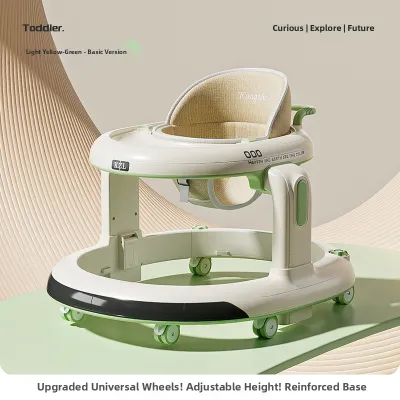
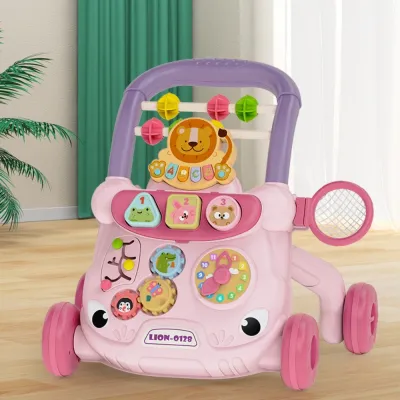
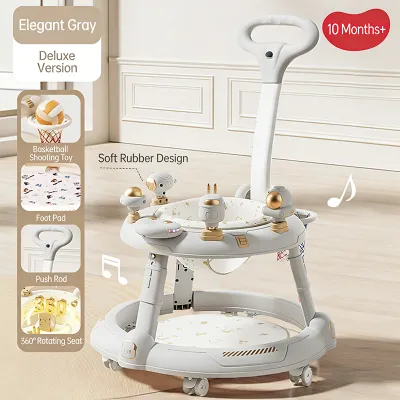
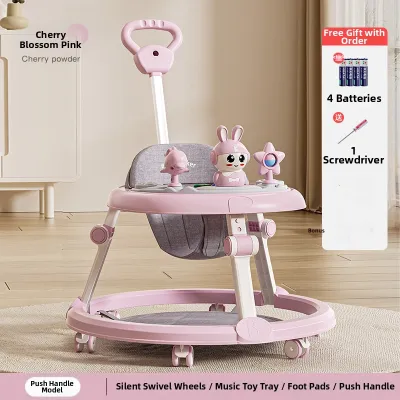
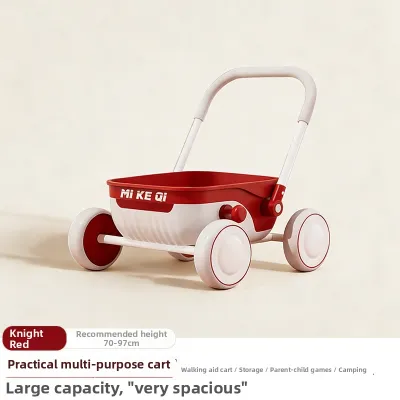
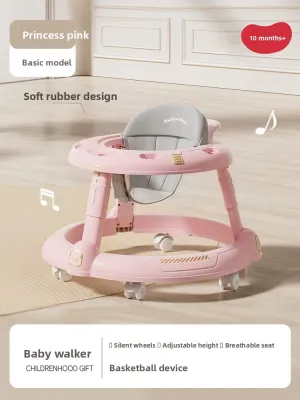
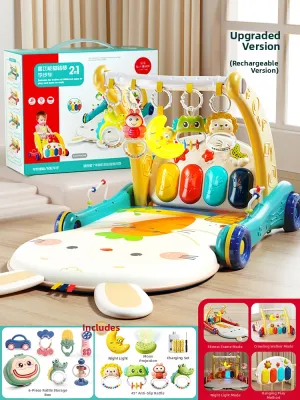
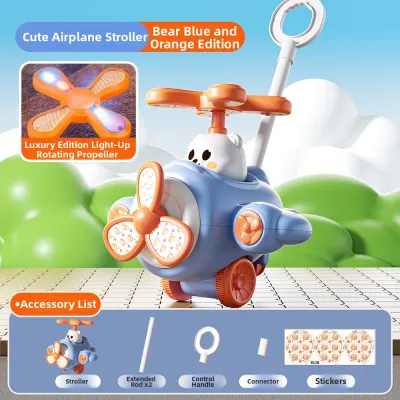
Prices are valid at publication and may change. Please refer to the product page for the latest price.

Falls and Stairs
Rolling down stairs or tipping over steps is the leading cause of severe, walker-related head injuries and fractures. In many Singapore homes, including multi-story landed properties or apartments with split-level living rooms, kitchen thresholds, and balcony steps, even a tiny drop-off can cause a walker to flip. The momentum of the wheeled frame accelerates the fall, often resulting in the baby landing headfirst on hard flooring like marble, ceramic tiles, or vinyl.
Increased Speed and Reach
A baby in a wheeled walker can travel at speeds of up to one meter per second. This rapid mobility allows them to reach dangerous areas long before an adult can intervene. Additionally, the elevated position of a walker grants the baby extra height, allowing them to pull down hot beverages like coffee, tea, or Milo from dining tables, pull heavy objects off countertops, grab sharp kitchen utensils, or access toxic household cleaners stored in low cupboards.
Tip-overs and Entrapment
Walkers are designed to roll smoothly on perfectly flat surfaces, but household floors are rarely completely uniform. When a walker’s wheels strike a minor obstacle—such as the edge of a play mat, a throw rug, a sliding door track leading to a balcony, or a slightly raised floor transition—the sudden stop can cause the entire device to tip over. Furthermore, the folding frames, scissor joints, and metal hinges of many walkers present a risk of pinching or trapping a baby’s delicate fingers and toes.
Developmental Concerns: Do Walkers Actually Help Babies Walk?
Many parents buy infant walkers under the impression that the device will accelerate their baby’s physical development and help them take their first independent steps sooner. However, pediatric physical therapists and developmental experts have established that walkers can actually hinder the natural progression of walking skills.
Muscle Development and Gait Patterns
Learning to walk requires building strength in the hips, thighs, and core, as well as mastering balance and weight shifting. When a baby is suspended in a walker’s fabric seat, their body weight is supported artificially. Instead of pulling themselves up and balancing, they tend to push off the floor using only their toes. This movement engages the lower calf muscles while failing to build the necessary strength in the upper legs and hips, often leading to a habit of “toe-walking” that can persist even when the baby is out of the device.
Milestone Delays
A baby’s journey to walking is a sequential process of building muscle memory and coordination through floor-based movements like rolling, sitting, crawling, and pulling up to stand. Unrestricted floor play is vital for these milestones. When a baby spends significant time in a walker, they miss out on these crucial floor activities. Studies indicate that excessive walker use can delay independent sitting, crawling, and walking milestones because the baby is not practicing the core-strengthening movements that naturally precede walking.
Visual and Spatial Awareness
To develop balance and spatial awareness, a baby needs to see how their feet and legs move in relation to the floor. The large plastic tray of an infant walker completely blocks the baby’s view of their lower body. This lack of visual feedback prevents them from understanding how their physical movements affect their position in space. Without this visual connection, babies have a harder time developing the natural balance and coordination required to walk steadily without support.
Crucial Precautions if You Decide to Use a Walker
If you choose to use an infant walker despite the recommended safety warnings, you must implement strict harm-reduction strategies. Minimizing the risks associated with these devices requires meticulous environmental preparation, constant vigilance, and a clear understanding of the product’s physical limits. Before using any walker, always check the applied product’s label and the manufacturer’s instructions for specific safety warnings, weight limits, and height restrictions.
Meticulous Environment Proofing
To prevent catastrophic falls, you must completely block off access to any stairs, steps, or floor transitions. Install sturdy, hardware-mounted safety gates at the top and bottom of all stairways, as pressure-mounted gates can easily fail under the impact of a rolling walker. Remove all throw rugs, loose mats, and electrical cords from the floor. Ensure sliding door tracks to balconies or wet areas are securely blocked, and keep all hot liquids, sharp objects, and household chemicals far out of reach on elevated surfaces.
Constant, Arm's-Reach Supervision
An infant walker is never a safe place to leave a baby unattended, nor is it a substitute for a secure playpen. An adult must remain within arm’s reach and maintain direct, active supervision at all times while the baby is in the device. Do not leave the room, even for a brief moment, to answer the door, check the stove, or look at a phone. If you must step away, remove the baby from the walker first.
Strict Time Limits
To prevent muscle fatigue, postural strain, and developmental interference, restrict your baby’s walker sessions to very short intervals. Limit use to no more than 10 to 15 minutes once or twice a day. This ensures that the walker remains a brief source of entertainment rather than a primary environment, leaving plenty of time for the baby to engage in natural, floor-based play.
Equipment and Suitability Checks
Before placing your baby in a walker, verify that the device complies with current safety standards, which typically require built-in rubber friction strips or automatic braking mechanisms to help stop the wheels at the edge of a step. Regularly inspect the walker to ensure all folding locks and frame mechanisms are secure. Always adhere to the manufacturer’s specified weight and height limits. You must stop using the walker immediately if your baby can stand or walk independently, or if they are large enough to climb out of the seat.
Safer Alternatives to Support Your Baby's Mobility
You can easily satisfy your baby’s desire for entertainment and upright exploration without exposing them to the hazards of a wheeled walker. Several safer, pediatrician-approved alternatives provide excellent physical stimulation while keeping your baby secure.
Stationary Activity Centers
Stationary activity centers, often called exersaucers or stationary bouncers, offer a seat surrounded by interactive toys, music, and textures. Because these devices do not have wheels, they allow your baby to spin, bounce, and play safely in one spot without the risk of rolling into dangerous areas. They provide a secure environment for your baby to play upright, giving caregivers a hands-free moment while keeping the baby contained.
Push Walkers (Walk-Behind Toys)
Unlike seated, wheeled walkers, push walkers are sturdy, walk-behind toys designed for babies who are already pulling themselves up to stand. These toys feature a handle that the baby holds while walking behind the device, pushing it forward. Push walkers encourage correct walking mechanics, as the baby must support their own weight, engage their core, and walk heel-to-toe. Look for weighted models with adjustable wheel tension to prevent the toy from rolling away too quickly.
Tummy Time and Floor Play
The most effective and natural way to help your baby learn to walk is to maximize their time on the floor. Provide a clean, comfortable play mat and encourage plenty of tummy time, rolling, crawling, and cruising along stable furniture. This unrestricted floor play builds the exact muscle groups, core strength, and bilateral coordination that your baby needs to transition naturally and safely into independent walking.
Frequently Asked Questions (FAQ)
At what age or developmental stage is a walker typically introduced?
Parents often consider introducing a walker when a baby can sit up unassisted, which typically occurs between 6 and 9 months of age. However, a baby’s physical ability to sit up does not mean a walker is safe or beneficial for them. Even if a baby’s feet can rest flatly on the floor, they still lack the cognitive awareness to control the device’s speed or recognize potential hazards in their path.
What safety features should I check before buying or borrowing a walker?
If you choose to use a walker, verify that it complies with recognized international safety standards and features a wide, stable base to prevent tipping. Look for models equipped with rubber friction strips on the underside of the frame, which are designed to grip the floor and stop the wheels at thresholds or steps. Always check the manufacturer’s documentation to ensure the baby falls within the specified weight and height limits, and inspect the folding frames for secure locking mechanisms.
Can a baby sleep or eat while in an infant walker?
No, a baby should never be allowed to sleep or eat while in an infant walker. Sleeping in a seated, suspended position poses a serious risk of positional asphyxiation and severe neck strain. Eating or drinking while in a walker is a major choking hazard, as the baby can suddenly roll, bump into an obstacle, or tip over while swallowing food or milk, making it extremely difficult for a caregiver to intervene quickly.
Community discussion
Share your experience or ask a question. Comments are reviewed before publication.