
Bringing active play indoors can be a wonderful way to keep children engaged, especially when outdoor playgrounds are too hot or rainy. However, setting up an indoor swing for kids requires a rigorous safety evaluation that matches or exceeds the standards of outdoor playground equipment. Because indoor spaces are bounded by hard walls, concrete floors, and sharp-edged furniture, even a minor slip or structural failure can lead to serious injuries. Before purchasing any indoor swing, parents must carefully evaluate key safety features, structural integrity, and installation requirements to ensure a secure play environment.
To make a safe choice, you should prioritize checking the manufacturer-stated weight limits, the restraint harness design, the physical stability of the frame or mounting hardware, and certified non-toxic materials. Understanding these features allows you to match the product to your child’s developmental stage and your home’s physical layout. This guide breaks down the critical safety dimensions you must verify on the product label and installation manuals before bringing a swing into your home.
Quick Safety Checklist: What to Look For First
Before diving into the technical specifications of various models, it is helpful to have a direct, non-negotiable checklist in mind. Evaluating an indoor swing for kids requires looking past aesthetic appeal to focus entirely on structural and material integrity. Below are the essential safety checks you must perform on any product label or instruction manual before making a purchase.
Products mentioned in this guide
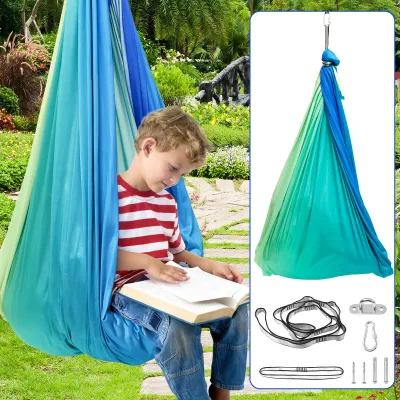
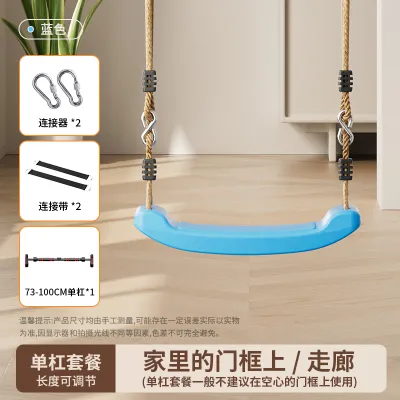
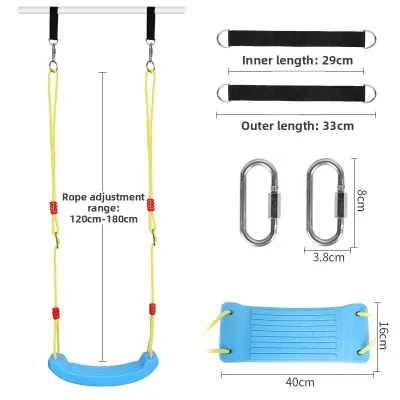
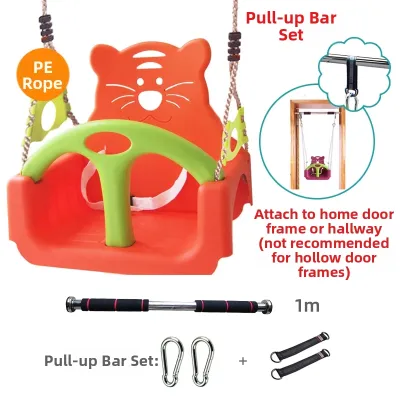
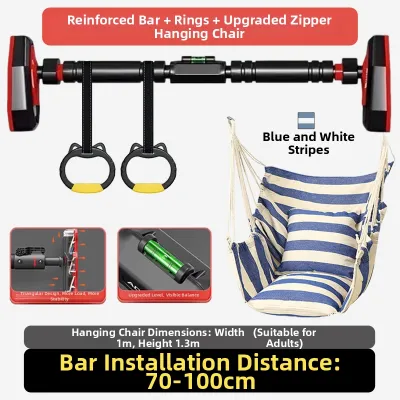
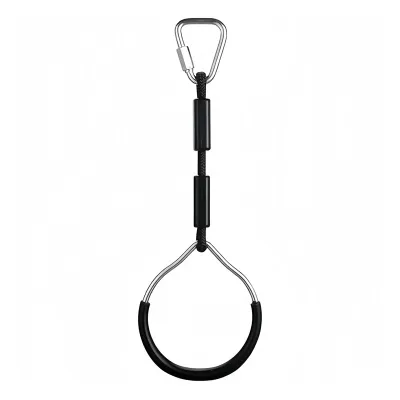
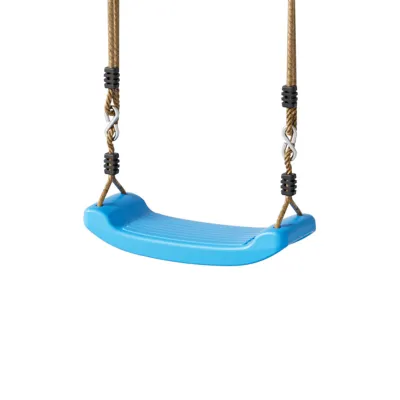

Prices are valid at publication and may change. Please refer to the product page for the latest price.
- Manufacturer-Stated Weight Limits: Always verify both the minimum and maximum weight requirements, ensuring your child fits comfortably within the safe operating range.
- Restraint Harness System: Look for a secure 3-point or 5-point harness, depending on your child's age and physical development, to prevent accidental slips or falls.
- Frame and Mounting Stability: Ensure freestanding frames have a wide, slip-resistant base, or verify that ceiling-mounting hardware is rated for dynamic, moving loads.
- Non-Toxic Material Certifications: Check the product packaging for verifiable safety marks indicating the materials are free from harmful chemicals and heavy metals.
- Clearance Zone Requirements: Confirm that your indoor space allows for a completely clear path free of walls, furniture, and household hazards.
Evaluating Frame Stability and Weight Limits
The physical stability of an indoor swing is the foundation of its safety. When a child swings, they generate dynamic forces that are significantly higher than their static body weight. A frame or mount that seems sturdy when holding a stationary object can easily tip, slide, or bend under the kinetic energy of an active child.

Always begin by checking the manufacturer’s maximum weight limit and comparing it against your child’s current weight. It is highly recommended to leave a generous safety margin rather than buying a swing that your child is close to outgrowing. Keep in mind that children grow rapidly, and a swing operating near its weight limit will experience increased wear on its joints, ropes, and connectors.
For freestanding frames, such as A-frame or standalone swings, the width and weight of the base are critical. A wide, heavy base lowers the center of gravity, making it much harder for the entire structure to tip over during vigorous swinging. You should also look for frames equipped with non-slip rubber feet or dedicated floor anchors to prevent the swing from walking or sliding across smooth indoor tiles or hardwood floors.
If you are opting for a hanging or ceiling-mounted swing, the mounting hardware requires meticulous inspection. Standard household hardware is rarely designed to support the multi-directional, dynamic loads of a swinging child. Ensure that all included carabiners, swivel hooks, ropes, and mounting brackets are explicitly rated for dynamic weight and heavy-duty use. Look for heavy-gauge steel connectors and high-density nylon or climbing-grade ropes that resist fraying and stretching over time.
Harness Systems and Age-Appropriate Seat Design
A swing’s seat and restraint system must be tailored to your child’s specific developmental stage to prevent falls and provide proper physical support. Children have different physical capabilities at different ages, meaning a seat design that is safe for a toddler could be highly hazardous for an infant.
Restraint harnesses are categorized primarily into 3-point and 5-point systems. For infants and younger toddlers who are still developing core strength and balance, a 5-point harness is a critical safety requirement. This system secures the child over the shoulders, around the waist, and between the legs, preventing them from sliding downward, leaning dangerously to the side, or attempting to stand up in the seat. Older toddlers who have mastered balance and can sit upright reliably may transition to a 3-point harness or a deep bucket seat, but supervision remains essential.
The physical structure of the seat itself must match the child’s physical development. Infants who lack full neck and head control require a seat with a high back support, contoured headrests, and a reclined angle to keep their airways open and secure. As children grow into older toddlers, they can transition to bucket-style seats with high sides, and eventually to flat or flexible belt seats once they can hold on tightly and control their body movements.
Before finalizing a purchase, you should physically inspect the seat design for potential physical hazards. Check for exposed hinges, sharp plastic seams, rough wooden splinters, or small gaps where tiny fingers, hair, or clothing could easily become trapped. The swinging motion can turn a small, overlooked gap into a dangerous pinch point, so look for models with covered joints and smooth, rounded edges.
Verifying Material Safety and Certifications
Because young children naturally explore their environment by touching, licking, and chewing on objects, the chemical composition of an indoor swing is just as important as its structural design. Parents should never rely solely on vague marketing claims like “eco-friendly” or “child-safe” without looking for verifiable proof on the product label.
When shopping, look for recognized safety certification marks on the product packaging or the manufacturer’s documentation. Depending on your region, these may include toy safety standards such as EN 71 (Europe) or ASTM F963 (United States). In Singapore, consumer goods and children’s products are subject to safety requirements monitored by Enterprise Singapore, so verifying that the product complies with international toy safety standards is a reliable way to ensure it has undergone rigorous testing.
Chemical safety is a non-negotiable factor when evaluating plastics, paints, and fabric dyes. Ensure the manufacturer explicitly states that the swing is free from bisphenol A (BPA), phthalates, lead, and other heavy metals. This is particularly crucial for teething infants who may chew on the swing’s safety bar, fabric straps, or attached toys.
The choice of fabric also plays a major role in both safety and hygiene. For indoor swings used in warm, humid climates like Singapore, opt for fabrics that are highly breathable, durable, and easily removable for machine washing. Accumulated sweat, spilled milk, and ambient humidity can quickly lead to mold and mildew growth in fabric crevices, which poses respiratory risks to young children. Regular washing and choosing mold-resistant materials are essential steps in maintaining a healthy indoor play space.
Safe Installation and Indoor Clearance Setup
Even the safest, most certified indoor swing can become a hazard if it is installed incorrectly or placed in an unsuitable location. Creating a dedicated safety clearance zone is essential to prevent collisions with surrounding structural elements and household items.
As a general rule, you should establish a clear safety perimeter around the swing. This means leaving ample, unobstructed clearance in front of and behind the swing—typically at least two meters—as well as a safe distance on both sides. This clearance zone must be completely free of walls, structural pillars, doors, and hard-edged furniture like coffee tables, TV consoles, or bookshelves.
When selecting a location, pay close attention to overhead and surrounding hazards. Never install an indoor swing near open windows, glass sliding doors, heavy drapes, electrical cords, or ceiling fans. A child swinging high could easily kick a nearby object, get caught in loose cords, or come dangerously close to a spinning fan blade.
Ceiling mounting introduces specific structural risks, especially in modern apartments and condominiums. Standard false ceilings, which are typically made of gypsum board, plasterboard, or acoustic tiles, are purely decorative and cannot support the dynamic weight of a swinging child. Attempting to mount a swing directly to a false ceiling will result in structural failure and severe injury. You must consult a professional contractor or structural engineer to locate the solid concrete structural slab above the false ceiling and anchor the mounting brackets directly into it using heavy-duty expansion bolts. If you are renting or cannot verify the structural integrity of your ceiling, a sturdy freestanding frame is a much safer alternative.
Finally, safety is an ongoing process that requires routine maintenance. Create a habit of inspecting the swing weekly for any signs of wear and tear. Check for frayed ropes, loose bolts, worn-out carabiners, and fabric tears. If you notice any damage or if a component seems compromised, stop using the swing immediately and contact the manufacturer for approved replacement parts.
Frequently Asked Questions (FAQ)
Can I hang an indoor swing from a standard false ceiling?
No, you must never hang an indoor swing from a standard false ceiling made of gypsum, plasterboard, or acoustic tiles. These materials are not structural and will fail under the dynamic load of a swinging child. To install a ceiling-mounted swing safely, you must hire a professional contractor to anchor the mounting brackets directly into the solid concrete structural slab above the false ceiling, or choose a freestanding swing frame instead.
At what age or stage should a child stop using a baby swing?
A child must stop using a baby swing as soon as they reach any of the developmental milestones or physical limits specified by the manufacturer. Generally, you should stop use when the child can sit up unassisted, attempts to climb out of the seat, or reaches the maximum weight or height limit indicated in the product manual. Always refer to your specific product’s instructions to ensure safety.
Community discussion
Share your experience or ask a question. Comments are reviewed before publication.