
Finding the right diaper for a growing baby is a journey of trial and observation. As your baby transitions into Size L, you are likely dealing with a more active infant who crawls, stands, or takes their first steps. At this stage, diaper performance becomes critical because movement tests the limits of any diaper’s construction. Comparing Huggies Size L against other premium diaper brands reveals that there is no single, universally superior option for every household. The ideal choice depends entirely on your baby’s unique physical build, skin sensitivity, and your daily routine.
Rather than relying on generic online rankings or marketing claims, you can make a more reliable decision by establishing a personalized evaluation framework. This involves assessing how a diaper conforms to your baby’s body, observing how well it manages moisture during active play and long sleep stretches, and calculating the actual cost per change. By focusing on observable performance and checking manufacturer specifications, you can find a premium diaper that keeps your baby dry and comfortable without overstretching your household budget.
Setting the Baseline: What Defines a Premium Size L Diaper?
Premium diapers distinguish themselves through advanced material technology and specialized design elements aimed at maximizing comfort and skin health. When evaluating Huggies Size L alongside other high-end options, you will typically find features such as textured top sheets designed to channel liquid away quickly, wetness indicators that change color when wet, and breathable outer covers that allow heat and moisture to escape. These features are engineered to maintain a dry microclimate next to your baby’s skin, which is essential for preventing diaper rash during long wear periods.
Products mentioned in this guide
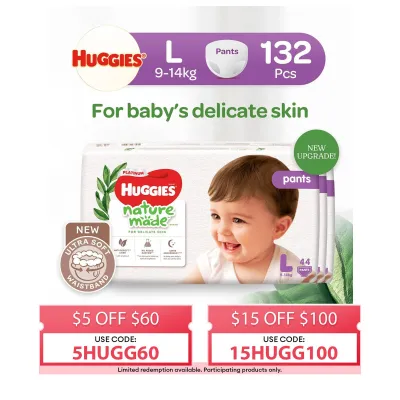
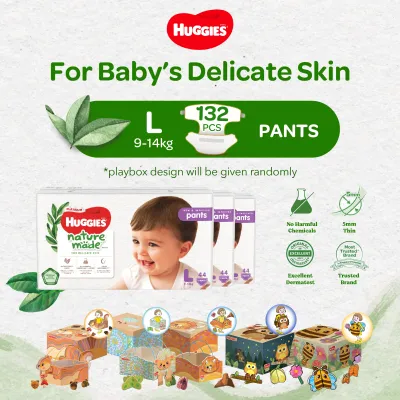
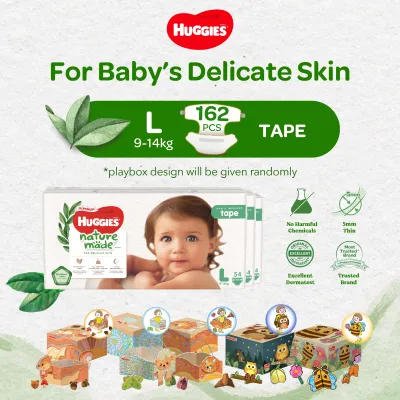
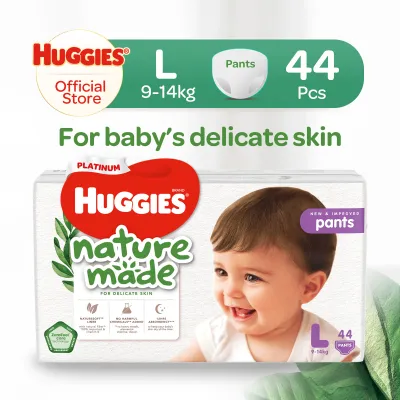
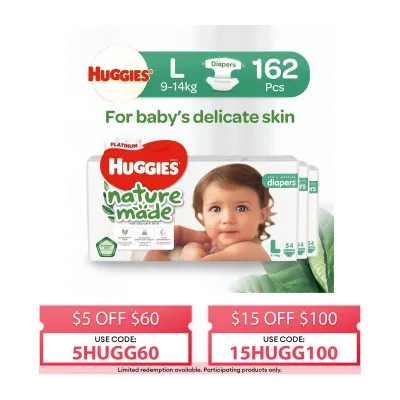
Prices are valid at publication and may change. Please refer to the product page for the latest price.
However, the label “Size L” is not standardized across the diaper industry. While most manufacturers design Size L diapers for babies within a general weight range—often starting around 9 kilograms and extending up to 14 kilograms—the actual physical dimensions and cut of the diaper can vary significantly between brands. Some brands favor a taller, narrower cut, while others design a wider, more accommodating chassis. Before purchasing a large quantity, always verify the manufacturer’s specific weight guidelines on the packaging and compare them against your baby’s current weight and growth trajectory.
Skin sensitivity is another critical factor when establishing your baseline. Premium diapers often highlight the absence of specific additives, such as chlorine, latex, fragrances, or parabens, and may feature certifications from dermatological institutes. If your baby has sensitive skin or a history of eczema, you should carefully inspect the ingredient and material labels on the packaging. Keep in mind that even within premium ranges, some diapers include mild lotions or botanical extracts that might agree with one baby’s skin but trigger mild irritation in another.
Comparing Fit: How to Check Waist and Leg Cuff Comfort
A diaper’s ability to prevent leaks and keep your baby comfortable depends heavily on its physical fit. When applying Huggies Size L or any competing premium diaper, begin by evaluating the elasticity of the waistband. A high-quality waistband should stretch easily to accommodate your baby’s tummy as it expands after feeding, yet contract gently to prevent gaps when they sit or crawl. Pay close attention to the flexibility and fastening strength of the side tabs; they should secure firmly without digging into your baby’s hips or curling at the edges.

The leg cuffs represent the primary line of defense against messy blowouts, making them a crucial point of comparison. Gently run your finger along the inner leg guards after fastening the diaper to ensure they are fully flared outward rather than tucked inward. Compare the height and stiffness of these double-layered leak barriers across different brands. Some premium diapers feature taller, more robust leg guards that offer excellent containment for active babies, while others use softer, more pliable materials that prioritize skin comfort but may require more careful positioning.
To truly assess fit, perform a physical inspection immediately after removing a wet diaper. Look closely at your baby’s thighs, hips, and lower back for any deep red marks or indentations left by the elastic bands. While light, temporary impressions are normal, deep or persistent red marks indicate that the diaper’s cut is too tight or does not match your baby’s body shape, regardless of the brand’s premium status. If you notice these marks consistently, it may be time to adjust the fastening tabs, try a brand with a wider cut, or transition to a larger size.
Evaluating Absorbency: Observable Signs of Leak Protection
Absorbency is the core function of any diaper, but marketing terms like “12-hour dryness” can be misleading. To evaluate real-world performance, you must observe how the diaper handles moisture during actual use. A practical way to assess surface dryness is to perform a simple touch test during a routine change. Gently press a dry tissue or your clean fingers against the inner lining of a moderately wet diaper; a high-performing premium diaper should feel remarkably dry to the touch, indicating that the superabsorbent core has successfully locked the liquid away from your baby’s skin.
The wetness indicator line is a convenient feature found on most premium diapers, but its utility varies. Observe whether the indicator changes color promptly and evenly as the diaper fills, or if it reacts only to localized moisture. A reliable indicator helps you avoid unnecessary changes while ensuring you do not leave a fully saturated diaper on your baby for too long. However, do not rely solely on the color change; physically feel the weight and bulk of the diaper to gauge its actual saturation level.
Tracking the frequency and location of any leaks provides valuable clues about a diaper’s suitability for your baby’s habits. For instance, if your baby is a stomach sleeper, you may notice leaks occurring primarily at the front waistband. If they are highly active during the day, leaks might occur around the legs. Compare how Huggies Size L and alternative brands distribute liquid throughout the absorbent core. Some diapers feature specialized distribution channels that spread wetness evenly from front to back, preventing sagging and reducing the likelihood of localized leaks.
Calculating Real Value: Cost per Diaper and Usage Efficiency
When managing a household budget in Singapore, comparing the retail price of diaper packs can be deceptive because packaging sizes vary widely. To determine the true financial impact, always calculate the exact cost per diaper. You can do this by dividing the total price of the pack by the number of individual diapers inside:
Cost per Diaper = Total Pack Price in S$ / Number of Diapers in Pack
Using this simple formula allows you to compare different brands and packaging options on an equal footing, ensuring you see exactly how much you spend on each diaper change.
The purchasing channel you choose also plays a significant role in overall value. Buying bulk boxes or multi-pack cartons from official brand stores on online marketplaces often yields a much lower cost per diaper than purchasing single packs from local convenience stores. However, before committing to a large bulk purchase of a new brand, it is wise to buy a smaller trial pack. This approach prevents you from being left with a large supply of diapers that do not fit your baby properly or that cause skin irritation.
In addition to the unit price, you must factor in usage efficiency, which represents the “hidden cost” of diapering. A cheaper diaper that leaks frequently or has lower absorbency may require more frequent changes throughout the day and night, quickly erasing any initial savings. Furthermore, frequent leaks lead to increased laundry loads, extra water and detergent consumption, and the premature wear of baby clothing. A slightly more expensive premium diaper that offers superior containment and allows your baby to sleep through the night without a change can often prove more economical in the long run.
Decision Framework: Choosing the Right Premium Diaper for Your Baby
Selecting the right diaper involves balancing your physical observations with your baby’s comfort and your family’s budget. You should choose Huggies Size L if your hands-on evaluation shows that its specific waistband and leg cuff design provides a secure, gap-free fit on your baby’s body without leaving deep red marks. It is an excellent choice if the absorbent core successfully keeps your baby’s skin dry during their typical activity levels and sleep cycles, and if the cost per diaper aligns with your household’s financial goals.
Conversely, you should explore alternative premium diaper brands if you notice consistent leaks despite correct application, or if the physical cut of Huggies Size L does not match your baby’s proportions. For example, if your baby has exceptionally chubby thighs or a very round tummy, a brand with a wider cut or more generous elastic panels may offer a more comfortable fit. Similarly, if you find that another premium brand provides better overnight dryness for your baby’s specific sleeping position, switching is a practical decision.
Regardless of the brand you choose, prioritize your baby’s skin health above all else. If your baby develops unexplained redness, bumps, or persistent irritation in the diaper area, stop using the current diaper immediately. Switch to a plain, fragrance-free alternative and consult a pediatrician to rule out contact dermatitis, yeast infections, or specific material allergies. A professional medical assessment will help you identify the root cause of the irritation and guide you toward the safest diapering materials for your baby’s sensitive skin.
Frequently Asked Questions (FAQ)
When should I transition my baby from Size M to Size L?
While the weight guidelines printed on diaper packaging serve as a helpful starting point, they are not absolute rules. You should consider transitioning your baby to Size L when you observe physical signs of a tight fit, such as the fastening tabs straining to reach the center of the landing zone or the waistband sitting too far below your baby’s belly button. Frequent leaks, blowout incidents, or deep red marks around your baby’s thighs and waist are clear indicators that the current size no longer offers adequate coverage or absorption capacity.
How can I tell if a premium diaper is causing a rash?
Distinguishing between different types of diaper irritation helps you take the correct action. A friction rash typically appears as localized redness along the precise lines where the elastic waistbands or leg cuffs rub against your baby’s skin, suggesting a fit issue or a need to size up. In contrast, a contact reaction or allergy to diaper materials usually presents as a widespread red rash across the entire area that touches the diaper’s inner lining. If a rash persists despite frequent changes, gentle cleaning, and the application of barrier creams, pause use of the diaper and consult a pediatrician.
Community discussion
Share your experience or ask a question. Comments are reviewed before publication.