
Selecting a premium diaper in Singapore involves balancing your baby’s skin sensitivity, wetting volume, and your household budget. Huggies NatureMade stands out as a strong contender if your primary goal is to minimize synthetic chemical exposure and prioritize plant-derived materials against your baby’s delicate skin. Featuring a liner crafted with natural plant-derived fibers, this diaper is designed to offer a soft, hypoallergenic barrier that reduces the risk of diaper rash and irritation.
However, whether Huggies NatureMade represents the absolute best value for your family depends heavily on your baby’s developmental stage and wetting patterns. While its gentle, breathable construction is highly effective for daytime wear and moderate wetting, it may not always match the heavy-duty liquid retention of synthetic-heavy competitors during long overnight stretches. For babies prone to heavy wetting or for families operating under a strict monthly budget, alternative premium brands utilizing high-density synthetic cores might prove more practical. Ultimately, a premium label does not guarantee a perfect fit for every child; the most effective approach is to match the diaper’s specific design strengths to your baby’s daily physical needs and your lifestyle.
In Singapore’s humid conditions, diaper selection becomes even more critical, as trapped moisture and heat can quickly escalate minor skin irritations into persistent rashes. Therefore, understanding how a diaper’s material composition interacts with local environmental factors is key to making an informed decision.
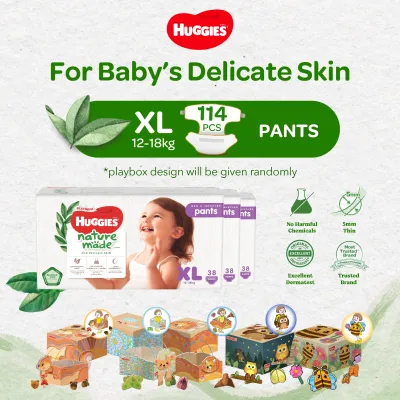
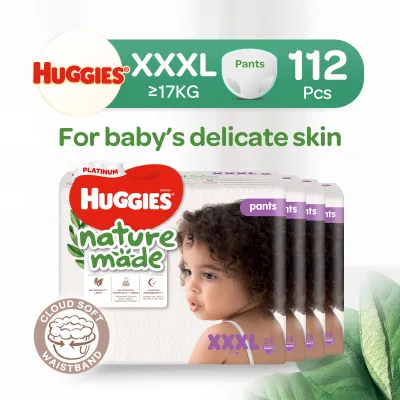
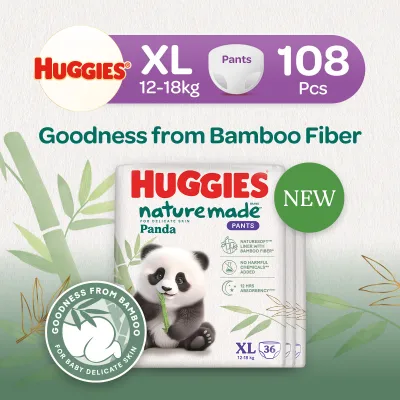
Products mentioned in this guide
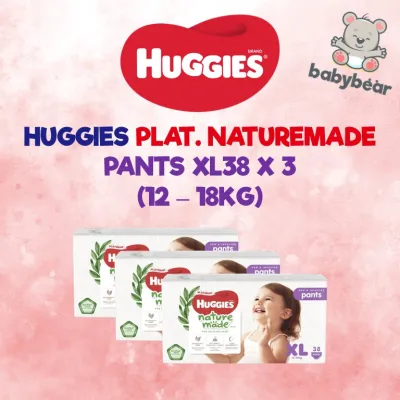
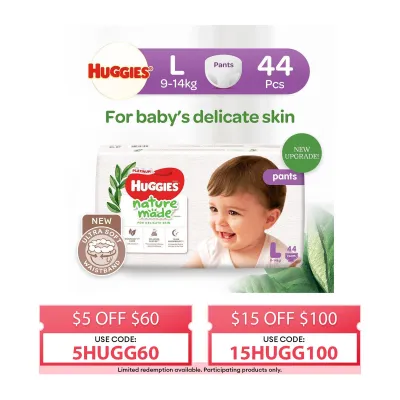
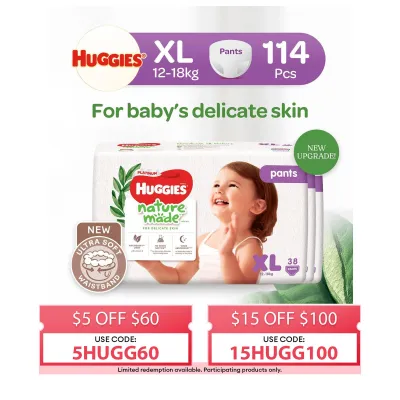
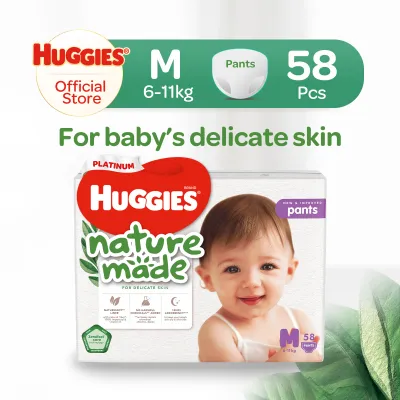
![[1 Carton] Huggies Platinum Naturemade Pants M](https://img.lazcdn.com/g/p/a10e8960e3dee19ee933958cea6d0dff.jpg_400x400q80.jpg_.webp)
Prices are valid at publication and may change. Please refer to the product page for the latest price.
Absorbency and Leak Protection: How NatureMade Handles Moisture
Huggies NatureMade's Core Absorbency Design
The core technology of Huggies NatureMade relies on a combination of plant-derived materials and moisture-distribution channels designed to draw wetness away from the skin quickly. The primary contact layer is made with a plant-based liner, which is engineered to feel exceptionally soft while remaining highly permeable. When liquid hits this surface, it is designed to pass rapidly through to the underlying absorbent core, minimizing the time wetness remains in direct contact with your baby’s skin.
When evaluating this diaper, parents should carefully examine the packaging details regarding the core structure. Huggies NatureMade incorporates a multi-layer design that utilizes distribution channels to spread liquid evenly along the length of the diaper. This prevents the common issue of sagging and pooling in a single spot, which can lead to premature leaks. Additionally, a clear wetness indicator line on the exterior changes color to signal when a change is required, helping caregivers avoid unnecessary diaper changes or leaving a wet diaper on too long.
It is important to understand that plant-based or naturally derived liners behave differently under pressure compared to fully synthetic alternatives. While they excel at initial absorption and breathability, the rate at which they distribute and lock away massive volumes of liquid can vary. Under rapid, heavy wetting—such as when a baby drinks a large bottle before sleep—the natural fiber layers may require slightly more time to transfer liquid to the core than a purely synthetic polymer mesh. Caregivers should observe how the diaper performs during active, upright daytime play versus stationary, horizontal sleep to determine if the absorption speed matches their baby’s output.
How Competing Premium Brands Manage Heavy Wetting
To fully appreciate where Huggies NatureMade sits in the premium market, it is helpful to compare its design with competing premium lines, particularly high-end Japanese options or premium Western options. These competing brands often rely heavily on dense networks of synthetic Superabsorbent Polymers (SAP) and multi-layered synthetic nonwoven fabrics. These synthetic materials are specifically engineered to lock away several times their weight in liquid almost instantly, turning wetness into a stable gel that remains dry even under the physical pressure of a sitting or rolling baby.
This highlighting of materials points to a fundamental engineering trade-off in diaper design: the balance between natural, breathable materials and maximum liquid lock-away capacity. Diapers that maximize natural, plant-based fibers in their liners often sacrifice a degree of the rapid, high-volume absorption that synthetic SAP-heavy cores provide. While the natural fibers offer superior skin-friendliness and reduce the risk of chemical sensitivity, they may reach their saturation point sooner during extended twelve-hour overnight stretches.
Because of these differences, parents should not rely solely on generic marketing terms like “overnight protection” or “leak-proof.” Instead, examine the product packaging for specific claims regarding hours of dryness or specialized overnight channels. To find the optimal solution for your child, it is highly recommended to conduct small-batch testing at home. Try using Huggies NatureMade during the day when changes are more frequent, and compare its performance against a high-absorbency synthetic brand during the night to see which configuration keeps your baby driest and most comfortable.
Comfort and Skin Sensitivity: Evaluating the "Natural" Material Claims
Material Composition and Breathability
The term “natural” is frequently used in diaper marketing, but for parents of babies with sensitive skin, understanding the exact material composition is crucial. Huggies NatureMade features a liner made with plant-derived fibers, which provides a significantly smoother and less abrasive texture than standard synthetic polyester top sheets. In Singapore’s persistently hot and humid climate, skin friction combined with trapped moisture is a primary trigger for contact dermatitis, heat rash, and diaper candidiasis. A smooth, plant-based surface minimizes physical friction against the skin, reducing the micro-tears that allow bacteria and moisture to cause inflammation.

When choosing a premium diaper, caregivers should look beyond the front cover of the box and carefully inspect the ingredient and material lists. High-quality premium diapers, including Huggies NatureMade, typically highlight the absence of potentially irritating additives. Parents should verify that the product is free from added lotions, synthetic fragrances, parabens, and elemental chlorine bleaching. Elemental chlorine bleaching processes can leave trace residues, whereas modern premium options utilize elemental chlorine-free (ECF) or totally chlorine-free (TCF) bleaching methods to ensure maximum purity.
While choosing a diaper with minimal additives is a proactive step, it is important to remember that no diaper can guarantee absolute protection against all skin conditions. If your baby develops persistent redness, broken skin, or signs of infection, stop using the product immediately and consult a qualified pediatrician or medical professional.
In contrast, many standard and competing premium diapers utilize synthetic soft-top sheets treated with cosmetic lotions to mimic softness. While these lotions can feel smooth initially, they may introduce chemical compounds that trigger allergic reactions in highly sensitive infants. Furthermore, breathability is heavily influenced by the outer cover. While Huggies NatureMade utilizes a highly breathable outer layer to allow heat and vapor to escape, some competitors use proprietary micro-porous back sheets designed to maximize airflow through millions of microscopic pores. Comparing these materials is essential, as a diaper that traps heat will inevitably increase sweating, exacerbating skin conditions in tropical environments.
Fit, Elasticity, and Blowout Prevention
No matter how absorbent or gentle a diaper’s materials are, its real-world performance depends entirely on how well it fits your baby’s unique shape. The waistband and leg cuffs serve as the primary containment barriers against liquid and solid waste. Huggies NatureMade is designed with a soft, stretchy waistband and double-layered leg guards to prevent leaks. However, because natural and plant-based nonwoven materials are structurally different from purely synthetic elastanes, the stretch, recovery, and tension of these waistbands can vary.
Synthetic spandex and elastane blends used in some competing premium brands often provide a highly elastic, snug grip that conforms closely to very active toddlers. Plant-based fibers, while incredibly soft and less likely to leave red marks, may offer a slightly gentler, less aggressive stretch. This means that if a baby is highly active, crawling, or pulling up, a diaper with gentler elasticity might shift slightly, creating temporary gaps. Caregivers must pay close attention to how the diaper holds its shape during movement to ensure it maintains a seal around the waist and thighs.
To prevent messy blowouts and leaks, parents should practice proper fitting techniques rather than relying on the diaper’s stretch alone. When securing the diaper, apply the two-finger rule: you should be able to comfortably slip two fingers between the diaper waistband and your baby’s tummy. Additionally, always run your finger around the leg cuffs after fastening to ensure the inner and outer guards are fully flared outward rather than tucked inward. If you notice persistent red marks on your baby’s thighs or tummy, it is a clear sign that the diaper is either fastened too tightly or that your baby has outgrown the current size, necessitating a transition to a larger size or a different cut.
Value for Money: Calculating the True Cost per Diaper
Evaluating the financial impact of premium diapering requires looking beyond the retail price of a single pack. To establish a realistic budget, caregivers should calculate the true cost-per-diaper. This is done by dividing the total price of the package or carton by the exact number of diapers inside. Because diaper counts decrease significantly as sizes increase (a newborn pack contains far more diapers than a size XL pack), tracking the unit cost is the only reliable way to compare Huggies NatureMade against other premium or mid-tier brands over time.
In Singapore, the retail landscape offers several strategic opportunities to lower these diapering expenses. Rather than purchasing individual packs at standard supermarket prices, parents can achieve substantial savings by purchasing in bulk cartons on major e-commerce platforms. Planning purchases around monthly double-digit promotional events (such as 9.9, 10.10, or 11.11 sales) allows buyers to combine store discounts, platform vouchers, and payment partner rebates. Utilizing subscription services offered by authorized online retailers can also secure a consistent discount on recurring deliveries, ensuring you never run out of stock while keeping costs predictable.
However, calculating value also requires accounting for the “hidden costs” of diaper performance. A cheaper diaper that suffers from poor absorbency, frequent leaks, or rapid sagging is often a false economy. If a diaper cannot endure a standard three-to-four-hour daytime stretch or fails overnight, you will find yourself changing your baby far more frequently. This increased consumption rate means you burn through packs much faster, ultimately raising your monthly diapering expenditure. Furthermore, the added costs of treating diaper rash with specialized creams, or washing soiled clothing and bedding after a blowout, must be factored into the overall value equation.
Furthermore, bulk buying requires adequate storage space in your home. In Singapore’s typical high-rise apartments, storing multiple large cartons of diapers can be a spatial challenge. Parents must weigh the financial discount of buying three to four cartons at once against the physical storage space available. If space is limited, subscription models that deliver a single carton monthly at a discounted rate offer an excellent middle ground, combining bulk-pricing benefits with manageable storage requirements. Additionally, keep in mind that babies grow rapidly during their first year; buying too many cartons of a single size can result in leftover stock that your baby has outgrown, completely wiping out any bulk-purchase savings.
Before committing to a specific brand or purchasing bulk cartons, always verify current promotions, bundle deals, and stock availability directly on official brand stores or authorized online distributors. Because inventory and pricing fluctuate dynamically in the Singapore market, checking these sources directly ensures you receive genuine products that have been stored in climate-controlled environments, preserving the integrity of the adhesive tapes and superabsorbent materials.
Final Verdict: Which Premium Diaper Should You Choose?
Selecting the ideal premium diaper requires matching your baby’s physical needs and skin sensitivity to the design priorities of each brand. Use the following structured decision framework to guide your next purchase:
- Choose Huggies NatureMade if:
- Your baby has highly sensitive skin, is prone to contact dermatitis or heat rash, and benefits from a diaper free of added fragrances, parabens, and elemental chlorine.
- You prioritize plant-derived, natural-fiber liners that offer exceptional softness and breathability in humid conditions.
- Your baby has moderate wetting habits, and you primarily need a reliable, gentle diaper for daytime wear and regular active intervals.
- Choose Competing High-Absorbency Premium Brands if:
- You require maximum overnight leak protection for a heavy wetter who sleeps through the night, where high-density synthetic SAP is necessary to lock away large volumes of liquid.
- Your baby is highly active, crawling, or walking, and requires the ultra-stretchy, snug fit of synthetic spandex waistbands to prevent shifting and gaps during movement.
- You prefer a diaper core that prioritizes rapid, high-volume liquid distribution over plant-based material composition.
- Re-evaluate Your Premium Strategy if:
- The cost-per-diaper of premium brands places an unsustainable strain on your monthly household budget.
- Your baby does not suffer from skin sensitivities, rashes, or allergies, meaning standard, mid-tier diapers can provide adequate protection and comfort at a significantly lower price point.
Ultimately, the best diaper is the one that keeps your baby dry, comfortable, and free from rash while fitting comfortably within your family’s monthly budget. Do not hesitate to mix and match brands—such as using Huggies NatureMade during the day and a high-capacity synthetic diaper at night—to achieve the perfect balance of skin care, leak protection, and cost efficiency.
Frequently Asked Questions (FAQ)
Is Huggies NatureMade completely biodegradable?
No, Huggies NatureMade is not completely biodegradable. While the diaper incorporates a liner made with plant-derived fibers and utilizes renewable resources for certain structural components, the absorbent core still contains synthetic Superabsorbent Polymers (SAP) to ensure effective liquid retention. Additionally, the outer waterproof backing, fastening tapes, and elastic waistbands are made from synthetic plastics to prevent leaks. Caregivers should inspect the product packaging for precise details regarding the percentage of bio-based materials and follow local municipal waste guidelines for proper disposal, as these diapers must be discarded in standard household waste rather than compost bins.
Does Huggies NatureMade run smaller or larger than other premium brands?
Huggies NatureMade generally features a cut that aligns closely with standard Western sizing, which can feel slightly wider but sometimes shorter in the rise compared to certain Japanese premium brands. Sizing, cut, and weight ranges vary significantly across different manufacturers, and a baby’s unique body shape—such as chubby thighs or a slim waist—will greatly affect how a diaper fits. To avoid the frustration of leaks or tight marks, always verify the weight range printed on the packaging. It is highly recommended to purchase a single, small trial pack to test the physical fit on your baby before investing in a full bulk carton.
Community discussion
Share your experience or ask a question. Comments are reviewed before publication.