
Tracking your baby’s growth is one of the most reassuring parts of early parenthood. While regular visits to the maternal and child health clinic provide official milestones, having a reliable way to monitor weight at home can offer peace of mind between appointments.
However, obtaining an accurate reading requires more than just placing your infant on a standard scale. Minor variations in clothing, movement, and equipment setup can lead to misleading numbers that cause unnecessary worry. By establishing a consistent routine and using the correct techniques, you can gather reliable data that complements your pediatrician’s professional assessments.
Why Track Your Baby's Weight at Home?
Home baby weighing serves as a helpful tool to monitor general growth trends, especially during the first few months of life when development is rapid. It is particularly useful if your pediatrician has recommended close monitoring due to early feeding challenges, slow weight gain, or transition from hospital to home.
Products mentioned in this guide
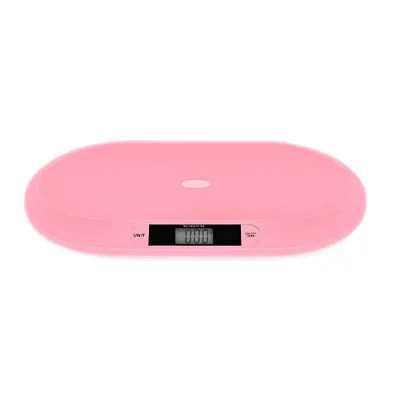
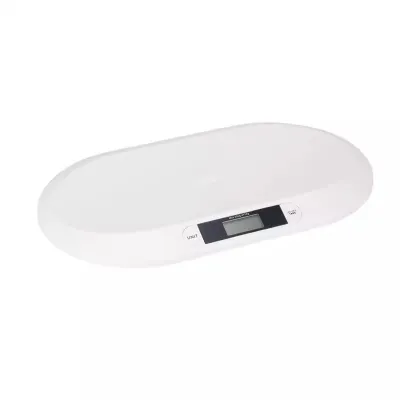
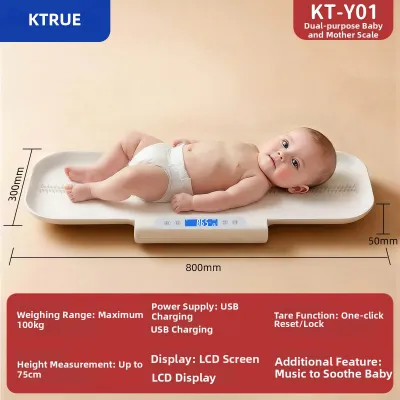
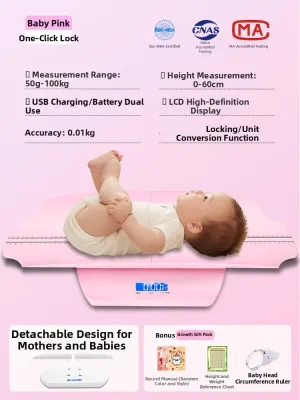
Prices are valid at publication and may change. Please refer to the product page for the latest price.
However, it is crucial to understand that home tracking is a supplement to, not a replacement for, professional medical evaluations. Pediatricians do not just look at a single number on a scale; they assess overall developmental milestones, head circumference, length, and clinical signs of hydration and nutrition.
If you notice signs of illness, such as extreme lethargy, fewer wet diapers than usual, persistent vomiting, or difficulty feeding, you must seek immediate professional medical evaluation. Do not rely on home weight tracking to determine if an unwell baby is thriving, and always consult a healthcare provider if you have concerns about their development.
Choosing the Right Baby Scale for Home Use
Selecting the appropriate equipment is the foundation of accurate tracking. While it might be tempting to use a standard adult bathroom scale, these devices are generally designed for much larger weights and lack the precision required for an infant.

A dedicated digital baby scale is specifically engineered to measure small, incremental changes in weight. When reviewing manufacturer specifications, look for a scale with a minimum increment of 5 to 10 grams. This level of precision is essential because a newborn’s daily weight changes are often very small.
Additionally, check the scale’s maximum weight capacity to ensure it can safely accommodate your baby as they grow into toddlerhood. A curved, secure weighing tray is another vital feature that helps keep your baby centered and prevents rolling during the process.
If you must use an adult scale, ensure it features a reliable tare or zero-out function. This allows you to subtract your own weight automatically, though you must accept that the final reading will have a wider margin of error due to the adult scale’s lower sensitivity to tiny weight differences.
Preparing for the Weighing Session
To get a consistent reading, you must prepare both the environment and your baby before starting. Always place the scale on a flat, hard, and stable surface, such as a sturdy wooden table or a tiled floor. Avoid soft surfaces like beds, sofas, or thick carpets, as these absorb weight and will cause inaccurate, lower readings.
Because babies should ideally be weighed completely naked for the most accurate results, managing the indoor climate is essential. In Singapore’s warm climate, you may have air conditioning running; ensure the scale is positioned away from direct drafts or AC vents to prevent your baby from catching a chill.
Consistency is key to tracking meaningful trends. Choose a specific time of day for your weighing sessions, such as right after the first morning diaper change and before the first feed. This minimizes variables like a full stomach or a heavy, wet diaper, which can skew the data from one session to the next.
Step-by-Step Guide to Weighing Your Baby
To achieve the most reliable results, you can choose between two primary methods depending on the equipment you have at home. Follow these step-by-step instructions carefully to prioritize safety and accuracy.
Method 1: Using a Dedicated Baby Scale
First, place the digital baby scale on your prepared flat surface and turn it on. Wait for the display to read exactly zero. If you plan to use a light receiving blanket to keep your baby warm, place the blanket on the tray first, then press the tare or zero button to subtract its weight.
Gently undress your baby completely, ensuring their diaper is removed. Carefully lower your baby onto the center of the weighing tray, keeping your hands hovering just a fraction of an inch above their body. Never leave your baby unattended on the tray, and do not let your hands touch them while the scale is reading, as this will alter the measurement.
Wait a few seconds for the digital display to lock or stabilize. Many dedicated scales feature an automatic hold function that registers the weight once the baby stops moving. Record the stabilized number immediately in your log before safely lifting your baby off the scale and dressing them.
Method 2: The Tare (Subtraction) Method with an Adult Scale
If you do not have a dedicated baby scale, you can use a standard digital adult scale using the subtraction method. Start by placing the adult scale on a hard, flat floor and turning it on.
Step onto the scale alone, stand completely still, and record your exact weight. Next, step off the scale, pick up your baby (who should be undressed or wearing only a clean, dry diaper), and step back onto the scale together. Record this combined weight.
Subtract your individual weight from the combined weight to find your baby’s weight. For example, if the combined weight is 70.5 kg and your weight is 65.2 kg, your baby’s weight is calculated as 5.3 kg. Keep in mind that because adult scales typically measure in larger increments, this method is much less precise and should only be used for general estimation.
Recording and Interpreting the Results
Once you have obtained the weight, log the exact date, time, and reading in a dedicated tracker, a mobile application, or your baby’s official health record book, such as the physical Health Booklet. Keeping a structured log prevents memory errors and allows you to see patterns over time.
It is vital to focus on the overall growth trajectory over weeks and months rather than focusing on daily or weekly fluctuations. A baby’s weight can vary naturally due to hydration levels, recent bowel movements, or feeding times, so a single lower reading is rarely a cause for alarm on its own.
To interpret the numbers correctly, plot the weights on the standard growth charts found in your baby’s health record book or consult your pediatrician. These charts show percentiles, which help track how your baby is growing relative to standard developmental curves, rather than comparing them to an arbitrary ideal weight.
Common Mistakes and Safety Precautions
Safety must always be your top priority when handling an infant on a scale. Never leave your baby unattended on a baby scale, even for a split second, as infants can wiggle or roll unexpectedly and fall. Always keep at least one hand hovering directly over their chest or abdomen, ready to secure them instantly.
Avoid placing the scale on elevated, narrow, or unstable surfaces such as changing tables, kitchen countertops, or washing machines. If a fall occurs from these heights, the risk of serious injury is high; placing the scale on a clean, hard floor is often the safest option.
Additionally, watch out for technical errors that can compromise your data. Check the digital display for low battery indicators or error codes, as weak batteries can cause the scale to display highly inaccurate readings. Always refer to the manufacturer’s manual to verify proper calibration steps and warning signals.
Frequently Asked Questions (FAQ)
How often should I weigh my baby at home?
For a healthy, full-term baby, weighing once every two to four weeks is generally sufficient to track growth trends without causing unnecessary parental anxiety. Daily or even weekly weighing is rarely necessary unless specifically advised by your pediatrician to monitor a medical condition or feeding plan. Over-monitoring can lead to stress over normal, minor daily weight fluctuations that do not reflect long-term development.
What if my baby moves too much during weighing?
If your baby is fussy or active, try to soothe them by singing softly, offering a pacifier, or waiting until they are calm or even asleep. If your scale does not have an automatic hold or averaging function to lock the weight, take three separate readings in quick succession. Calculate the average of these three numbers to get the most reliable estimate of your baby’s actual weight.
Community discussion
Share your experience or ask a question. Comments are reviewed before publication.