
Using a nursing cover properly is all about balancing your personal comfort with your baby’s safety and ease of feeding. To breastfeed confidently in public, you need to master a few simple techniques: choosing a breathable cover, securing it before you unclip your nursing bra, maintaining constant eye contact with your baby, and monitoring their temperature. With a little preparation and the right positioning, a nursing cover becomes a helpful tool rather than a clumsy barrier, allowing you to feed your baby comfortably wherever you are.
Many new mothers feel anxious about nursing in public for the first time. It is completely natural to worry about accidental exposure, your baby’s latch, or simply managing a piece of fabric while holding an infant. By understanding how to position, adjust, and troubleshoot your cover, you can transform public feeding into a relaxed, stress-free experience for both you and your little one.
Preparing for Public Breastfeeding with a Cover
Before heading out, selecting the right style of nursing cover is crucial for your comfort. The most common styles include the apron, the infinity scarf, the poncho, and the multi-use cover. Each style offers distinct advantages depending on your preferences for coverage, airflow, and ease of use.
Products mentioned in this guide
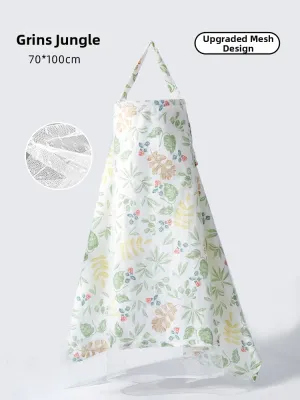
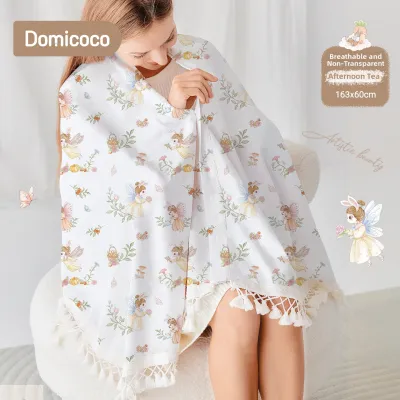

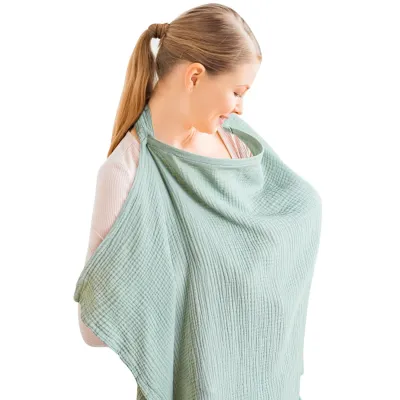


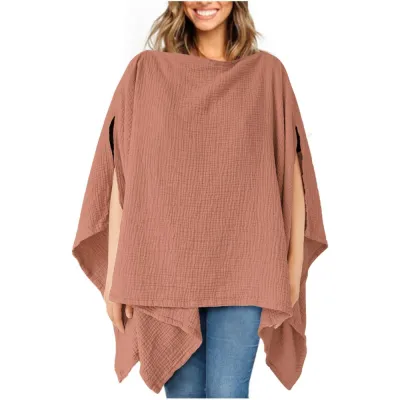

Prices are valid at publication and may change. Please refer to the product page for the latest price.
The apron-style cover is widely used because it features a rigid, arched neckline. This structured opening allows you to look directly down at your baby to check their latch while keeping your hands free. It also provides good airflow because the sides remain open, making it a suitable choice for warm or humid climates.
An infinity scarf cover is a versatile option that wraps around your neck as a fashion accessory and unfurls to drape over your shoulder when it is time to feed. While stylish, it provides 360-degree coverage which can sometimes trap more heat. Poncho-style covers also offer full front-and-back coverage, which is helpful for active babies who might pull at fabric, but they can make it harder to maintain direct eye contact with your baby. Multi-use covers, often made of stretchy fabric, can double as car seat or stroller canopies, though they tend to fit snugly and may require more adjustment to keep your baby cool.
Practicing at home is a practical way to build muscle memory before your first public outing. Try putting the cover on, adjusting the straps, and latching your baby while sitting on your sofa. This low-pressure environment allows you to find your most comfortable nursing positions and get used to the feel of the fabric without the distraction of a busy public space.
When shopping for a cover, look for essential features that enhance usability. An adjustable neck strap is vital for positioning the cover at the correct height. A rigid neckline, often made with flexible boning, is highly recommended so you can see your baby’s face clearly. Finally, prioritize breathable, lightweight fabrics such as organic cotton, bamboo rayon, or muslin to ensure your baby stays cool and comfortable.
Step-by-Step Guide to Positioning Your Nursing Cover
Using a nursing cover smoothly in public requires a systematic approach. By following a step-by-step process, you can maintain your privacy and ensure your baby latches successfully without any awkward fumbling.

Step 1: Secure the cover around your neck or body completely before you make any adjustments to your clothing. Slip the strap over your head and adjust the buckle or slider so the fabric drapes flat against your chest. Only after the cover is fully in place should you unclip your nursing bra or lower your shirt. This sequence ensures that your chest remains completely shielded from view throughout the entire process.
Step 2: Adjust the neckline or drape to establish a clear line of sight to your baby. If you are using an apron-style cover, ensure the rigid boning is bowed outward so you can look down through the opening. For other styles, gently pull the fabric forward with one hand to create a viewing window. You must be able to see your baby’s nose, mouth, and eyes clearly before you attempt to latch them.
Step 3: Guide your baby under the cover and support their head and neck as you prepare to latch. Hold your baby in your preferred nursing position, such as the cradle or football hold, and bring them close to your breast. Use your free hand to guide your breast and help your baby achieve a deep, comfortable latch. Ensure your baby’s head is positioned safely, with their nose free of fabric and their chin resting comfortably against your breast.
Step 4: Check the final drape of the cover once your baby is successfully latched. Ensure the fabric falls naturally over your baby’s body without pressing tightly against their face or head. The cover should provide full chest coverage while still allowing your baby room to move their arms and legs. Double-check that the fabric is not restricting your baby’s airway or blocking the natural flow of fresh air.
Ensuring Baby's Safety and Comfort Under the Cover
Your baby’s safety and physical comfort must always be your top priority when using a nursing cover. Because babies can easily overheat, especially when tucked under layers of fabric, you must remain vigilant throughout the feed.
Keep your baby’s face uncovered or ensure there is maximum airflow entering the nursing space. Never allow the fabric to rest directly over your baby’s nose or mouth, as this can restrict their breathing and lead to the rebreathing of carbon dioxide. The cover should act as a canopy, creating a spacious, well-ventilated pocket of air rather than a tight wrap.
Monitor your baby closely for any observable signs of overheating. These signs include sweating around their hairline, flushed or red skin, rapid breathing, or a damp neck. If you notice any of these indicators, immediately remove the cover or adjust it to allow cool air to circulate. In warm weather, it is often best to keep feedings under a cover as brief as possible or seek out an air-conditioned space.
Regularly check your baby’s latch and listen for steady swallowing sounds during the feed. You do not need to fully expose your chest to do this; simply look down through the rigid neckline or lift a small corner of the fabric. Ensuring a proper latch prevents your baby from swallowing excess air, which can lead to fussiness and gas, making the public feeding experience much smoother for both of you.
Troubleshooting Common Nursing Cover Challenges
Even with practice, you may encounter a few practical challenges when breastfeeding in public. Knowing how to handle these situations quickly will help you stay calm and focused on your baby.
One common issue is the cover slipping or blowing upward in a sudden breeze. If you are outdoors or in a drafty area, you can secure the edges of your cover using simple clothing clips or magnetic clips attached to your shirt. Alternatively, adjusting the neck strap to be slightly tighter can keep the fabric closer to your body, or you can choose a cover with weighted hems designed to resist wind.
If your baby resists the cover or becomes fussy underneath it, do not force the issue. Some babies dislike having their heads covered or feel trapped by the fabric. Try taking a short break, stepping into a quieter area, and offering a brief pacifier distraction to calm them down. You might also consider switching to a more open style of cover, such as an apron style with wide open sides, which feels less restrictive to an active infant.
If you struggle with visibility and cannot see your baby’s face clearly, try adjusting the rigid neckline. Sometimes the boning in an apron cover can become bent or flattened during storage; gently reshaping it into a wide arch can restore your view. If you are using a drape or scarf style, carrying a small, compact mirror in your diaper bag can help you check your baby’s latch without having to strain your neck.
Navigating Public Spaces and Alternative Feeding Options
Breastfeeding in public does not have to be confined to using a traditional cover. Planning your outings and knowing your alternatives can give you more flexibility and peace of mind.
When visiting shopping malls, cafes, or parks, take a moment to locate comfortable, low-traffic seating areas. Look for booths in restaurants, quiet corners in department stores, or benches shaded by trees. Positioning your back to the main flow of foot traffic can provide a natural layer of privacy, making you feel much more comfortable whether you choose to use a cover or not.
If a traditional nursing cover feels too cumbersome, there are several practical alternative public feeding methods. The “two-shirt method” is highly effective: wear a nursing camisole under a loose t-shirt. When you lift the top shirt, the camisole keeps your midriff covered, and your baby’s head naturally blocks the view of your breast. Alternatively, you can drape a lightweight muslin swaddle over your shoulder and tuck one corner into your bra strap for a relaxed, breathable shield.
Many modern public venues, especially major shopping centers and transit hubs, offer dedicated nursing rooms or family rooms. These spaces are designed specifically for parents and often feature comfortable armchairs, changing tables, and electrical outlets for breast pumps. Utilizing these facilities when they are available can provide greater privacy, quiet, and convenience, allowing you to feed your baby in a calm environment.
Frequently Asked Questions (FAQ)
Can a nursing cover cause my baby to overheat?
Yes, using a nursing cover can cause your baby to overheat, particularly if the cover is made from thick, synthetic, or non-breathable fabrics. In warm climates, heat can quickly become trapped under the fabric, raising your baby’s body temperature. To prevent this, always choose lightweight, breathable materials like muslin or open-weave cotton, and ensure the cover is positioned to allow continuous airflow around your baby’s face.
What should I do if my baby pulls the nursing cover down?
If your baby constantly pulls at or removes the cover, try using an apron-style cover with a secure, adjustable neck strap that cannot be easily yanked off. You can also transition to wearing specialized nursing tops or dresses that offer built-in privacy panels without the need for an external cover. To keep your baby’s hands occupied during a feed, try wearing a safe, silicone nursing necklace or offering them a small, soft toy to hold.
Community discussion
Share your experience or ask a question. Comments are reviewed before publication.