
A baby cot mattress must be exceptionally firm to provide a safe sleep environment for your infant. Unlike adult mattresses designed for pressure relief and contouring comfort, a baby’s sleep surface must act as a flat, unyielding platform. This level of firmness is essential to prevent the mattress from conforming to your baby’s face, which can block their airways if they roll over. Understanding how to evaluate this firmness and knowing how your child’s needs change as they grow will help you create a secure nursery.
Evaluating firmness involves simple physical checks, such as the hand press test, checking edge support, and ensuring a snug fit within the cot frame. Additionally, understanding age-specific requirements helps you determine when a dual-sided mattress should be flipped. Prioritising safety over adult perceptions of comfort is the most critical step in choosing the right sleep surface.
Why Mattress Firmness Is Critical for Safe Sleep
Infant safety during sleep relies heavily on the physical properties of their mattress. When a baby lies on a surface that is too soft, their heavy head can cause an indentation. If the baby rolls onto their stomach or side, their nose and mouth can sink into this depression, obstructing their breathing. This physical obstruction can lead to suffocation or the dangerous rebreathing of exhaled carbon dioxide, which becomes trapped in the pocket of soft material.
Products mentioned in this guide
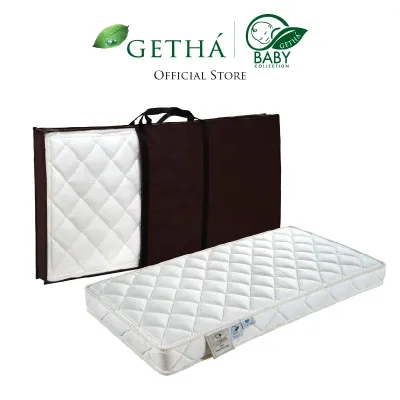
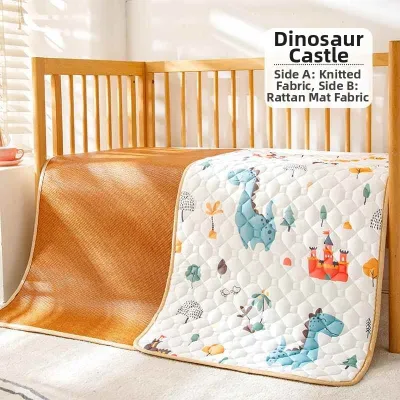
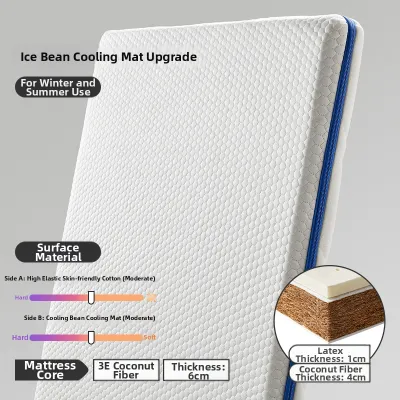
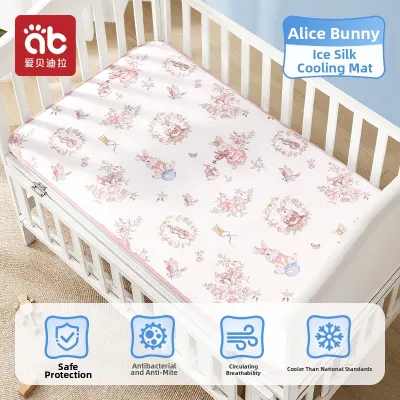

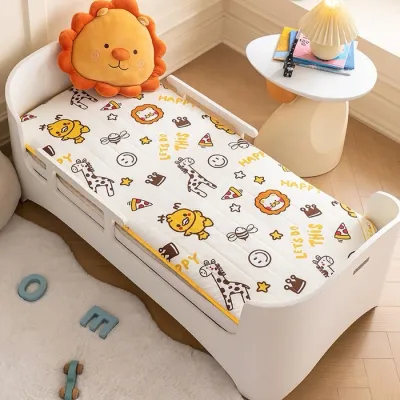
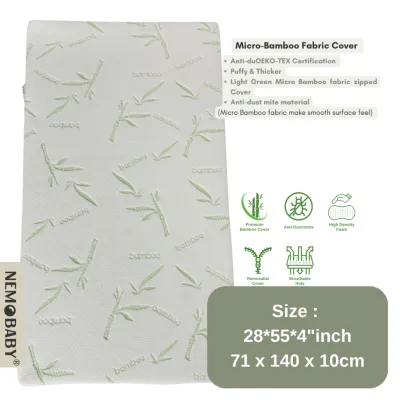

Prices are valid at publication and may change. Please refer to the product page for the latest price.
Safe sleep guidelines consistently emphasize that infants require a flat, firm, and completely unobstructed surface. A firm mattress does not indent under the light weight of an infant’s body, ensuring that their airway remains clear and open at all times. It is common for parents to touch a baby cot mattress and worry that it feels too hard or uncomfortable. However, infant bone structures are rapidly developing and require solid skeletal support, making adult comfort standards entirely inapplicable to baby bedding.
Furthermore, a soft mattress can make it difficult for an infant to move or roll back over if they find themselves in an uncomfortable position. A firm surface provides the necessary resistance for babies to push against as they develop their motor skills. By choosing a mattress that maintains its flat shape under pressure, you eliminate the physical hazards associated with sinking and contouring.
Recommended Firmness by Age and Developmental Stage
A child’s physical capabilities change rapidly during their first few years, and their sleep surface must accommodate these developmental milestones. While a newborn requires maximum resistance, an older toddler who has developed strong motor skills can safely sleep on a slightly different support level. Parents must always verify the manufacturer’s specific age, weight, and developmental milestones before adjusting any sleep setup.

Newborns and Infants (0 to 12 Months)
During the first year of life, infants lack the neck strength and muscle coordination to lift their heads or roll away from a hazard. If an infant ends up face-down on a soft surface, they cannot easily rescue themselves from a suffocating position. For this reason, a newborn mattress must be completely unyielding, showing virtually no compression under the baby’s weight.
When shopping for an infant mattress, always cross-reference the product documentation with your baby’s current developmental stage. Manufacturers design infant-specific mattresses to meet strict safety limits that prevent sinking. If your baby was born prematurely or has specific developmental delays, consult a pediatrician or qualified healthcare professional to ensure their sleep surface matches their medical needs.
Caregivers must also ensure that the sleep surface remains entirely free of loose items during this stage. A firm mattress loses its safety benefits if it is covered with soft blankets, pillows, or sleep positioners. Keep the mattress surface bare, using only a tight-fitting sheet designed specifically for the mattress dimensions.
Toddlers (1 to 3 Years)
As babies transition into toddlerhood, they gain the ability to roll over easily, sit up, and reposition themselves during sleep. At this stage, their sleep surface can transition to a slightly more pressure-relieving material, though it must still remain highly supportive. A mattress that is too soft can still cause spinal misalignment or make it difficult for a toddler to stand up safely inside the cot.
Many modern baby cot mattresses feature a dual-firmness design, offering a highly firm side for infants and a slightly softer, more resilient side for toddlers. If you choose a dual-sided model, strictly follow the manufacturer’s transition guidelines, weight limits, and physical labels to know exactly when to flip the mattress. Never flip the mattress to the toddler side prematurely, and always inspect the structural integrity of both sides regularly.
Even on the toddler side, the mattress should not allow for significant sinking. Toddlers still require excellent spinal alignment to support their growing bones. Always verify that the transition to the toddler side aligns with your child’s actual weight and development rather than age alone.
Practical Tests to Check Mattress Firmness
Whether you are testing a mattress in a physical showroom or inspecting a newly delivered model at home, you should perform physical tests to verify its safety. Do not rely solely on visual appearance, as some soft mattresses can look deceptively flat and firm when unoccupied.
The Hand Press and Rebound Test
The hand press test is a straightforward, tactile method to evaluate how a mattress reacts to pressure. Place the mattress on a flat, solid surface and press down firmly on the center with your open palm. Apply significant pressure, then release your hand quickly to observe how the material behaves.
A safe, firm mattress will resist deep indentation and snap back to its original flat shape immediately. If your hand leaves a temporary crater, or if the material takes more than a second to recover, the mattress is too soft for an infant. Repeat this test in multiple spots across the surface to ensure the firmness is consistent throughout.
The Edge Support and Sagging Check
A mattress’s perimeter is just as important as its center, especially as babies begin to move and explore the edges of their cot. Apply firm pressure along the outer edges and corners of the mattress to evaluate the strength of the border support.
If the edges compress easily or slope downward under pressure, they present a serious safety hazard. Weak edges can allow a rolling baby to slide into the narrow space between the mattress and the cot frame, leading to dangerous entrapment. Ensure the edges offer robust resistance and maintain their vertical shape under localized pressure.
The Cot Fit and Gap Test
A mattress must be perfectly compatible with the specific cot frame you are using to prevent dangerous gaps. In Singapore, cots and mattresses are sold in various regional dimensions, so a generic “standard” size may not guarantee a safe fit.
To verify the fit, place the mattress inside the cot and perform the standard “two-finger rule.” Attempt to slide your index and middle fingers into the gap between the edge of the mattress and the inner wooden rails of the cot. If you can fit more than two fingers (approximately 3 centimeters) into this space, the mattress is too small for the cot. This gap poses a severe entrapment risk for your baby’s limbs or head, meaning you must replace either the cot or the mattress to achieve a flush, secure fit.
Signs Your Current Mattress Is Too Soft or Worn Out
If you are reusing a mattress for a second child or evaluating one that has been in use for a while, you must carefully diagnose its current condition. Over time, the materials inside a mattress degrade, leading to localized softening that may not be immediately obvious.
Conduct a thorough visual and physical inspection of the mattress under bright lighting. Look for visible signs of structural failure, such as permanent sagging in the center, noticeable body impressions, or a loss of rebound elasticity. If you feel lumps, broken springs, or areas where the internal foam has crumbled, the mattress is no longer safe and must be discarded.
Using second-hand or hand-me-down mattresses carries hidden risks that can compromise your baby’s safety. Without knowing the mattress’s full history, you cannot verify if it has been stored in damp conditions, which can lead to internal mold growth—a common issue in Singapore’s humid climate. Furthermore, older mattresses may have lost their original firmness or may not comply with modern safety regulations. If a mattress shows any signs of wear, softening, or structural compromise, stop using it immediately and replace it to maintain a safe sleep environment.
Verifying Firmness Through Labels and Specifications
Navigating the marketing claims of mattress brands requires looking past descriptive jargon to find objective safety data. Terms like “orthopaedic,” “pediatrician-preferred,” or “cloud-like comfort” are highly subjective and unregulated, offering no guarantee of actual safety or firmness.
Instead of relying on marketing terms, look for explicit age-stage labeling on the product packaging and physical tags. Verify that the mattress complies with recognized safety standards, such as the European Standard EN 16890 (which specifically covers safety requirements and test methods for cot mattresses) or equivalent international safety guidelines. These certifications indicate that the mattress has undergone rigorous laboratory testing for firmness, chemical safety, and durability.
Always remember that the manufacturer’s specific weight limits, care instructions, and safety warnings printed on the physical tag supersede any general advice. Check the tag for instructions on how to clean the mattress, as improper washing can degrade the internal materials and compromise its firmness. If the care instructions are missing or unclear, contact the manufacturer directly to verify the correct maintenance procedures.
Frequently Asked Questions (FAQ)
Can I add a soft mattress topper if the cot mattress feels too hard?
No, you should never add a soft mattress topper, pillow, or extra padding to a baby’s cot. Adding these items introduces a significant suffocation and rebreathing hazard, as they can easily conform to an infant’s face. They also create uneven surfaces that can trap a rolling baby. To ensure a safe sleep environment, keep the mattress covered only by a tight-fitting sheet, and consult a pediatrician if you have concerns about your baby’s comfort.
Are memory foam mattresses safe for newborns?
Traditional memory foam is not safe for newborns or young infants because it is designed to contour to the body in response to heat and weight. This contouring effect creates a deep pocket that can easily block a baby’s nose and mouth if they turn over. While some manufacturers offer specialized, high-density baby foam mattresses, you must strictly verify their explicit age suitability, material density, and safety certifications before use. If the product documentation does not explicitly state it is safe for newborns, do not use it.
Community discussion
Share your experience or ask a question. Comments are reviewed before publication.