
Protecting your baby from mosquito bites is a top priority for parents in Singapore, where the tropical climate supports year-round mosquito activity and raises dengue concerns. A hanging baby mosquito net provides an effective physical barrier over a crib, keeping insects away without the need for chemical repellents. However, an improperly installed net poses severe safety risks, including fabric entanglement, suffocation, or injuries from falling hardware.
To safely install a hanging baby mosquito net, you must secure a heavy-duty mechanical anchor directly into your ceiling, adjust the fabric height so it remains entirely out of your child’s reach, and immediately discontinue use once your baby reaches key developmental milestones. Taking shortcuts with temporary adhesives or improper hardware can lead to dangerous failures.
Before You Begin: Safety Checks and Preparation
Before drilling any holes or unpacking your tools, you must perform a thorough safety assessment of both the product and your room layout. Start by inspecting the baby mosquito net itself. Unroll the fabric completely and check for any manufacturing defects, large gaps in the mesh, tears, or loose threads. Loose threads can easily wrap around a baby’s fingers or toes, creating a constriction hazard, while tears compromise the net’s primary protective function.
Products mentioned in this guide
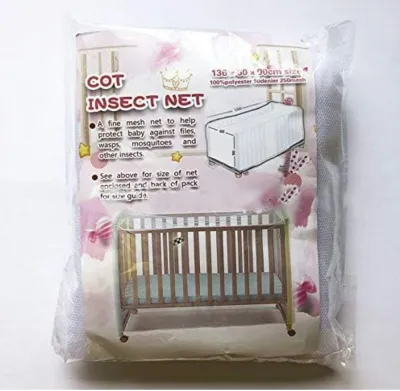
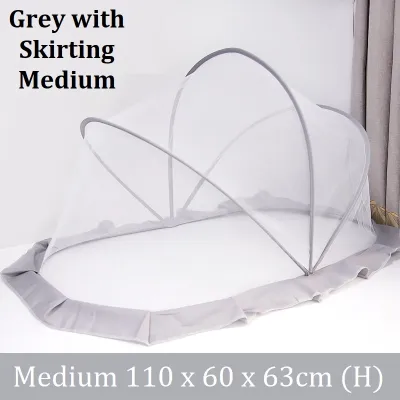
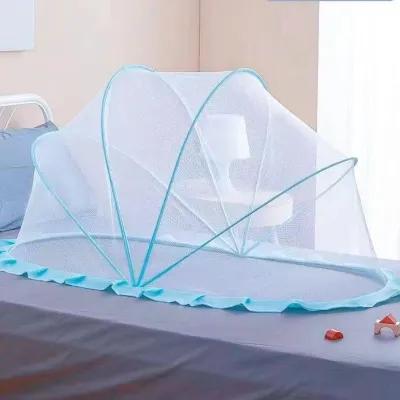
![[Infantods] Spring Cot Sarong Net. Manual Baby Cradle Net. Hammock Sarong Yao Lan. Spring Cot. Swing. Mosquito net. Baby sleep better and longer.](https://img.lazcdn.com/g/p/mdc/e81ed3d076c9d7e54b5400fb52d0510b.jpg_400x400q80.jpg_.webp)
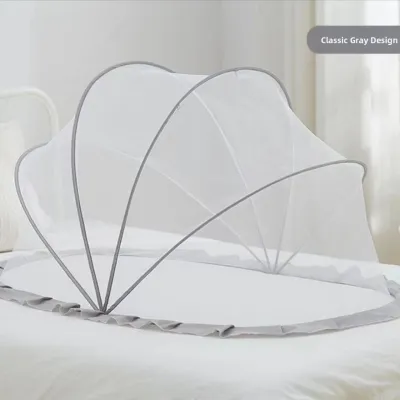
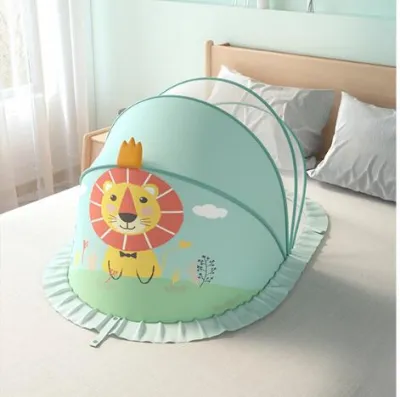
Prices are valid at publication and may change. Please refer to the product page for the latest price.
Next, evaluate the position of your baby’s crib. The crib must be situated away from windows, blinds, curtain cords, and electrical outlets. If a mosquito net is placed too close to window treatments, a baby might pull on both the net and the blind cords simultaneously, significantly increasing the risk of strangulation.
You must also identify your ceiling material, as this determines the specific anchoring hardware required. In Singapore, residential construction varies:
- Solid Concrete Ceilings: Highly common in Housing & Development Board (HDB) flats and many private condominiums. Concrete is exceptionally dense and requires a hammer drill, a carbide-tipped masonry drill bit, and plastic expansion wall plugs or concrete anchors.
- False Ceilings or Plasterboard: Often installed in renovated spaces or modern condominiums to conceal air conditioning ducts and wiring. Plasterboard cannot support overhead loads on its own; you must use heavy-duty toggle bolts (butterfly anchors) that expand behind the board, or locate a structural timber or metal joist to screw into.
Finally, locate and read the manufacturer’s specific installation manual. Every baby mosquito net has unique weight specifications, tension requirements, and mounting guidelines that you must verify before proceeding. Do not rely on generic instructions if your product comes with dedicated documentation.
Tools and Materials Needed for a Secure Mount
Achieving a secure, load-bearing installation requires the correct tools and hardware. Using inadequate substitutes increases the risk of the ceiling hook pulling loose if the net is accidentally tugged. Gather the following items before starting:

- Power Drill: A hammer drill is essential for concrete ceilings, while a standard rotary drill is sufficient for plasterboard or timber.
- Appropriate Drill Bits: Use a carbide-tipped masonry bit for concrete, or a standard twist/spade bit for plasterboard, sized precisely to match your wall anchors.
- Heavy-Duty Wall Anchors: Select high-quality plastic expansion plugs for concrete or spring toggle bolts for false ceilings. These typically cost between S$2 and S$10 at local hardware stores.
- Heavy-Duty Ceiling Hook or Eye Bolt: Choose a threaded metal hook or eye bolt rated for overhead suspension. Avoid open hooks where the net's loop could easily slip out if bumped.
- Measuring Tape and Pencil: For precise layout and height calculation.
- Sturdy Step Ladder: Ensure your ladder is placed on a flat, even floor. Never stand on the crib, a swivel chair, or unstable furniture.
Do not use lightweight picture hooks, adhesive strips, or improvised wire to hang the net. These temporary solutions are highly vulnerable to temperature changes and physical tension, making them unsafe for nursery environments.
Step-by-Step Installation Guide
Step 1: Measure and Mark the Safe Hanging Point
To ensure the net drapes evenly and safely, you must establish the correct mounting location on your ceiling. Begin by locating the center point of the crib. If the manufacturer recommends offsetting the hanging point toward the head of the crib, adjust your measurements accordingly.
Measure the vertical distance from your ceiling to the top of the crib mattress. This measurement helps you determine how much suspension cord or strap is needed. The net must drape low enough to cover all sides of the crib frame completely without leaving any gaps, but it must not bunch up inside the crib where a sleeping baby could roll into the excess fabric.
Use your measuring tape to project the net’s canopy width onto the ceiling. Once you have identified the ideal spot, mark it clearly with a pencil. If you are drilling into a false ceiling, use a stud finder or check architectural layouts to avoid drilling into hidden electrical conduits, air conditioning copper pipes, or water lines.
Step 2: Drill and Secure the Ceiling Hook or Bracket
Once the hanging point is marked, you can proceed with drilling. Put on safety goggles to protect your eyes from falling plaster or concrete dust.
Set your drill to the correct mode—hammer mode for concrete, or standard rotary mode for plasterboard. Drill a pilot hole straight up into the ceiling at your pencil mark. Ensure the hole’s depth and diameter match the exact specifications of your chosen wall anchor. If the hole is too wide, the anchor will slip; if it is too shallow, the hook will not sit flush.
Clear any loose dust or debris from the drilled hole using a hand pump or a vacuum cleaner. Insert your wall anchor into the hole, tapping it gently with a hammer until it sits completely flush with the ceiling surface. Screw the heavy-duty ceiling hook or mounting bracket into the anchor, turning it until it is tight and cannot be turned any further.
Critical Safety Stop Condition: If the ceiling material crumbles excessively during drilling, if the drill bit drops suddenly into an unexpected hollow space, or if the wall anchor fails to grip tightly and spins in place, stop immediately. Do not attempt to hang the net from a compromised anchor point. Consult a qualified local handyman or structural contractor to assess the ceiling before proceeding.
Step 3: Attach the Mosquito Net and Adjust the Height
With the hook securely installed, you can now hang the mosquito net. Thread the net’s built-in hanging loop, ring, or hoop onto the ceiling hook. If your hook is an open cup design, consider wrapping a small piece of electrical tape over the opening or using a hook with a safety latch to prevent the loop from slipping off.
Adjust the suspension cord, chain, or straps so that the canopy hangs straight. The fabric must drape smoothly over the outer rails of the crib. Verify that the bottom edges of the net reach past the top of the crib rails and cover the sides completely. Some manufacturers design nets to drape all the way to the floor, while others require tucking the excess fabric under the mattress. Only tuck the fabric if the manufacturer’s user manual explicitly instructs you to do so and provides a secure, tight-fitting design.
Carefully inspect the interior of the crib. The net fabric must remain taut against the outer frame and must never sag inward into the baby’s sleeping space or breathing zone. There should be absolutely no loose fabric resting near where the baby’s head will be.
Critical Safety Rules to Prevent Entanglement and Collapse
A hanging baby mosquito net is a functional safety tool, but it can quickly become a hazard if safety guidelines are ignored. Adhere strictly to the following rules to protect your child from injury:
- Do Not Hang Accessories: Never attach toys, mobiles, fairy lights, heavy decorations, or sensory items to the mosquito net, its suspension cord, or the ceiling hook. These items add unnecessary weight, increasing the risk of structural failure, and can introduce electrical or strangulation hazards.
- Keep Cords Out of Reach: Ensure the suspension cord or adjustment strap is kept as short as possible. Any excess cord must be tied off securely at the ceiling level, completely out of your baby's physical reach. A loose, dangling cord inside or near the crib is a severe strangulation risk.
- Monitor Airflow and Temperature: While mesh nets are designed to be breathable, they can slightly restrict airflow. In Singapore's warm and humid climate, monitor your baby closely for signs of overheating, such as sweating or flushed cheeks. Ensure the nursery is well-ventilated, but position any ceiling fans so they do not blow directly onto the net, which can cause the fabric to billow or sway dangerously.
- Observe Developmental Milestones: This is the most critical safety rule for hanging nets. You must stop using a hanging ceiling net immediately once your baby learns to sit up, kneel, pull themselves up to a standing position, or reach the top rails of the crib. At this stage of development, babies naturally grab and pull on surrounding fabrics. A child pulling on a hanging net can easily dislodge the ceiling hardware or wrap themselves in the mesh, leading to serious injury or suffocation.
Post-Installation Verification and Daily Maintenance
Before placing your baby in the crib under the newly installed net, you must verify the structural integrity of your work. Perform a manual pull test by grasping the ceiling hook firmly and applying steady downward pressure. The hook and anchor must not budge, wiggle, or show any signs of pulling away from the ceiling. If there is any movement, remove the hardware and reinstall it using a more robust anchoring system.
Check the overall tension of the net. The fabric should drape cleanly and remain taut enough that it cannot blow inward toward the center of the mattress if a draft enters the room.
To maintain a safe sleeping environment over time, establish a weekly maintenance routine:
- Inspect the Anchor: Look closely at the ceiling hook to ensure no plaster dust is falling and that the anchor remains perfectly flush.
- Check for Wear and Tear: Examine the mesh fabric for any new holes, snags, or fraying seams that could trap tiny fingers or let mosquitoes through.
- Verify Cord Security: Ensure the excess suspension cord has not slipped or loosened.
- Clean Regularly: Mosquito nets easily trap airborne dust and allergens, which can affect your baby's respiratory health. Take the net down periodically for cleaning. Always refer to the product's care label for washing instructions; most mesh nets require hand washing or a gentle machine cycle in a protective laundry bag. When re-hanging the net after washing, always repeat the manual pull test on the ceiling hook to ensure it has not loosened.
Frequently Asked Questions (FAQ)
Can I use adhesive or command hooks to hang a baby mosquito net?
No, you should never use adhesive hooks, sticky pads, or command strips to hang a baby mosquito net. While adhesive hooks are convenient, they are not designed to withstand the continuous, dynamic downward pull of hanging fabric, especially if a baby or caregiver accidentally brushes against the net. Furthermore, Singapore’s high relative humidity can rapidly degrade adhesive backings, causing them to fail unexpectedly. If an adhesive hook detaches, the heavy hook and the entire net will collapse directly into the crib, posing an immediate suffocation and physical injury hazard. Always use mechanically fastened, drilled hardware.
When should I stop using a hanging crib mosquito net?
You must stop using a hanging crib mosquito net as soon as your baby reaches the developmental milestone of sitting up, kneeling, or pulling themselves up to a standing position. This typically occurs between 5 and 9 months of age, though every child develops at their own pace. Once a baby can reach the net fabric or the top rails of the crib, they can easily pull the entire structure down, creating a severe risk of entanglement, suffocation, or being struck by falling ceiling hardware. When your baby reaches this stage, transition to room-wide insect protection, such as magnetic window screens, or consult a professional about safe, frame-based crib nets that secure firmly to the crib structure without hanging overhead.
Community discussion
Share your experience or ask a question. Comments are reviewed before publication.