
Installing an anti-fall mosquito net on your baby’s crib requires a careful balance of physical security and strict adherence to safe sleep guidelines. In tropical climates like Singapore, where safeguarding infants from mosquitoes is a year-round priority, these specialized nets offer a dual benefit: keeping pests away while acting as a soft physical barrier to prevent limbs from slipping through crib rails. However, a poorly installed net can quickly transform from a protective shield into a serious hazard. To ensure maximum safety, caregivers must focus on precise alignment, secure external fastening, and regular tension checks.
Pre-Installation Safety Checks and Crib Preparation
Before beginning the installation process, verify that both your crib and the specific anti-fall mosquito net model are fully compatible. Not all nets are designed to fit every crib style, such as oval cribs, convertible beds, or solid-back designs. Start by consulting the manufacturer’s product documentation to confirm the recommended age, weight, and developmental limits for the net. If your baby has already reached milestones like rolling aggressively, sitting up, or pulling themselves up, using a crib net may no longer be safe, and you should re-evaluate your nursery setup.
Next, perform a thorough physical inspection of the crib itself. Run your hands along the wooden or metal rails, checking for any splintering, peeling paint, or rough edges that could snag and tear the delicate mesh of the net. Ensure that all structural hardware, such as screws and brackets, are fully tightened and flush with the frame. Any protruding hardware can catch on the netting under tension, creating tears that compromise both the insect barrier and the anti-fall support.
Products mentioned in this guide
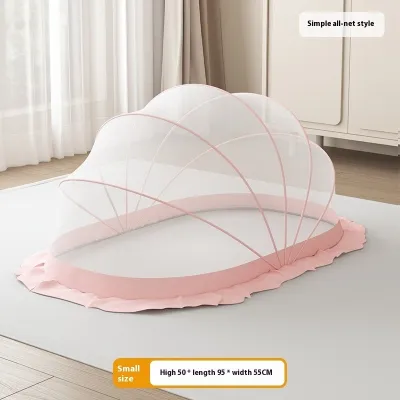

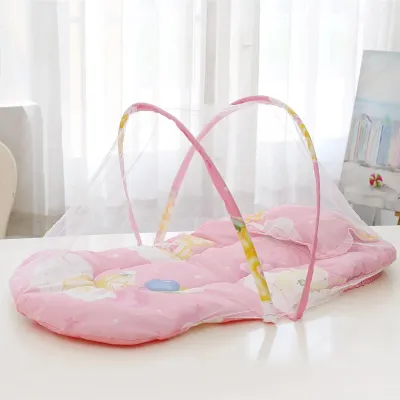
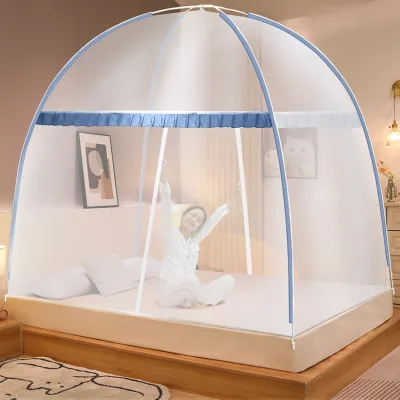
![[in stock]Foldable Anti Mosquito Net 190cm King Queen Bed Size Indoor Folding Tent Portable Breathable](https://img.lazcdn.com/g/p/8508933577b936781d0e10baf0081195.jpg_400x400q80.jpg_.webp)
Prices are valid at publication and may change. Please refer to the product page for the latest price.
Unpack the mosquito net and inspect it closely under good lighting. Look for any manufacturing defects, such as skipped stitches, loose threads, or weak seams. Pay close attention to the attachment points, including straps, ties, buckles, or zippers. If you notice any fraying, weak stitching, or faulty zipper teeth, do not proceed with the installation. A compromised attachment point can easily fail when a baby leans or rolls against the net, creating an entrapment risk.
Finally, gather only the tools and hardware explicitly recommended in the product manual. Avoid the temptation to use improvised fasteners, such as plastic zip ties, household string, bungee cords, or adhesive tapes. These non-standard materials can easily degrade, snap, or be pulled loose by an active infant, presenting immediate choking or strangulation hazards in the sleep environment.
Step-by-Step Installation for a Secure Fit
Properly mounting the net requires a methodical approach to ensure that the structural integrity of the barrier is maintained without creating loose fabric folds. Begin by identifying the correct orientation of the net. Most anti-fall mosquito nets have clearly designated top, bottom, and side panels, often marked with small fabric labels or distinct seam patterns. Carefully drape the net over the crib frame, ensuring that the reinforced mesh panels—which are specifically engineered to withstand physical pressure—align perfectly with the crib’s side rails. Misaligning these panels can place weaker sections of the mesh under undue stress, increasing the risk of tearing.

Once the net is positioned correctly, begin securing the attachment points to the crib frame. Always follow the sequence recommended in the manufacturer’s manual, which typically starts from the top corners and works downward. When tying or buckling the straps, ensure they are wrapped tightly around the solid wooden or metal posts of the crib, rather than loose decorative elements. Crucially, all knots, buckles, clips, or fasteners must be positioned entirely on the exterior of the crib. No part of the fastening mechanism should be accessible from inside the sleep area, preventing your baby from pulling, chewing, or untying them.
Achieving the correct tension is one of the most critical aspects of the installation process. The mesh must be taut enough to prevent a baby from pushing their face into loose fabric, which poses a suffocation risk, or getting their limbs tangled in sagging folds. However, you must avoid over-tightening the straps. Excessive tension can warp the crib’s structure, bend lightweight rails, or put immense strain on the net’s seams, leading to sudden tears. A properly tensioned net should feel firm to the touch, springing back slightly when gently pressed, without causing any visible distortion to the crib frame.
If your anti-fall mosquito net features zippered doors or access panels for easy caregiving, you must verify their functionality before placing your baby in the crib. Test the zippers multiple times to ensure they glide smoothly along the tracks without catching on the surrounding mesh. Check that the zippers lock securely in the fully closed position and cannot be easily pushed open from the inside by a curious baby. If the zippers slide open under light pressure, the net’s protective barrier is compromised, and it should not be used until repaired or replaced.
Post-Installation Verification and Routine Maintenance
Once the installation is complete, you must perform a rigorous physical verification to ensure the setup is entirely secure. Conduct a “pull and shake” test by grasping the mesh panels and the attachment straps, applying moderate pressure to simulate a baby rolling, pushing, or pulling against the barrier. The net should remain firmly anchored to the crib frame without slipping, sliding, or sagging. If any strap slides down a rail or if the mesh sags significantly under pressure, adjust the fasteners immediately to restore proper tension.
Next, inspect the entire perimeter of the crib for any gaps. Pay close attention to the areas where the net meets the mattress, the crib rails, and the corners. There should be no openings large enough for a baby’s hand, foot, or head to slip through. Even a small gap can lead to dangerous entrapment, where a limb becomes stuck between the net and the crib structure. If you identify any gaps that cannot be resolved by adjusting the net’s built-in straps, discontinue use, as the net may be incompatible with your specific crib model.
Maintaining safety requires ongoing vigilance, as daily use and environmental factors can affect the net’s integrity. Establish a weekly inspection routine to check for signs of wear and tear. Look for stretched-out mesh, loose stitching along the seams, or frayed ties. In Singapore’s humid climate, dust and fibers can also accumulate quickly on fine mesh, so regular cleaning is necessary to maintain proper airflow.
When cleaning the net, always adhere strictly to the manufacturer’s washing and drying instructions. Many safety-focused nets require gentle hand washing or a delicate machine cycle in cold water to prevent the synthetic fibers from shrinking or warping. Never use harsh chemical bleach or fabric softeners, which can degrade the strength of the mesh over time. Air drying is typically recommended, as the high heat of a clothes dryer can melt or weaken the structural fibers, compromising the net’s anti-fall capabilities.
Common Mistakes and When to Remove the Net
One of the most dangerous mistakes caregivers make is routing the attachment straps or ties inside the crib or underneath the mattress. While it might seem like a good way to hide unsightly straps, placing these cords within the baby’s reach creates a severe risk of strangulation and entanglement. All straps must remain on the outside of the crib frame, completely isolated from the sleep environment.
Another common error is attempting to adjust the fit of the net or support its structure using loose household items. Never place extra blankets, pillows, rolled-up towels, or bumper pads inside the crib to prop up the net or fill in gaps. Introducing these items directly violates safe sleep guidelines, significantly increasing the risk of suffocation. If the net does not fit securely on its own, it is the wrong size or model for your crib, and no amount of improvised padding can make it safe.
Knowing when to stop using the anti-fall mosquito net is just as important as knowing how to install it. This product is designed for a specific developmental window. The absolute stop-use condition occurs the moment your baby shows signs of being able to pull themselves up to a standing position, climb, or actively pull on the mesh. Once a child can stand, they can use the tension of the net or the top of the frame as leverage to climb over the crib rail, leading to a much more dangerous fall. Additionally, a standing baby can exert enough force to tear the net or pull it down, creating an immediate entrapment and suffocation hazard.
If you are ever uncertain about your baby’s developmental milestones or whether their increasing mobility makes the net unsafe, consult your pediatrician or a certified child safety professional. They can provide personalized guidance on when to transition your baby to a different sleep environment, such as a toddler bed with appropriate guardrails or a floor bed setup, ensuring their safety remains uncompromised as they grow.
Frequently Asked Questions (FAQ)
Is it safe to modify the net's straps if they do not fit my crib rails?
No, you should never modify the straps of an anti-fall mosquito net. Cutting, sewing, or adding aftermarket extensions (such as ribbons, ropes, or velcro) to the original straps severely compromises the product’s structural integrity. These modifications can fail under the physical pressure of a rolling or leaning baby, voiding any safety assurances provided by the manufacturer. If the straps do not fit your crib rails, check the manufacturer’s official compatibility list or contact their customer support to see if they offer approved extension kits or alternative mounting hardware. If no official solutions are available, return or exchange the net for a model specifically designed to fit your crib’s dimensions.
Can I use a crib anti-fall mosquito net once my baby starts standing?
No, you must immediately discontinue using the net once your baby begins to stand. When a baby gains the ability to pull themselves up, any mesh or netting attached to the crib rails becomes a major safety hazard. A standing infant can use the taut mesh or the top edge of the net as a climbing aid, using their body weight to leverage themselves over the crib rail and causing a severe fall. Furthermore, the force of a standing baby pulling on the net can cause the attachment points to snap or the mesh to tear, leading to dangerous entanglement. At this stage, it is time to transition your child to a safer sleep setup, such as a toddler bed or a floor bed.
Community discussion
Share your experience or ask a question. Comments are reviewed before publication.