
Installing Cubble magnetic locks on kitchen cabinets is a highly effective way to secure hazardous household items and keep curious toddlers safe. These locks mount discreetly inside the cabinetry, preserving the exterior aesthetic of the kitchen while preventing children from accessing sharp utensils, heavy cookware, or household chemicals. Successful installation relies on meticulous surface preparation, precise alignment using the provided installation cradle, and allowing the adhesive to cure completely under optimal environmental conditions.
Preparation: Tools and Surface Cleaning
Before beginning the installation, gather all the components included in your Cubble magnetic lock kit. A standard kit typically contains the lock bodies, catches (the striking plates), a magnetic key, a magnetic key holder, and a plastic installation cradle designed to assist with alignment. Having these parts organized beforehand prevents errors and ensures a smooth workflow.
Kitchen cabinets are prone to accumulating a thin layer of cooking grease, moisture, and dust, particularly in active cooking areas. To ensure a strong, long-lasting adhesive bond, clean the mounting areas thoroughly. Use rubbing alcohol (isopropyl alcohol) or a mild degreasing agent to strip away any oily residue. Avoid using standard household glass cleaners or surface sprays that leave a slick, protective coating, as these residues will prevent the adhesive from sticking properly. Allow the cleaned surfaces to dry completely before proceeding.
Products mentioned in this guide
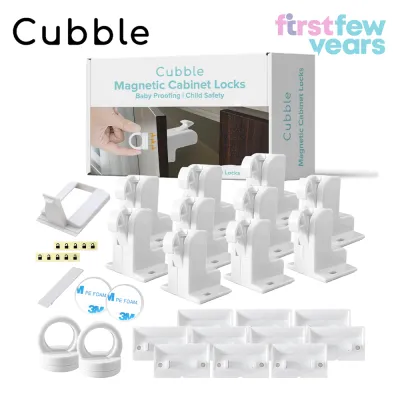
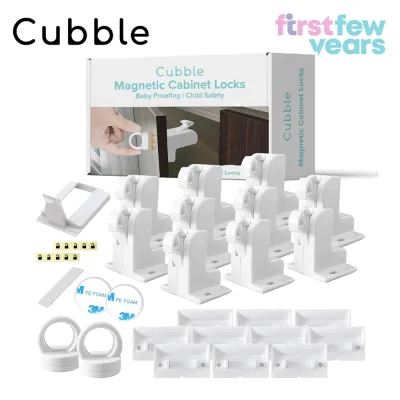
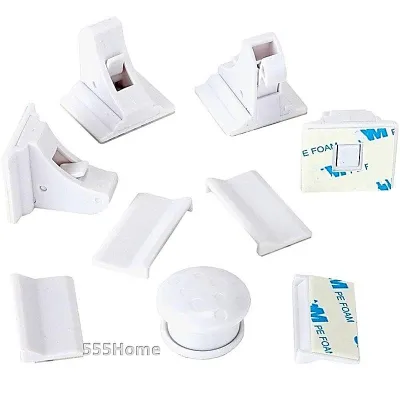
Prices are valid at publication and may change. Please refer to the product page for the latest price.
Before applying any adhesive to your cabinets, check the lock manufacturer’s packaging and your cabinet manufacturer’s care instructions. If the instructions conflict, if your cabinet material is unidentified, or if adhesive use is not recommended for your specific cabinet finish, stop and consult the manufacturer or a qualified professional. A hidden-area test is helpful for checking finish compatibility, but it does not replace official manufacturer instructions.
These adhesive-based locks perform best on smooth, non-porous surfaces such as finished wood, laminates, and wood veneers. Avoid installing them on heavily textured surfaces, unfinished raw wood, or freshly painted cabinets, as the adhesive may fail to bond or could peel the paint away. Additionally, keep in mind that high relative humidity—a common environmental factor in Singapore kitchens—can affect initial adhesive tackiness, making thorough surface drying and proper curing even more critical.
Step-by-Step Installation Guide
Careful positioning and mounting will ensure your magnetic locks engage smoothly without jamming or preventing the cabinet doors from closing properly.

Positioning the Lock and Catch
Most Cubble kits feature a plastic installation cradle that holds both the lock body and the catch in perfect alignment during the mounting process. Begin by slotting the lock body and the catch into their designated positions inside this cradle. This alignment tool ensures that the two pieces meet at the exact angle required to latch securely.
Position the cradle against the inside corner of the cabinet frame where the door closes. The catch portion should rest flat against the underside of the cabinet frame or shelf, while the lock body faces outward toward the door. Mark the position lightly with a pencil if necessary, ensuring the door can close fully without hitting the lock body. Check that there is sufficient clearance for the latch to drop and clear the frame.
Applying the Adhesive and Mounting
Once the parts are nested in the installation cradle, peel the protective backing from the adhesive tape on both the lock body and the catch. Carefully position the cradle back against the inside corner of the cabinet frame and press it firmly to adhere the catch to the frame.
With the cradle still in place and the adhesive backing on the lock body exposed, slowly close the cabinet door until it presses firmly against the lock body’s adhesive. When you reopen the cabinet door, the cradle will release, leaving the catch perfectly adhered to the cabinet frame and the lock body adhered to the inside of the door.
Apply firm, direct pressure with your fingers to both components for at least 30 seconds to activate the pressure-sensitive adhesive. Do not test or pull on the lock immediately. Check the manufacturer’s instructions for the recommended curing time—typically 24 hours—before allowing any tension or weight on the lock. In humid climates, letting the adhesive cure for the full recommended duration without disturbance is critical for a long-lasting bond.
Operating the Magnetic Key
To open the cabinet, hold the magnetic key against the outside of the door, directly opposite where the internal lock body is mounted. The powerful magnet pulls the internal latch down, releasing it from the catch and allowing the door to swing open.
When you close the door, the spring-loaded latch automatically re-engages with the catch, locking the cabinet instantly. Many kits feature a disengagement switch on the lock body, allowing you to temporarily disable the locking function when children are not present.
Store the magnetic key on its adhesive holder high on a wall, refrigerator, or nearby magnetic surface. Ensure it is placed well out of reach of children, but easily accessible to adult caregivers.
Testing and Verifying Childproof Security
After the curing period has fully elapsed, perform a physical test. Pull the cabinet door with moderate, adult-level force to verify that the lock holds securely. Do not yank with excessive force that could damage the cabinet door or hinges.
Check for gaps when the door is locked. A small gap of a few millimeters is normal and allows the magnetic field to operate, but the opening must not be wide enough for a child’s fingers to slip through or get pinched. Ensure the door rests flush against the frame when closed.
If you notice misalignment or a weak hold during testing, assess the components immediately. If the adhesive has not fully cured, you may be able to gently slide or reposition the parts. If the adhesive has fully cured and is misaligned, you must carefully remove the component, clean the surface, and apply a fresh adhesive pad to restart the process.
Troubleshooting and Maintenance
If the adhesive fails, do not force the lock off, as this can damage cabinet laminate or wood veneer. To remove a failed or misaligned lock safely, apply gentle heat with a hair dryer to soften the adhesive backing. Slide a piece of dental floss or fishing line behind the plastic component to saw through the softened foam tape. Clean any remaining sticky residue with rubbing alcohol or an adhesive remover, checking first that the remover is safe for your cabinet finish. Reinstall using high-quality replacement double-sided foam tape designed for baby-proofing products.
Maintain the kitchen environment to preserve adhesive integrity. Wipe away cooking grease, splatters, and condensation from the cabinet doors near the locks. In humid environments, periodically check that the adhesive is not lifting at the edges.
Regularly inspect the locks for signs of wear. If you notice cracked plastic, a weakening spring mechanism, or a decrease in magnetic pull, stop using the lock immediately and replace it. Remember that childproofing products are safety aids; they do not replace active adult supervision.
Frequently Asked Questions (FAQ)
Can magnetic cabinet locks be used on drawers as well as doors?
Yes, magnetic locks are highly versatile and can be installed on drawers. However, the alignment and catch placement differ from standard hinged doors. The catch must be mounted to the underside of the cabinet frame or countertop overhang directly above the drawer slide, while the lock body attaches to the inside face of the drawer front. Ensure there is enough vertical clearance within the drawer cavity so the lock mechanism does not snag on items stored inside.
Will the magnetic key affect other electronics or magnetic strips in the kitchen?
The magnetic keys contain strong magnets designed to penetrate thick cabinet doors. Keep them away from sensitive kitchen electronics, induction cooktops, pacemakers, credit cards, and magnetic storage media to prevent interference or damage. Do not store the key directly on magnetic knife strips or next to metal utensils, as this can demagnetize or scratch the key over time.
Community discussion
Share your experience or ask a question. Comments are reviewed before publication.