
Installing a baby crib mosquito net correctly requires a systematic approach that balances pest protection with strict infant sleep safety standards. In tropical environments like Singapore, shielding your little one from mosquito bites is a top priority for parents looking to prevent dengue and other insect-borne illnesses. However, a poorly installed net poses severe physical hazards that can compromise your child’s well-being. To do this safely, you must select a net compatible with your crib style, mount or fit it so the fabric remains completely taut and well outside your baby’s reach, and perform rigorous safety inspections daily.
Understanding the Safety Risks of Crib Mosquito Nets
While mosquito nets are highly effective physical barriers against insects, they can introduce serious hazards if they are not installed with absolute precision. The primary risks associated with crib netting include strangulation, suffocation, and entrapment. If a net collapses or sags, the fine mesh can drape over an infant’s face, blocking their airways and causing rapid suffocation. Loose cords, ribbons, or hanging threads can easily wrap around a baby’s neck or limbs, presenting an immediate strangulation hazard. Additionally, if there are gaps between the netting and the crib, a baby can slip into the space and become trapped.
The golden rule of infant sleep safety is absolute: the mosquito net must never come into contact with the baby, and there must be no loose, dangling parts, cords, or excess fabric inside or near the sleep space. The net should function as a secure outer dome, completely separated from the child’s reach.
Products mentioned in this guide
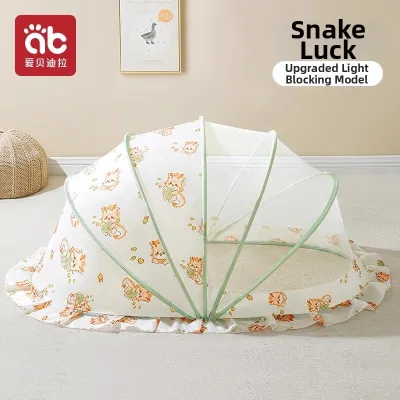
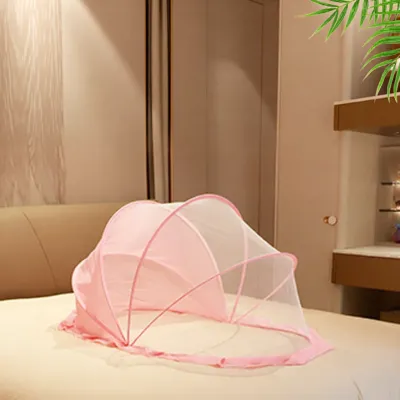
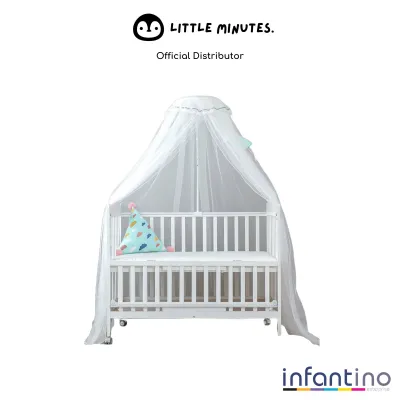
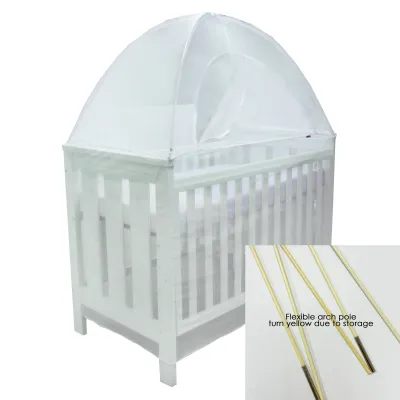
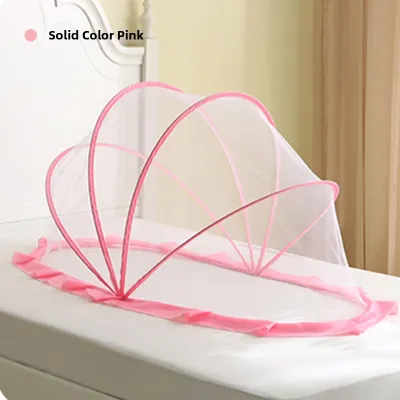
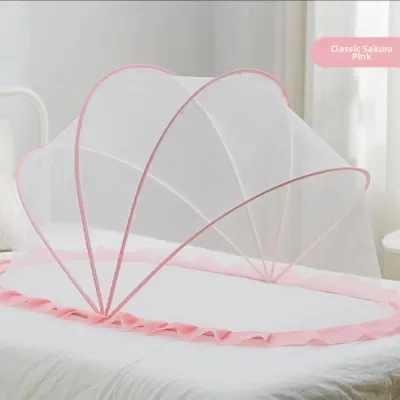
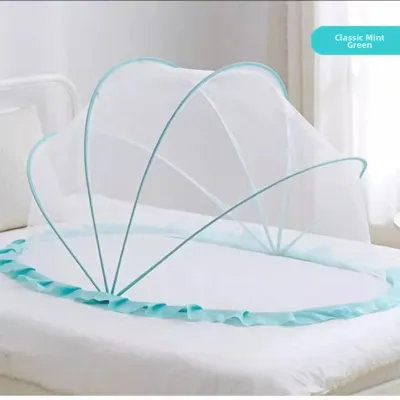
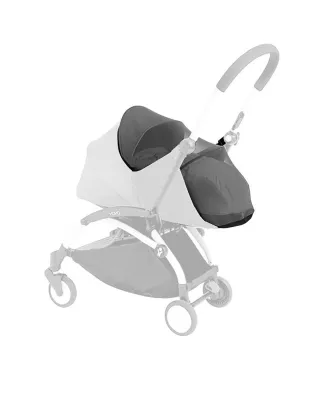
Prices are valid at publication and may change. Please refer to the product page for the latest price.
Before beginning any installation, always cross-reference your steps with the manufacturer’s specific warnings and instructions. It is also vital to align your setup with safe sleep guidelines recognized in Singapore, such as those from the Health Promotion Board, which emphasize keeping the cot clear of loose items, soft bedding, and potential hazards that could restrict airflow or cause entanglement.
Preparing Your Crib and Identifying Your Net Type
Before purchasing or installing a net, you must identify which style of mosquito net best suits your nursery setup. The three most common designs are canopy or hanging nets (which suspend from the ceiling or a tall, independent floor stand), frame-supported nets (which rely on built-in hoops, rods, or brackets that clamp directly to the crib rails), and elastic or fitted nets (which stretch tightly over the top of the crib or around the mattress like a fitted sheet).

Next, examine your crib’s physical structure. Solid wooden corner posts, rounded slatted rails, and fabric-sided travel cots all offer different attachment opportunities and limitations. For example, clamp-on frames require sturdy, flat rails to grip securely, while hanging nets require a clear ceiling space or a stable floor area next to the crib.
To ensure a smooth and safe installation, use this basic preparation checklist:
- Read the manual: Thoroughly review the manufacturer's instruction booklet for any model-specific steps or weight limits.
- Check the mattress fit: Ensure your crib mattress fits snugly within the frame with no gaps along the sides where netting could get wedged.
- Gather the right tools: Prepare high-quality adhesive ceiling hooks (rated for the weight of your canopy), zip ties, or tension rods.
- Avoid hazardous hardware: Do not use metal nails, screws, or sharp tacks on the crib itself, as these can damage the wood, chip the non-toxic paint, or leave sharp edges that could injure your baby.
Step-by-Step Installation for Different Mosquito Net Types
Each style of mosquito net requires a distinct installation method to achieve a secure, taut fit. Follow these sequential instructions to set up your chosen net type correctly.
Installing a Canopy or Hanging Mosquito Net
If you are using a ceiling-mounted canopy net, begin by locating the center point directly above the middle of the crib. Clean the ceiling surface thoroughly and apply a heavy-duty adhesive hook rated for at least two to three kilograms, or install a secure screw hook if your ceiling material allows. If you prefer a standalone floor stand, assemble the heavy base and position it completely outside the crib’s perimeter, ensuring it is stable and cannot be easily tipped over.
Suspend the top ring of the net from the hook or the stand’s hoop. The most critical safety step during this process is securing the main suspension cord or ribbon. Pull this cord completely taut and tie it off securely, ensuring it remains strictly out of the baby’s reach, even if they reach upward from a standing position.
Once suspended, drape the netting evenly over all four sides of the crib. Pull the fabric downward so it is fully extended. Tuck the excess netting completely under the mattress, or anchor it tightly to the outer base of the crib frame using secure, child-safe ties. The fabric must be stretched tight enough that it cannot sag or billow into the sleeping area.
Setting Up a Frame-Supported Crib Net
Start by laying out all the frame pieces, rods, and connectors on a clean floor. Assemble the frame joints carefully, ensuring every interlocking piece clicks or locks into place. A loose joint can cause the frame to collapse unexpectedly under the weight of the fabric.
Attach the frame brackets or clamps to the crib rails according to the manufacturer’s instructions. Secure the clamps tightly using the provided safety straps or clips. Double-check that these attachments are completely rigid and cannot slide, tilt, or rotate inward if pressure is applied to the frame.
Once the frame is securely anchored, drape the mosquito net over the top hoop or support bars. Pull the netting down over the frame, stretching it evenly to eliminate any slack. Finally, tuck the bottom edges of the netting securely under the mattress on all sides. Verify that the fabric does not sag or droop over the baby’s sleeping area, maintaining a high, clear dome above the cot.
Fitting an Elastic or Pop-Up Crib Net
Unfold the net and locate the elasticized perimeter. If you are using a pop-up style net, allow the internal flexible wire frame to expand fully, taking care to keep it away from your face as it springs open.
Stretch the elastic band completely under the mattress, ensuring it wraps deeply around all four corners of the mattress base. If the net is designed to cover the entire crib frame, stretch the elastic over the outer edges of the top rails, ensuring a snug, slip-free fit that cannot be easily dislodged.
Carefully verify that the net is highly taut across the entire top opening of the crib. The fabric should be springy and firm, meaning it cannot be easily pulled up, bunched together, or collapsed by a baby’s hands.
Do not use elastic or pop-up nets if your baby is old enough to sit up, pull themselves up, or grab at the edges of the net. Additionally, avoid these nets if your crib mattress is exceptionally lightweight; a strong elastic band can cause a light mattress to bend or fold, creating dangerous gaps or causing the net to snap back into the crib.
Post-Installation Safety Checks and Verification
Before you place your baby in the crib, you must perform a comprehensive safety verification. Never skip these checks, as a minor oversight can lead to a hazardous sleeping environment.
First, perform the “tug test.” Gently but firmly pull on the netting, the frame, and the mounting brackets from several different angles. The entire assembly should remain stable, and no attachments should slip, slide, or loosen under moderate tension.
Next, conduct a thorough gap check. Inspect the entire perimeter where the net meets the mattress or the crib frame. Ensure there are no gaps larger than two fingers where an infant’s head, limbs, or fingers could become trapped or wedged.
Follow this with a detailed cord and fabric check. Inspect the mesh closely for any loose threads, small tears, holes, or dangling adjustment cords. If your net has drawstrings or ribbons, ensure they are wrapped up, tied off, and secured completely outside the net’s exterior. Additionally, confirm that the fine mesh does not restrict airflow; in Singapore’s warm, humid climate, adequate ventilation is essential to prevent your baby from overheating.
If you observe any issues—such as the net sagging into the crib, broken frame components, loose attachments, or any part of the net or cords coming within the baby’s reach—stop using the net immediately and dismantle it. Do not attempt to patch a damaged net with tape or temporary ties, as these can easily fail.
Maintaining and Cleaning Your Crib Mosquito Net
To keep your mosquito net effective, hygienic, and structurally safe over time, establish a regular maintenance routine. Dust and airborne allergens can accumulate quickly on fine mesh, which can restrict airflow and irritate your baby’s respiratory system.
Conduct a brief visual inspection before every single nap and bedtime. Look for new tears, fraying seams, or stretched-out elastic that may have developed from daily use. Even a tiny hole can allow mosquitoes to enter, defeating the purpose of the net, while frayed seams can catch on your baby’s fingers.
When cleaning the net, always prioritize the manufacturer’s care instructions. If no instructions are available, hand wash the net gently in cool water using a mild, baby-safe detergent. If you prefer to use a washing machine, place the net inside a zippered mesh laundry bag and select a delicate or hand-wash cycle with a low spin speed.
Always air dry the net completely by hanging it up in a well-ventilated area. Never place a synthetic mosquito net in a hot tumble dryer, as extreme heat can shrink, melt, or warp the delicate mesh fibers, ruining the fit and creating safety hazards. Additionally, avoid drying the net in direct, harsh sunlight for extended periods, as UV rays can degrade the synthetic fibers over time.
Discard and replace the net immediately if you notice any of the following replacement triggers: permanent holes or tears, stretched-out elastic that no longer fits snugly, broken zippers, or frayed cords that cannot be safely secured.
Frequently Asked Questions (FAQ)
Can I use a standard crib mosquito net for a newborn in a bassinet?
No, you should never use a standard crib-sized mosquito net on a smaller bassinet. Because bassinets have much smaller dimensions than standard cribs, a crib net will have a significant amount of excess, loose fabric. This loose material creates a severe risk of suffocation and entanglement if it drapes into the bassinet or if the baby shifts during sleep. Always use a net that is specifically designed, sized, and safety-tested for your exact bassinet model.
Are mosquito nets safe if my baby can stand up in the crib?
Once your baby reaches the developmental milestone of being able to pull themselves up, stand, or climb, crib mosquito nets are no longer safe to use. A standing baby can easily reach, grab, and pull down the netting, creating an immediate risk of strangulation, suffocation, or entrapment. They may also pull down the frame or stand onto themselves. At this stage, you must transition to alternative mosquito protection methods, such as installing secure window screens, using air conditioning to keep pests out, or consulting your pediatrician about safe, room-sized mosquito repellents.
Community discussion
Share your experience or ask a question. Comments are reviewed before publication.