
Finding the correct replacement straw for your baby’s Pigeon bottle requires matching the specific bottle generation, neck diameter, and material to the manufacturer’s compatibility guidelines. While calendar-based schedules offer a general reference, you should replace the silicone straw immediately if you observe physical damage, persistent discoloration, or changes in liquid flow. Regularly inspecting the straw before each feeding ensures a secure, leak-free seal and maintains a hygienic feeding environment for your child.
Identifying the Correct Replacement Straw for Your Pigeon Bottle
To find a replacement straw that fits securely, you must first identify the exact model and physical characteristics of your current Pigeon bottle. Pigeon manufactures bottles in several materials, including PPSU (polyphenylsulfone), glass, T-Ester, and PP (polypropylene). While the bottle’s body material does not directly alter the straw’s fit, the neck size is a critical factor. Pigeon bottles generally come in wide-neck and slim-neck (or standard-neck) varieties. A straw assembly designed for a wide-neck bottle will not fit a slim-neck bottle, as the collar diameters and thread patterns are entirely different.
Another essential step is verifying the generation of your bottle. Over the years, design updates have introduced subtle changes to the collars, caps, and venting systems of popular lines like the SofTouch series. For instance, a straw accessory designed for a second-generation bottle may not form an airtight seal when paired with a third-generation collar. Using mismatched generations can lead to persistent leaks or cause the straw to collapse during feeding. Always check the product packaging or the manufacturer’s official compatibility guide to confirm which generation of parts you need.
Products mentioned in this guide
![[2-Pack] Pigeon Softouch Drinking Straw Set (12M+)](https://img.lazcdn.com/g/p/a980d35ef7b18fe2717e96381b81aa6b.png_400x400q80.png_.webp)
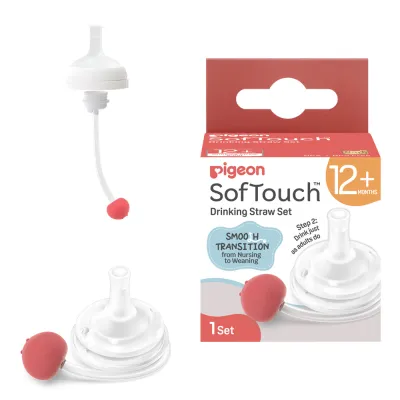
Prices are valid at publication and may change. Please refer to the product page for the latest price.
Your baby’s age and developmental stage also dictate the type of straw design you should select. Straw feeding accessories are typically introduced around six months of age, when infants develop the motor skills to sit upright and sip. Some replacement kits feature a straight, vertical straw suitable for older toddlers who hold their bottles upright. Other designs incorporate a weighted ball at the base of the straw, which allows younger infants to drink from any angle, even when reclining. Review the manufacturer’s age recommendations on the packaging to choose a flow rate and straw style that matches your child’s feeding capabilities.
Before finalizing your purchase at a local baby boutique or online marketplace, cross-reference the model numbers printed on your bottle’s base or collar with the compatibility list on the replacement straw packaging. If you are unsure of the bottle’s model, keeping the original packaging or consulting the manufacturer’s customer service can prevent the inconvenience of purchasing incompatible parts. Ensuring a precise match is the only way to guarantee a leak-proof fit and a consistent, safe flow of liquid.
Recognizing the Signs That the Straw Needs Replacing
Silicone is a flexible and durable material, but it is subject to gradual wear and tear from daily use, cleaning, and teething. You should establish a routine of inspecting the straw before every single feeding rather than relying solely on a fixed calendar schedule. Gently stretch the silicone tip and the valve area to check for hidden splits, micro-tears, or thinning. If your baby has started teething, they may bite down on the straw, which can quickly create punctures or tear the delicate silicone tip.

Changes in liquid flow are another clear indicator that a straw needs to be replaced. If you notice the bottle leaking from the collar, or if your baby seems to be working unusually hard to draw liquid, the internal venting valve may be damaged. This valve regulates air pressure inside the bottle; if it is stretched, clogged, or torn, it can disrupt the vacuum seal, causing the straw to collapse or the liquid to flow inconsistently. If cleaning the valve does not restore proper flow, the straw assembly should be replaced.
Physical appearance and hygiene are equally important factors in deciding when to swap out a straw. Over time, silicone can absorb oils, pigments, and odors from milk, formula, or juices. This can result in persistent cloudiness, yellowing, or a stubborn smell that remains even after thorough washing and sterilization. In warm and humid climates, such as in Singapore, any lingering moisture can also encourage mold growth in the hard-to-reach crevices of the straw or the weighted ball. If you spot any black dots, permanent discoloration, or lingering odors, discard the straw immediately.
While manufacturers often provide a general guideline for replacing silicone parts—such as every few months—the actual lifespan depends heavily on your cleaning methods and how frequently the bottle is used. A straw used multiple times a day will wear out much faster than one used occasionally. By making physical and visual checks a daily habit, you can ensure that your baby always feeds from a clean, intact, and fully functional straw.
Safe Removal, Cleaning, and Installation Steps
Proper maintenance not only extends the lifespan of the silicone straw but also ensures a hygienic feeding experience. To disassemble the bottle safely, start by unscrewing the cap collar. Gently grasp the silicone straw from the underside of the collar and pull it downward. Avoid pulling the straw at an extreme angle or tugging forcefully on the drinking tip, as this can easily tear the delicate flange or the air valve. If your straw model includes a weighted ball, detach it carefully according to the instructions in the product manual.
Cleaning a narrow silicone tube requires specialized tools, as standard bottle brushes cannot reach the inner walls. Use a dedicated, slim straw brush designed specifically for baby bottle straws. Wet the brush with warm, soapy water and gently insert it into the bottom of the straw, pushing it through to the top. Be extremely careful when navigating the drinking tip; pushing a brush too forcefully through a cross-cut valve can tear the silicone and ruin the flow control. Rinse all components thoroughly under running water to remove all soap residue.
When sterilizing the straw, you must adhere strictly to the manufacturer’s recommended temperature and time limits to prevent material degradation. High heat from boiling water, steam sterilizers, or chemical solutions can cause silicone to become sticky, brittle, or misshapen over time if exposed for too long. If you use a UV sterilizer, check the product manual first, as prolonged UV exposure can accelerate the aging and yellowing of certain silicone materials. Allow all parts to dry completely in a clean, well-ventilated area before reassembly.
To install the new straw, insert the drinking tip through the underside of the collar and pull it upward until the silicone flange sits completely flush against the plastic rim. Ensure there are no folded edges, gaps, or twists in the silicone, as an uneven fit will break the vacuum seal. Once assembled, fill the bottle with a small amount of water and perform a quick test sip to verify that the liquid flows smoothly and that no water leaks from the collar before using it for a feeding.
Troubleshooting Common Straw Feeding Issues
If you experience leaks around the bottle cap during a feeding, the issue is often related to assembly alignment rather than a defective part. Unscrew the collar and check if the silicone flange of the straw is seated evenly within the plastic rim. Even a tiny speck of dust, a hair, or a slight misalignment can prevent an airtight seal, allowing liquid to escape when the bottle is tilted. Realigning the straw and tightening the collar firmly—but not overly tight—usually resolves this issue.
Restricted liquid flow or a complete lack of suction is another common problem that parents encounter. This is frequently caused by a stuck cross-cut valve at the drinking tip or a temporary blockage in the air vent. During sterilization or drying, the silicone surfaces of the valve can sometimes stick together. To fix this, wash your hands thoroughly and gently massage the drinking tip and the air vent with your fingers to open up the slits. If the flow remains restricted, check the weighted ball or the tube for any trapped milk residue that may be blocking the passage.
For weighted straw systems, the angle at which the bottle is held can affect how well the straw functions. The weighted ball is designed to follow the liquid as the bottle tilts, but if the liquid level is very low or if the bottle is held at an extreme angle, the ball may occasionally get stuck against the side of the bottle. Gently swirling the bottle can help reposition the weight. If your baby is transitioning from a standard nipple to a straw, they may also need time to adjust to the different sucking mechanism; encourage them to hold the bottle more upright than they would a traditional baby bottle.
If you have tried these troubleshooting steps and the straw still leaks, collapses, or restricts flow, it may be time to replace the assembly. Additionally, if your baby consistently struggles with the straw, refuses to drink, or shows signs of frustration during feeding, temporarily pause straw use. Consult the manufacturer’s customer support to verify compatibility, or speak with a pediatrician or feeding specialist to ensure your child is developmentally ready for straw feeding.
Frequently Asked Questions (FAQ)
Can I use a Pigeon straw in a non-Pigeon bottle?
It is highly recommended to use Pigeon straws only with compatible Pigeon bottles. Every baby bottle manufacturer designs their collars, threads, and venting systems with proprietary dimensions. Attempting to fit a Pigeon straw into a different brand’s bottle often results in an imperfect seal, leading to persistent leaks, air bubbles, or the straw detaching entirely during use, which can present a choking hazard. Always verify the manufacturer’s official compatibility list before mixing components.
How often should I sterilize the straw?
The frequency of sterilization depends on your baby’s age, health status, and the manufacturer’s specific guidelines. Generally, daily sterilization is recommended for younger infants, while older babies may only require periodic sterilization alongside thorough daily washing with warm, soapy water and a dedicated straw brush. Always refer to the instructions on your specific product packaging to find the approved temperature limits and sterilization methods to avoid premature degradation of the silicone.
Community discussion
Share your experience or ask a question. Comments are reviewed before publication.