
To choose the right size disposable bed pad for your changing table, measure the flat, usable surface area of your table, compare it to the actual absorbent dimensions listed on the pad’s packaging, and ensure the pad covers the main area without excessive overhang or bunching. A proper fit prevents side leaks, maintains a flat surface for the baby, and ensures the pad stays securely in place during use.
Selecting the correct dimensions is not just about keeping the changing area clean; it is also a matter of comfort and stability for your infant. A pad that is too small leaves the surrounding furniture vulnerable to unexpected messes, while an oversized pad can fold over itself, creating an uneven surface that makes diaper changes awkward. By taking a few precise measurements and understanding how manufacturers label their products, you can find a reliable fit for your nursery setup.
Measure Your Changing Table Accurately
Before purchasing any disposable bed pads, you need to determine the exact usable surface area of your specific changing table. Many parents make the mistake of guessing the size based on the overall look of the table, which often leads to buying pads that are either too small or excessively large.
Products mentioned in this guide

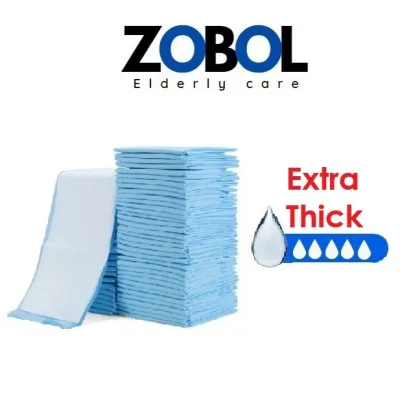

Prices are valid at publication and may change. Please refer to the product page for the latest price.
To get an accurate measurement, use a standard measuring tape to find the flat length and width of the main changing surface. If your changing table features a wooden frame, safety rails, or built-in storage rims, measure only the interior space where the baby actually lies. Do not include the outer wooden borders, as a flat pad cannot lay flat over these raised structural elements.
If you use a contoured changing pad on top of your table, measure the curves of the pad itself. Contoured pads have raised sides designed to keep the baby centered, which reduces the flat, usable width. Note down these maximum dimensions so you know the exact limit of what a flat disposable pad can cover without hanging over the edges or climbing up the sides of the barrier.
Understand Common Disposable Bed Pad Dimensions
Once you have your table’s measurements, you can begin evaluating the disposable bed pad options available on the market. Manufacturers use various size labels, such as small, medium, or large, but these terms are not standardized across different brands. A “medium” pad from one manufacturer might be significantly larger or smaller than a “medium” from another.

When reading the packaging, it is crucial to distinguish between the total pad size and the actual absorbent core area. The total pad size includes the outer plastic or waterproof border, which does not absorb liquid. The absorbent core is the quilted center section that actually holds moisture.
Always check the specific dimensions printed on the box, usually listed in centimeters or inches, rather than relying solely on generic category names. If the packaging does not clearly state the absorbent core dimensions, look for product specifications online or contact the manufacturer directly to verify the active coverage area before making a bulk purchase.
Match the Pad to Your Table for Full Coverage
With your measurements and the pad dimensions in hand, your goal is to find a pad that covers the entire flat area of the changing surface. Full coverage is the most effective way to prevent side leaks from reaching the underlying mattress or wooden table frame.
If you are using a contoured changing pad, you may need to adjust your expectations. Standard flat disposable pads do not perfectly hug deep curves, so you should aim to cover the flat center valley where the baby rests. Trying to force a flat pad to climb up steep, contoured sides often results in the pad lifting off the surface, creating air gaps and instability.
Avoid choosing pads that are excessively large for your table. Overhanging edges can easily catch on your clothing as you move around the table, which can pull the pad out of place while you are changing the baby. Excess material hanging off the sides can also collect dust, catch on nearby nursery drawers, or create a tripping hazard in tight spaces.
Ensure Secure Placement and Prevent Slipping
Keeping the disposable pad stable during active diaper changes is essential for both convenience and safety. Babies naturally wiggle, kick, and turn during changes, which can easily shift a loose pad out of position and expose the table underneath to messes.
To prevent this, look for disposable bed pads that feature a non-slip backing or integrated adhesive tabs. Non-slip backings use textured materials that grip the fabric or vinyl surface of your changing table pad. Adhesive tabs allow you to secure the corners directly to the table, keeping the pad flat and taut throughout the process.
Regardless of how secure the pad feels, never rely on it to keep your baby in place. Always use the changing table’s built-in safety strap over the baby during every diaper change. If you find that the surface material of your changing table causes the disposable pad to slide uncontrollably even with adhesive tabs, stop using that specific pad and consult the table manufacturer for recommended liner materials.
Common Sizing and Fit Mistakes to Avoid
One of the most frequent errors parents make is using a pad that is too small, leaving the table edges exposed to leaks. While a smaller pad might seem more economical, it often results in extra cleanup work when liquids run off the sides onto the unprotected changing table cover.
Conversely, using an oversized pad that bunches up creates its own set of problems. Bunched material forms ridges and uneven surfaces that can make your baby uncomfortable. Furthermore, folded or bunched plastic backing can cause liquid to pool in the creases instead of draining into the absorbent core, increasing the likelihood of spills.
Lastly, ignoring the changing table’s specific contour design when buying standard flat pads is a common pitfall. Always match the stiffness and shape of the disposable pad to the flexibility of your changing surface to ensure a flat, safe, and hygienic environment.
Frequently Asked Questions (FAQ)
Can I use standard adult disposable bed pads on a baby changing table?
While adult disposable bed pads are highly absorbent, they are generally much larger than standard baby changing tables. Using them often requires folding the pad multiple times, which creates bulky, uneven surfaces that can make diaper changes unstable. Additionally, you must verify the pad’s material safety for infant skin, as some adult products may contain fragrances, heavy adhesives, or chemical attractants not formulated for sensitive newborn skin.
Do I need a specially shaped pad for a contoured changing table?
You do not necessarily need a specially shaped pad, but standard flat pads must be positioned carefully on contoured surfaces. If you use a flat pad, ensure it lies smoothly in the center valley without bunching up under the baby’s back. If the flat pad is too wide, you can tuck the excess material safely under the sides of the changing pad, provided it does not lift the pad or create a loose, slippery surface. For deep contours, a specialized contoured liner may offer a more precise fit.
Community discussion
Share your experience or ask a question. Comments are reviewed before publication.