
Selecting the right baby basket size for a compact Singapore nursery is a balancing act between maximizing limited square footage and maintaining quick, stress-free access to daily essentials. In typical Housing & Development Board (HDB) flats or modern condominiums where nursery rooms are often cozy, every centimeter of floor and shelf space matters. Finding the ideal fit requires more than just guessing the dimensions on an online store listing; it demands a systematic approach to measuring your specific furniture, mapping out storage zones, and matching basket capacities to your baby’s daily needs. By choosing baskets that align with your room’s layout, you can prevent clutter from taking over and create a serene, functional environment.
To achieve an organized and highly functional nursery, you must look beyond the aesthetic appeal of a storage container and focus on its spatial efficiency. A basket that is even slightly too large can block a wardrobe door from opening fully, hang precariously off a shelf, or create a tripping hazard in a narrow walkway. Conversely, baskets that are too small can lead to wasted vertical space and fragmented storage, forcing you to rummage through multiple containers just to find a clean swaddle or a fresh pacifier. The key is to select sizes that integrate seamlessly into your existing furniture, utilize neglected areas like under-crib gaps, and adapt to the changing storage demands as your baby grows.
Assessing Your Nursery Space and Storage Needs
Successful organization in a compact Singapore nursery begins with a tape measure. Do not rely on visual estimates. Instead, take precise measurements of open shelving, changing table surfaces, wardrobe interiors, and the empty spaces beneath the crib. Always account for structural elements like baseboards, skirting boards, wall trim, and door swing arcs. A shelf that appears to be 40 centimeters deep might actually only accommodate a 37-centimeter basket if a protruding cabinet hinge or backing board reduces the usable interior depth.
Products mentioned in this guide
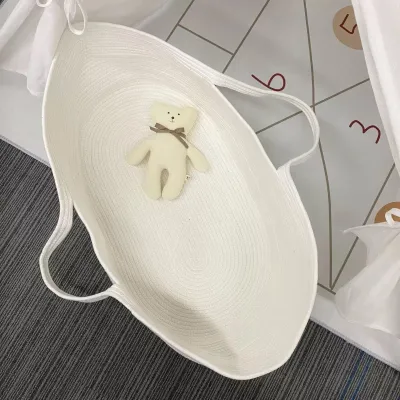
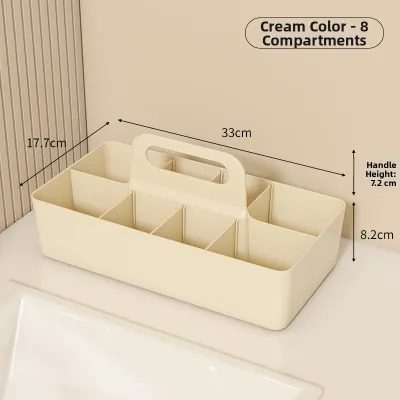
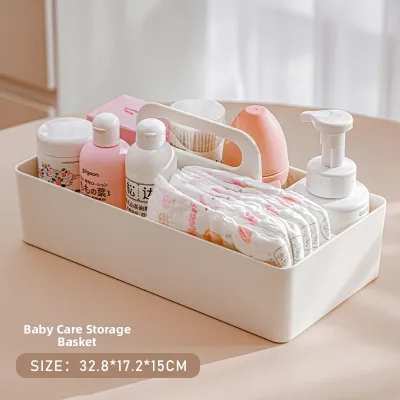
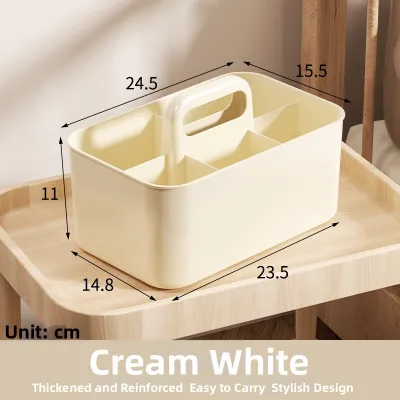
Prices are valid at publication and may change. Please refer to the product page for the latest price.
Once you have recorded your exact dimensions, categorize your baby’s items by physical volume and frequency of use:
- High-frequency, low-volume essentials: Items like diapers, wipes, and creams need to be immediately accessible. These are best suited for shallow, wide baskets that sit on the changing table or the most accessible shelf, allowing you to grab what you need with one hand while keeping your other hand safely on your baby.
- Medium-frequency, medium-volume items: Swaddles, sleep sacks, onesies, and blankets can be folded or rolled and stored in medium-sized, moderate-depth baskets inside wardrobes or on mid-level shelves.
- Low-frequency, high-volume items: Bulky bedding, seasonal clothing, next-size-up apparel, and extra packs of wipes can be tucked away in deeper, larger baskets. Place these on high closet shelves or in under-crib storage zones since you do not need to access them multiple times a day.
When organizing a small room, you will face the trade-off between using one large basket or multiple smaller ones. In a tight HDB bedroom, a single massive toy chest or laundry hamper can quickly become an obstructive obstacle. Opting for multiple smaller, modular baskets offers far greater flexibility. They allow you to categorize items more granularly, making it easier to maintain order. They can also be redistributed across different zones—such as placing two small baskets side-by-side on a narrow shelf, or stacking them if they have sturdy lids—thereby maximizing vertical space without consuming floor area.
Matching Basket Dimensions to Common Nursery Zones
Under-Crib and Changing Table Storage
The space underneath a baby’s crib and the lower shelves of a changing table are prime real estate for storage, yet they are frequently underutilized. To reclaim this space, measure the exact clearance height from the floor to the lowest rail of the crib frame, as well as the depth between the legs. Keep in mind that some cribs have adjustable mattress heights; a basket that fits perfectly when the mattress is at its highest newborn setting may become trapped once you lower the mattress platform for an older, more active baby. Always measure based on the lowest possible mattress setting to ensure long-term compatibility.

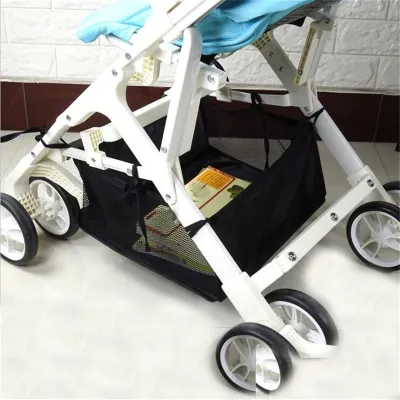
For these low-profile areas, select wide, shallow baskets with a height that is at least two to three centimeters shorter than the clearance space. This gap prevents the basket from scraping against the underside of the furniture when you slide it out. Low-profile baskets with a wide footprint are ideal for storing flat or stackable items, such as extra mattress protectors, bedsheets, unopened diaper packs, or flat-packed toys. If your nursery has hard flooring like vinyl, laminate, or parquet, look for baskets with smooth bases or add small felt pads to the bottom to prevent scratches and ensure a quiet, effortless glide when retrieving items.
Shelf, Drawer, and Wardrobe Organizers
Standard shelving units and built-in wardrobes are excellent for vertical storage, but without proper organization, they easily become jumbled piles. When choosing baskets to act as shelf inserts or drawer organizers, leave a small margin of clearance on all sides. A basket that fits too tightly against the walls of a shelf will be difficult to pull out, potentially scraping the furniture’s finish. Aim for a clearance of at least one to two centimeters on the sides, and two to three centimeters of clearance at the top to allow your hand to comfortably grip the rim or handle.
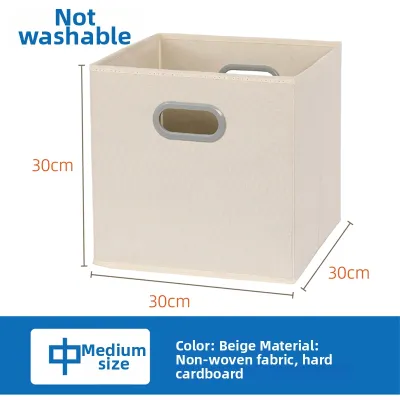
To maximize every square centimeter of a shelf, uniform rectangular or square baskets are vastly superior to round or oval designs. Rectangular baskets align flush against the back and sides of the shelving unit, eliminating the wasted “dead space” that naturally occurs in the corners when using round containers. If you are organizing a deep wardrobe drawer, using a series of small, shallow, rectangular fabric baskets can divide the drawer into dedicated compartments for socks, mittens, bibs, and hats. This modular approach keeps these tiny items perfectly organized and prevents them from sliding to the back of the drawer.
Floor-Level Baskets for Toys and Laundry
Floor-level storage is necessary for larger, bulkier items like laundry and toys, but in a small nursery, these baskets must not encroach on walkways or block the door’s path. When selecting a laundry hamper, prioritize a tall, narrow silhouette over a short, wide one. A tall, cylindrical or rectangular hamper occupies a minimal floor footprint while utilizing vertical space to hold several days’ worth of baby clothes. Place the hamper in a corner or in the gap between the wardrobe and the wall, ensuring it sits flush and does not obstruct movement.
For toy storage, the requirements are slightly different. While laundry can be stuffed into a tall, narrow container, toys are much easier for a growing child to access if they are stored in a wider, medium-depth basket. To keep this from cluttering the room, choose a semi-rigid or soft woven basket that can sit flush against a wall or tuck neatly into a corner behind the nursery door. Ensure the basket is not so deep that a toddler cannot safely reach the toys at the bottom. By keeping toy baskets at a manageable height, you encourage independent play and make it easier to teach your child to tidy up.
Material and Design Features That Maximize Compact Spaces
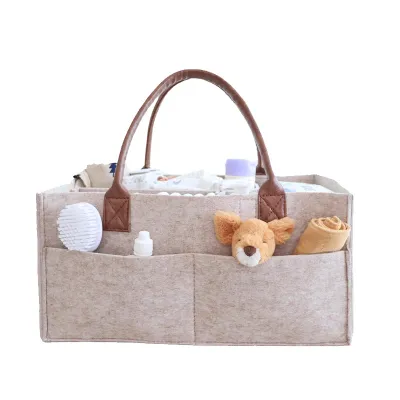
The materials and physical construction of baby baskets play a significant role in how well they function within a compact layout. Soft-sided, collapsible fabric baskets—often made from canvas, cotton rope, or felt—are exceptionally well-suited for tight nurseries. These baskets possess a natural flexibility, allowing them to gently compress into slightly irregular spaces, such as a wardrobe shelf that is just a millimeter too narrow. Furthermore, when empty, they can be folded flat and tucked away in a drawer, freeing up valuable space. This flexibility is a major advantage over rigid plastic or wooden crates, which require the same physical space whether full or empty.
However, rigid baskets made from woven plastic, wood, or structured wicker maintain their shape perfectly, which is essential if you plan to stack them or use them for heavier items like books, wooden toys, or bottles of lotion. If you choose rigid baskets, you must be incredibly precise with measurements, as there is no room for error. When choosing woven natural materials like wicker or rattan, always verify that the interior is fully lined with a soft fabric or that the weave is completely smooth. Rough, unshielded natural fibers can snag delicate baby clothing, scratch expensive wooden furniture, or irritate a baby’s sensitive skin.
Another critical design element to evaluate is the style of the handles. While loop handles made of thick rope or protruding plastic look charming, they add several centimeters of unnecessary width to the basket’s overall footprint. In a tight shelf or wardrobe, these protruding handles can prevent you from placing baskets side-by-side or get caught on the door frame. For compact spaces, opt for baskets with recessed handles, integrated side cutouts, or flat fabric tabs that lie flush against the basket’s body. These streamlined handle designs allow the baskets to sit perfectly flush against walls, cabinet doors, and adjacent containers, maximizing every millimeter of available storage space.
Common Sizing Mistakes to Avoid in Small Nurseries
A frequent error is failing to account for the physical mechanics of furniture. While a wardrobe shelf might measure 40 centimeters wide, protruding hinges or overlapping sliding doors can reduce the actual opening width. If a basket matches the exact interior width, you may not be able to slide it out. Always measure the clear opening space—the gap available when doors are fully open—rather than the static interior width.
Additionally, account for baseboards and skirting boards. These features prevent shelving units or floor baskets from sitting completely flush against the wall. If a shelf unit is pushed out by a two-centimeter skirting board, the actual depth available for your baskets is reduced, or the unit may protrude into a walkway. Always measure from the outermost point of any obstacle to ensure a safe, unobstructed fit.
Another pitfall is purchasing baskets that are too deep for high shelving units. When a basket is positioned above eye level, a deep design makes it impossible to see what is inside without pulling the container down. Retrieving a heavy basket from a high shelf while holding a baby is a safety hazard. For high shelves, stick to shallow baskets or clear, labeled containers that allow you to easily identify contents from below.
Finally, never assume that terms like “standard,” “medium,” or “large” are consistent across brands. Ignore these generic labels and focus entirely on the precise, numerical dimensions listed in the product specifications. Distinguish between external dimensions (which include handles, trim, and material thickness) and internal capacity. Thick woven baskets, for example, can have walls up to two centimeters thick, which significantly reduces the actual usable storage space compared to thin fabric alternatives.
Frequently Asked Questions (FAQ)
How much extra space should I leave when measuring a shelf for a baby basket?
Aim for a clearance margin of at least one to two centimeters on each side of the basket, and two to three centimeters at the top. This space lets you slide your hand in to grip the basket without scraping your knuckles or damaging the shelf. Always refer to guidelines from both your furniture and basket manufacturers to ensure a safe, stable fit, especially on high shelves.
Can I use hanging organizers instead of baskets to save floor space?
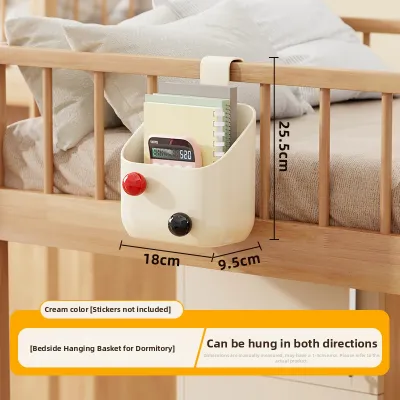
Yes, hanging organizers (like over-the-door pockets or crib-side organizers) are excellent space-saving alternatives. They are ideal for lightweight, frequently used items like diapers and wipes, keeping them within arm’s reach. Before installation, verify the manufacturer’s product specifications, weight limits, and safety warnings to ensure the organizer is mounted securely and poses no hazard.
Community discussion
Share your experience or ask a question. Comments are reviewed before publication.