
Selecting the right Pigeon toothbrush for your baby depends directly on their current age, physical development, and teething milestones. Rather than relying on a single brush for the entire infancy period, parents should transition through different brush designs as their baby’s mouth grows and their motor skills develop. By matching the brush’s physical characteristics—such as bristle texture, handle shape, and safety features—to your child’s specific stage, you can establish a safe, comfortable, and effective oral hygiene routine from the very beginning. This proactive approach not only protects newly erupted teeth but also helps your child build positive associations with daily oral care.
Understanding Your Baby's Oral Development Stages
The journey of infant oral care begins long before the first white speck of a tooth breaks through the gums. In the early months of life, a baby’s mouth undergoes rapid physiological changes. Parents often notice the first signs of early teething around three to six months of age. These signs typically include excessive drooling, a constant urge to chew on fingers or toys, and general irritability. During this pre-eruption phase, the primary objective is not mechanical cleaning, but rather soothing the sensitive gum tissue and introducing the infant to the sensation of having oral care tools in their mouth. This early sensory introduction is crucial for desensitizing the gag reflex and preparing the baby for future brushing routines.
As the first primary teeth—usually the lower central incisors—begin to erupt, the oral care strategy must transition. Newly emerged teeth have delicate, thin enamel that is highly susceptible to decay, and the surrounding gum tissue remains tender and easily irritated. At this stage, the cleaning tool must be gentle enough to avoid causing pain to the sensitive gums, yet effective enough to wipe away milk sugars and plaque biofilm from the surface of the new teeth. Because an infant’s oral cavity is extremely small, any brush used must have a very low profile to ensure it can navigate the tight spaces without causing discomfort or accidental gagging.
Products mentioned in this guide
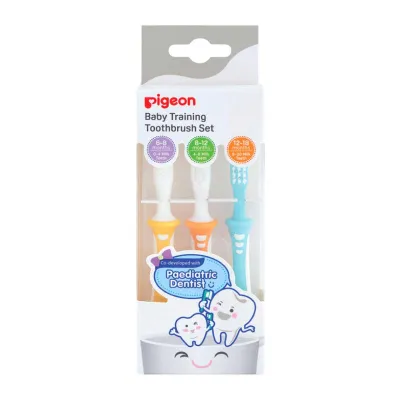
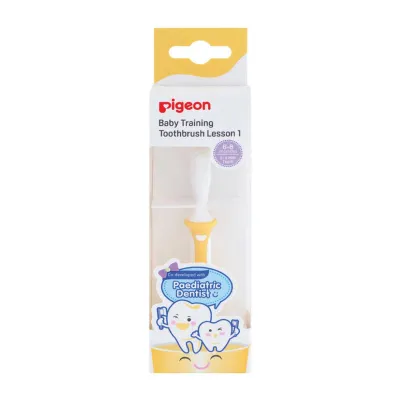
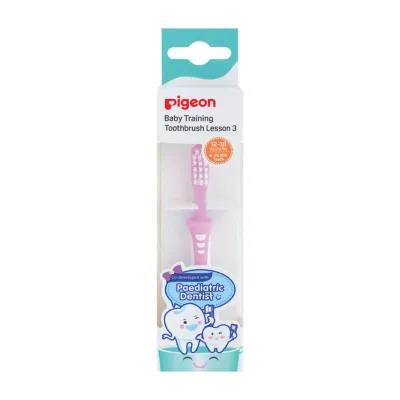
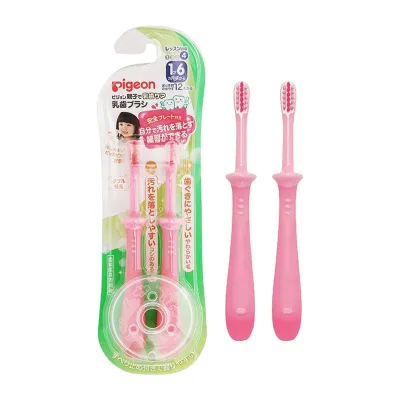
Prices are valid at publication and may change. Please refer to the product page for the latest price.
In parallel with dental eruption, a baby’s motor skills and grip capabilities develop in distinct stages. Around six to nine months, infants transition from a primitive palmar grasp, where they hold objects with their entire fist, to a more refined pincer grasp. They also begin to develop the hand-eye coordination required to guide objects toward their mouth intentionally. Recognizing these motor milestones is essential when selecting a toothbrush. A baby who is just beginning to grasp objects requires a completely different handle design and level of parental assistance compared to an older toddler who is eager to mimic their parents’ brushing movements and practice independent cleaning.
Key Features to Check on Pigeon Toothbrush Packaging
When shopping for oral care products in Singapore, carefully examining the specifications on the packaging is the most reliable way to ensure you select a safe and age-appropriate tool. The first and most critical feature to verify is the bristle type and softness. For infants and young toddlers, the packaging should explicitly state that the bristles are ultra-soft, micro-fine, or made of gentle elastomer materials. Standard nylon bristles, even those labeled as soft for adults, are far too abrasive for an infant’s delicate oral tissues. The brush head must also be highly compact, featuring a rounded shape with no sharp edges to prevent accidental scraping of the inner cheeks or gums.

Handle design is another key feature that varies significantly across the product range to match different stages of parental involvement. For the earliest stages, look for handles designed for cooperative brushing. Some models feature wide, ring-shaped handles that allow parents to maintain a secure grip while guiding the brush, while also allowing the baby to hold on and feel involved. As the child grows and transitions toward independent brushing, the handle design should shift to a straight or slightly angled shape with non-slip rubber grips. This ergonomic design fits comfortably into a toddler’s small palm, helping them learn the proper angles for brushing without the tool slipping from their grasp.
Safety features are paramount, particularly when babies begin holding the brush themselves. Always check the packaging for the inclusion of a dedicated choke guard or safety shield. This is a wide, circular shield that attaches securely to the neck of the toothbrush, acting as a physical barrier. It prevents the brush from being pushed too far back into the baby’s throat if they slip, fall, or overreach while practicing. A reliable safety shield should lock firmly into place and be made of durable, BPA-free materials that can withstand regular cleaning and inspection.
Finally, use the age and developmental recommendations printed on the packaging as your primary reference point. Manufacturers design these age brackets based on average oral dimensions and developmental capabilities. However, because children develop at different rates, you should always cross-reference these age labels with your baby’s actual physical milestones. If the packaging indicates a brush is for babies aged twelve months and older, but your ten-month-old already has a full set of front teeth and excellent grip strength, you may find that transitioning to the next stage slightly early is appropriate, provided all safety precautions are maintained.
Matching Toothbrush Types to Teething Milestones
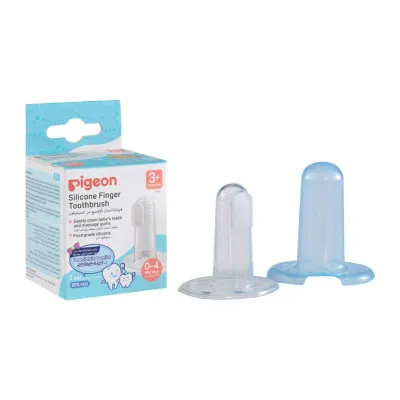
To simplify the selection process, parents can align general toothbrush categories with specific teething milestones. During the pre-teething and early eruption phase, when gums are swollen but no teeth have fully emerged, the focus should be on gentle stimulation and habit formation. Silicone finger brushes or soft gum massagers are the ideal choice for this stage. These tools fit snugly over a parent’s finger, allowing for precise control and a highly gentle touch. By softly massaging the gums, parents can alleviate teething discomfort while clearing away milk residue and familiarizing the baby with a daily oral hygiene routine.
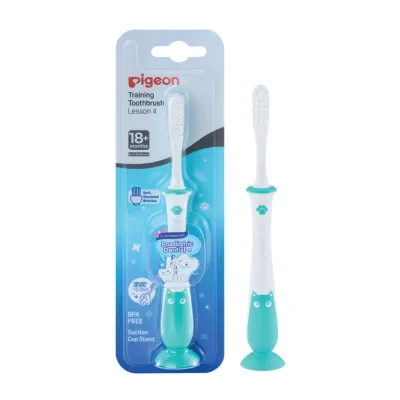
Once the first teeth erupt, typically between six and twelve months, it is time to transition to a training toothbrush. This stage requires a brush that can clean the newly emerged enamel while remaining exceptionally gentle on the surrounding gums. Training brushes designed for this phase often feature soft elastomer bristles that wipe away plaque without scratching the delicate enamel. These brushes are specifically engineered to accommodate a safety shield, ensuring that as your baby begins to explore the brush and practice holding it, there is no risk of deep throat insertion. The focus during this milestone is on guided practice and building confidence.
As your child enters the toddler stage, usually around twelve to eighteen months, and begins to cut their primary molars, their oral care needs change significantly. This milestone requires a transition to a brush with actual nylon bristles, which must still be rated as ultra-soft. The brush head at this stage is slightly larger to cover the increased surface area of the new teeth, but it must remain compact enough to reach the very back of the mouth. The handle should feature an ergonomic, non-slip grip designed for a toddler’s hand, encouraging them to practice independent brushing motions under close parental supervision.
Regardless of the general milestones, always cross-reference the specific product’s official age and developmental guidelines rather than relying solely on generic age charts. If your baby is a late teether and does not get their first tooth until twelve months, they may still require the ultra-soft elastomer bristles and safety features of an early-stage training brush, despite their chronological age. Conversely, an early teether may need to transition to a more advanced brush sooner. Always prioritize your baby’s actual physical development, oral sensitivity, and motor skills over the age number printed on the box.
Safe Brushing Practices and Maintenance
Selecting the right toothbrush is only the first step; maintaining safe brushing practices is equally vital for your baby’s health and safety. Continuous, active adult supervision is mandatory during every single brushing session. Infants and young toddlers do not possess the coordination or judgment to use a toothbrush safely on their own. A sudden fall, trip, or sharp movement while holding a toothbrush can lead to severe oral or throat injuries. Brushing should always be treated as a cooperative activity where the parent either performs the cleaning or closely monitors and assists the child throughout the process.
Before each use, parents must thoroughly inspect the toothbrush for any signs of wear, damage, or contamination. Examine the bristles or silicone parts closely to ensure they are intact and firmly attached to the head. If you are using a brush with a removable safety shield, verify that the shield is securely locked in place and shows no signs of cracking or structural weakness. Additionally, inspect the base of the bristles and any joints in the handle for discoloration, debris, or mold growth. Because toothbrushes are frequently exposed to moisture, they can easily become breeding grounds for bacteria if not properly maintained.
Knowing when to replace your baby’s toothbrush is critical for maintaining oral hygiene and safety. While standard dental guidelines recommend replacing a toothbrush every three months, baby toothbrushes often require more frequent replacement. If your baby tends to chew on the brush, the bristles can quickly become splayed, bent, or torn. Splayed bristles are highly ineffective at removing plaque and can scratch sensitive gum tissue. You should replace the toothbrush immediately if you notice any physical damage, if the bristles begin to fall out, or after your child recovers from an illness to prevent the reintroduction of bacteria.
Proper cleaning, sterilization, and drying are essential to keep the toothbrush hygienic. After each use, rinse the brush thoroughly under warm running water, using your thumb to gently massage the bristles to ensure all toothpaste and food particles are washed away. Shake off any excess water and store the toothbrush upright in an open holder where it can air-dry completely. Avoid storing the brush in closed containers, damp drawers, or near the toilet, as these environments promote bacterial growth. Always consult the manufacturer’s instructions on the packaging to determine if the specific materials can safely withstand boiling water, steam sterilization, or microwave sanitizing, as excessive heat can warp certain plastics and loosen bristles.
Frequently Asked Questions (FAQ)
Can I use a regular toddler toothbrush for a baby who just got their first tooth?
No, you should not use a regular toddler toothbrush for a baby who has just cut their first tooth. Toddler toothbrushes are designed for older children who have more teeth and larger oral cavities. They often feature larger brush heads and firmer bristles that can easily bruise or irritate a baby’s highly sensitive gums and delicate new enamel. Additionally, toddler toothbrushes typically lack the safety shields or choke guards found on infant training brushes, which are essential for preventing accidental deep throat insertion during this early developmental stage.
How much toothpaste should I use with a Pigeon training toothbrush?
When introducing toothpaste, always consult your pediatric dentist or check the specific toothpaste manufacturer’s guidelines. For babies and toddlers under three years of age, dental professionals generally recommend using a tiny smear of toothpaste, often described as the size of a single grain of rice. This minimal amount ensures that even if your baby is unable to spit out the toothpaste and ends up swallowing it, they will not ingest an excessive or unsafe amount of fluoride or other active ingredients.
What should I do if my baby chews on the toothbrush and damages the bristles?
If your baby chews on their toothbrush and damages the bristles or silicone parts, you must replace the toothbrush immediately. Damaged, torn, or loose bristles lose their ability to clean teeth effectively and can easily break off in the mouth, posing a serious choking hazard. Chewing is a natural response to teething discomfort; if your baby constantly bites down on their brush, try offering them a dedicated teething toy to soothe their gums before you begin the actual brushing routine.
Community discussion
Share your experience or ask a question. Comments are reviewed before publication.