
When your baby transitions to solid foods, selecting the right tableware becomes a daily priority. A high-quality metal plate kids can use safely offers a durable, hygienic, and plastic-free alternative to traditional baby dishes. To choose the right metal weaning plate, you must match the plate’s physical design—such as its depth, compartments, and suction capabilities—to your baby’s specific motor skills and feeding stage.
While stainless steel is exceptionally long-lasting, it is a tool to support your feeding strategy rather than a magic solution to make a baby eat. Understanding how your child interacts with food at six, nine, or twelve months will help you select a plate that minimizes mess and encourages independent eating.
Step 1: Match the Metal Plate Kids Design to Your Baby's Developmental Stage
Your baby’s motor skills develop rapidly during the first year of life, transforming how they interact with food. A plate that works beautifully for a toddler can cause immense frustration for a six-month-old beginner. By aligning the plate’s structural features with your child’s physical milestones, you create a supportive environment for self-feeding.
Products mentioned in this guide
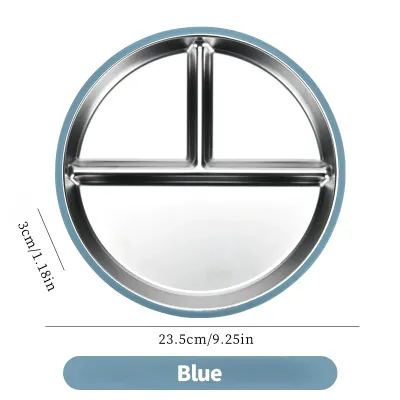
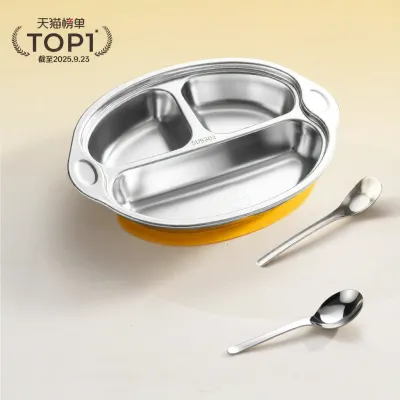
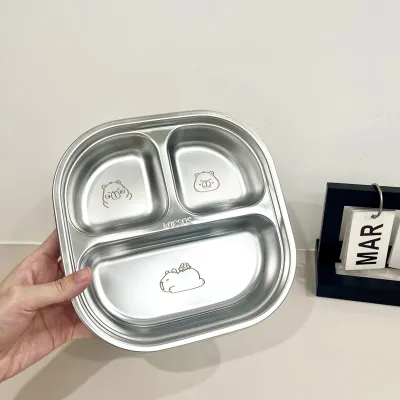
![[SG InStock]304 Stainless Steel Plate Kids Dinner Palte Compartments Tray Divided Dinner Plate](https://img.lazcdn.com/g/p/68e8cd2d5b1cdad3a7408ca8a62b005f.jpg_400x400q80.jpg_.webp)
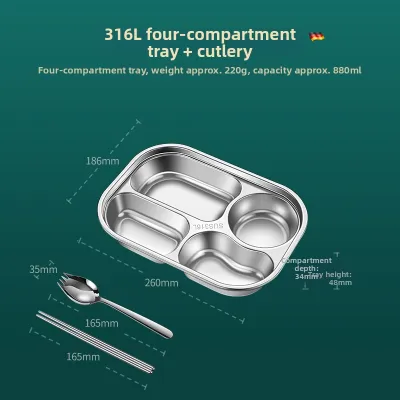
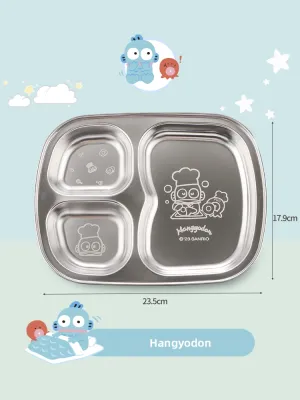
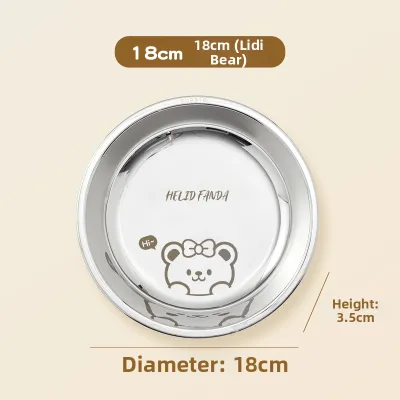
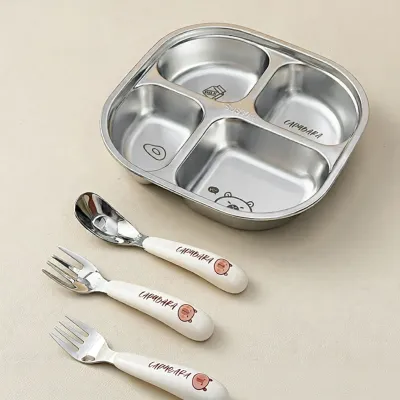
Prices are valid at publication and may change. Please refer to the product page for the latest price.
Early Weaning (Around 6 Months): First Tastes and Purees
At the start of the weaning journey, usually around six months, babies are transitioning from a liquid diet to smooth purees, thick mashes, or soft starter foods. During this stage, their hand-eye coordination is still developing, and they primarily use a palmar grasp to bring objects to their mouth. Flat plates are highly impractical at this point because purees and soft foods easily slide off the edges when a baby attempts to scoop them.
If you are starting with soft foods, look for metal dishes with deep, curved compartments or high-sided metal bowls rather than flat plates. These raised walls give your baby a physical barrier to push food against, making it easier to load their spoon or fingers. Additionally, a strong suction base is absolutely essential during this phase. Young babies have uncoordinated arm movements and will easily swipe a loose plate off their highchair tray, turning mealtime into a cleaning chore.
Finger Food Stage (8–12 Months): Grasping and Exploration
Between eight and twelve months, babies typically develop the pincer grasp, allowing them to pick up smaller pieces of food between their thumb and forefinger. This is the classic baby-led weaning (BLW) phase where exploration of textures, shapes, and colors is paramount. Babies at this stage are highly curious and will actively touch, squeeze, and separate their food.
For this developmental milestone, divided metal plates—often referred to as bento-style plates—are highly beneficial. These compartments allow you to serve different food groups, such as soft steamed broccoli florets, sliced fruits, and grains, without them mixing together. Many babies go through phases where they dislike different textures touching, and divided plates help keep meals visually distinct and approachable. Ensure the plate features a wide, stable base or a secure silicone suction ring. At this age, babies will test boundaries by grabbing, pulling, and applying lateral force to the plate, so the suction must be strong enough to withstand determined tugs.
Toddler Stage (12+ Months): Independent Eating
By the time your child reaches twelve months and enters toddlerhood, their fine motor skills are significantly more refined. They are learning to navigate utensils like toddler-safe spoons and forks, and they have a better understanding of mealtime boundaries. Their movements are more deliberate, and the urge to deliberately throw tableware decreases, though occasional spills still happen.
At this stage, you can gradually transition away from heavy suction bases to standard, non-slip metal plates. Toddlers benefit from plates with larger capacities to accommodate their growing appetites and more varied meals. Look for plates with gently sloped edges that assist with utensil training, allowing your toddler to scoop up grains or small pieces of protein independently. Choosing a durable metal plate at this stage ensures a smooth transition to family meals, as these plates can easily sit directly on your dining table.
Step 2: Evaluate Safety and Functional Features
Not all metal plates are created equal, and when it comes to products used for feeding your child, material safety and functional design are non-negotiable. Before purchasing any metal weaning plate, you should run through a strict checklist of physical and material attributes to ensure the product is safe, durable, and compatible with your home setup.

Material Grade and Safety Labels
The first and most critical step is verifying the grade of the metal. Always check the product packaging, labels, or the manufacturer’s official website to confirm that the plate is made from food-grade stainless steel, specifically 304 or 316 grade (often labeled as 18/8 or 18/10 stainless steel). These grades are highly resistant to corrosion, do not leach chemicals, and do not retain food odors or stains.
Avoid cheap, unbranded, or unmarked metal alloys, as they may contain trace amounts of heavy metals or rust quickly after a few washes. Do not rely solely on online marketing buzzwords like “baby-safe metal” without verifying the actual material specifications. If a manufacturer does not explicitly state the grade of stainless steel on their packaging or official documentation, it is best to choose a different product.
Suction Bases and Stability
A metal plate is only as good as its ability to stay on the table. When evaluating suction capabilities, look at how the suction mechanism is integrated. Some plates feature a built-in silicone base that is permanently attached to the metal, while others utilize a removable silicone suction ring that stretches around the bottom of the plate.
Removable suction rings are highly versatile because they allow you to convert the dish into a standard plate as your child grows, and they are easier to clean thoroughly. However, you must verify that the suction base is compatible with your specific highchair tray material. Silicone suction works best on completely smooth, non-porous surfaces like plastic or polished glass. If your highchair tray has a textured plastic surface or is made of matte wood, even the strongest suction base may struggle to maintain a vacuum seal.
Compartment Depth and Edge Design
Take a close look at the physical construction of the plate’s compartments and edges. The inner walls of each compartment should have a smooth, rolled, or gently curved design. This curvature is not just for aesthetics; it plays a functional role in helping your baby scoop up food. Sharp, 90-degree angles make it incredibly difficult for tiny hands or spoons to retrieve food from the corners, leading to frustration and wasted meals.
Furthermore, inspect the plate for any sharp seams, rough welding, or poorly finished dividers. High-quality metal plates are typically pressed from a single sheet of stainless steel to ensure a seamless, smooth finish. Any rough edges or crevices can trap food particles, moisture, and bacteria, making them incredibly difficult to sanitize properly and posing a hygiene risk over time.
Step 3: Avoid Common Safety and Usage Mistakes
While stainless steel is incredibly durable and virtually shatterproof, using metal tableware for babies requires a few specific safety precautions. Because metal behaves differently than plastic, silicone, or bamboo, caregivers must be aware of its unique physical properties to prevent accidents.
- Microwave Warning: You must never place a metal plate in a microwave. Attempting to microwave a metal plate can cause electrical arcing, spark fires, and permanently damage your appliance. If you need to warm up your baby's food, always heat it in a microwave-safe glass or ceramic container first, stir it thoroughly to eliminate hot spots, and then transfer the warm food onto the metal plate before serving.
- Heat Conductivity: Stainless steel is an excellent conductor of heat. If you place piping hot food directly onto a metal plate, the plate itself will quickly absorb that heat, making the edges and bottom extremely hot to the touch. Always test the temperature of both the food and the plate's outer edges with your own hand before placing it in front of your baby to prevent accidental burns.
- Suction Failure: A suction base is not infallible. For a suction cup to work, the contact surface must be completely clean, dry, and free of grease or food crumbs. Even a tiny speck of dust can break the vacuum seal, allowing your baby to lift and toss the plate. If you notice the silicone base has warped, cracked, or lost its elasticity over time, stop using it and replace the suction component immediately.
- Dishwasher Limitations: While the stainless steel portion of the plate is typically dishwasher-safe, the removable silicone suction rings or bases may not be. High dishwasher temperatures and harsh detergents can degrade silicone over time, causing it to stretch, warp, or lose its suction power. Always refer to the manufacturer's care instructions; in many cases, hand-washing the silicone parts is recommended to prolong their lifespan.
Step 4: Clean, Maintain, and Inspect the Plate
Proper maintenance ensures your metal weaning plate remains hygienic and lasts through multiple childhood stages. In Singapore’s warm and humid climate, prompt cleaning and thorough drying are essential to prevent water spots and maintain optimal hygiene.
- Daily Cleaning: After every meal, wash the metal plate with warm, soapy water using a soft sponge. Avoid using abrasive scrubbing pads, steel wool, or harsh chemical cleaners, as these can scratch the polished surface of the stainless steel. While minor scratches are normal over time, deep scratches can create microscopic crevices where bacteria and food residue can hide.
- Stain and Odor Removal: Although stainless steel is highly resistant to stains, certain vibrant foods like tomato sauce, turmeric, or beetroot can sometimes leave a faint residue, especially on the silicone parts. To remove stubborn stains or lingering odors, mix a tablespoon of baking soda with a small amount of water to form a thick paste. Gently rub this paste onto the affected areas with a soft cloth, let it sit for ten minutes, and then rinse thoroughly with warm water.
- Routine Inspection: Make it a habit to inspect your baby's tableware regularly. Check the metal for any signs of pitting, deep scratches, or unusual discoloration. Examine the silicone suction base for tears, mold growth in hidden crevices, or loss of flexibility. If the metal integrity is compromised or the suction base is permanently damaged, discard or repurpose the plate to ensure your baby's safety.
Frequently Asked Questions (FAQ)
Are metal plates safe for babies who throw their dishes?
Yes, metal plates are highly durable and will not shatter, crack, or chip like glass, ceramic, or cheap plastics when dropped or thrown. However, because stainless steel is heavier than plastic, a thrown metal plate can still cause minor injuries if it hits someone, or it can damage your flooring. To minimize throwing, always secure your baby in their highchair, use a plate with a strong, verified suction base, and closely supervise them during meals so you can intervene before they attempt to toss their dish.
Can I use a regular adult stainless steel plate for my toddler?
While food-grade adult stainless steel plates are perfectly safe in terms of material composition, they are generally not ideal for toddlers who are still learning to eat independently. Adult plates typically lack non-slip bases, divided compartments, and the high, curved walls that help young children scoop up food. A specialized kids’ metal plate provides the functional design elements necessary to support your child’s developing motor skills. However, if you are in a pinch, a small, shallow adult stainless steel bowl can serve as a temporary alternative under close supervision.
Community discussion
Share your experience or ask a question. Comments are reviewed before publication.