
Choosing the right kids spoon is a foundational step in your child’s weaning journey. It directly impacts their ability to swallow safely, manage different food textures, and build the fine motor skills required for independent eating. Many parents select baby utensils based solely on aesthetic appeal or brand popularity, but matching the physical dimensions of a spoon to your child’s developmental stage is crucial for a smooth transition to solid foods.
Using an incorrectly sized spoon can lead to mealtime frustration, excessive spilling, or a hyperactive gag reflex. By understanding how oral anatomy and motor skills evolve during the first two years of life, you can select utensils that support, rather than hinder, your child’s progress. This guide outlines the specific spoon sizes, shapes, and handle designs recommended for each stage of the weaning process, helping you make informed decisions for your growing baby.
Quick Guide: Matching Spoon Design to Your Baby's Stage
To help you quickly identify the appropriate spoon category for your child’s current developmental phase, the table below maps the three primary weaning stages to their corresponding spoon specifications. Keep in mind that while age ranges are helpful guidelines, your child’s actual physical readiness and motor skills should always dictate when you transition to a different utensil design.
Products mentioned in this guide
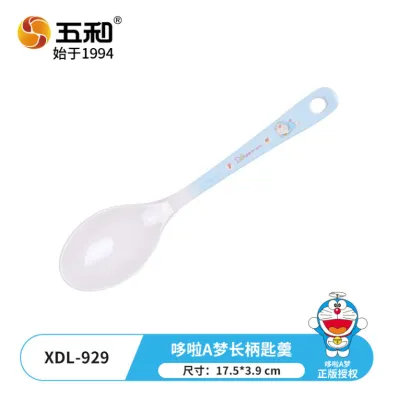
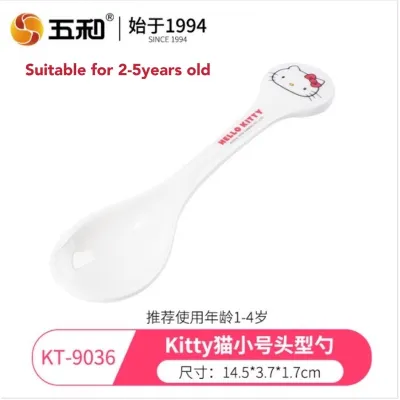
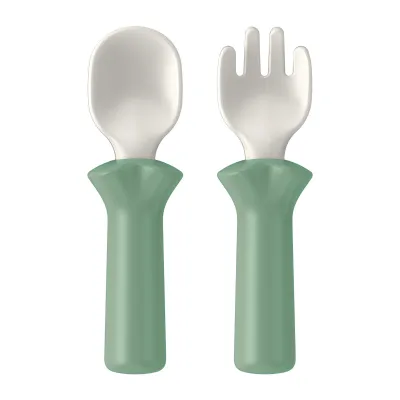
Prices are valid at publication and may change. Please refer to the product page for the latest price.
| Developmental Stage | Typical Age Range | Recommended Spoon Length | Bowl Depth & Width | Handle Characteristics | Primary Feeding Method |
|---|---|---|---|---|---|
| Stage 1: First Tastes | 4 to 6 months | Long (15 to 17 cm) | Very shallow, narrow | Slim, straight, easy for adults to grip | Parent-led feeding of smooth purees |
| Stage 2: Early Self-Feeding | 6 to 9 months | Short (8 to 10 cm) | Slightly deeper, wider | Thick, textured, contoured, easy for small hands | Self-feeding of thick purees and mashed solids |
| Stage 3: Toddler Independence | 9 to 18+ months | Medium (11 to 13 cm) | Deep, wide, shovel-like | Ergonomic, weighted, non-slip grip | Independent eating of family meals and solids |
Every infant develops physical coordination at their own unique pace. If your baby is struggling to clear food from a spoon or shows signs of frustration during meals, observe their feeding cues closely. Adjusting the utensil size or shape can often resolve these early feeding challenges immediately.
Why Spoon Dimensions and Handle Design Matter for Weaning
A baby’s oral cavity undergoes rapid anatomical changes during their first year. In early infancy, the palate is relatively flat, the tongue fills most of the mouth, and the gag reflex is triggered much closer to the front of the tongue than it is in adults. Introducing a kids spoon with a bowl that is too deep or too wide can easily overload the mouth, cause gagging, or make it difficult for the baby to close their lips around the utensil to clear the food.

Motor skill progression also dictates the ideal handle design. When babies first attempt to hold utensils, they lack the wrist rotation and finger strength required for a mature grip. They initially rely on a primitive “palmar grasp,” using their entire fist to hold the spoon. Short, chunky handles are essential during this phase because they fit securely inside a small palm and prevent the baby from shoving the spoon too far into their mouth, which is a common hazard with long-handled design variations.
Using the wrong spoon size can also introduce safety risks. A spoon that is too long or has a rigid, unyielding tip can poke the sensitive tissues at the back of the throat, causing pain and a subsequent aversion to feeding. Conversely, using a spoon that is too small for an older toddler can cause frustration, as they will struggle to scoop up adequate portions of solid family foods, leading to messy meals and prolonged feeding times.
Stage 1 Spoons: First Tastes and Parent-Led Feeding (4 to 6 Months)
When introducing your baby to their very first purees, the feeding process is entirely parent-led. Because you are maintaining full control of the utensil, the design of a Stage 1 spoon is optimized for adult ergonomics and the unique physical characteristics of a beginner eater.
- Recommended Type: Long-handled, exceptionally shallow, and narrow silicone spoons.
- Why it works: The long handle—typically measuring between 15 and 17 centimeters—is designed to help parents easily reach into the bottoms of deep baby food jars or storage containers without getting food on their fingers. It also gives the adult precise control over the angle of entry into the baby's mouth. The shallow, almost flat bowl ensures that only a tiny, manageable amount of puree is offered at one time, allowing the infant to easily clear the food using their upper lip.
- What to look for: Look for ultra-soft, flexible silicone tips that are gentle on emerging teeth and highly sensitive gums. The handle should feature a non-slip, comfortable grip designed for adult hands. Avoid rigid plastics or metals at this stage, as they do not offer the necessary flexibility for a baby who is still learning how to coordinate swallowing.
- Safety Note: Always check the manufacturer's label to see if the spoon features heat-sensitive color-changing technology. However, never rely solely on these indicators to determine food safety. Always test the temperature of any puree or porridge on the inside of your own wrist before feeding it to your baby. If your child struggles with swallowing, gags excessively, or shows persistent distress during feeding sessions, stop using the utensil and consult a pediatrician or a pediatric feeding specialist.
Stage 2 Spoons: Early Self-Feeding and Textures (6 to 9 Months)
Around six to nine months, babies typically show a strong desire to grab the spoon and guide it to their own mouths. This stage marks the transition from smooth purees to thicker, mashed foods and soft textures, requiring a fundamental shift in utensil design.
- Recommended Type: Shorter, thicker handles with a slightly deeper and wider spoon bowl.
- Why it works: Short handles (around 8 to 10 centimeters) are much easier for a baby to maneuver using a palmar grasp. The reduced length significantly decreases the leverage of the spoon, lowering the risk of the baby accidentally poking the back of their throat. A slightly deeper and wider bowl is necessary to hold thicker mashed vegetables, oatmeal, and soft proteins, preventing the food from sliding off before it reaches the mouth.
- What to look for: Seek out textured or contoured handles that provide friction, preventing the spoon from slipping out of messy, food-covered hands. Some innovative Stage 2 spoons feature angled or curved necks that assist babies who have not yet mastered wrist rotation, allowing them to successfully scoop food and guide it to their mouths with a straight-arm movement.
- Durability Check: Because teething typically peaks during this stage, babies will naturally use their self-feeding spoons as teething toys to soothe sore gums. It is critical to select highly durable, tear-resistant silicone or high-quality, food-grade plastics. Always inspect the spoon thoroughly before each meal, checking for deep bite marks, tears, or peeling material that could pose a choking hazard.
Stage 3 Spoons: Toddler Independence and Solid Foods (9 to 18 Months+)
As your toddler transitions to eating solid family foods such as rice, diced vegetables, and small pieces of meat, they require a kids spoon that can handle larger, more diverse food shapes while supporting their advancing motor skills.
- Recommended Type: Toddler-sized spoons featuring wide, deep, shovel-like bowls and sturdy, ergonomic handles designed to support a transitional or early pincer grasp.
- Why it works: At this stage, toddlers are actively scooping up solid foods. A deep, wide bowl is essential to keep items like peas, corn, or rice from falling off the sides of the spoon. The handles are slightly longer than Stage 2 utensils but remain thick and contoured to accommodate the child's evolving grip as they learn to rotate their wrists more effectively.
- What to look for: Look for spoons with weighted bases or anti-slip contours that help keep the utensil stable when resting on a highchair tray or table. Some advanced toddler spoons feature slightly curved or angled heads that align with a toddler's natural scooping trajectory, which helps minimize spills and builds self-feeding confidence.
- Transition Tip: To determine if your toddler is ready to transition to a Stage 3 spoon, observe their success rate with Stage 2 utensils. If they are consistently frustrated by the small capacity of their current spoon, or if they are successfully scooping up solid foods but losing them before reaching their mouth, it is time to upgrade to a larger, deeper toddler-sized spoon.
Pre-Purchase Checklist: Verifying Materials and Safety Limits
Before purchasing any kids spoon, it is vital to verify its safety credentials, material composition, and maintenance requirements. Do not assume a product is safe simply because it is marketed for babies or features an attractive design.
- Material Verification: Carefully inspect the product packaging and the manufacturer's official documentation to confirm that the spoon is made from 100% food-grade silicone, BPA-free plastic, or other non-toxic, certified materials. Look for compliance with international safety standards to ensure the product is free from harmful chemical additives.
- Temperature and Cleaning Limits: Different materials have highly variable thermal tolerances. Before cleaning or sterilizing, verify the manufacturer's explicit instructions regarding dishwasher safety (typically top rack only), boiling water exposure, microwave use, and UV sterilizer compatibility. Some plastics can degrade or leach chemicals when exposed to high-heat UV or boiling cycles, while high-quality silicone can withstand extreme temperatures.
- Wear and Tear Inspection: Establish a strict routine to inspect your child's spoons before every single meal. Gently bend and flex the spoon bowl in all directions, looking for micro-tears, deep bite marks, or peeling edges. If a silicone or plastic spoon is compromised, small pieces can easily tear off during chewing, presenting an immediate choking hazard. Discard any damaged utensils immediately.
- Design Traps: Avoid spoons with complex, multi-piece constructions, hollow handles, or intricate decorative crevices. These areas are incredibly difficult to clean thoroughly and can easily trap food particles, milk residue, and moisture. Over time, this trapped moisture creates a breeding ground for mold and bacteria, which can contaminate your baby's food.
Frequently Asked Questions (FAQ)
When should I switch from a baby spoon to a regular toddler spoon?
You should consider switching when your child exhibits specific physical and behavioral cues, rather than relying solely on their age. Key indicators include consistent frustration with the small food capacity of a baby spoon, successfully using a pincer grasp (holding objects between the thumb and index finger), and eating the same textured solid foods as the rest of the family. If your child is consistently spilling food because they are trying to scoop larger portions than their baby spoon can hold, it is a clear sign they are ready for a deeper toddler spoon.
Are metal spoons safe for babies starting solids?
Generally, metal spoons are not recommended for the early stages of weaning (Stages 1 and 2). Metal is a highly rigid material that can hurt a baby’s delicate, sensitive gums and emerging teeth if they bite down too hard or if the spoon is inserted too quickly. Additionally, metal conducts heat rapidly, which can accidentally burn a baby’s sensitive mouth if the food is slightly too warm. It is best to wait until the toddler stage (typically around 12 to 18 months), when your child has developed better oral motor control, temperature awareness, and a more stable self-feeding technique, before introducing metal utensils. Always check the manufacturer’s age recommendations on metal cutlery sets before use.
Community discussion
Share your experience or ask a question. Comments are reviewed before publication.