
Choosing the right kid utensils set is not about finding a single product that lasts from infancy to preschool. Instead, it is about matching the physical design of the spoon, fork, or knife to your child’s rapidly developing motor skills, hand-eye coordination, and oral anatomy. As children transition from parent-led purees to independent self-feeding, their grip styles, wrist rotation capabilities, and chewing patterns change. Selecting the appropriate utensils supports this developmental journey, helping to build confidence at the family dinner table while minimizing frustration and mealtime stress.
In busy modern households, establishing positive mealtime habits early on is a priority. Parents often navigate a vast array of feeding products on online marketplaces, making it essential to understand the specific features that align with each developmental milestone. Rather than relying solely on arbitrary age labels on packaging, observing your child’s physical readiness—such as their ability to sit upright, grasp objects, and bring hands to their mouth—provides the most reliable guide for introducing new tools. If you ever notice persistent feeding difficulties, structural swallowing issues, or sensory aversion to utensils, consult a pediatrician or a pediatric occupational therapist for personalized guidance.
Matching Utensil Features to Your Child's Feeding Stage
During the initial introduction of solid foods, typically around six months of age, the primary goal is introducing new textures and tastes rather than independent feeding. At this stage, parent-assisted feeding is the norm, requiring utensils designed for caregiver control and infant comfort. Look for spoons with shallow bowls, as infants have not yet developed the lip strength or tongue coordination to clear deep spoon cavities. Soft materials, such as food-grade silicone, are essential to protect sensitive, teething gums from accidental bumps. Long, slender handles are highly practical here, allowing parents to comfortably navigate deep jars or bowls while maintaining a clear line of sight to the baby’s mouth.
Products mentioned in this guide
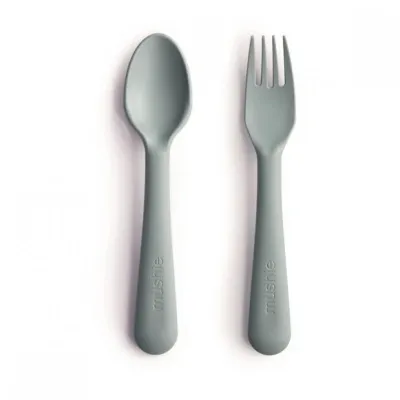
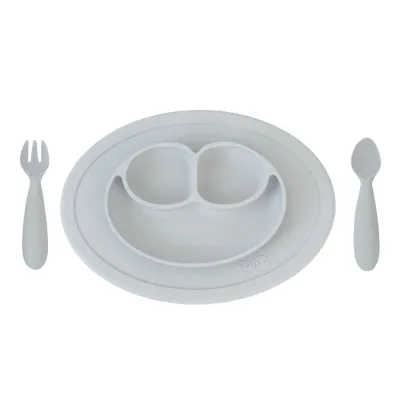
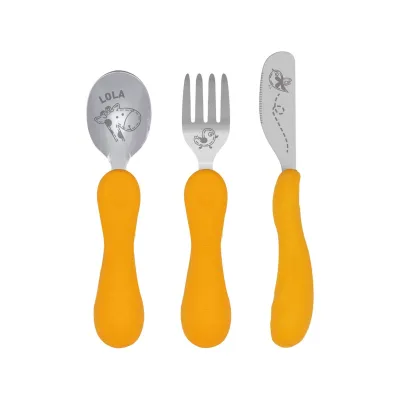
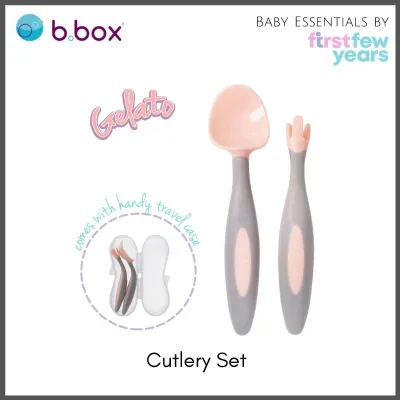
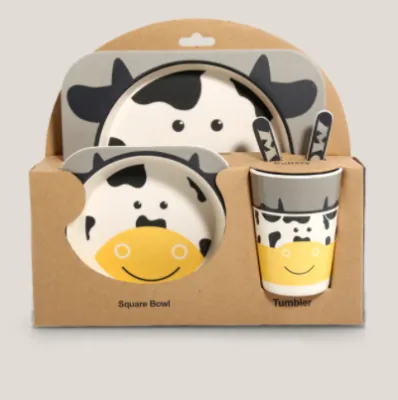
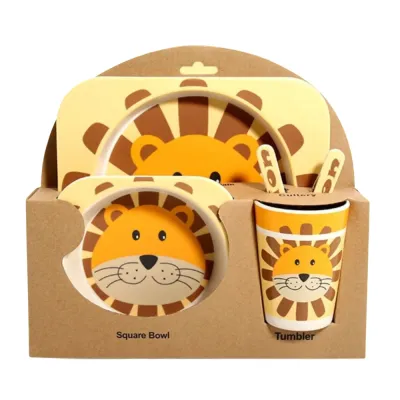
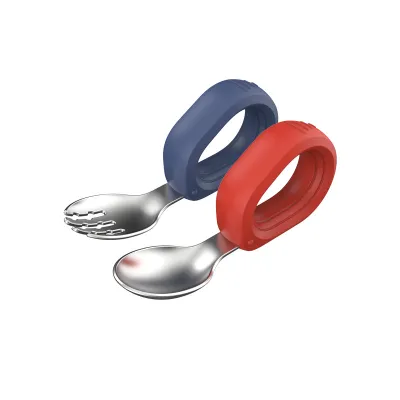
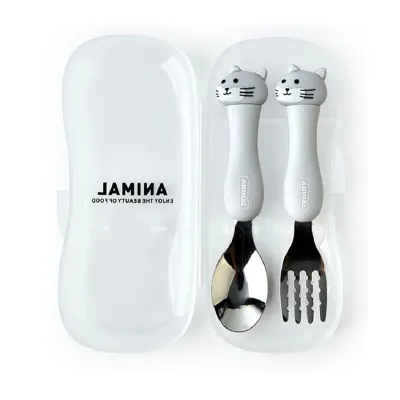
Prices are valid at publication and may change. Please refer to the product page for the latest price.
As your child transitions to early self-feeding, their motor skills undergo a dramatic shift. This stage is characterized by the palmar grasp, where the child holds objects with a closed fist, and limited wrist rotation. Because toddlers at this stage bring food to their mouths by moving their entire arm rather than rotating their wrists, standard long-handled spoons often cause frustration and spills. To accommodate this physical limitation, look for a kid utensils set featuring short, chunky, or bulbous handles that fit easily into a small fist. Some specialized designs incorporate angled spoon bowls, which help bridge the gap by allowing food to enter the mouth straight even when the child’s wrist remains rigid.
Eventually, your child will progress to confident self-feeding, marked by the development of the pincer grasp and improved wrist stability. At this point, they are ready to transition to standard-proportioned utensils that mimic adult cutlery but are scaled down for small hands. Spoons should feature deeper bowls to hold more varied food textures, such as soups, grains, or small pasta shapes. Forks should transition from purely rounded shapes to designs with functional, slightly pointed but still blunt tines that can successfully pierce food without posing a safety hazard. Handles should gradually become longer and slimmer, encouraging the transition from a fist grip to a mature pencil-like grip.
Essential Safety and Ergonomic Checks Before Buying
Before purchasing any kid utensils set, parents must perform a thorough safety and material verification. Carefully inspect the manufacturer’s packaging and product documentation for food-grade specifications. While many products claim to be safe, it is important to verify that the materials are free from BPA, phthalates, and other potentially harmful chemical additives. Additionally, check the manufacturer’s specified dishwasher-safe limits and temperature tolerances. Some plastics can degrade, warp, or release unwanted substances when exposed to high-heat cycles in dishwashers or steam sterilizers, making it safer to hand-wash them if compatibility is unclear.

Ergonomics play a critical role in how easily your child will adopt new utensils. When evaluating a set, consider the weight balance and texture of the handles. A utensil that is too heavy at the handle may slip out of a child’s hand, while one that is too light or flimsy might not provide enough sensory feedback for the child to understand where the utensil is in space. Look for textured grips, non-slip silicone sleeves, or contoured handles that prevent slipping when hands are wet or covered in food. The physical size of the utensil head must also match the child’s oral capacity; a spoon bowl that is too wide can cause discomfort and spills, while one that is too deep makes it difficult for the child to clear the food with their upper lip.
Functional design details can make or break the self-feeding experience. For early training forks, examine the tines closely. They must be blunt enough to prevent accidental pokes to the lips, tongue, or gums, yet defined enough to actually pierce soft foods like steamed carrots or pasta. Avoid overly flat, flexible plastic forks that only frustrate the child by sliding off the food. For spoons, a slight lip or a textured bowl can help keep purees and semi-solids in place as the child navigates the journey from the plate to their mouth. Always verify these physical characteristics in person or through detailed product specifications rather than relying on marketing claims alone.
Building a Stage-Appropriate Utensils Shortlist
When building a shortlist for your child’s feeding journey, it is best to categorize utensils by observable feeding behaviors and food textures rather than relying strictly on age brackets. For the transition from purees to mashed foods, your shortlist should focus on ultra-soft, flexible silicone spoons. Some innovative designs feature textured, flat heads instead of traditional bowls. These tools allow babies to dip the utensil into purees and lick the food off, eliminating the need for complex scooping motions. This stage is about exploration and sensory familiarity, so prioritizing gum-friendly materials is key.
As your child begins managing chunky and finger foods, their utensil needs change. This is the ideal time to introduce a kid utensils set with short, rounded handles and a slightly deeper spoon bowl to facilitate scooping. You should also introduce a beginner fork with short, blunt tines. This allows them to practice the motion of piercing soft, bite-sized pieces of food, which builds hand-eye coordination and spatial awareness. Look for sets that offer a wide, stable base on the handles, which prevents the utensil heads from touching the table surface when laid down, helping to maintain hygiene during messy meals.
Recognizing readiness for advanced utensils requires careful observation of your child’s physical coordination. If they can easily rotate their wrist to bring a straight spoon to their mouth without spilling, or if they consistently use a pincer grasp to hold smaller objects, they are ready for stainless steel sets with contoured plastic or silicone handles. These sets offer the durability and functionality of adult utensils, allowing children to cut through softer foods and pierce items more efficiently. Ensure that any metal components are rounded and smooth, with no sharp edges or burrs from the manufacturing process.
Introducing New Utensils and Maintaining Them Safely
Introducing a new kid utensils set should be a low-pressure, positive experience. Start by modeling proper usage during family meals; children learn rapidly by observing their caregivers. Allow your child to hold and explore the utensils outside of mealtime during supervised play, which helps desensitize them to the new textures and shapes. Expect and accept messes as a natural, necessary part of the learning process. Forcing a child to use a utensil before they are ready can lead to mealtime resistance and anxiety, so always follow their lead and offer gentle encouragement. Caregivers must provide constant supervision during meals to ensure utensils are used safely and not inserted too far into the mouth.
Maintaining utensil hygiene is particularly important in humid climates, where moisture can easily trap bacteria or encourage mold growth in hard-to-reach crevices. Always follow the manufacturer’s specific cleaning instructions. If the utensils feature multi-part designs, such as removable silicone sleeves or hollow handles, disassemble them completely during washing to ensure no food residue or water remains trapped inside. After washing, allow all pieces to dry completely in a well-ventilated area before storing them in a closed drawer or container.
Regularly inspect each item before use to identify when it is time for a replacement. Check silicone parts for tears, cracks, or peeling, especially if your child is teething and prone to biting their utensils. Plastic utensils should be checked for rough edges, warping, or discoloration that indicates material degradation. Replace utensils immediately if you observe any signs of material breakdown, deep bite marks that could harbor bacteria, or loose components on multi-material designs. Additionally, transition to a larger size when your child’s hands physically outgrow the short, chunky grips, or when their feeding skills require more functional, adult-like tools.
Frequently Asked Questions (FAQ)
When should I introduce a fork to my baby?
Most babies show readiness for a fork around the time they transition to chunky finger foods and demonstrate a reliable pincer grasp and stable wrist control. This developmental milestone typically occurs after they have spent several months practicing with a spoon, usually between 12 and 18 months of age, though individual timelines vary. Start by offering a fork with blunt, rounded tines alongside soft, easy-to-pierce foods like cooked sweet potato cubes, banana slices, or soft pasta shapes. Always supervise your child closely during these practice sessions to ensure safe handling and prevent injury.
Are angled spoons necessary for toddlers?
Angled spoons are highly beneficial for toddlers who are in the early stages of self-feeding but have not yet mastered wrist rotation. Because these spoons are pre-angled toward the mouth, they allow the child to successfully feed themselves using a simple straight-arm motion, reducing frustration and spills. However, they are not strictly necessary for every child. If your toddler is already showing good wrist flexibility and can bring a straight spoon to their mouth without excessive spilling, you can skip angled designs and proceed directly to short, straight-handled utensils.
How do I clean and sterilize silicone and plastic utensils?
To clean and sterilize silicone and plastic utensils safely, always refer to the manufacturer’s guidelines on the packaging. Many food-grade silicone utensils can withstand high temperatures, making them compatible with steam sterilizers, boiling water, and top-rack dishwasher cycles. Plastic utensils, however, are often more sensitive to extreme heat and may warp, crack, or degrade over time if exposed to sterilization temperatures. Visually inspect all utensils after washing; if you notice any warping, cloudiness, sticky residue, or structural changes, discontinue use immediately to ensure your child’s safety.
Community discussion
Share your experience or ask a question. Comments are reviewed before publication.