
Choosing the right breast pump is one of the most significant decisions you will make during your breastfeeding journey. The ideal pump should seamlessly integrate into your daily routine, support your lactation goals, and provide a comfortable, efficient expression experience. Jevonbaby offers a range of breast pumps designed to accommodate different lifestyles, from hands-free wearable models for busy mothers to traditional electric setups. Finding the right fit requires evaluating your personal pumping frequency, daily environment, and specific comfort preferences. By understanding what features to look for and how to assess your unique needs, you can confidently select a model that makes your breastfeeding journey smoother and more manageable.
Assess Your Breastfeeding and Pumping Needs
To narrow down your options, start by identifying your primary pumping scenario and how often you plan to use the device. Mothers who are exclusively pumping require a highly durable, efficient system capable of handling multiple sessions a day without losing suction power. If you are pumping to build a backup supply or to allow a partner to assist with feedings, an occasional-use pump may be more than sufficient. Your daily routine dictates whether you need a stationary plug-in unit or a highly portable, battery-operated model.
Returning to work introduces unique challenges that heavily influence your choice of breast pump. In Singapore, busy office environments and commuting on public transport mean that portability, discretion, and quick setup are paramount. If you plan to pump during office hours, you will need a device that is quiet enough to use in shared wellness rooms or private offices without causing distraction. Consider how much time you have during your breaks; a double breast pump can cut your pumping time in half compared to a single pump, making it highly practical for tight schedules.
Products mentioned in this guide
Prices are valid at publication and may change. Please refer to the product page for the latest price.
Discretion is another critical factor if you anticipate pumping in semi-private spaces or while multitasking. Wearable, tubeless breast pumps fit directly inside your nursing bra, allowing you to express milk while working at your desk, managing household chores, or caring for your baby. On the other hand, if you primarily pump at home in a dedicated, comfortable space, a traditional electric pump with external tubing and a separate motor unit might offer the robust performance and advanced settings you prefer. By mapping out your daily schedule and identifying where and when you will pump, you can establish a clear set of requirements to guide your purchase.
Navigating Jevonbaby Breast Pump Categories
When exploring the Jevonbaby product lineup, you will generally encounter three main categories: manual pumps, traditional electric pumps, and wearable electric pumps. Manual breast pumps are operated by hand, using a handle to create suction. They are lightweight, completely silent, and require no electricity or batteries, making them excellent for occasional use, travel, or as a quiet backup in your diaper bag. However, because they require continuous manual effort, they are generally not recommended for exclusive pumping or frequent daily use.

Traditional electric breast pumps utilize an external motor unit connected to the breast shields via silicone tubing. These systems are typically available in both single and double configurations. Double electric pumps allow you to express milk from both breasts simultaneously, which not only saves time but can also help stimulate higher prolactin levels to support milk production. Traditional electric models often feature larger motors that provide highly consistent suction and a wide range of customizable settings, making them a reliable choice for high-frequency pumpers.
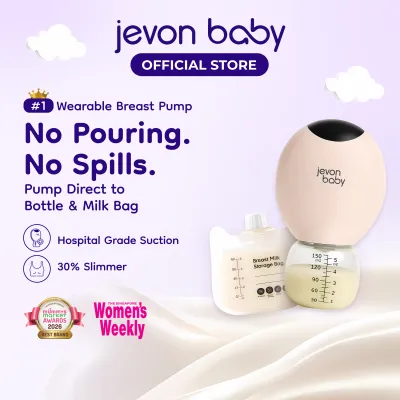
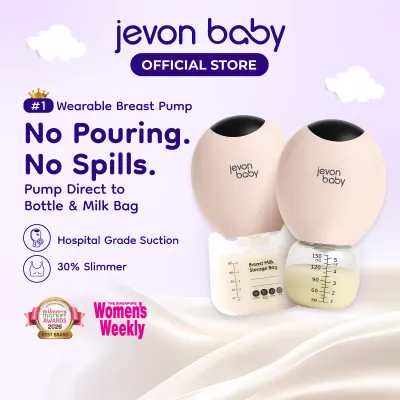
Wearable electric breast pumps represent the latest in hands-free convenience. These self-contained units house the motor, battery, and milk collection cup within a single shell that slips directly into your standard nursing bra. Because there are no external tubes or wires, you enjoy complete freedom of movement. This category is highly popular among working mothers and active parents who need to multitask. While prices can vary, allocating a budget of S$100 to S$300 is common for quality electric models in Singapore. However, wearable pumps may have slightly smaller milk capacities and require more frequent charging than traditional desktop models.
To find the exact Jevonbaby models currently available in Singapore, it is best to consult the brand’s official website or authorized local distributors. Product availability, model names, and specific features can change over time, so verifying the current catalog ensures you are looking at the latest technology. Avoid purchasing from unauthorized online marketplaces or unverified third-party sellers, as these products may lack local warranty coverage or fail to meet local safety standards. Checking official retail channels also allows you to compare current prices and read verified customer feedback tailored to local parenting needs.
Essential Specifications and Features to Compare
Once you have identified the category of pump that fits your lifestyle, you should compare specific technical features to ensure optimal comfort and performance. The first specification to evaluate is the range of adjustable suction levels and expression modes. A quality breast pump should offer a stimulation or massage mode, which uses fast, shallow cycles to mimic a baby’s initial rapid sucking and trigger the milk ejection reflex (let-down). Once milk begins to flow, the pump should allow you to transition to an expression mode with slower, deeper suction cycles. Having multiple suction levels ensures you can customize the intensity to your comfort level, as pumping should never feel painful.
Flange sizing is another critical factor that directly impacts both comfort and milk output. The flange, or breast shield, is the funnel-shaped part that fits over your nipple. If the flange is too small, it can cause painful friction and restrict milk ducts; if it is too large, excess areola tissue will be drawn into the tunnel, reducing suction efficiency. When reviewing Jevonbaby listings, check what flange sizes are included in the box and whether the brand offers alternative sizes or silicone inserts. Measuring your nipple diameter before purchasing is highly recommended to ensure a proper fit.
For electric and wearable models, battery life and charging mechanisms are vital for on-the-go convenience. Look for pumps equipped with rechargeable lithium-ion batteries that can last through multiple sessions on a single charge. USB-C charging compatibility is highly beneficial, as it allows you to charge your pump using standard phone chargers, power banks, or laptop ports while commuting or working. Additionally, pay close attention to the noise level specified by the manufacturer, typically measured in decibels (dB). A quiet motor (ideally under 50 dB) is essential for maintaining privacy in office environments or pumping near a sleeping baby.
Finally, consider the practicalities of daily maintenance by evaluating the ease of assembly and cleaning. A breast pump consists of several small components, including valves, diaphragms, connectors, and bottles or collection cups. Models with fewer parts are much easier to disassemble, wash, and reassemble multiple times a day. Look for a closed-system design, which features a physical barrier (usually a silicone diaphragm) that prevents milk from entering the tubing or motor. Closed systems are highly hygienic, prevent mold growth inside the motor, and make cleaning significantly simpler.
Safety, Hygiene, and Warranty Verification
Prioritizing safety and hygiene is essential when selecting any feeding equipment for your infant. Before purchasing a Jevonbaby breast pump, verify that all parts that come into direct contact with breast milk are made from food-grade, BPA-free materials. Bisphenol A (BPA) is a chemical used in some plastics that can pose health risks, so ensuring your pump components are certified BPA-free is a non-negotiable safety check. You can typically find this information on the product packaging, official user manuals, or authorized retailer listings.
Proper maintenance is crucial to keep your pump functioning safely and efficiently. Always consult the manufacturer’s instruction manual for specific guidelines on washing, sanitizing, and drying the components. In Singapore’s warm and humid climate, ensuring parts are completely dry after sterilization is vital to prevent the growth of bacteria or mold. Silicone parts, such as duckbill valves and diaphragms, are delicate and will naturally wear out over time due to heat and regular use. Inspect these parts frequently for tiny tears or loss of elasticity, and replace them according to the manufacturer’s recommended schedule to maintain optimal suction.
Lastly, protect your investment by verifying the warranty terms and after-sales support available in Singapore. Purchasing through authorized local channels ensures that you receive a valid local warranty, which typically covers motor defects for a specified period. A local warranty provides peace of mind, as it allows you to quickly contact customer support or access replacement parts if your pump encounters technical issues. Be sure to register your product online immediately after purchase and keep your receipt safe to facilitate any future warranty claims.
Frequently Asked Questions (FAQ)
Can I use a Jevonbaby breast pump if I have sensitive nipples?
Yes, but you must take specific precautions to ensure a comfortable experience. Look for Jevonbaby models that feature adjustable suction levels and a dedicated massage or stimulation mode, which helps gently prepare the breast before active expression begins. Always start your pumping session at the lowest suction setting and gradually increase it only to a level that feels comfortable, never painful. Additionally, ensure you are using a soft, silicone flange or insert that fits your nipple size correctly, as an improper fit is a primary cause of nipple soreness. If pain persists, stop using the pump and consult a lactation consultant or healthcare professional.
How do I find the correct flange size for my Jevonbaby pump?
To find your correct flange size, you need to measure the diameter of your nipple at the base, excluding the areola. Use a ruler or a printable sizing tool to measure in millimeters, preferably before a pumping session or when your nipple is stimulated. Once you have this measurement, add approximately 2 to 3 millimeters to determine your recommended flange size. For example, if your nipple base measures 17 mm, a 19 mm or 20 mm flange or insert is typically a good starting point. Check Jevonbaby’s official sizing guides or contact their customer service to verify which inserts or shields are compatible with your chosen model.
Are Jevonbaby pump parts compatible with other brands?
Generally, it is highly recommended to use only official Jevonbaby parts and accessories with your pump. Mixing components from different manufacturers, such as valves, tubing, or breast shields, can compromise the airtight seal required for proper suction, leading to poor milk expression or motor strain. In some cases, using non-compatible parts can cause milk to backflow into the motor, damaging the device and voiding your warranty. Always consult the official Jevonbaby compatibility charts or contact their customer support team before attempting to use third-party accessories with your breast pump.

Community discussion
Share your experience or ask a question. Comments are reviewed before publication.