
Choosing the right feeding tools is a major milestone in your child’s development. As infants transition from milk to solid foods, their ability to handle utensils evolves from basic sensory exploration to precise, independent coordination. Introducing a fork at the right time not only fosters self-reliance but also helps refine the fine motor skills needed for later developmental tasks.
There is no single universal design that works for every child. The most suitable fork for kids depends entirely on your child’s current grip strength, hand-eye coordination, and oral motor control rather than their chronological age alone. When selecting a utensil, caregivers must prioritize physical safety by verifying age recommendations, material certifications, and manufacturer safety labels on the packaging before introduction.
Matching Fork Designs to Your Child's Feeding Stage
Using a fork that does not align with your child’s current developmental stage can lead to intense mealtime frustration or safety hazards. An advanced fork with firm tines can injure a young infant’s sensitive gums, while an overly soft weaning tool can make it impossible for an older toddler to pierce solid foods, leading to mealtime refusal. Aligning the utensil design with specific physical milestones ensures a smoother, safer transition to independent eating.
Products mentioned in this guide
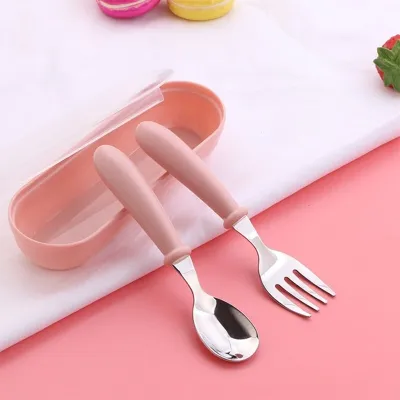
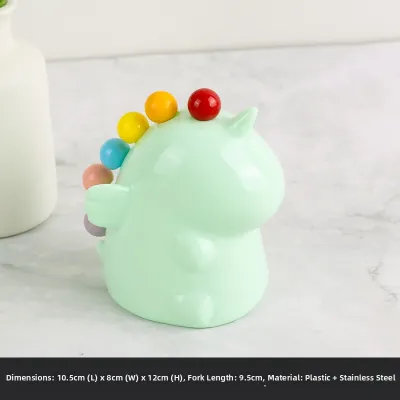
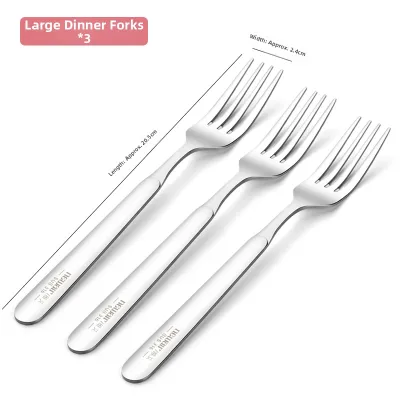


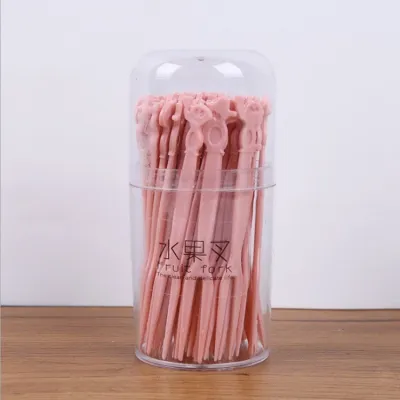
Prices are valid at publication and may change. Please refer to the product page for the latest price.
Early Weaning (Around 6 to 12 Months)
During the initial stages of weaning, infants are just beginning to explore the concept of self-feeding. At this stage, their primary physical coordination relies on the palmar grasp, where they wrap their entire fist around an object to lift it. Their movements are broad and lack the precision required to spear individual pieces of food.
For this age group, standard forks are highly unsuitable. Instead, look for specialized pre-forks or hybrid spoon-fork tools designed specifically for dipping. These utensils feature blunt, rounded heads with textured grooves or hollow centers rather than defined tines. The design allows thick purees, mashed fruits, or yogurts to cling to the surface, making it easy for the baby to taste food regardless of how they hold the tool.
At this stage, the utensil serves primarily as a tool for sensory exploration and mimicking caregivers. The handles must be short, thick, and bulbous to fit comfortably inside a tiny fist. This chunky design also acts as a natural physical barrier, preventing the infant from inserting the tool too far into their mouth and triggering a severe gag reflex.
Toddler Independence (12 to 24 Months)
Between 12 and 24 months, toddlers undergo rapid motor development. They begin transitioning from a fist-based grip to a primitive pincer grasp, using their thumb and index finger to manipulate objects. They also start experimenting with wrist rotation, allowing them to bring a utensil to their mouth with greater control.
Forks designed for this stage should feature slightly longer handles than weaning tools, but they must still incorporate ergonomic grips or textured, non-slip zones. These features help the toddler maintain a secure hold even when their hands are wet, greasy, or covered in food.
The tines on a toddler fork must be more defined than those on a pre-fork to allow actual spearing of soft solids, such as steamed vegetables or soft fruit chunks. However, they must remain sufficiently blunt and rounded to prevent accidental punctures to the lips, tongue, or gums during sudden, jerky movements.
Safety features remain a critical consideration during this phase of high activity. Look for toddler forks that feature a wide base, an integrated collar, or a built-in choke barrier just below the head. This design element physically prevents the child from pushing the fork too deep into their oral cavity during enthusiastic self-feeding sessions.
Preschool Refinement (2 to 4 Years)
By the time a child reaches preschool age, their fine motor skills are significantly more mature. They are ready to transition to a tripod grasp, which is the same finger positioning used to hold a pencil. This grasp allows for highly precise movements and excellent control over the angle of the utensil.
Preschool forks closely resemble adult tableware but are scaled down to match smaller hands and mouths. The handles are longer, slimmer, and less bulky than toddler models, encouraging the child to practice mature finger placement and leverage.
The tines on these forks can be made of firmer materials, such as food-grade stainless steel, and are typically more elongated and slightly sharper. This structural change is necessary to help the child successfully pierce a wider variety of dense solid foods, including meats, pasta, and firmer vegetables.
While these utensils mimic adult proportions, they must still feature rounded tips on the tines. This ensures that even if the child misjudges a movement or eats quickly, the risk of scratching the inside of the mouth is minimized.
Essential Design Features to Evaluate
When comparing different options on the market, evaluating specific physical attributes will help you select a safe and functional fork for kids. Inspecting these details closely ensures the utensil supports your child’s learning process rather than hindering it.

- Tine Shape and Length: The design of the tines must balance food-piercing efficiency with oral safety. For younger toddlers, short, flexible tines made of food-grade silicone or thick plastic are ideal because they cannot injure delicate oral tissues. For older children, longer, stiffer tines are required to hold food securely, but the tips must always be polished and rounded rather than sharp.
- Handle Ergonomics: Analyze how the handle shape supports your child's current grip. Look for contoured shapes, bulbous ends, or textured silicone sleeves that prevent slipping. The angle of the handle is also important; some toddler forks feature a curved or angled neck that reduces the need for wrist rotation, helping food reach the mouth more reliably.
- Weight and Balance: A well-balanced fork prevents hand fatigue and frustration. If the handle is excessively heavy, the fork will tilt backward out of the child's hand. If the head is too heavy, it can make the utensil difficult to steer. Test the balance by holding the fork lightly; the center of gravity should sit near the middle of the tool.
- Material and Finish: Inspect the construction quality for a smooth, seamless finish. Any visible seams, joints, or deep crevices can trap food particles and bacteria, making the fork difficult to sanitize. Ensure all materials—whether silicone, plastic, or stainless steel—are certified food-safe and free from harmful chemical additives.
Safety Checks and Supervision Rules
No feeding utensil is entirely indestructible or chew-proof, especially when used by teething toddlers. Caregivers must establish a strict routine of physical inspections and mealtime rules to ensure safety during every meal.
Before each use, perform a quick physical check of the fork. Run your fingers over the tines to feel for sharp burrs, rough edges, or cracks. Inspect the joint where the fork head meets the handle, as this is a common point of structural failure. If you observe any deep bite marks, peeling coatings, loose parts, or broken tines, discard the utensil immediately to eliminate choking or injury hazards.
Active adult supervision is a non-negotiable safety requirement during mealtimes. Children must always sit upright in a secured highchair or booster seat while using any utensil. Never allow a child to walk, run, crawl, or play with a fork in their hand or mouth, as a sudden trip or fall can cause severe oral or facial trauma.
Establish clear stop-conditions for self-feeding sessions. If your child begins using the fork as a toy, throws the utensil, or attempts to insert it too deeply into their mouth, calmly pause the session. You can temporarily assist them with feeding or transition back to finger foods to keep the mealtime safe, positive, and stress-free.
Building Your Evaluation Shortlist
To find the best options on online marketplaces or at local baby specialty stores in Singapore, use a structured approach to filter through the available choices.
Begin by filtering products strictly by the manufacturer’s verified age recommendations rather than relying on visual appeal alone. Read user reviews thoroughly, looking specifically for feedback regarding how well the grip performs when wet or greasy, and whether the materials hold up to daily use without degrading.
Next, check the manufacturer’s care and cleaning instructions. Ensure the fork’s materials are compatible with your household’s sanitizing routine. Some materials are dishwasher-safe and can withstand high-temperature steam sterilization, while others require gentle hand-washing to prevent warping or structural damage.
Finally, avoid buying large bulk sets of a single style initially. It is highly recommended to start with a small, multi-stage set or a couple of individual options. This allows your child to test different handle shapes, weights, and tine designs, helping you identify the exact style that matches their unique motor skills before you invest in a complete set.
Frequently Asked Questions (FAQ)
When should I introduce a fork instead of just using a spoon?
You can introduce a fork alongside a spoon as soon as your child shows active interest in self-feeding, which typically occurs between 10 and 12 months. Look for observable signs of readiness, such as your child trying to stab food with their fingers, mimicking your movements with adult utensils, or showing frustration when slippery foods slide off their spoon. Introducing both tools together helps children learn which utensil is best suited for different food textures, such as using a spoon for purees and a fork for soft solid chunks.
Are angled or curved handles better for toddlers?
Angled or curved handles are highly beneficial for toddlers who are still developing basic wrist rotation and joint mobility, typically between 12 and 18 months. Because young toddlers struggle to bring a straight utensil directly to their mouth without spilling, an angled handle compensates for this limited range of motion. However, once your child’s fine motor skills mature and they transition to a tripod grasp, straight handles are preferred to help them prepare for standard adult tableware.
Community discussion
Share your experience or ask a question. Comments are reviewed before publication.