
Selecting the ideal sleep surface for your baby is one of the most critical decisions you will make for their safety and physical development. For newborns and young infants under six months, a highly firm, unyielding sleep surface is non-negotiable to support their rapidly growing spine and eliminate suffocation risks. As your child grows, gains weight, and achieves milestones like rolling, sitting, and crawling, their developmental needs shift, allowing for a carefully managed transition to a slightly more pressure-relieving surface. In Singapore’s warm, tropical climate, a baby latex mattress is highly sought after for its natural breathability, temperature regulation, and resistance to common allergens like dust mites. However, navigating the various firmness levels, density specifications, and safety labels can be overwhelming. By evaluating your baby’s specific developmental stage, weight, and mobility, you can confidently choose a latex mattress that balances absolute safety with optimal comfort.
Why Firmness is Critical for Infant Sleep Safety
The primary factor governing infant sleep environments is safety, particularly the prevention of Sudden Infant Death Syndrome (SIDS) and accidental suffocation. Pediatric safe-sleep guidelines emphasize that infants must sleep on a flat, firm, and stable surface. Unlike adults, who benefit from mattresses that contour to the body to relieve pressure, babies have entirely different physiological requirements. A soft, plush mattress that allows an infant’s head or body to sink creates a high-risk environment. If a baby rolls onto their stomach, their nose and mouth can easily become obstructed by the depressed material, leading to suffocation or the dangerous rebreathing of exhaled carbon dioxide.
Furthermore, an infant’s skeletal system is in a stage of rapid development. Their bones are soft, and their spine is straight, lacking the mature S-shaped curve of an adult. To support this growth and keep their airways fully open, babies require a flat, uncompromising plane that maintains their natural alignment. A soft mattress that allows the spine to sag can interfere with healthy physical development and compromise breathing.
Products mentioned in this guide
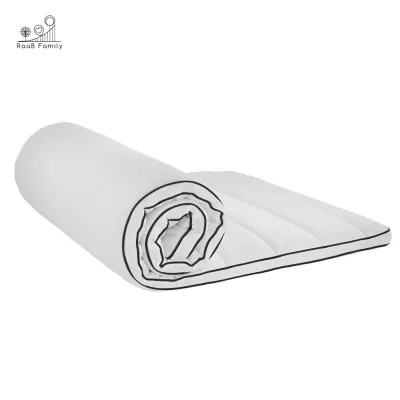
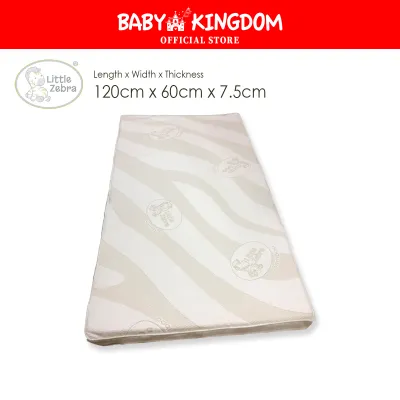
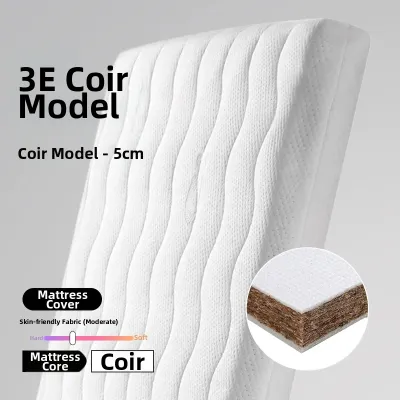
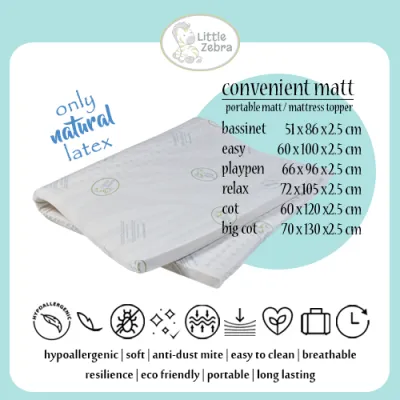
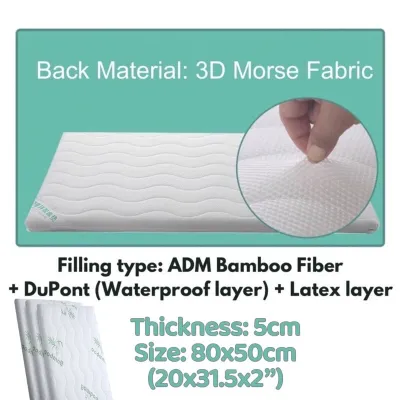
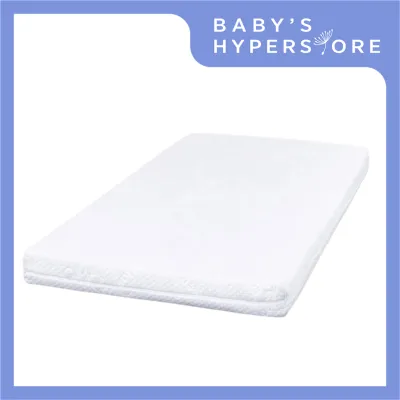
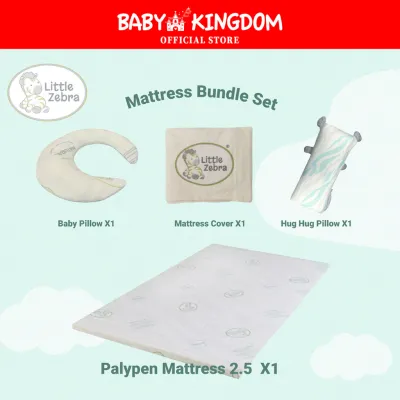
Prices are valid at publication and may change. Please refer to the product page for the latest price.
Natural latex is an excellent nursery choice due to its inherent resilience, open-cell structure, and durability. However, because natural latex is known for its springiness in adult bedding, manufacturers must specially formulate infant versions to be significantly denser and firmer. This ensures that the natural bounce of the latex does not translate into a soft, sinking surface. When shopping for a baby latex mattress, parents must always cross-reference choices with current pediatric safe-sleep guidelines and ensure the product aligns with manufacturer safety warnings regarding age and weight limits.
Assessing Your Baby’s Stage: Age, Weight, and Mobility
To determine the correct mattress firmness, you must look beyond chronological age and evaluate your baby’s physical milestones and weight. Babies develop at highly variable rates, and an active or heavy child may have different sleep surface requirements than a lighter, less mobile peer of the same age. Physical milestones—such as lifting the head, pushing up, rolling over independently, sitting, and standing—are the true indicators of developmental readiness for any change in their sleep environment.

When assessing readiness for a transition, establish a clear framework based on weight and physical capabilities. A newborn who cannot yet lift their head requires the absolute firmest surface available, whereas a toddler who can easily stand and walk can safely sleep on a slightly more forgiving surface. Always consult the specific weight thresholds and age recommendations provided by the mattress manufacturer. These guidelines are designed to match the structural density of the latex core with the physical load of the child, ensuring the mattress performs safely.
Newborns to 6 Months: Prioritizing Maximum Firmness
During the first six months of life, your baby’s mobility is highly limited, and their neck muscles are still developing. This is the period of highest risk for sleep-related accidents, making maximum mattress firmness your absolute priority. A newborn mattress must feel incredibly rigid—often surprisingly so to parents who associate comfort with plushness. It is vital to remember that what feels hard or uncomfortable to an adult is actually the safest and most supportive environment for a newborn.
An ultra-firm latex mattress ensures that even if your baby accidentally rolls onto their stomach or presses their face against the sleep surface, the material will not compress or form a pocket around their airway. The high density of natural latex designed for infants provides a strong, upward resistance that keeps the baby’s face clear of the surface. This structural integrity is essential for maintaining an open airway, especially during deep sleep cycles when muscle tone naturally relaxes.
To verify the firmness of a latex mattress at home, you can perform a simple hand-press check. Place the mattress on a flat surface and press your palm down firmly into the center, as well as near the corners and edges. When you release your hand, the mattress should instantly snap back without leaving any visible indentation or slow-recovering depression. If your hand leaves a lingering print, or if the material feels soft and easily compressible, the mattress is too soft. While this physical check is a helpful screening tool, always prioritize official manufacturer safety labels and pediatric guidelines for final verification.
Older Infants and Toddlers: Balancing Safety with Comfort
As babies pass the six-month mark, their physical capabilities expand dramatically. They begin to roll over confidently, push themselves up, sit independently, and eventually stand in their crib. Along with these physical milestones, their body weight increases, and their skeletal structure begins to mature. At this stage, the absolute rigidity required for a newborn can be balanced with a minor degree of pressure relief to accommodate their changing weight distribution and active sleep positions.
To address this transitional phase, many natural latex mattress manufacturers offer dual-firmness or dual-sided designs. These mattresses feature an ultra-firm side engineered specifically for the infant stage (0 to 12 months) and a slightly more yielding, medium-firm side on the reverse, designed for toddlers (usually 12 months and older). This allows parents to maximize their investment, utilizing a single mattress that adapts to the child’s growing body. The toddler side provides a touch more cushioning for comfort while maintaining a highly supportive core that prevents spinal sagging.
However, transitioning to a softer surface must never be done prematurely. Flipping a dual-firmness mattress too early can expose an infant to safety risks if they have not yet mastered the physical strength to rescue themselves from a face-down position. Before making the switch to a toddler firmness level, consult your pediatrician to confirm your child’s developmental readiness. Additionally, carefully read the manufacturer’s documentation to verify that your child has met both the minimum age and weight requirements specified for the softer side.
Decoding Latex Mattress Specifications and Labels
When shopping for a baby latex mattress, you will quickly realize that descriptive terms like “firm,” “extra-firm,” or “medium-firm” are entirely subjective. A mattress labeled “firm” by one brand might feel significantly softer than a “firm” mattress from another manufacturer. To make an objective, safety-first decision, parents must learn to decode product specifications, safety labels, and material certifications rather than relying on subjective marketing claims.
First, look for compliance with recognized safety standards for nursery furniture. In Singapore, consumer products are subject to safety guidelines, and parents should search for mattresses that meet rigorous international standards like the European EN 16890 (which specifically tests for firmness, dimensions, and hazards in children’s cot mattresses). These certifications ensure the mattress has undergone objective mechanical testing to verify that it will not pose a suffocation or entrapment risk.
Second, verify the purity and safety of the latex itself. Natural latex is harvested from the sap of rubber trees, but some products are synthetic blends. To ensure your baby is not exposed to chemical off-gassing, look for reputable material certifications. Certifications such as the Global Organic Latex Standard (GOLS) or OEKO-TEX Standard 100 confirm that the latex core and the surrounding cover are free from harmful substances, heavy metals, and toxic flame retardants. This is crucial for safeguarding your baby’s sensitive, developing respiratory system during sleep.
Finally, physical dimensions are just as critical as firmness. A mattress that does not fit your crib perfectly poses a severe entrapment hazard, regardless of how firm or safe the material is. Measure the interior dimensions of your crib precisely before purchasing. There should be no gaps wider than 3 centimeters (roughly the width of two adult fingers) between the mattress edge and the crib frame. If a gap exists, a baby can easily slide into it and become trapped. Always verify that the mattress dimensions align perfectly with your crib manufacturer’s specifications.
Essential Safety Checks Before Finalizing Your Choice
Before finalizing your purchase of a baby latex mattress, there are several practical and safety-related factors to evaluate to ensure the mattress performs optimally in your nursery.
- Breathability and Temperature Regulation: Singapore’s tropical, high-humidity climate makes heat retention a significant concern. Overheating is a known risk factor for SIDS. Natural latex is inherently breathable due to its open-cell structure and pincore ventilation holes. However, this natural airflow can be restricted if the mattress is paired with a heavy, synthetic cover. Ensure the mattress cover is made from highly breathable, natural fibers such as organic cotton, bamboo, or Tencel, which actively wick away moisture and allow heat to dissipate, keeping your baby cool.
- Waterproofing and Hygiene: Diaper leaks, spit-ups, and sweat are inevitable in a nursery. Because moisture can seep into the latex core and encourage mold and bacteria growth—especially in humid climates—hygiene protection is essential. However, many standard waterproof protectors are made from thick, non-breathable plastics that trap heat and disrupt sleep. Look for a mattress with a non-toxic, breathable waterproof membrane, or invest in a high-quality, fitted waterproof protector that is certified as breathable and does not alter the firm, flat surface of the mattress.
- Weight and Handling: Natural latex is dense and heavy compared to lightweight polyurethane foam or polyester fiber. Because you will need to lift the mattress frequently to change fitted sheets and clean up spills, consider the physical weight of the product. Ensure that you can comfortably lift and maneuver the mattress on your own, without struggling to position it securely back inside the crib frame.
- Return and Trial Policies: Because it is difficult to judge the true firmness of a mattress online, always check the retailer’s return and trial policies. A reputable brand should offer a clear return or exchange window, allowing you to physically inspect the mattress in your home, test its firmness, and verify its fit within your crib. If the mattress does not meet your safety expectations or feels too soft upon arrival, you should have a straightforward path to return or exchange it.
Frequently Asked Questions (FAQ)
Can I use a regular adult latex mattress for my baby?
No, you must never use a regular adult latex mattress, topper, or cut-down adult mattress for an infant. Adult mattresses are designed for adult weight distribution and comfort, making them far too soft and contouring for a baby’s delicate body. An infant placed on an adult latex mattress runs a severe risk of sinking into the material, which can block their airway and lead to accidental suffocation. Additionally, adult mattresses do not comply with the strict structural and dimensional safety standards required for nursery furniture.
How do I know if the latex mattress is too soft for my newborn?
You can determine if a latex mattress is too soft by performing a simple physical check. Press your hand down firmly in the center and along the edges of the mattress. When you lift your hand, the surface must immediately rebound to its original, flat shape without leaving any visible depression or handprint. If your baby’s head or body leaves a noticeable indent when lying down, or if the mattress feels plush and easily compressible under light pressure, it is too soft and unsafe.
Are natural latex mattresses hypoallergenic for babies?
Yes, high-quality natural latex is inherently resistant to dust mites, mold, and mildew, which thrive in humid climates like Singapore. This makes it an excellent choice for babies with sensitive respiratory systems. However, true latex allergies exist and can be severe. If there is a family history of latex allergies, consult your pediatrician before introducing a latex mattress. Additionally, ensure the mattress is enclosed in a high-quality, protective cover that acts as a secure barrier.
Community discussion
Share your experience or ask a question. Comments are reviewed before publication.