
Selecting a car booster seat in Singapore requires balancing strict legal regulations, vehicle compatibility, and your child’s physical development. Under Singapore law, anyone below the height of 1.35 meters must be secured with an approved child restraint appropriate for their height and weight when traveling in a passenger vehicle. To ensure you are purchasing a genuine, highly protective product, you must look for internationally recognized safety certifications, verify the brand’s local support network, and understand how the seat fits both your child and your car’s cabin. This guide provides a comprehensive framework to help you evaluate booster seat options, decode safety labels, and make an informed decision that keeps your child secure on every journey.
Navigating the transition from a harnessed car seat to a booster seat is a major milestone in your child’s travel safety. A booster seat works by raising your child so that the vehicle’s adult lap-and-shoulder belt fits properly across their strongest anatomical points. Without a booster, an adult seat belt can rest dangerously high across a child’s soft abdomen and neck, risking severe internal injuries in a sudden stop or collision. By focusing on certified brands and proper installation, you can significantly reduce these risks and ensure compliance with local traffic laws.
Understanding Safety Standards and Certification Labels
To legally use a car booster seat in Singapore, the product must comply with safety standards approved by the Land Transport Authority (LTA). The most common standards you will encounter are the European regulations, specifically ECE R44/04 and the newer ECE R129 (often referred to as i-Size). Singapore also recognizes standards from other reputable jurisdictions, including the United States (FMVSS 213), Australia and New Zealand (AS/NZS 1754), Canada (CMVSS 213), and Japan (JIS). When shopping, your first task is to locate the physical certification label permanently affixed to the seat shell.
Products mentioned in this guide
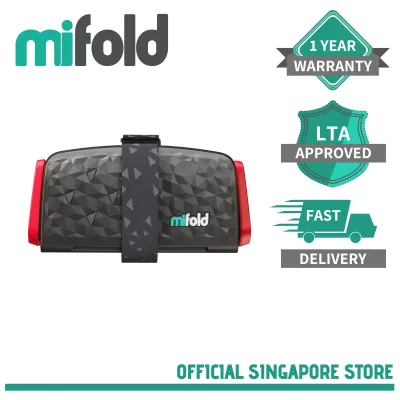
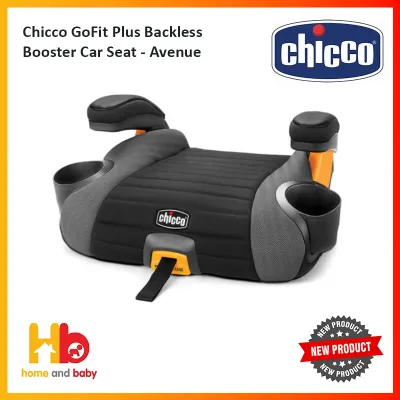
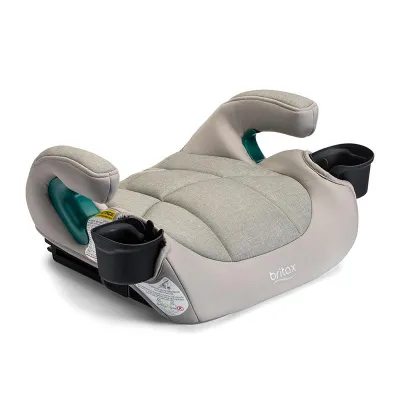
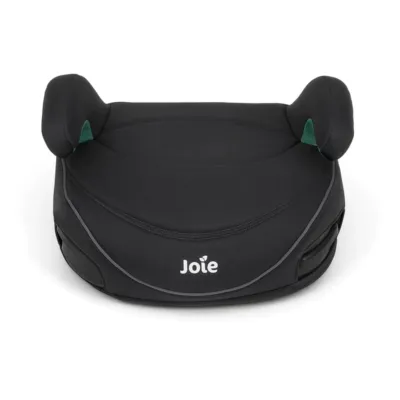
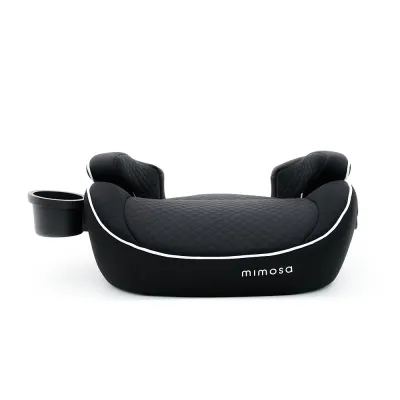
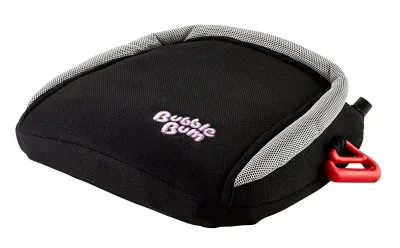
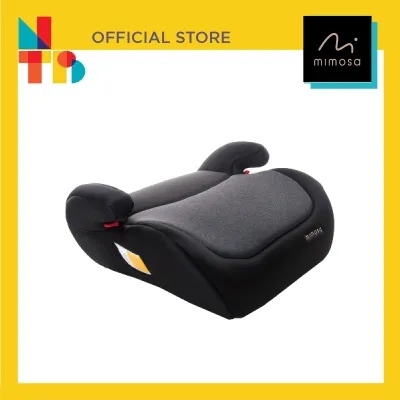
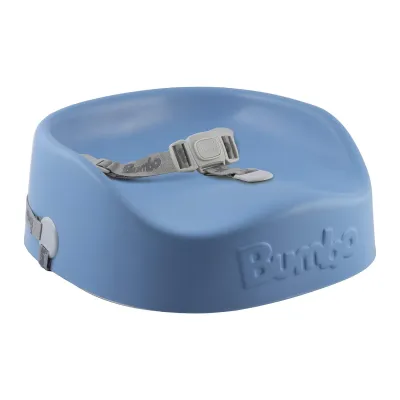
Prices are valid at publication and may change. Please refer to the product page for the latest price.
The European certification label is typically a bright orange sticker that contains critical safety information. On this label, you will see an circle containing the letter “E” followed by a number, which indicates the country that granted the approval (for example, “E1” represents Germany and “E4” represents the Netherlands). Below this mark, the label specifies the standard version, such as 044404 (for ECE R44/04) or 129R (for ECE R129). If a booster seat lacks this orange label or an equivalent official certification mark from another approved jurisdiction, it is not legally compliant for use on Singapore roads.
Understanding the difference between ECE R44/04 and ECE R129 is essential for matching the seat to your child. The older ECE R44/04 standard categorizes booster seats primarily by the child’s weight, typically grouping them into Group 2 (15 to 25 kg) and Group 3 (22 to 36 kg). In contrast, the newer ECE R129 standard uses the child’s height as the primary classification metric, which is widely considered a more accurate indicator of proper seat belt fit. ECE R129 also mandates rigorous side-impact testing, whereas ECE R44/04 focuses primarily on frontal and rear collision protection.
Before purchasing any booster seat, you must measure your child’s current height and weight rather than relying solely on their age. Manufacturers design their seats to perform safely only within these precise physical boundaries. If your child is near the lower limit of a booster seat’s specifications, it is safer to keep them in their current harnessed seat until they fully transition into the booster’s optimal range. Conversely, once your child exceeds the maximum height or weight limit specified on the certification label, the seat can no longer be trusted to protect them effectively.
Key Criteria for Evaluating Brand Reliability
Evaluating the reliability of a booster seat brand requires looking beyond marketing claims and focusing on verifiable operational standards. A reputable brand maintains transparent manufacturing processes and provides easily accessible customer support channels. When researching brands, check their official websites for downloadable product manuals, instructional installation videos, and clear contact information. Brands that make their safety testing methodologies and crash-test results publicly available demonstrate a higher level of accountability.

Having a dedicated local authorized distributor or official brand store in Singapore is a crucial factor in brand reliability. Authorized distributors ensure that the booster seats imported into the country comply with local regulations and are suited for the local market. They also serve as your primary point of contact for after-sales service, product demonstrations, and assistance with complex installations. Purchasing through these official channels guarantees that you have access to professional support if you encounter any issues with the seat.
Another critical aspect of brand evaluation is researching the manufacturer’s public history regarding safety recalls and product updates. Reliable brands proactively monitor the performance of their products in the market and issue public recalls if any manufacturing defects or safety anomalies are detected. You can search international safety databases, such as the UK’s Vehicle Certification Agency (VCA) or the US National Highway Traffic Safety Administration (NHTSA), to check if a brand has a history of unresolved safety issues or frequent recalls.
Finally, compare the warranty terms and the availability of replacement parts across different brands. A robust manufacturer’s warranty, typically ranging from two to five years, indicates confidence in the product’s durability and materials. Reliable brands also make it easy to purchase replacement components, such as extra fabric covers, harness clips, or ISOFIX guides, directly through their authorized local distributors. Avoid brands that do not offer replacement parts, as a minor component failure could force you to discard the entire booster seat prematurely.
Essential Structural Features to Look For
When examining the physical design of a booster seat, the presence of robust side-impact protection is a primary safety feature. High-quality booster seats incorporate deep side wings lined with energy-absorbing materials, such as Expanded Polystyrene (EPS) or Expanded Polypropylene (EPP) foam. These materials are designed to compress and absorb the violent forces of a lateral collision, shielding your child’s head, neck, and torso from direct impact with the vehicle’s door or window. Look for seats that explicitly highlight these reinforced lateral structures in their technical specifications.
Proper alignment of the vehicle’s seat belt is entirely dependent on the adjustability of the booster seat’s headrest and shoulder belt guides. As your child grows, the shoulder belt guide must adjust vertically to keep the seat belt positioned precisely across the center of their collarbone. If the guide is too low, the belt will slip off the shoulder; if it is too high, the belt will rub against the neck, causing discomfort and prompting the child to position the belt incorrectly. Look for a headrest mechanism that can be easily adjusted with one hand to accommodate your child’s growth spurts.
The design of the seat belt routing system is another critical factor in preventing installation errors. High-quality booster seats feature clearly marked, color-coded belt paths that guide you on exactly where to thread the vehicle’s lap and shoulder belts. Under the ECE R44/04 standard, these guides are typically color-coded in red, while ECE R129 seats often use green indicators. The lap belt guides must hold the belt low and flat across the child’s pelvic region, preventing it from riding up onto the vulnerable abdominal area during a sudden stop.
Singapore’s hot and humid tropical climate makes the breathability and maintenance of the seat fabric a major practical consideration. Children can easily overheat and sweat during car rides, which can lead to skin irritation and unpleasant odors over time. Look for booster seats featuring moisture-wicking, breathable mesh fabrics that promote airflow. Additionally, verify that the fabric cover can be easily removed and is machine-washable according to the manufacturer’s care labels, allowing you to maintain a hygienic environment inside your vehicle.
Choosing Between High-Back and Backless Designs
Deciding between a high-back booster seat and a backless booster seat depends on your child’s physical development, your vehicle’s configuration, and your lifestyle needs. High-back booster seats provide comprehensive upper-body protection, including dedicated head, neck, and side-impact shielding. They also feature integrated shoulder belt guides that keep the vehicle’s seat belt positioned correctly, even if your child falls asleep and slumps to the side. For younger children who have just outgrown their harnessed seats, a high-back design is highly recommended.
Backless booster seats, on the other hand, are lightweight, compact, and highly portable. They are designed solely to raise the child so that the lap belt sits correctly across the hips, relying entirely on the vehicle’s seatback and headrest to protect the child’s head and neck. Because they lack side-impact wings and upper-body support, backless boosters are generally suitable only for older, taller children who can consistently maintain an upright seating posture throughout the entire journey. Always consult the specific product manual to verify the minimum height and weight requirements for a backless model.
Vehicle compatibility is a crucial factor when choosing between these two designs. A backless booster seat must only be used in vehicle seating positions that feature a built-in headrest that extends at least to the top of your child’s ears. Without a proper vehicle headrest, your child is at severe risk of whiplash injuries in a rear-end collision. High-back boosters, conversely, provide their own head support, but their tall structure can sometimes interfere with fixed vehicle headrests. You must check if your car’s headrest can be adjusted or removed to allow the high-back booster to sit completely flush against the vehicle’s seatback.
For families in Singapore who rely on taxis, ride-hailing services, or carpooling, portability is often a decisive factor. Carrying a bulky high-back booster seat while navigating public transport or switching between different vehicles can be highly impractical. In these scenarios, a compact, lightweight backless booster or a specialized folding booster seat designed for travel may offer the necessary balance of safety and convenience. However, if you primarily travel in a personal family vehicle, prioritizing the superior side-impact protection of a high-back booster is the safer choice.
Verifying Authenticity and Avoiding Counterfeits
With the rise of global e-commerce, counterfeit and uncertified car booster seats have become a significant safety concern. These counterfeit seats often mimic the appearance of reputable brands but are constructed from cheap, brittle plastics and substandard fabrics that fail catastrophically under crash conditions. A major red flag is a price that is significantly lower than the manufacturer’s recommended retail price. If a premium booster seat normally retailing for S$300 is offered on an online marketplace for S$50, it is highly likely to be a counterfeit or an uncertified product.
To verify the authenticity of a booster seat, inspect the packaging, labeling, and documentation carefully upon delivery. Genuine products arrive in high-quality, branded packaging and always include a comprehensive, printed instruction manual in multiple languages. Look for permanent tracking labels on the seat shell that display the manufacturer’s name, batch number, serial number, and date of manufacture. Many reputable brands also include holographic stickers or unique registration codes that you can verify directly on their official global website to confirm authenticity.
To minimize the risk of purchasing a dangerous counterfeit, restrict your shopping to authorized physical retailers, established baby gear boutiques, or official online flagship stores. Avoid purchasing booster seats from unauthorized third-party sellers on general e-commerce platforms, as these listings often bypass local safety checks. When buying online, look for sellers labeled as “Mall” or “Official Store,” and do not hesitate to ask the seller for proof of authorization or a copy of the product’s safety certification compliance certificate before making your purchase.
Finally, examine the safety labels permanently affixed to the seat shell to ensure they are legible, intact, and securely bonded. Genuine safety labels are designed to withstand years of use and will not peel off easily or feature blurry, low-resolution printing. If you notice spelling errors on the labels, missing certification codes, or a general lack of structural rigidity in the plastic shell, do not install the seat in your vehicle. Contact the brand’s local distributor immediately to report the product and seek verification.
Pre-Purchase and Daily Fit Checks
Before finalizing your purchase, it is highly beneficial to conduct a physical fit check of the booster seat in your specific vehicle. Not all booster seats fit perfectly on every vehicle seat cushion, especially in compact cars or vehicles with deeply contoured sports seats. Place the booster seat on the vehicle seat and ensure that the base sits flat and stable without tipping or sliding excessively. If the booster seat uses ISOFIX connectors, verify that your vehicle’s anchor points are easily accessible and that the connectors engage securely with a clear visual confirmation, such as a green indicator.
Once the booster seat is installed, you must perform a daily fit check with your child seated in it. Pull the vehicle’s seat belt out and thread it carefully through the designated lap and shoulder belt guides. The shoulder belt must lie flat across the center of your child’s collarbone and chest, resting midway between their neck and the edge of their shoulder. The lap belt must sit low and snug across their upper thighs and hips, touching the pelvic bones. Never allow the lap belt to rest across the soft tissue of the stomach, as this can cause severe internal injuries in a crash.
As your child continues to grow, you must monitor for physical signs that they are outgrowing their current booster seat. For high-back boosters, a key indicator is the position of the headrest at its maximum height setting. If the top of your child’s ears extends above the top of the booster seat’s headrest, or if their shoulders no longer fit comfortably between the side wings, they have outgrown the seat. At this point, you must transition them to a larger model or evaluate if they are ready to use the vehicle’s seat belt alone.
Maintaining proper seating posture during every journey is essential for the booster seat to perform its safety function. Teach your child that they must remain seated upright, with their back flat against the booster’s seatback and their bottom slid all the way to the rear of the seat. Consistent rules must be established against slouching, leaning sideways to look out the window, or tucking the shoulder belt under their arm or behind their back. Regular supervision and gentle reminders will help ensure that your child remains safely positioned throughout every ride.
Frequently Asked Questions (FAQ)
At what height or age can a child stop using a booster seat in Singapore?
Under Singapore’s Road Traffic Act, any passenger under the height of 1.35 meters must be secured with an approved child restraint or booster seat appropriate for their height and weight. Age is not the legal determining factor, as children grow at different rates; a child who is ten years old but under 1.35 meters must still legally use a booster seat. Transitioning to a standard adult seat belt should only occur once the child passes this height threshold and can successfully pass the five-step seat belt fit test.
The five-step test confirms if your child’s body is physically mature enough to use an adult seat belt safely. First, your child must be able to sit all the way back against the vehicle seatback with their knees bending comfortably over the edge of the seat cushion. Second, the shoulder belt must rest flat across the center of their collarbone, not their neck. Third, the lap belt must sit low across their hips and upper thighs. Fourth, the child must be able to maintain this correct posture for the entire duration of the journey without slouching.
Is it safe to use a second-hand booster seat if it looks undamaged?
Using a second-hand booster seat is generally not recommended because it is extremely difficult to verify the seat’s complete history and structural integrity. Even if a booster seat looks perfectly fine on the surface, it may have been involved in a collision, which can cause invisible micro-fractures in the plastic shell or stretch the internal safety webbing. Once a booster seat has been subjected to the forces of a crash, its structural integrity is compromised, and it must be replaced immediately.
Additionally, booster seats have a limited lifespan, typically ranging from six to ten years from the date of manufacture, due to the natural degradation of plastics and energy-absorbing foam over time. If you must use a second-hand seat, ensure it comes directly from a trusted family member or friend who can guarantee its accident-free history. You must also obtain the original instruction manual, verify that all safety labels are intact, and check the molded manufacture date on the underside of the shell to ensure the seat has not expired.

Community discussion
Share your experience or ask a question. Comments are reviewed before publication.